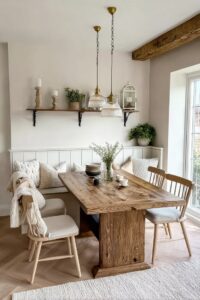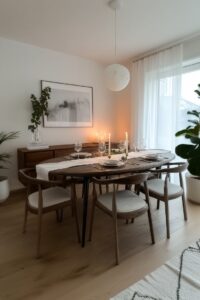

Do you stare at your cramped dining area and wonder how to make it work? You’re not alone – many homeowners wrestle with tight quarters when it comes to mealtime spaces.
The good news is that limited square footage can spark creativity rather than limit it. Smart choices in furniture, color, and layout can transform even the tiniest corner into a welcoming spot for family dinners and weekend brunches.
1. Transform a Window Nook Into a Cozy Dining Space
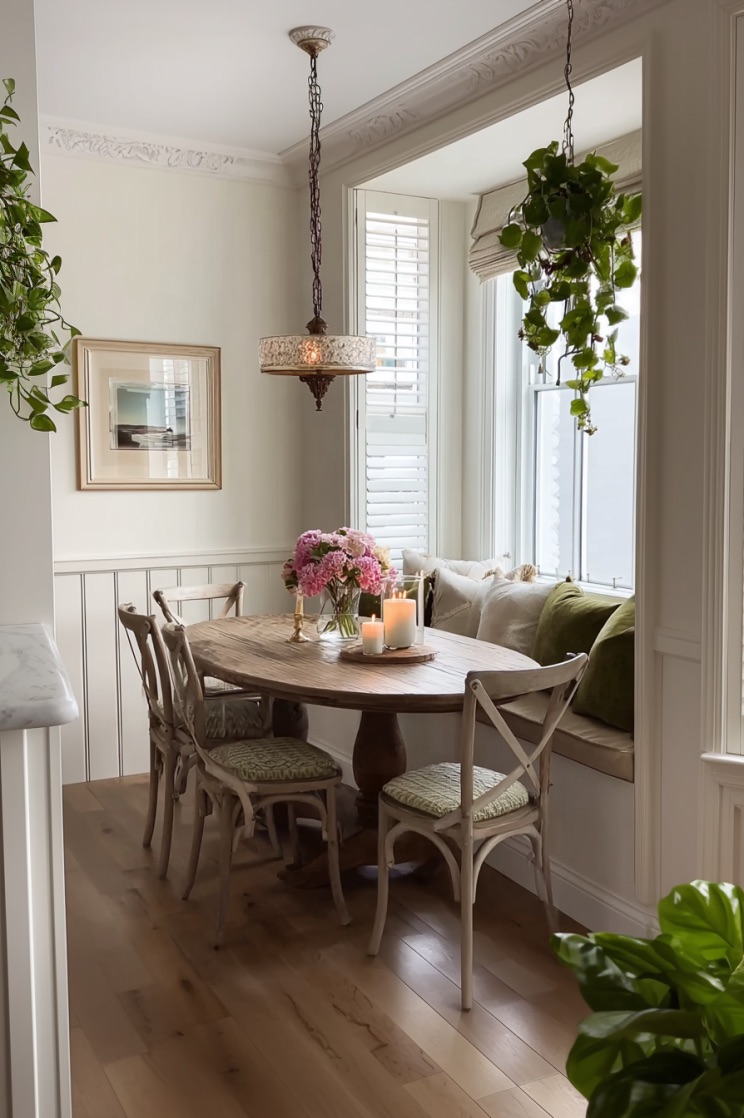
You might walk past that awkward alcove by your window every day without seeing its potential. That sun-drenched corner could become your favorite spot to sip morning coffee or host intimate dinners.
Picture a slim table tucked against the glass, paired with a cushioned bench on one side and a couple of streamlined chairs opposite. The natural light floods in, making the compact setup feel airy instead of cramped.
You won’t need overhead fixtures during daytime meals, and the view – even if it’s just your neighbor’s garden – becomes part of the dining experience.
This arrangement turns wasted space into a charming breakfast nook that invites lingering conversations. Your guests will gravitate toward the warmth of the window, and suddenly that forgotten corner becomes the heart of your home.
2. Showcase Statement Art for Inspiring Wall Decor
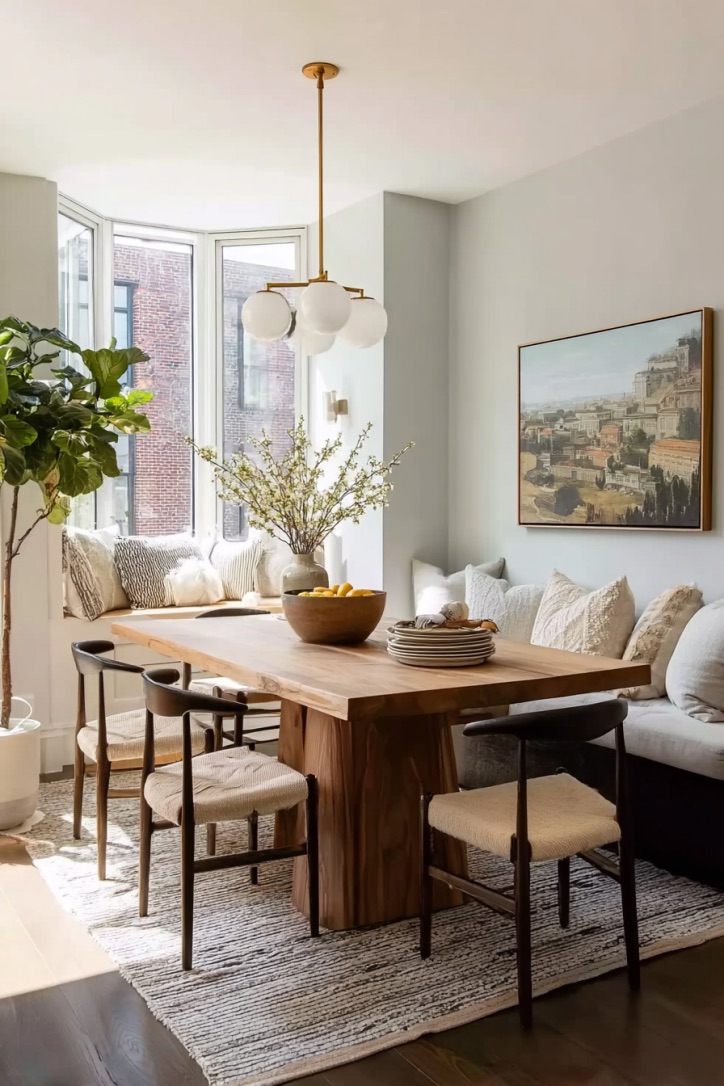
Here’s a straightforward approach: hang one large piece of art instead of cluttering your walls with multiple frames. A single bold painting or oversized photograph draws the eye upward and outward.
This trick makes your dining area feel taller and more spacious. The artwork becomes a conversation starter while keeping visual clutter at bay – your small room breathes easier without competing images fighting for attention.
3. Pair a Vintage Rug with a Wooden Table for Apartment Warmth
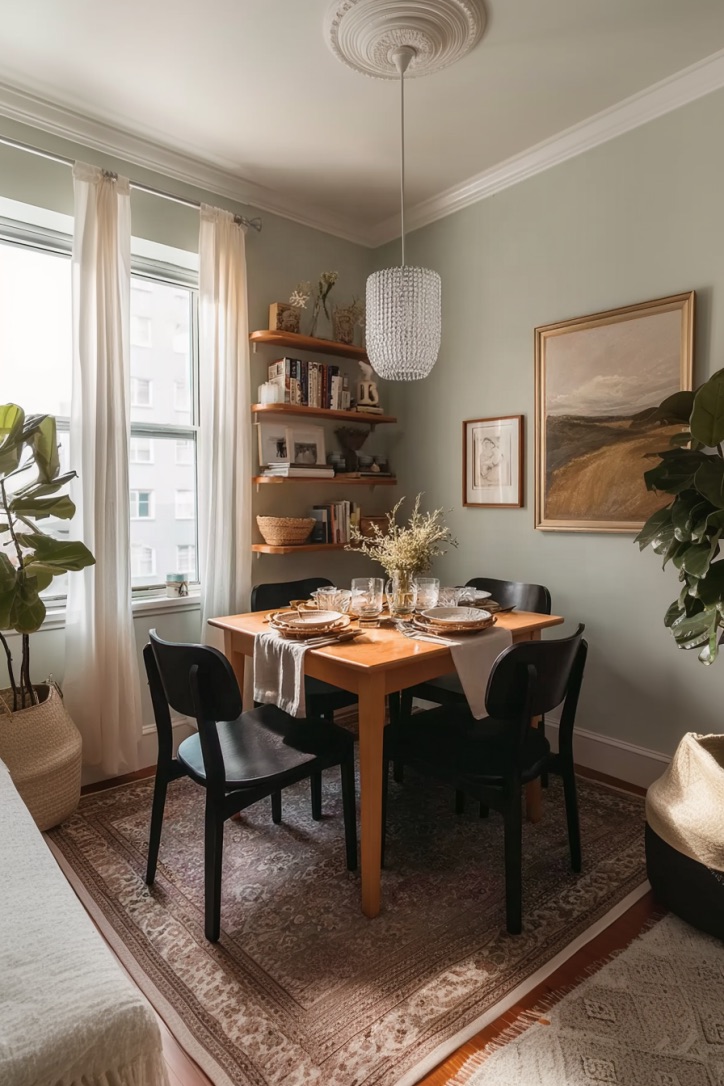
What grounds a dining room better than the floor beneath your feet? A well-chosen rug anchors your table and chairs while adding texture that makes the space feel curated rather than sparse.
Vintage rugs bring history and character into modern apartments that sometimes feel too clean-lined. The faded patterns and soft colors of an antique Persian or Turkish rug create warmth underfoot, and they’re forgiving when it comes to spills – another wine stain just adds to the patina.
Layer this beneath a simple wooden table, and you’ve built contrast between the ornate textile and clean furniture lines. The wood grain echoes the rug’s organic feel, and together they create a dining spot that feels collected over time rather than ordered from a catalog in one afternoon.
4. Layer Faux Fur Cushions for Inviting Seating Ideas
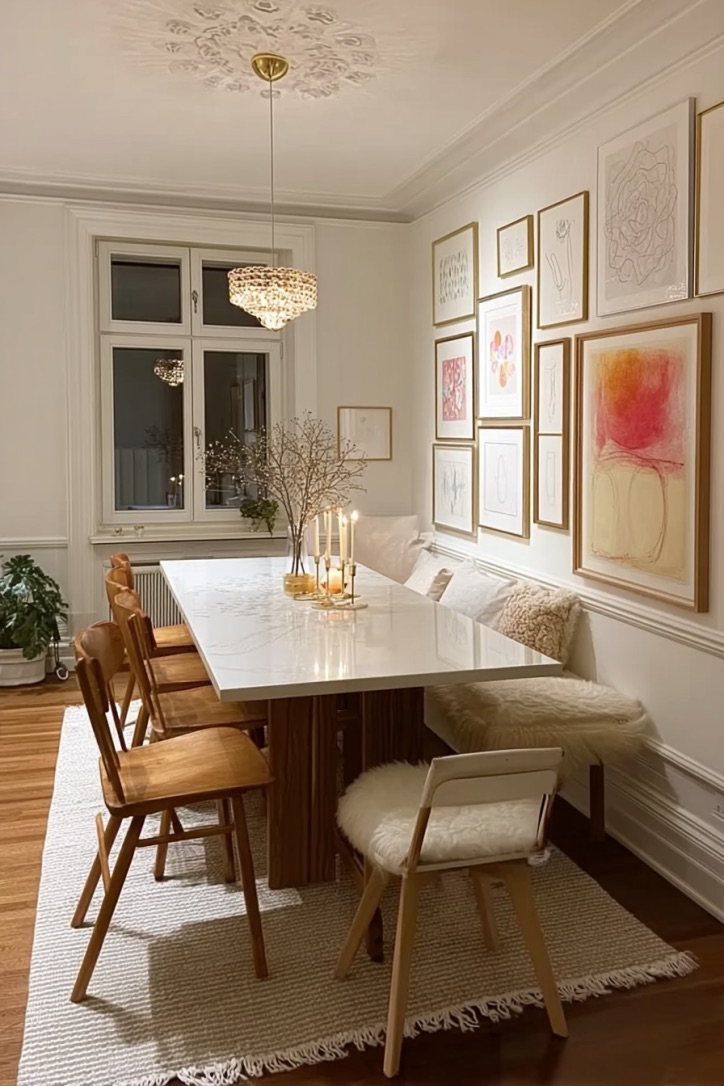
Hard chairs might look sleek, but they don’t exactly encourage guests to settle in for hours. Soft seating, on the other hand, whispers “stay awhile” without saying a word.
Drape faux fur cushions across your dining chairs and watch the transformation. The plush texture catches light differently than smooth surfaces, adding depth and shadow play that makes your small room more dynamic.
Your fingers sink into the softness as you pull out a chair, and suddenly sitting down for a meal becomes a tactile pleasure rather than just a necessity.
Can you remember the last time your dining chairs actually felt comfortable enough for after-dinner conversation?
5. Highlight Bold Drapery Patterns for Unique Dining Room Inspiration
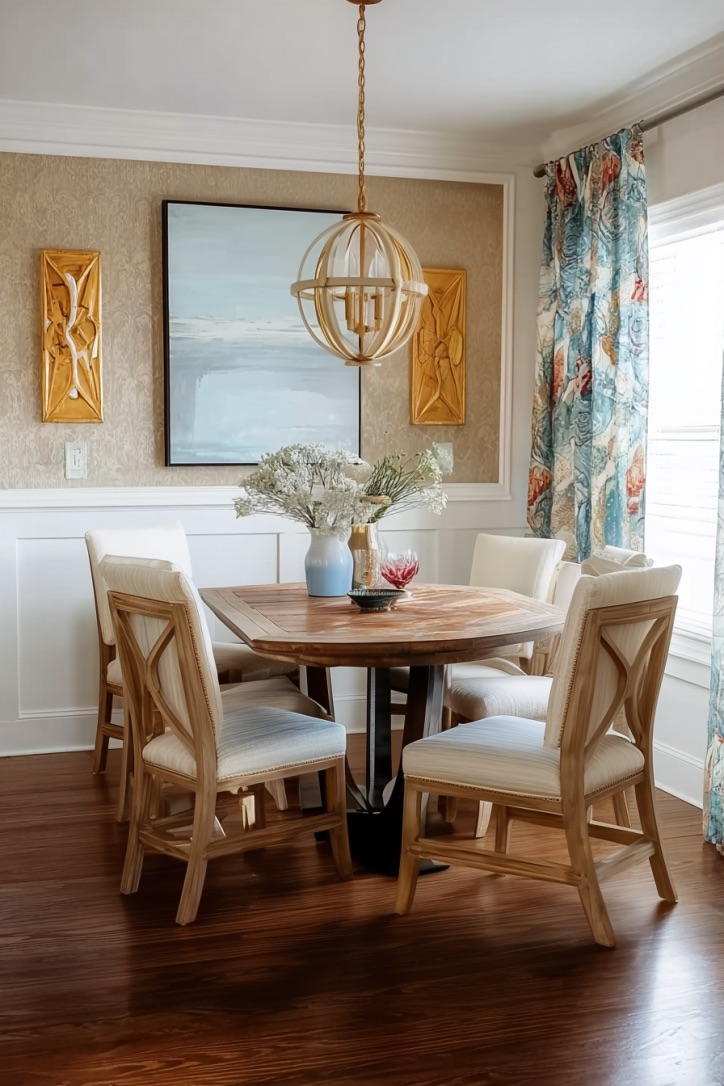
Fabric transforms rooms faster than almost any other element. Bold curtains frame your dining space and inject personality into walls that might otherwise fade into the background.
Choose patterns that reflect your style – geometric prints for modern tastes, florals for romantic leanings, or graphic stripes to elongate your walls. The fabric softens hard surfaces and absorbs sound, making conversations feel more intimate in your compact dining area.
During daylight hours, pull them back to let sunshine pour in; when evening arrives, close them to create a cocooned feeling that makes your small space feel intentionally snug rather than accidentally tight.
The right drapery also hides architectural flaws. That awkward window placement or off-center opening disappears behind generous folds of cloth. You control the room’s proportions through where you hang the rod and how wide you extend the panels beyond the window frame.
Visit fabric stores and hold samples against your walls in different lighting. The pattern that looks subdued in morning light might come alive during golden hour, and you want curtains that work throughout the day.
6. Maximize Storage By Using a Built-in Bench Layout
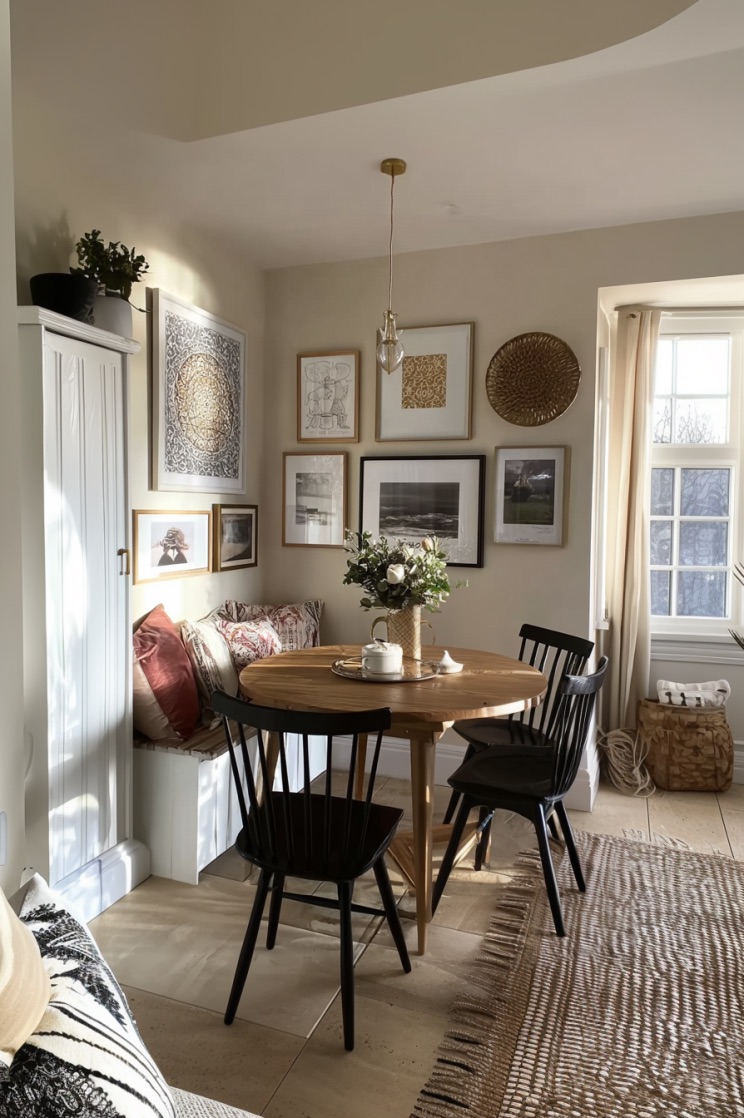
Open shelving and minimalism dominate design magazines these days, but there’s a quieter trend gaining ground: furniture that works double duty. Built-in benches with hidden storage compartments offer seating while swallowing table linens, seasonal decorations, and serving pieces you only need occasionally.
Picture a banquette running along one wall of your dining area. The cushioned top lifts to reveal deep bins perfect for storing extra plates, napkins, or those bulky serving platters that crowd your kitchen cabinets.
You’ve added seating for four or five people while actually reducing furniture footprint – no chair backs jutting into walkways, no legs creating obstacle courses.
One family I know installed a corner bench and discovered they could seat eight around their table instead of six. The kids love climbing over each other to reach the window seats, and the parents love that winter decorations no longer overflow from the hall closet.
Here’s a tip: add electrical outlets inside the bench storage. You can charge devices out of sight or even store a small warming tray for dinner parties, keeping food hot without cluttering your limited counter space.
7. Brighten the Room with an Elegant Glass Pendant Lighting Fixture
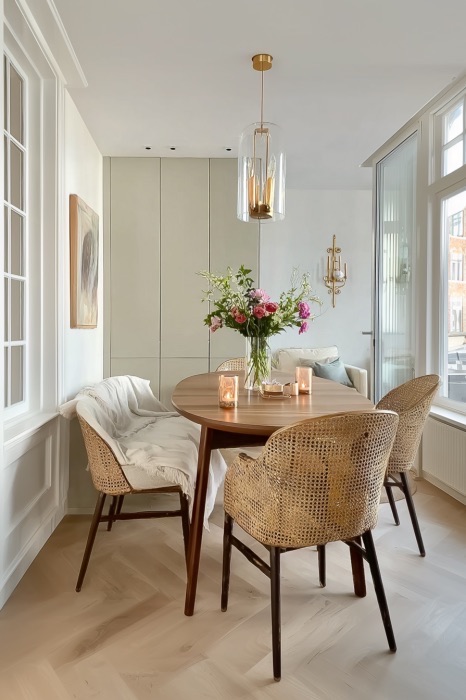
Dark rooms feel smaller, while light-filled spaces seem to expand beyond their actual measurements. This might seem obvious, but the right fixture makes all the difference between adequate lighting and atmosphere that transforms your dining experience.
Glass pendants cast light both downward onto your table and outward through their transparent or translucent bodies. The light bounces, reflects, and scatters in ways that solid fixtures simply can’t match. A blown glass globe or geometric crystalline shade becomes sculpture during the day and a light source after sunset.
The transparency keeps sight lines open – you’re not blocking visual space with an opaque lampshade – while the fixture itself adds elegance overhead.
Glass pendants open up your small dining room by letting light move freely rather than trapping it inside a shade.
8. Display Minimal Decor for Effortless Space Saving
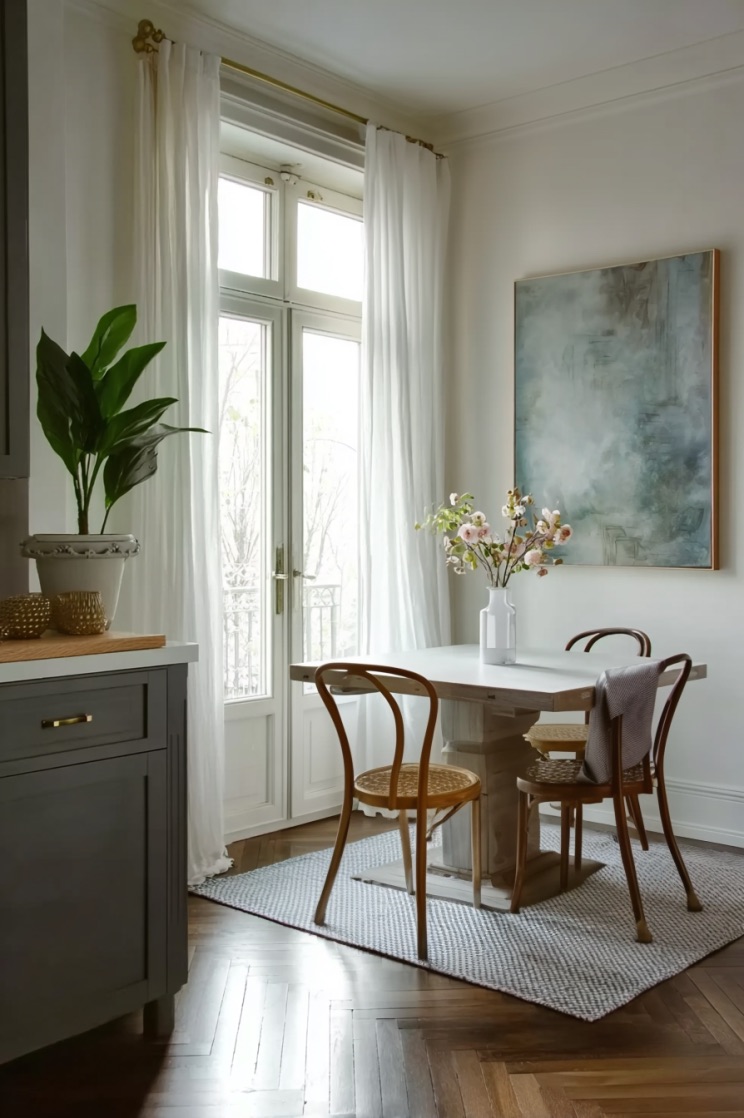
Building on earlier ideas about statement art and focused design choices, the minimal approach extends to your tabletop and surfaces. You don’t need a centerpiece, placemats, chargers, napkin rings, and candle holders all competing for attention.
Choose one element and let it shine. A single sculptural vase with branches, a low bowl of fruit, or three pillar candles clustered on a wooden board. The empty space around your chosen object becomes part of the composition, giving your eye places to rest.
Your small dining room suddenly feels curated rather than cluttered, intentional rather than indecisive.
This less-is-more approach seems likely to outlast maximalist trends. As living spaces continue shrinking in urban areas, the ability to create calm through restraint will only grow more valued.
9. Emphasize Chevron Wood Floors for Standout Dining Room Design
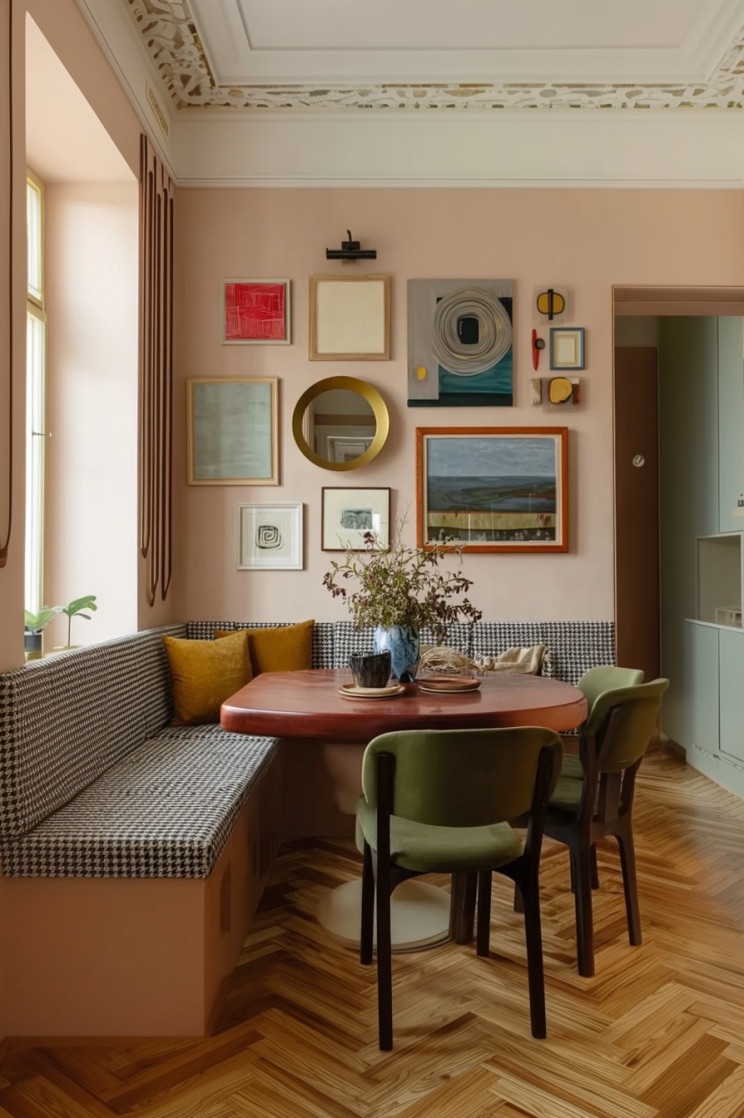
Your floor lacks personality when it’s just something you walk on without noticing. Chevron-patterned wood flooring changes that dynamic completely, creating movement and direction that guides the eye through your compact space.
The angled planks add visual interest without requiring a single piece of furniture or accessory. They make your room feel longer, wider, or taller depending on how you orient the pattern.
The zigzag draws attention down and across, which paradoxically makes people more aware of your room’s dimensions in a way that enhances rather than limits the space.
One caution: extremely bold chevron patterns in dark wood can overwhelm very small rooms. Consider lighter woods or subtle tone-on-tone variations if your dining area measures less than eighty square feet, saving the dramatic contrasts for spaces that can handle the visual weight.
10. Paint a Sky-Inspired Ceiling for Dreamy Visual Impact
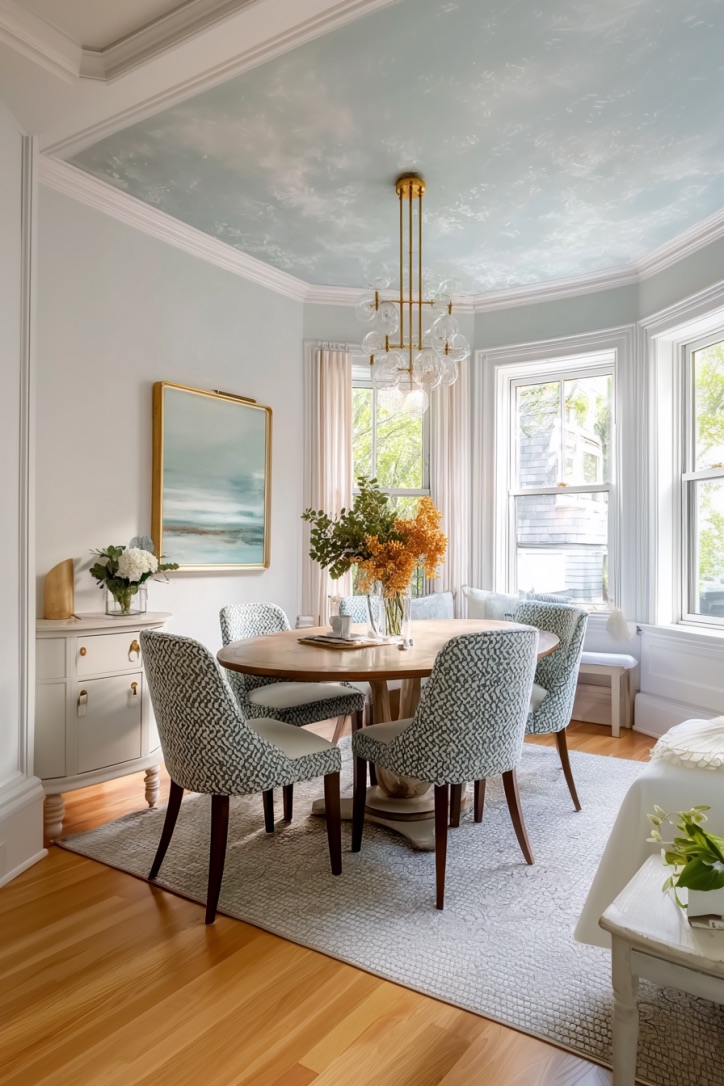
If you’re willing to look up, you’ll discover an entire surface that most people ignore. A pale blue ceiling reminiscent of early morning sky or sunset’s fading light changes your room’s entire mood.
Consider a family in Seattle who painted their dining room ceiling a soft periwinkle. Suddenly their frequent gray days felt less oppressive – they’d imported their own sky.
The color reflected subtly onto walls and faces, casting everything in a gentle glow that made evening meals feel special even on Tuesday nights when dinner was just leftover soup.
The ceiling color lifts your gaze upward, making walls seem taller than their actual measurements. Your small dining room gains vertical breathing space, and conversations happen beneath an expanse that feels open rather than closed in.
11. Place a Round Table Near Windows for Airy Layout
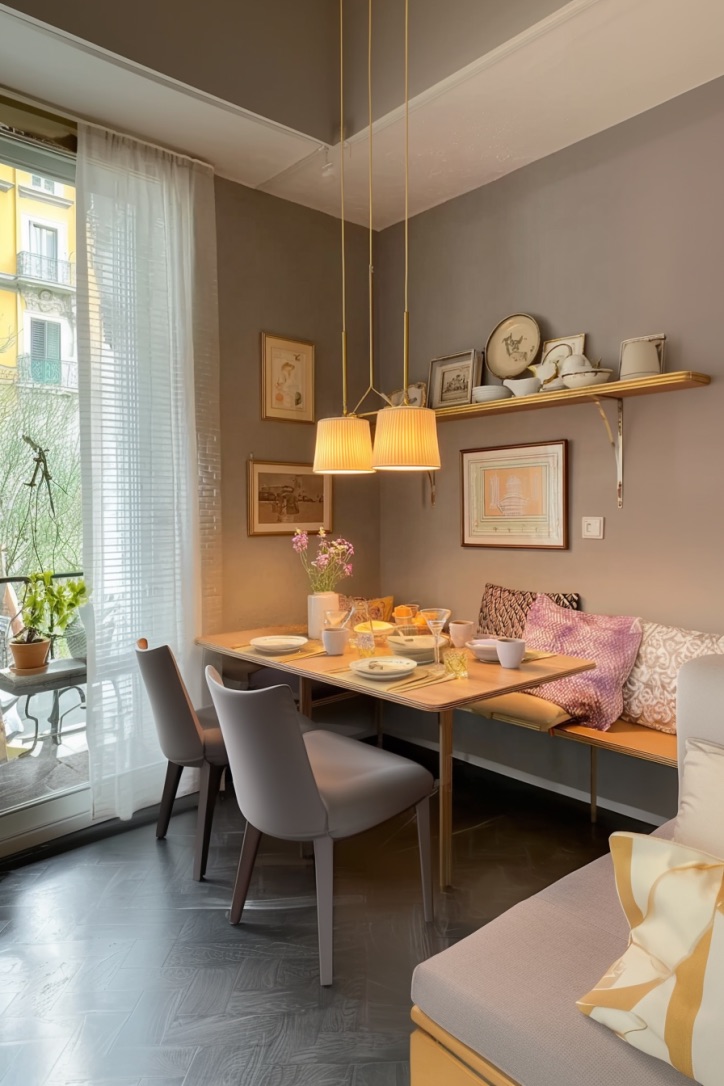
Square pegs in round holes might cause problems, but round tables in square rooms solve them. There’s something almost magical about how a circular dining table refuses to participate in the boxy confines of typical architecture.
Position your round table near windows and watch what happens. Light wraps around the curved edge instead of creating harsh shadows in corners. People sitting around the perimeter all face each other equally – no head of the table, no hierarchy, just conversation flowing in a natural circle.
The shape takes up less visual space than rectangular tables because your eye travels smoothly around curves rather than stopping at angles.
Friends pull their chairs slightly inward, creating an intimate huddle that rectangular seating never quite achieves. Don’t you find that your best dinner party conversations happen when everyone can see everyone else without craning their necks?
12. Arrange Fresh Flowers for Effortless Tabletop Inspiration
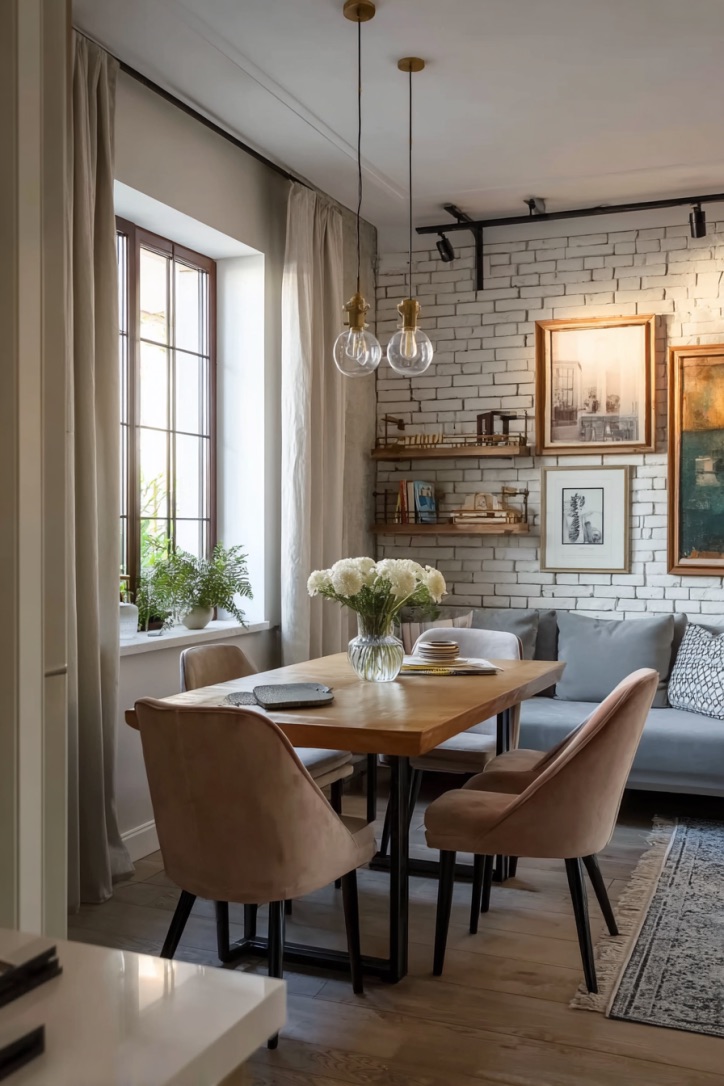
Most people drastically overthink centerpieces. The truth is that nothing you buy will ever match what you cut from a garden or pick up at a farmer’s market on Saturday morning.
Fresh flowers bring the outside world into your dining space, changing with seasons and moods. Spring tulips nod their heads in a simple glass cylinder. Summer zinnias explode in cheerful chaos. Autumn branches with turning leaves arch over your table. Even winter offers eucalyptus and evergreen clippings that smell like forests.
The imperfection of natural stems – the way they lean, cross, and tangle – creates visual interest that artificial arrangements strain to achieve. You spend three dollars at the market instead of thirty dollars on permanent decor that you’ll tire of by next month.
Water needs changing, stems need trimming, and this gentle maintenance connects you to your dining space in small daily moments.
13. Incorporate Sleek Gold Chair Legs for Modern Space Saving
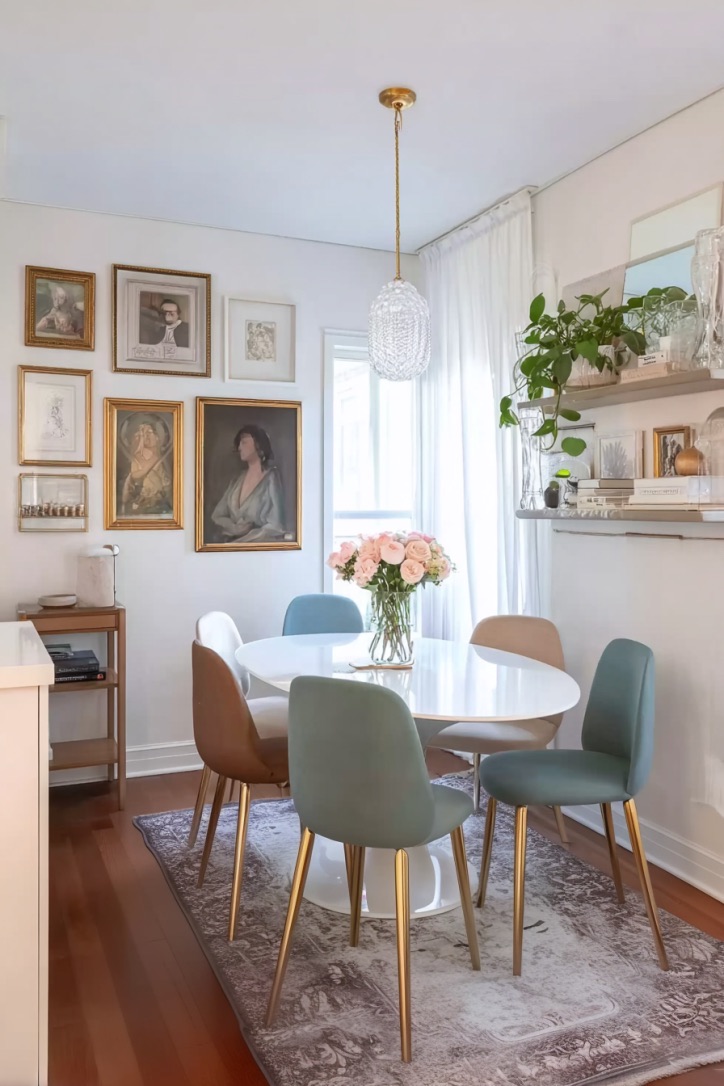
Walk through any furniture showroom and you’ll notice something: chairs have gotten lighter, both in weight and appearance. Metal legs in brass, gold, or rose gold finishes seem to barely touch the floor.
These slender supports create negative space beneath the chair that lets your eye travel through rather than stopping at solid wood. The metallic finish catches and reflects light, adding subtle sparkle at floor level that draws attention away from your room’s modest square footage.
A set of four chairs with gold legs occupies the same footprint as traditional wooden chairs but feels airier, almost floating above your floor.
The modern aesthetic works particularly well if you’re mixing styles – pair those contemporary metal legs with upholstered seats in traditional fabrics, and you’ve bridged design eras while keeping your small dining room from feeling dated or heavy.
Stop settling for whatever chairs you inherited or found on sale. Invest in pieces that earn their place through both function and the breathing room they create visually.
14. Swap Chair Cushions for Fresh Seasonal Color Ideas
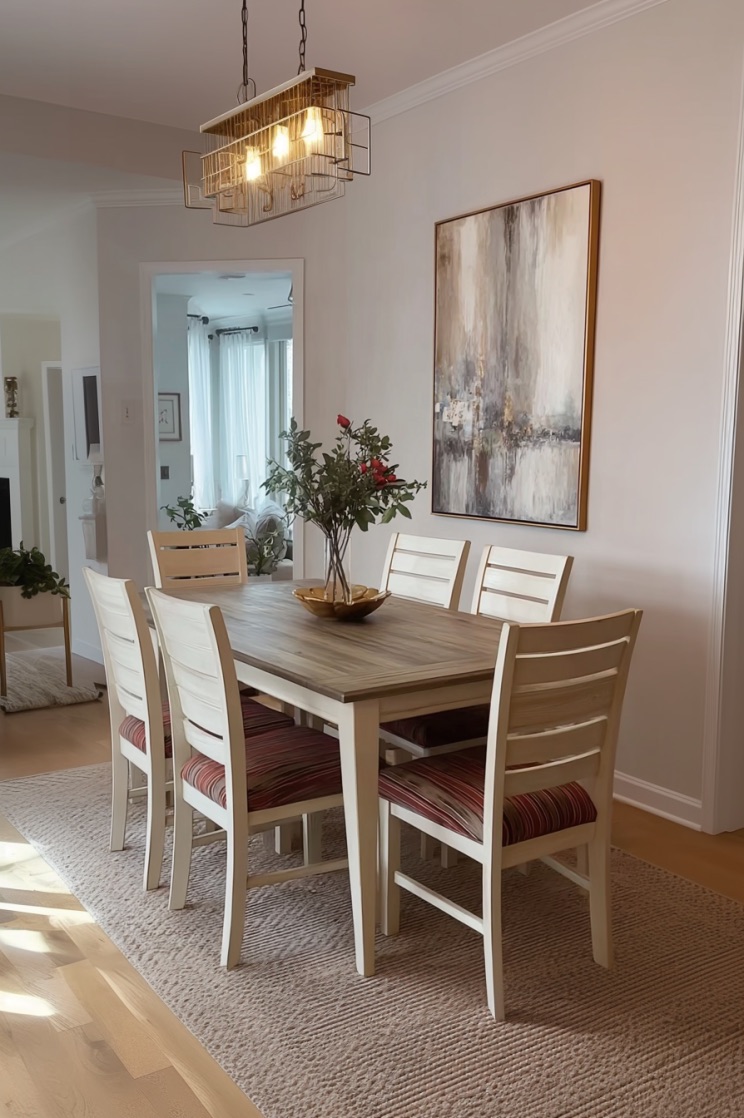
Think of your dining chairs as a wardrobe that changes with the calendar. You wouldn’t wear the same outfit year-round, so why should your furniture?
Removable cushions or slipcovers let you shift your room’s personality without buying new furniture. Imagine crisp linen covers in white or soft gray for summer months, creating a breezy coastal feeling even if you’re landlocked. When autumn arrives, swap them for cushions in rust, amber, or deep olive that echo falling leaves.
Winter calls for rich velvets in jewel tones, while spring welcomes pastels and floral prints.
This rotating approach keeps your small dining room from feeling stale. Your space evolves, responding to light changes and seasonal moods. Friends who visit regularly notice the updates, commenting on how different the room feels even though the bones remain unchanged.
Seasonal swapping will likely become more common as people seek affordable ways to refresh spaces without buying entirely new furniture sets.
15. Bring Nature Indoors with Lush Potted Plant Inspiration
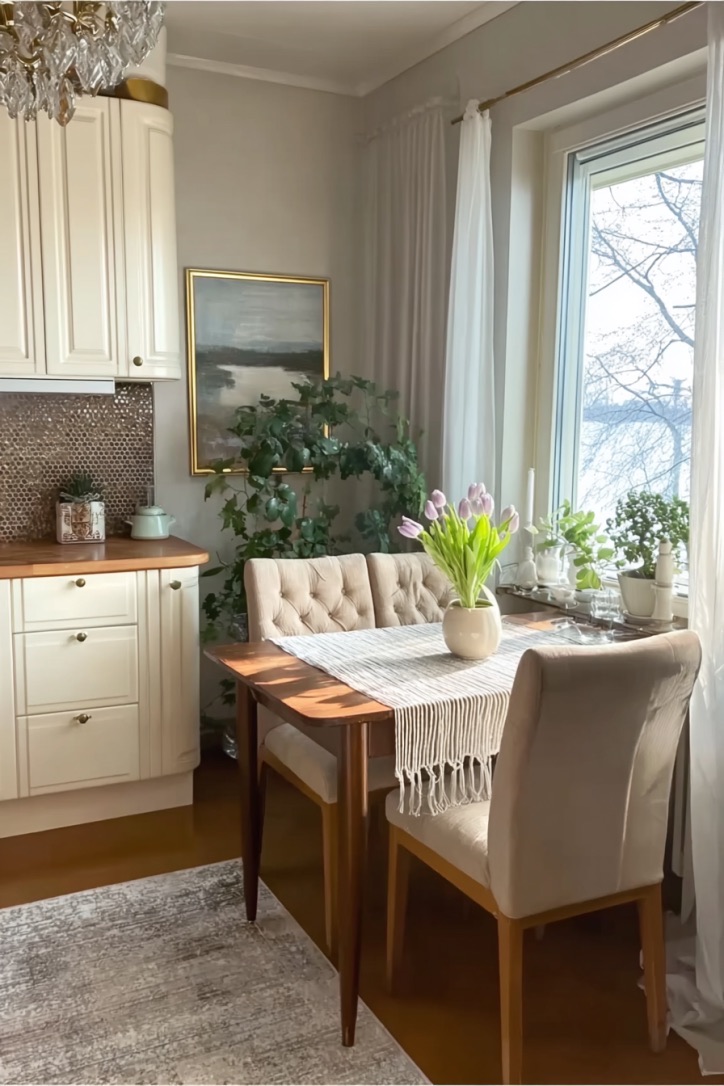
Here’s something you might not know: NASA studied houseplants extensively in the 1980s, discovering they don’t just look nice – they actually clean air and improve indoor environments. That research sparked renewed interest in bringing greenery inside, especially in urban spaces disconnected from nature.
Large potted plants in dining rooms create vertical interest without permanent commitment. A fiddle leaf fig tree in the corner draws eyes upward, making your ceiling seem higher. Cascading pothos on a shelf sends green tendrils downward, softening hard edges.
Even a simple snake plant on a sideboard adds life to what might otherwise feel like a static space.
Plants change throughout the year – growing, blooming, occasionally struggling – and this living quality prevents your dining room from feeling like a museum display. You water, prune, and rotate them toward light, engaging in small acts of care that make the space truly yours.
One tip: choose plants appropriate for your light levels. That Instagram-famous fiddle leaf fig needs bright indirect light; forcing it into a dim corner will leave you with dropped leaves and disappointment. Snake plants and pothos tolerate lower light, making them forgiving choices for north-facing rooms.
16. Use Open Shelving to Display Curated Ceramics for Wall Decor
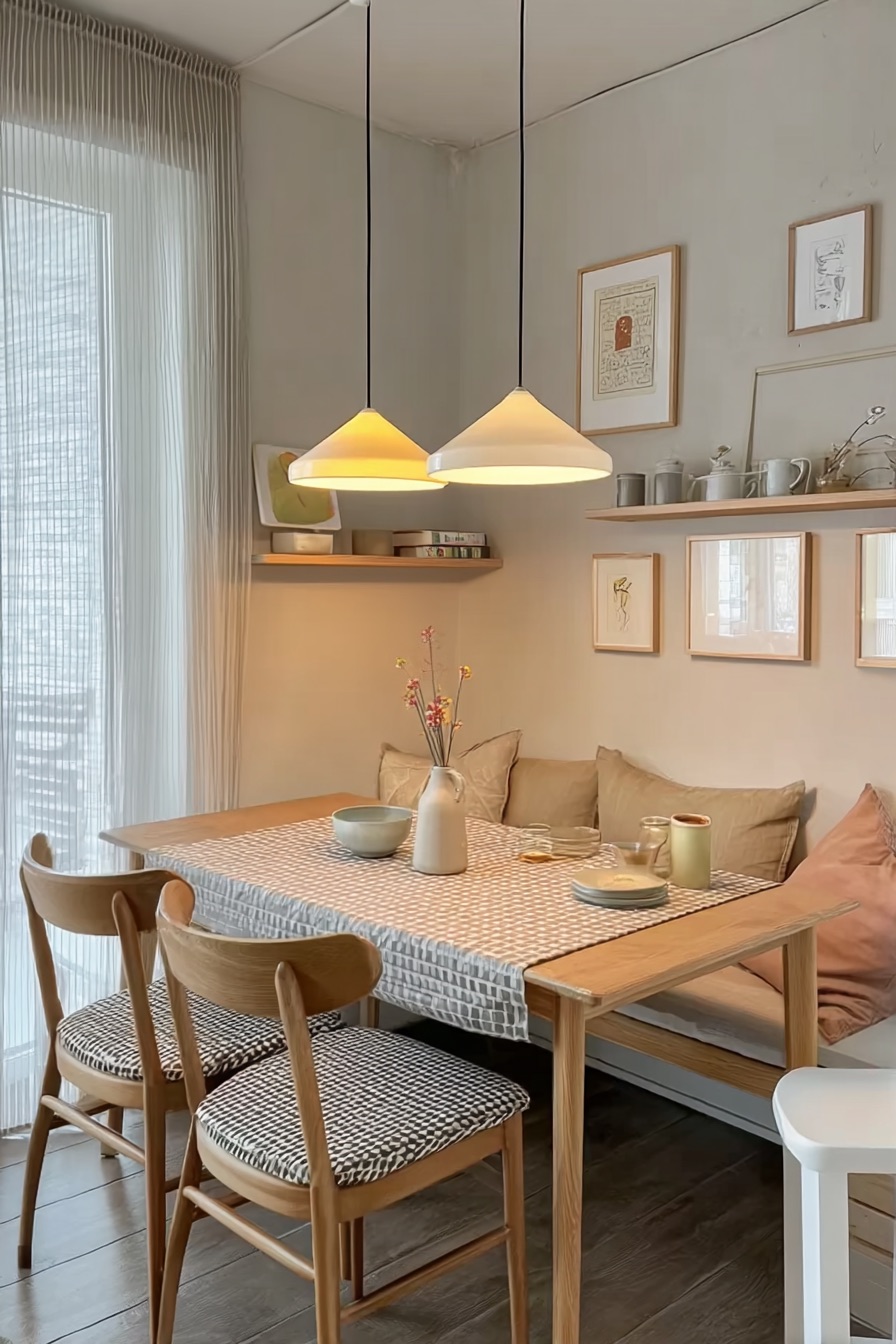
Forget hiding your beautiful dishes behind cabinet doors. Install floating shelves along one dining room wall and arrange your favorite pieces where you can actually see them.
Open shelving serves triple duty: storage, display, and decoration compressed into one efficient solution. Your grandmother’s serving platter, those hand-thrown bowls from the pottery studio, the vintage glassware you collected piece by piece – they become art when arranged thoughtfully on shelves.
The repetition of shapes and colors creates rhythm, while varied heights and depths add dimension to flat walls.
This approach works especially well in small dining rooms because you’re using vertical space that might otherwise go ignored, and the openness prevents the heavy feeling that closed cabinets create in tight quarters.
Conclusion
Your small dining room holds more potential than you’ve given it credit for. These ideas offer starting points, not rigid rules – mix the ones that resonate, ignore the rest, and trust your instincts about what your space needs. Transform that cramped corner into a place where people want to gather, linger, and return.
Pick one change today, even something as simple as fresh flowers, and notice how it shifts the energy in your home.