
Introduction
Have you ever wondered why some gardens feel alive with birdsong while others remain stubbornly silent? The secret often lies in a single, welcoming feature: a thoughtfully placed bird bath.
These simple water sources transform outdoor spaces into bustling avian hubs. Your yard can become a sanctuary where feathered visitors gather, splash, and sing from dawn until dusk.
1. Incorporate Lush Potted Greenery Around Your Bird Bath for Landscaping
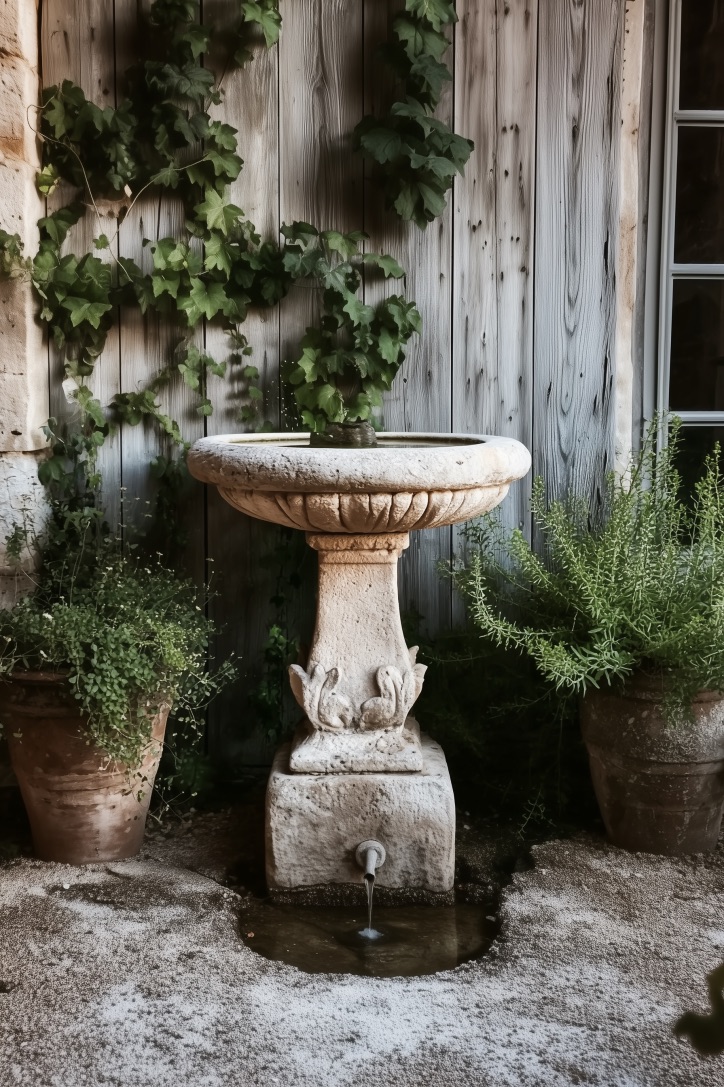
Think of your bird bath as the stage, and the surrounding potted plants as the curtains that frame the performance. Without that verdant backdrop, even the most beautiful basin looks exposed and uninviting.
Birds instinctively seek cover near water sources – it’s how they’ve survived for millennia. When you cluster ferns, hostas, and trailing vines in ceramic or terracotta containers around your bird bath, you create pockets of safety. This layered approach mimics natural woodland edges where birds feel secure enough to linger.
Here’s the catch, though: overgrown foliage can hide lurking predators. Keep at least two feet of clear sightlines around the basin so your feathered guests can spot approaching cats or hawks while they bathe.
2. Frame Your Bird Bath with Unique Architectural Backdrops for Garden Charm
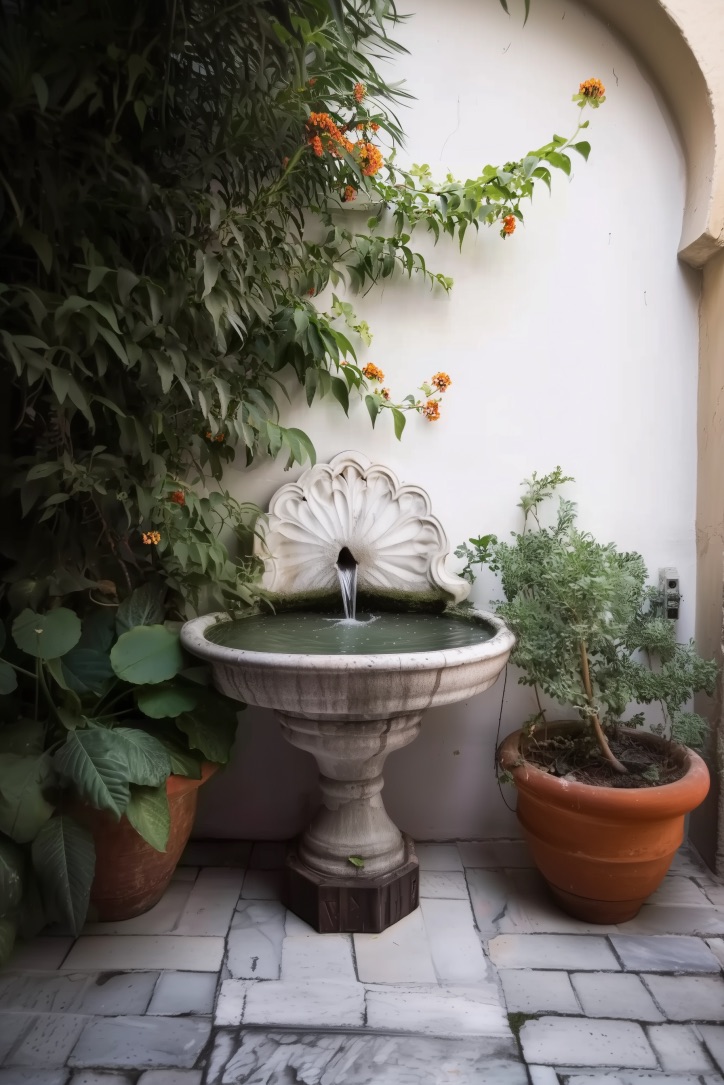
Here’s something most gardeners don’t realize: Victorian-era estates often positioned bird baths against decorative trellises not for beauty alone, but to create vertical interest in flat landscapes. The tradition stuck for good reason.
When you place your bird bath in front of a moon gate, lattice screen, or weathered arbor, you add depth to the scene. The structure draws the eye upward while the water feature anchors the composition at ground level.
Old wooden shutters leaned against a fence, an ornate wrought-iron panel, or even a salvaged window frame can serve this purpose beautifully – you’re essentially building a three-dimensional picture.
A bird bath becomes twice as captivating when it sits against an architectural element that tells a story.
3. Highlight Terracotta Pots As Decorative Accents for Homemade Bird Baths
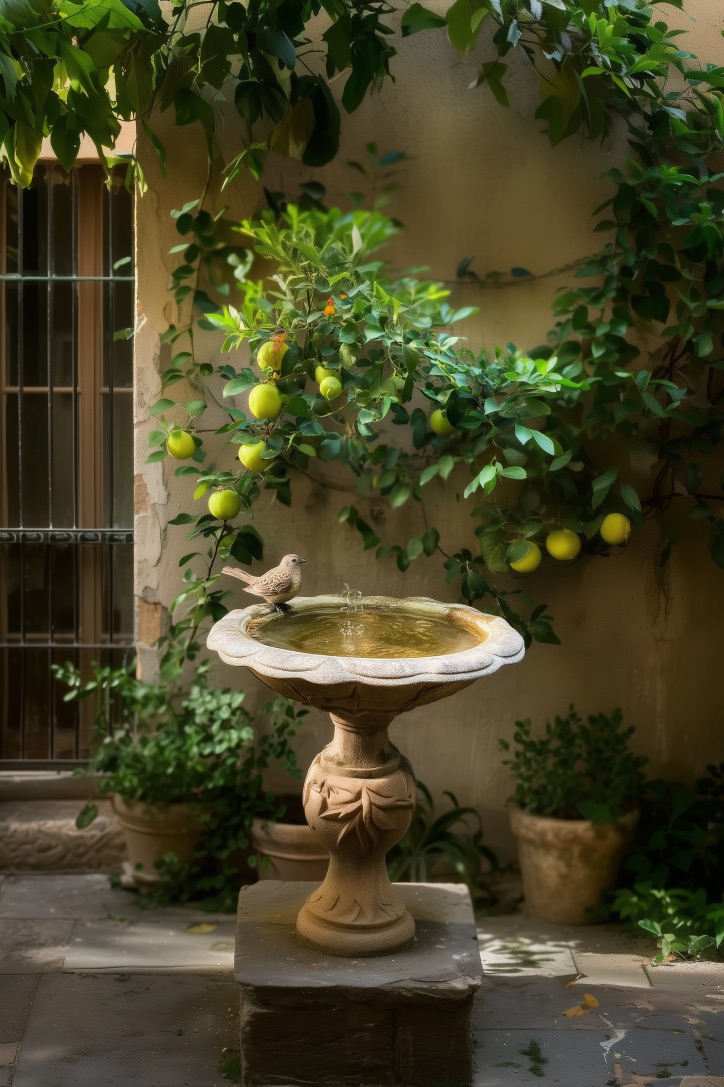
You might not expect this, but stacking terracotta pots and saucers can create one of the most charming bird baths in your entire garden. The humble clay vessels you’ve been using for geraniums have been moonlighting as potential water features all along.
This approach costs a fraction of store-bought alternatives while offering complete creative control. The natural porosity of terracotta keeps water slightly cooler during summer heat, and birds seem drawn to the earthy texture under their feet.
You can seal the interior with non-toxic waterproofing if you want the basin to hold water longer between refills.
The technique works like this: invert a large pot as the base, add a smaller inverted pot for height, then crown the stack with a wide, shallow saucer. Use strong adhesive rated for outdoor use, let it cure fully, and you’ve built a conversation piece that robins and finches will adore.
Some gardeners paint designs on their creations, while others embrace the terra cotta’s warm, sun-baked glow.
4. Surround Your Bird Bath with Lavender for Landscaping Backyards
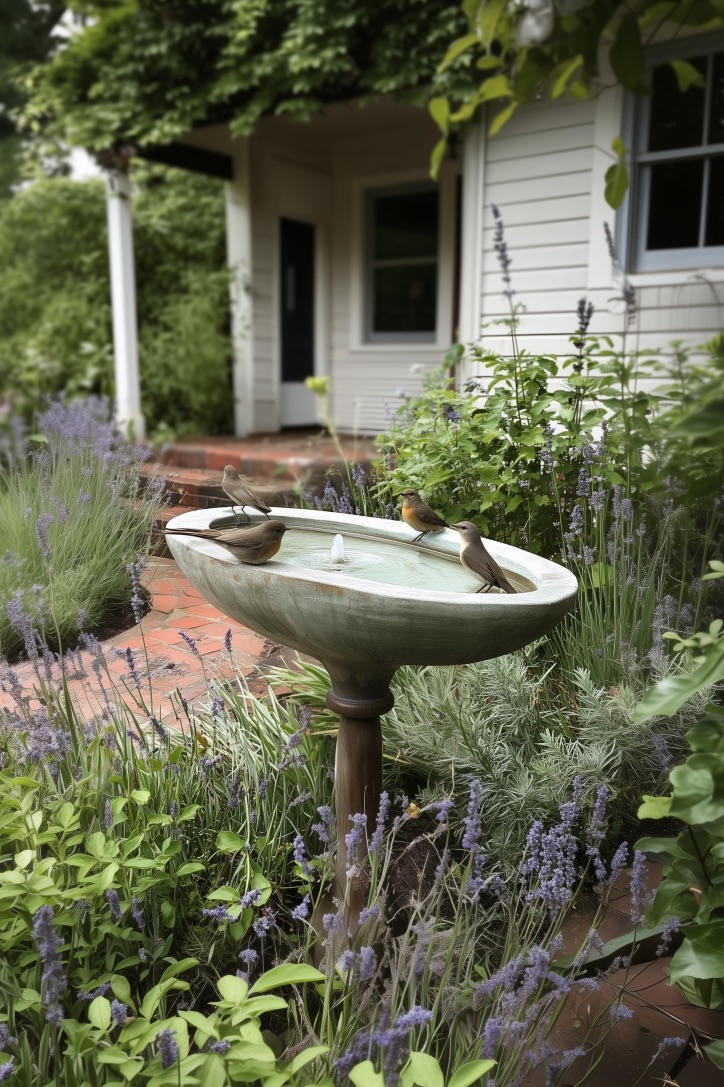
Where roses demand constant attention and delphiniums sulk in poor soil, lavender thrives with almost stubborn independence. This Mediterranean herb asks little while giving much, making it the perfect companion for a bird bath you want to enjoy rather than fuss over.
Plant lavender in a loose ring around your water feature, and watch what happens. The purple spikes sway in breezes, releasing fragrance that drifts across your patio. Butterflies visit the blooms while birds splash nearby, creating a multi-sensory experience that turns an ordinary afternoon into something worth remembering.
5. Showcase Vibrant Pink Blooms in Your Bird Bath with Flowers
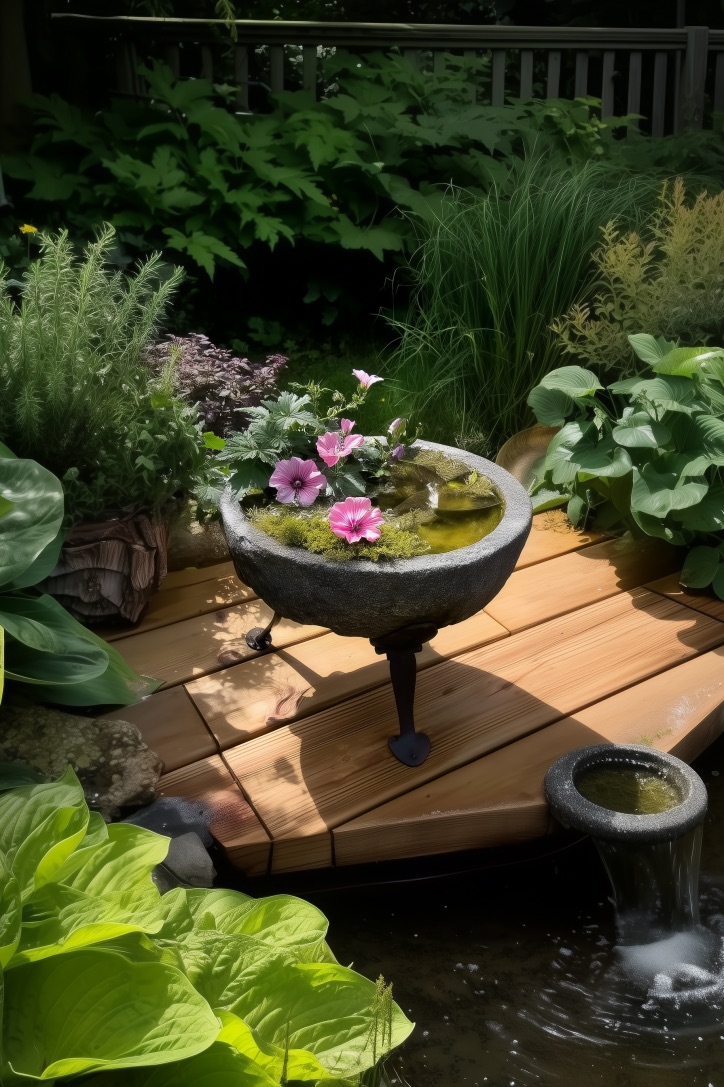
Most people settle for safe, predictable garden palettes – and then wonder why their yards blend into every other house on the block. Break that timid pattern by surrounding your bird bath with unapologetic shocks of pink.
We’re talking about petunias that spill from hanging baskets overhead, cosmos that tower behind the basin, and creeping phlox that carpets the ground in magenta waves. Dianthus adds spicy fragrance while begonias thrive in shadier spots.
The effect creates a focal point impossible to ignore, drawing both human visitors and curious birds who investigate these splashes of color. Pink gardens photograph beautifully too, if you’re inclined to share your space on social media.
This bold color strategy is gaining momentum as gardeners tire of neutral, “tasteful” designs. Expect to see more jewel-toned bird bath settings as homeowners embrace expressive outdoor rooms that reflect personality rather than restraint.
6. Feature Succulent Arrangements At the Base for Easy Diy Appeal
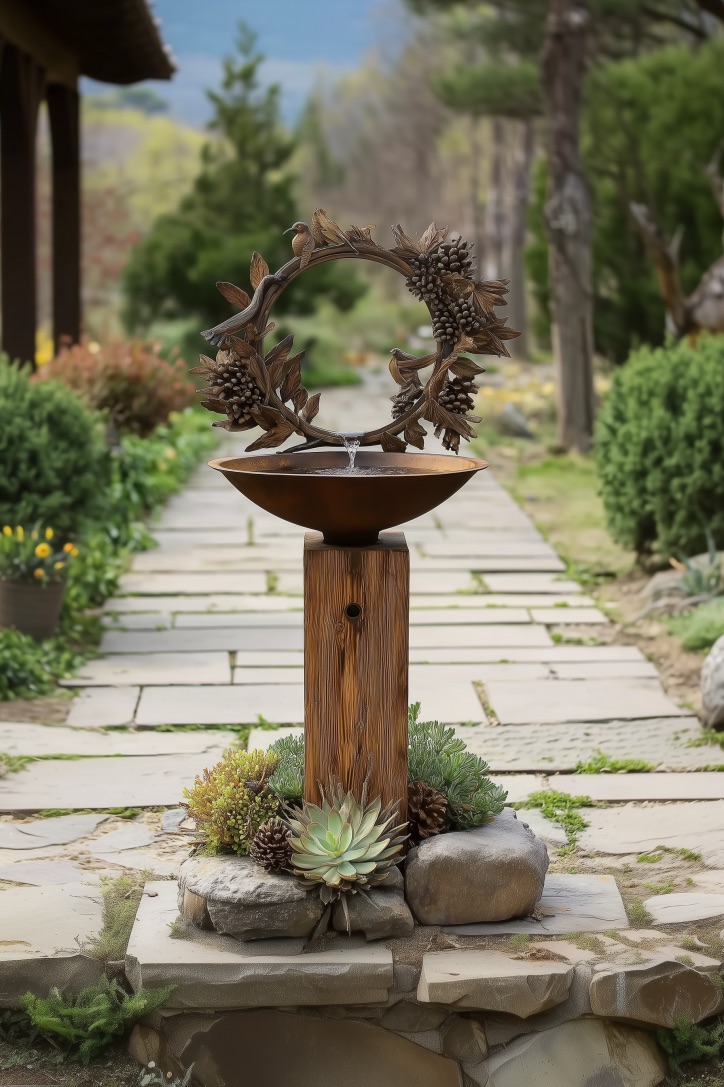
Walk through any garden center lately, and you’ll notice succulents have claimed entire sections that once belonged to annuals. There’s something quietly satisfying about their geometric forms and self-sufficient nature.
Arrange hens-and-chicks, echeveria, and sedum around your bird bath’s pedestal, and you’ve solved several problems at once. These drought-tolerant plants need minimal watering – handy when you’re already maintaining the bath itself. Their rosette shapes and varied textures create visual interest without competing for attention.
One gardener I know wedged succulents between the stones at her bird bath’s base, creating a living mosaic that fills in more densely each year.
The consequence? You’ve built a low-maintenance vignette that looks intentional and artistic, even if you only water it twice a month. Birds get their splash zone, and you get a garden feature that practically takes care of itself.
7. Position Your Bird Bath Among Sunflowers for Dramatic Garden Height
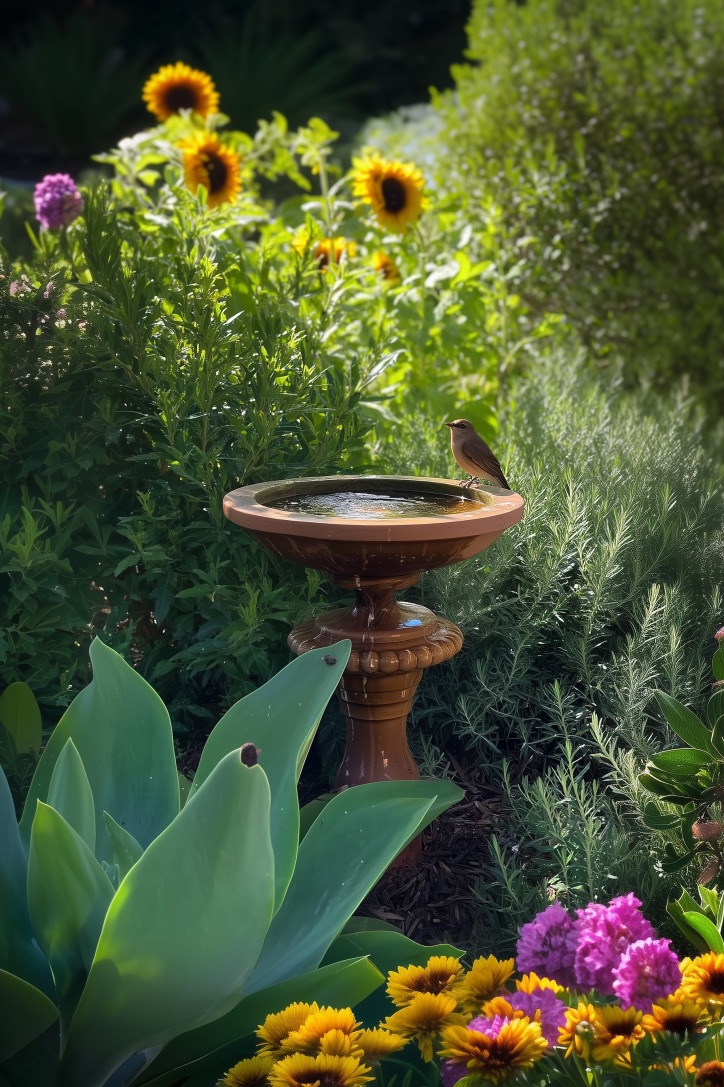
Why should your garden stay trapped at eye level when vertical space goes begging overhead? Sunflowers – those cheerful giants – shoot skyward with determination, offering drama that low shrubs simply can’t match.
Plant a grove of mixed sunflower varieties around your bird bath, staggering heights from four feet to over ten. As summer progresses, you’ll create a golden cathedral with your water feature as the altar. Birds perch on the sturdy stalks after bathing, preening their feathers while surveying their kingdom.
The massive seedheads later provide food, keeping goldfinches and chickadees visiting long after the blooms fade. Morning light filters through the broad leaves, dappling the water with shifting shadows.
Can you imagine a more welcoming beacon for migrating birds than towering sunflowers visible from the sky, with fresh water waiting below?
8. Contrast Sleek Metal Bird Baths Against Natural Granite for Modern Landscaping
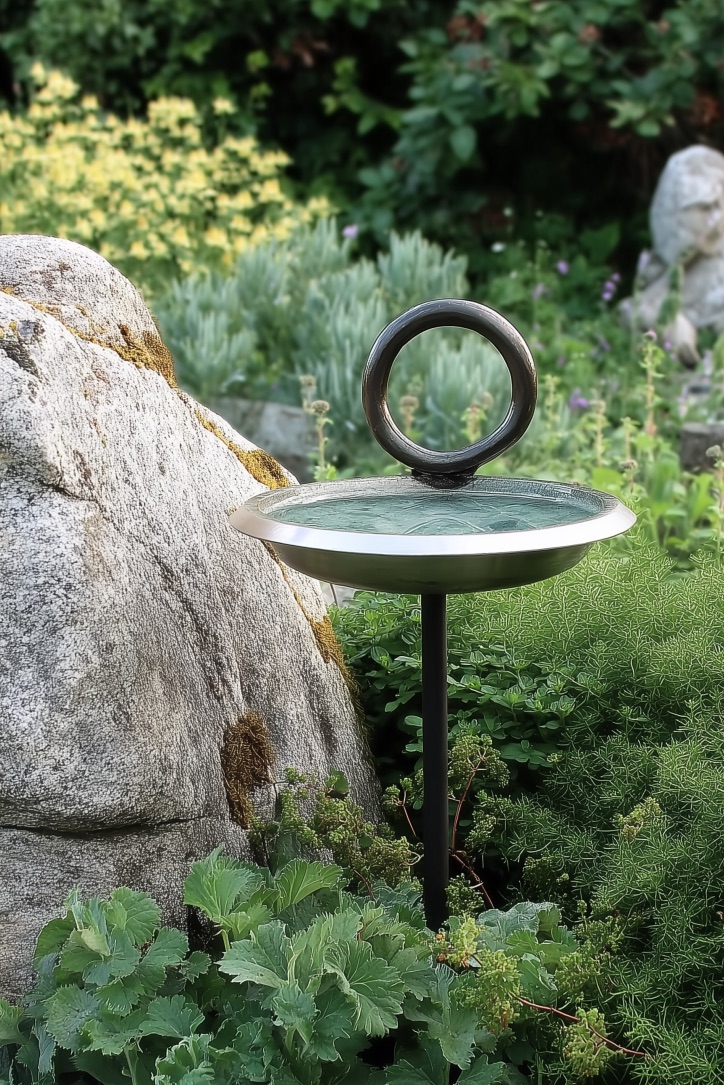
If you want your outdoor space to feel current rather than dated, material contrast becomes your most powerful tool. Pairing a brushed copper or galvanized steel basin with rough-hewn granite boulders creates tension that feels deliberately curated.
Modern garden design emerged partly as a reaction against fussy Victorian gardens, embracing clean lines and honest materials instead. When you position a contemporary metal bird bath among weathered stones, you’re acknowledging both traditions – the sculptural quality of modern metalwork and the timeless permanence of natural rock.
The metal reflects sky and surrounding foliage, while granite anchors the composition with earthy solidity.
Don’t just admire this pairing in magazines – visit a stone yard, select a few substantial boulders, and arrange them asymmetrically around your bird bath. You’ll elevate your garden from pleasant to memorable.
9. Choose Brick Pathways to Lead to Your Bird Bath for Front Yards
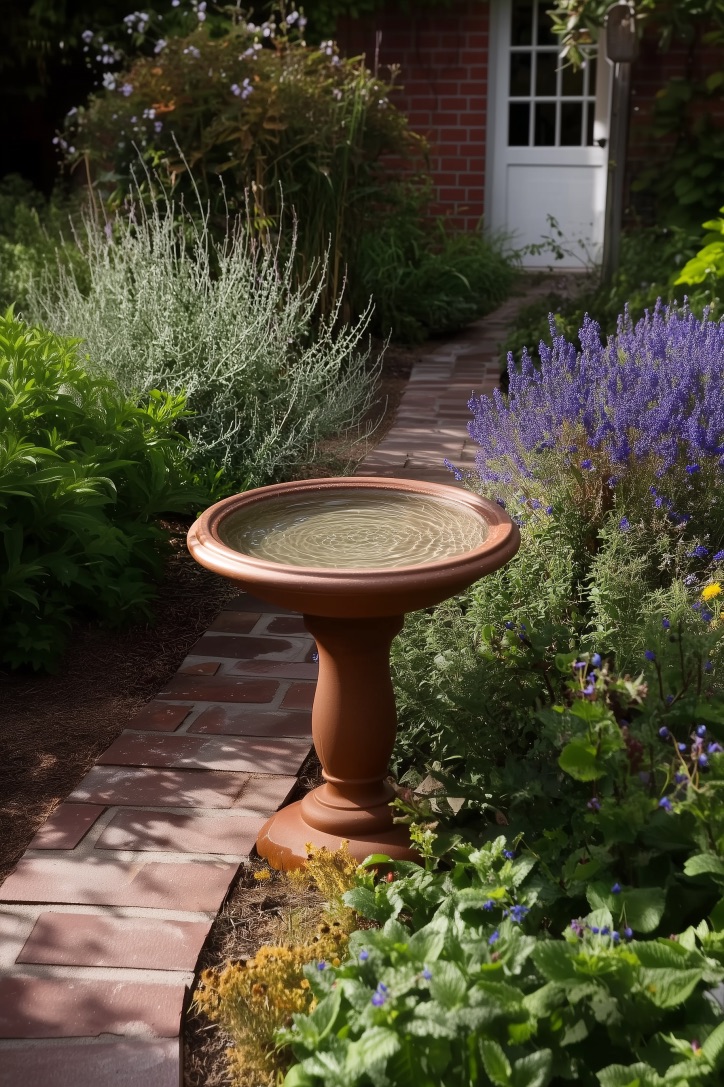
Remember those potted plants we discussed clustering around bird baths, and the architectural backdrops that frame them? Well, those elements float in space unless you physically connect them to the rest of your landscape.
A brick pathway solves this problem with old-world charm. The warm terracotta tones complement nearly every bird bath material, from concrete to ceramic. More importantly, the path invites movement – it beckons you to walk from your front door to the water feature, checking for visitors and refilling the basin.
That journey, repeated throughout seasons, becomes a small ritual that grounds your daily routine.
Lay your bricks in herringbone, basketweave, or running bond patterns. Leave gaps between them for creeping thyme or moss to colonize, softening the geometry. Edge the path with low-growing catmint or alyssum that spills onto the walkway.
The route you create doesn’t need to be direct – curves add mystery and make even small yards feel more expansive.
This approach works especially well in front yards, where a brick path leading to a bird bath becomes a neighborly gesture. It signals that your garden isn’t just for show; it’s a living space where nature is welcomed and enjoyed.
10. Emphasize Textured Stone Bird Baths for Mosaic Birdbath Inspiration
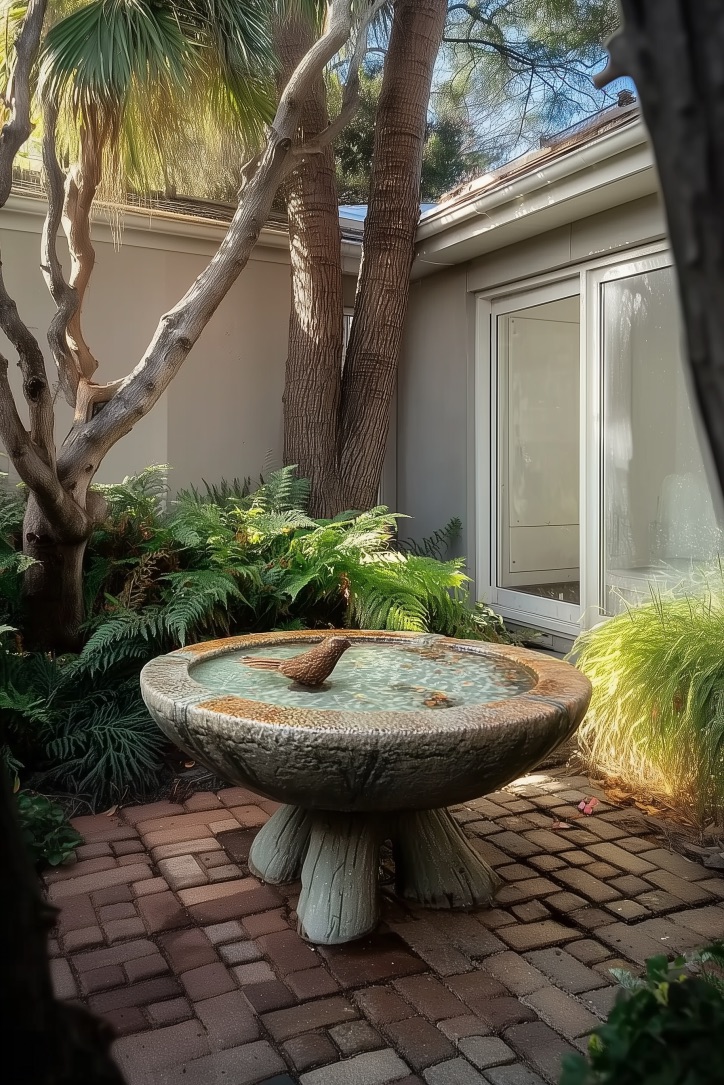
Picture a basin that catches sunlight in a thousand fragments, each tile and stone chip contributing its own flash of color. That’s the magic you unlock with textured, mosaic-adorned bird baths.
Start with a concrete or resin base – something structurally sound but aesthetically plain. Then begin pressing broken pottery shards, tumbled glass, pebbles, and tile pieces into a bed of thinset mortar. You’re not just decorating; you’re channeling the tradition of trencadís that Antoni Gaudí made famous in Barcelona.
Work in sections, mixing glossy and matte surfaces, warm and cool colors. Some crafters incorporate meaningful fragments – a piece of their grandmother’s china, a tile from a childhood home.
The finished piece becomes a bridge to our next consideration: how texture and pattern interact with their surroundings, leading us to think about placement and backdrop.
11. Select a Natural Stone Bird Bath for Organic Garden Appeal
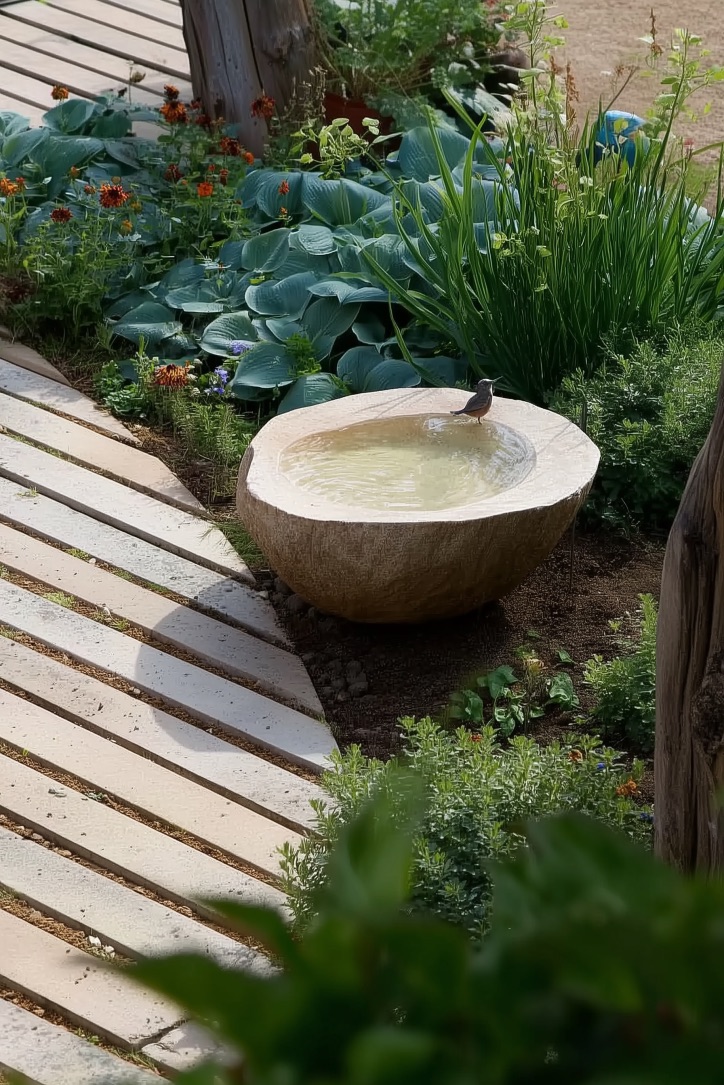
Let’s be honest – not every bird bath needs to scream for attention with mosaics or bright colors. Sometimes the most sophisticated choice is the one that looks like it’s been there since glaciers retreated.
A natural stone basin carved from granite, sandstone, or basalt brings instant gravitas to your garden. The irregular surface provides excellent footing for small birds, and the material stays refreshingly cool even during heat waves.
These heavyweight pieces rarely tip over, and they age gracefully, developing moss and lichen that only enhance their character.
12. Incorporate a Waterfall Effect for Serene Landscaping Projects
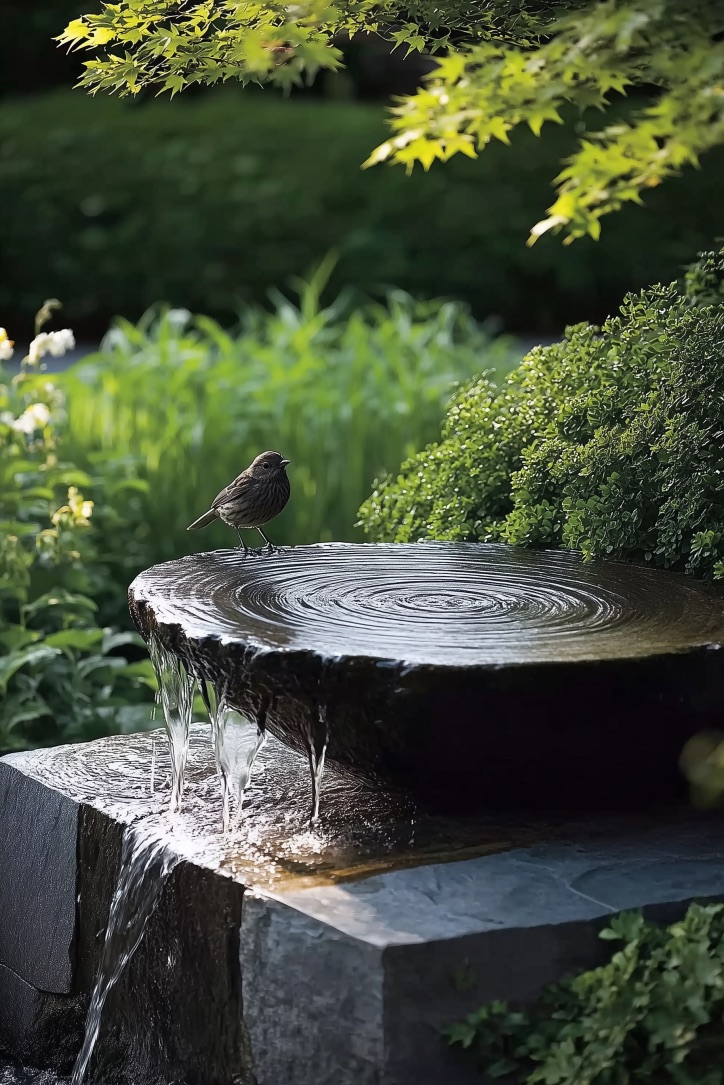
First, consider the sound. Second, think about movement. Third, imagine how these elements transform a static bird bath into a dynamic focal point. Fourth, picture yourself unwinding after work to the gentle trickle of water cascading over stones.
Adding a small recirculating pump to your bird bath creates this multi-sensory experience. The waterfall effect can be as simple as water spilling from an upper tier to a lower basin, or as elaborate as a stream flowing over stacked slate before collecting in the main pool.
One neighbor of mine tucked a solar-powered pump into her two-tier bird bath, and the constant ripple attracts three times as many birds as my still-water version. The movement discourages mosquitoes from laying eggs, keeps water oxygenated, and creates soothing background noise that masks traffic sounds.
You’ll need to check water levels more frequently since evaporation increases, but the payoff seems worth the extra attention. The sparkle of falling water catches the eye from across the yard, and there’s something deeply satisfying about engineering your own miniature ecosystem.
Ready to drill a hole, thread some tubing, and bring your bird bath to life? The supplies cost less than dinner out, and the return on investment – in both bird activity and personal tranquility – compounds daily.
13. Nestle a Stone Bird Bath Among Wildflowers for Landscaping Plants
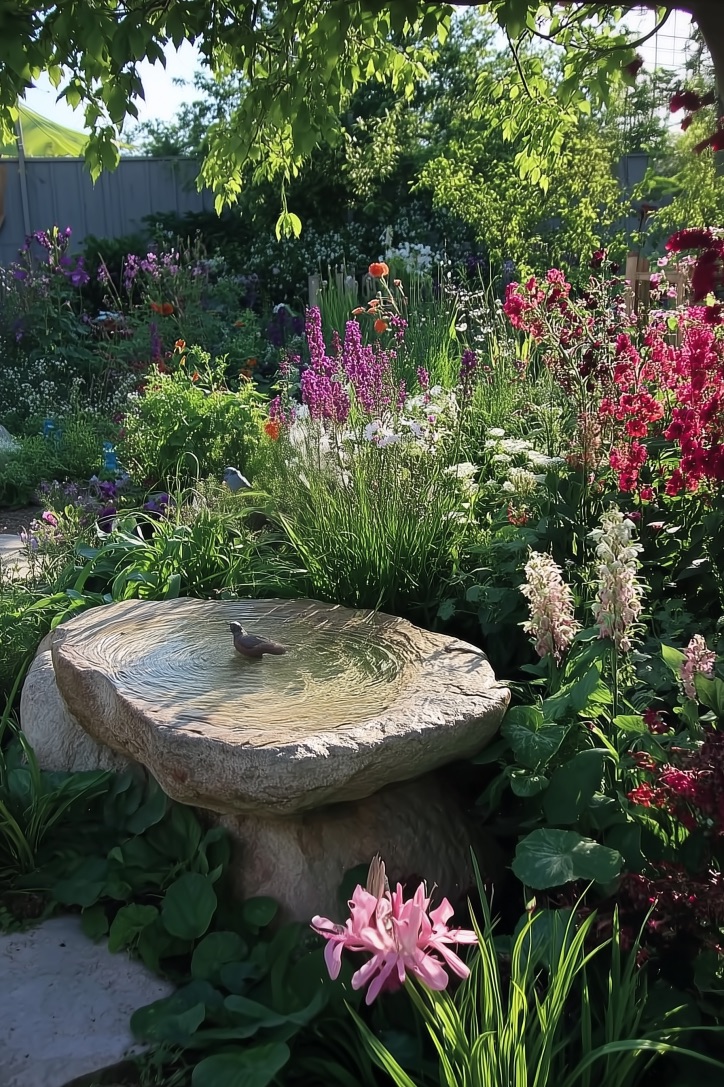
Most gardeners obsess over formal beds and crisp edges, completely missing the relaxed beauty that wildflower meadows offer. A stone bird bath rising from a sea of black-eyed Susans, purple coneflowers, and swaying grasses creates a scene that feels discovered rather than designed.
Let the wildflowers grow tall enough to partially obscure the basin’s pedestal while keeping the water surface visible. This approach works particularly well if you’re aiming for a cottage garden aesthetic or trying to support pollinators. Native wildflower species attract insects, which in turn draw insect-eating birds to your bath.
The layers of blooms at varying heights create the structured chaos that both wildlife and humans find irresistible. Goldfinches perch on coneflower seedheads after their bath, and swallowtail butterflies drift between the flowers and water’s edge.
The naturalistic garden movement is picking up speed as people recognize that perfect lawns demand too many resources for too little ecological payoff. Expect wildflower-framed bird baths to become increasingly common as this trend matures.
14. Outline Your Bird Bath with Smooth Black River Rocks for Diy Mosaic Birdbath
Picture your bird bath sitting in a sea of builder’s mulch or plain dirt – it lacks definition, doesn’t it? The fix is simpler than replanting an entire border.
Smooth black river rocks arranged in concentric circles around your bird bath’s base create instant visual weight. The dark stones make lighter-colored basins pop, while their rounded shapes feel organic rather than rigid.
Water that splashes over the basin’s edge during enthusiastic bird bathing sessions disappears between the rocks instead of creating mud puddles. You can arrange them tightly for a polished look or space them loosely with groundcover creeping through gaps.
This border treatment takes an afternoon to install and costs less than a tank of gas. Yet the impact transforms your bird bath from an afterthought into an intentional design element that looks professionally landscaped. The rocks also retain heat, creating a microclimate that extends the bathing season slightly into cooler months.
Conclusion
Your garden is already waiting – it just needs the splash of water and wing beats to feel complete. Choose one idea from this collection, gather your materials this weekend, and give the birds in your neighborhood a reason to visit.
The first robin that discovers your new feature will tell every friend, and before long, you’ll wonder how your outdoor space ever felt finished without the daily show only a bird bath can provide.