
Introduction
Have you ever wandered through a garden and felt instantly at home, drawn forward by a pathway that seemed to whisper “come explore”? The right garden path transforms scattered beds into a cohesive story, guiding visitors through your outdoor sanctuary while adding structure and charm.
Garden paths do more than connect point A to point B. They set the mood, frame your plantings, and invite leisurely strolls through spaces you’ve nurtured with care.
1. Arrange Natural Stepping Stones for an Inviting Through Lawn Pathway
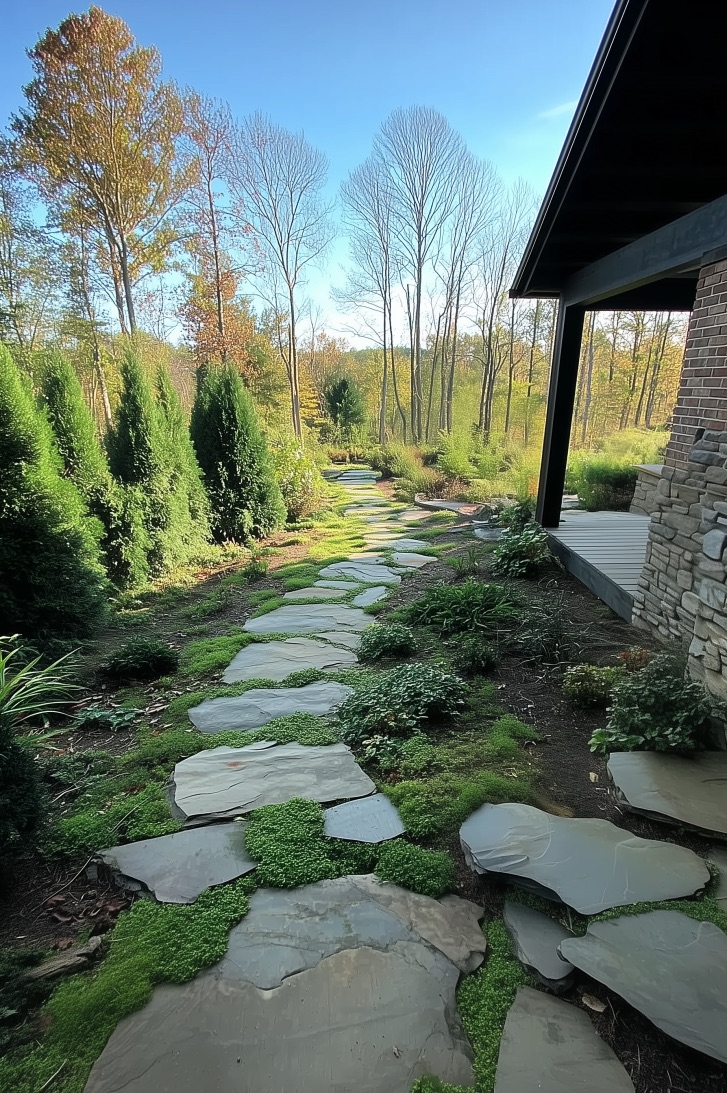
Picture yourself walking across your lawn on a dewy morning without soaking your feet. Place flat, irregular stones across grassy areas to create a charming route that feels both intentional and organic. The stones appear almost as if nature itself laid them down centuries ago.
Consider using Yorkshire stone or reclaimed slate – materials that develop character as they weather. Each stone should sit roughly one comfortable stride apart, though you might adjust spacing based on who uses the path most often. Children take smaller steps, after all.
The beauty lies in the imperfection: some stones slightly larger, others rounder or more angular. This irregular rhythm makes each journey across your lawn feel less like following a prescribed route and more like discovering a hidden trail through an enchanted meadow. Let the grass grow right up to the edges for that seamless, established look.
2. Install a Wooden Pergola for Modern Garden Structure
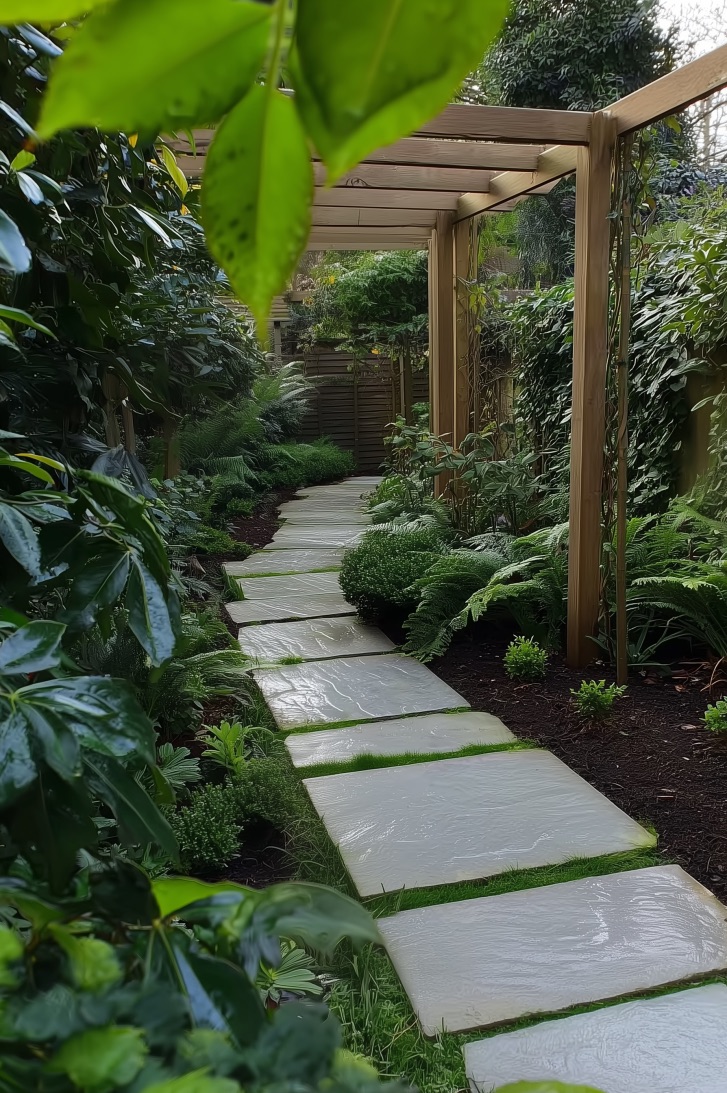
Three elements make a pergola transformative: vertical presence, dappled shade, and the promise of what’s beyond. This architectural feature creates an instant focal point while defining your path’s journey through space.
A well-placed pergola filters harsh midday sun into dancing patterns across your pathway, offering respite during summer months while maintaining an open, airy feel. Climbing roses or wisteria will eventually soften the timber beams, but even bare wood provides striking geometry against sky and foliage.
Consider painting yours in sage green or leaving it natural to weather to silvery gray. Why not transform your garden from a flat plane into a layered, room-like experience that draws you from one “outdoor chamber” to the next?
3. Line Pathways with Gravel for a Low Maintenance Cottage Look
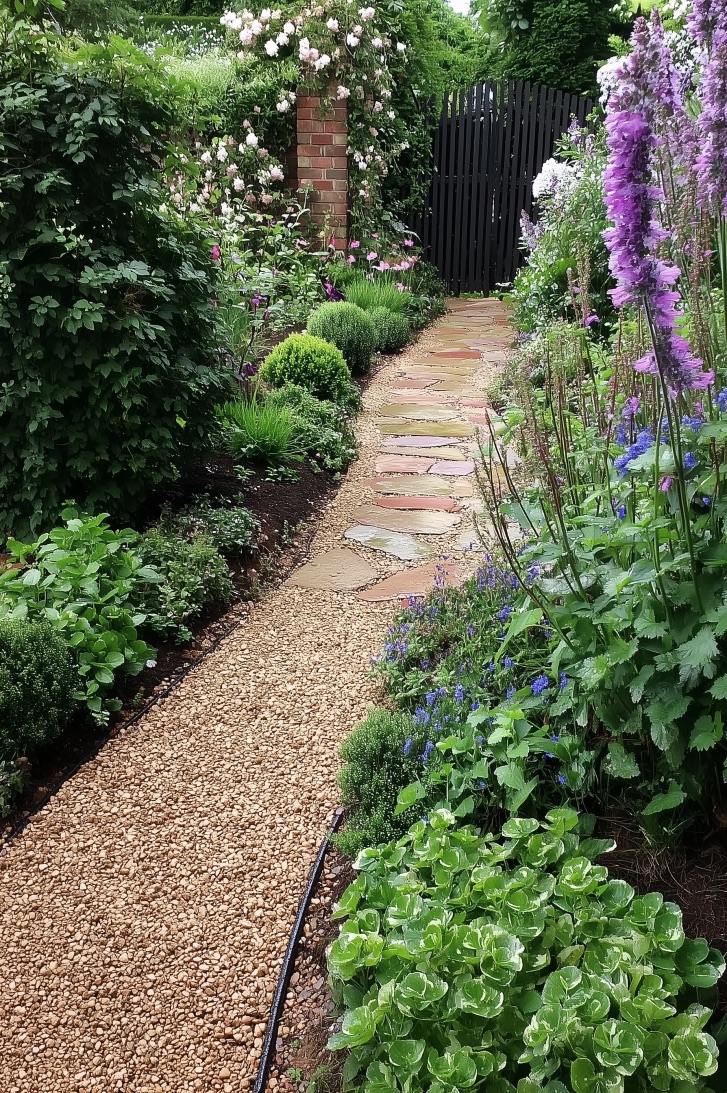
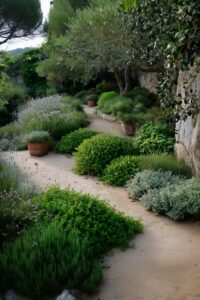
Let’s be honest: some of us want charming garden paths without dedicating every Sunday to upkeep. Gravel answers this call with a satisfying crunch underfoot and minimal fuss.
The effect is instantly cottage-garden romantic – that quintessentially British look of honey-toned pea gravel meandering between billowing lavender and sprawling roses. Gravel shifts and settles around plantings, allowing self-seeders to pop up spontaneously along edges, creating that coveted “lived-in” aesthetic without looking neglected.
This approach seems to be gaining momentum again, particularly in drought-conscious regions where water-hungry lawns are giving way to gravel gardens. Expect to see more pea gravel, Cotswold stone, and even slate chips defining paths in coming seasons as gardeners embrace materials that actually improve with age.
4. Frame Lush Green Borders for a Vibrant Front Garden Appeal
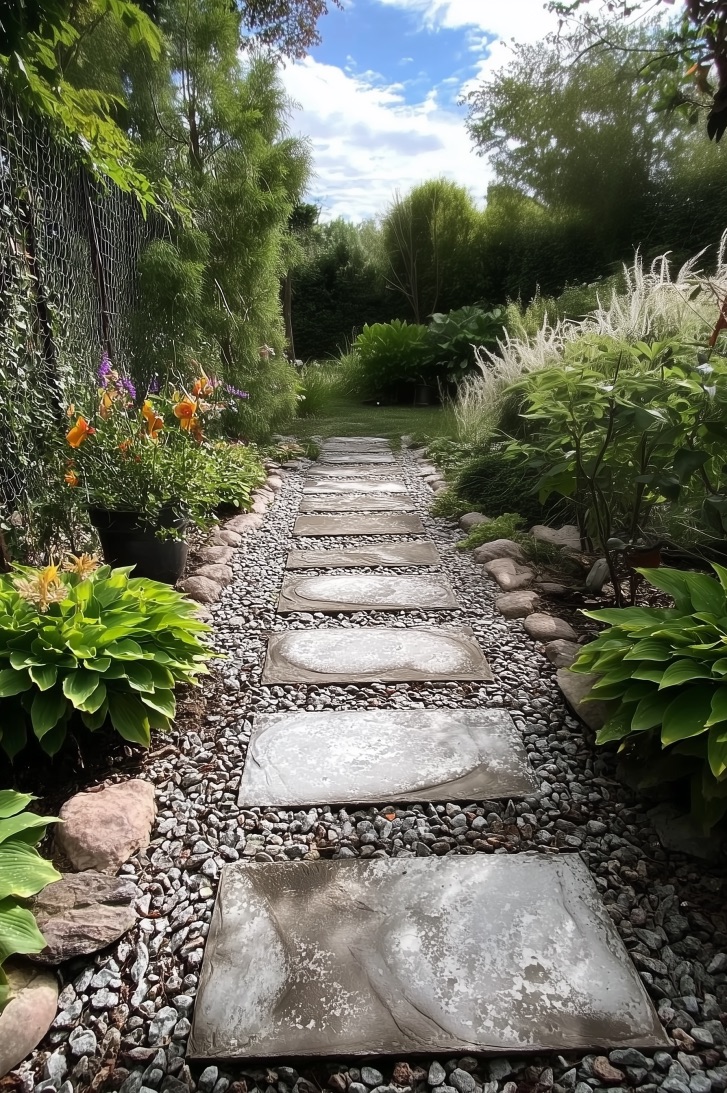
Does your front path feel exposed or uninviting? Flanking it with dense, green plantings instantly softens the approach to your door while making guests feel welcomed into something special.
Think beyond the typical miniature hedge. Layer ferns, hostas, and evergreen shrubs at varying heights to create depth and texture. The greenery acts as a visual corridor, naturally drawing the eye – and feet – toward your entrance while providing year-round structure even when flowering plants take their seasonal rest.
5. Mix Flowering Shrubs for a Colorful UK Garden Path
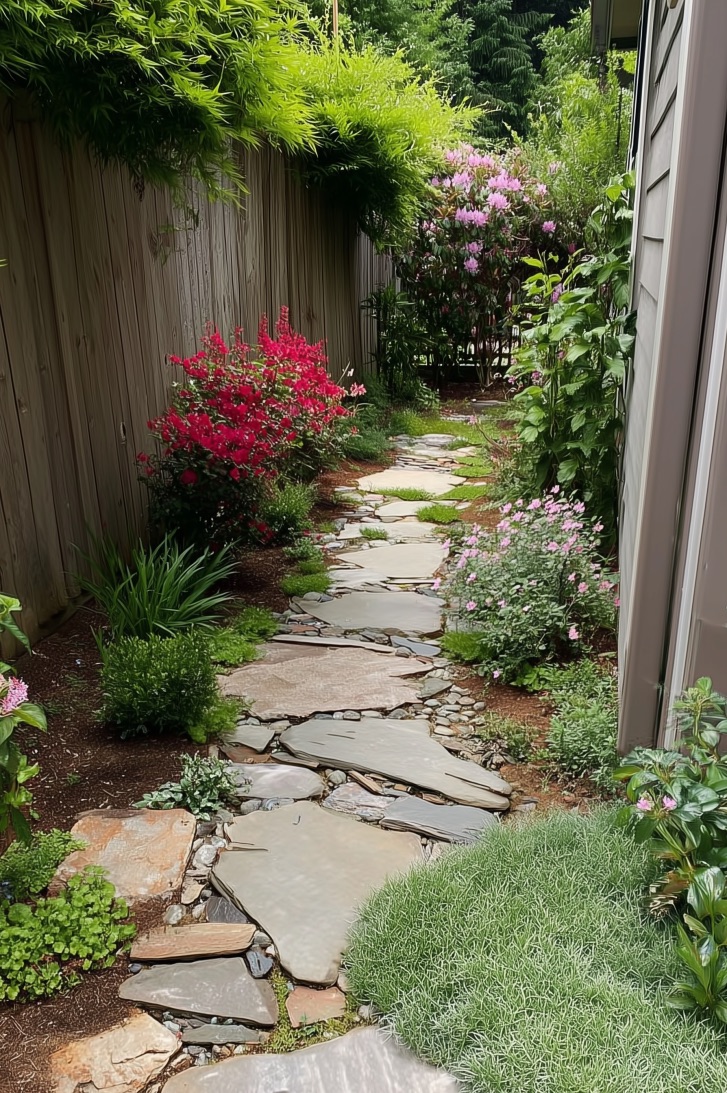
You might assume a flowering border requires meticulous planning, but here’s a secret: throwing together shrubs with overlapping bloom times often creates happier accidents than rigid color schemes. Spirea, potentilla, and weigela play surprisingly well together despite their different personalities.
British gardens have long embraced this “organized chaos” approach, where structure comes from path edges rather than military-precision plantings. The cottage garden movement of the 19th century rebelled against Victorian formality, and that spirit endures in modern mixed borders.
The consequence? Your path becomes a shifting exhibition throughout seasons – buttery kerria in spring, blushing weigela in early summer, and golden potentilla carrying on through autumn. Bees and butterflies treat your pathway as their personal buffet, adding movement and life to every stroll.
6. Highlight a Dramatic Archway for Instant Garden Wow Factor
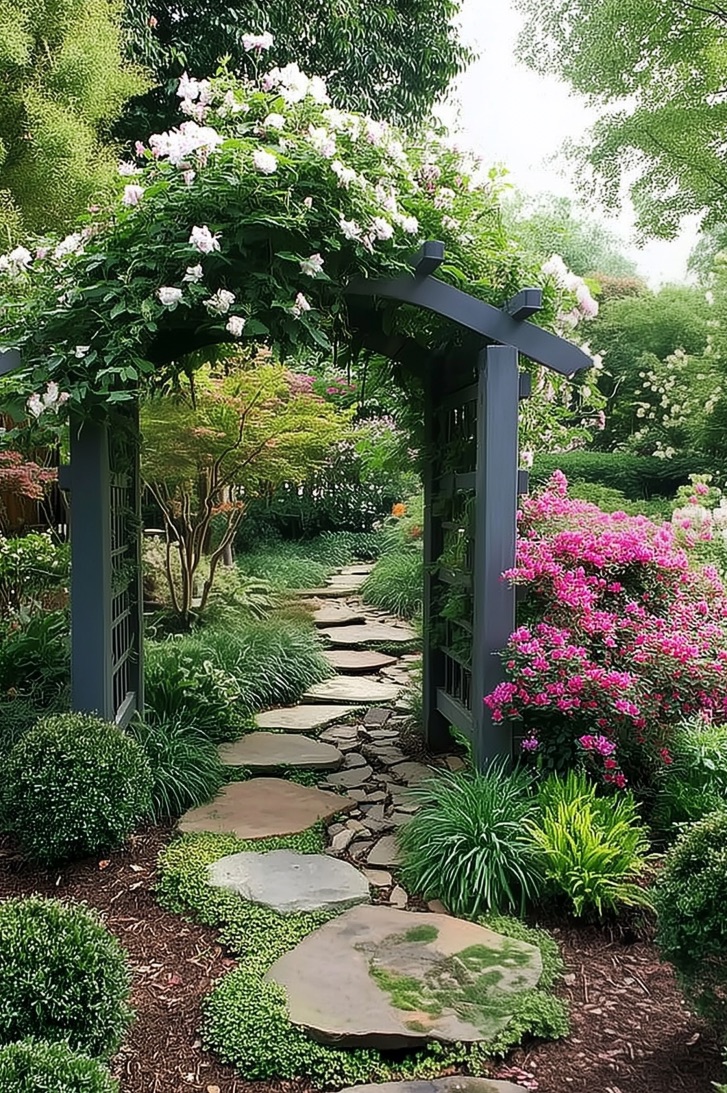
You know that moment when you turn a corner and something takes your breath away? An archway creates precisely that sensation, framing a view or marking a transition between garden “rooms.”
Position your arch where it frames something worth seeing – perhaps a sundial, a specimen tree, or simply the path curving mysteriously out of sight. The vertical structure interrupts the horizontal flow of borders and lawn, creating anticipation. What lies beyond? Even in a small garden, an arch suggests greater expanse and hidden treasures.
One warning: choose your arch material wisely. Flimsy metal structures collapse under vigorous climbers like wisteria or climbing hydrangea. Invest in substantial timber or powder-coated steel that won’t need replacing in three years when your roses finally hit their stride.
7. Accent Path Edges with Lush Groundcover for Inexpensive Texture
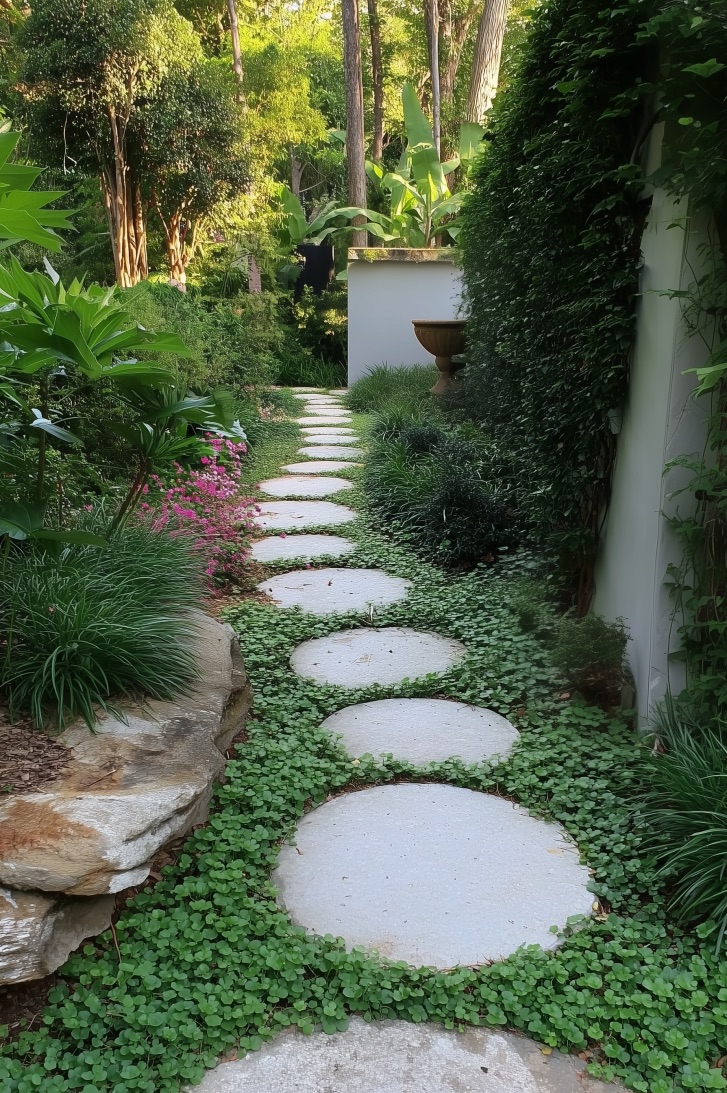
Groundcover plants soften hard edges better than any design trick. Creeping thyme, ajuga, or Alchemilla mollis (lady’s mantle) sprawl onto path surfaces, blurring boundaries and creating that established, slightly wild look that makes gardens feel mature.
These low-growers serve double duty: they suppress weeds trying to colonize path edges while adding seasonal interest through foliage and flowers. Creeping thyme releases fragrance when trodden on, turning every walk into aromatherapy. Lady’s mantle catches morning dew in its pleated leaves, creating tiny pools of light.
The texture contrast between structured paving and soft, billowing plants creates visual interest without costing much – most groundcovers spread generously from a few starter plants. Isn’t it satisfying when good design coincides with budget-friendly choices?
8. Contrast Sleek Windows with Natural Stone Walls for Modern Interest
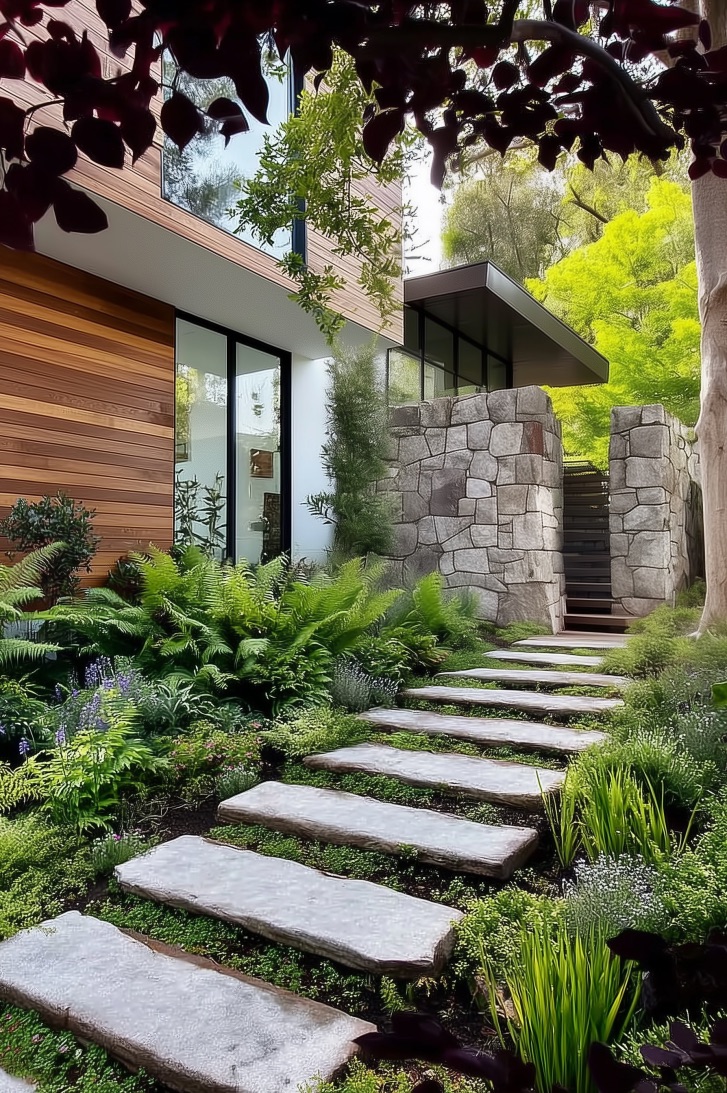
Contemporary architecture increasingly embraces the tension between refined and raw materials. This design philosophy has migrated from buildings to gardens, where clean-lined structures meet deliberately rustic stonework.
A modern glass extension overlooking a path edged with dry-stone walling creates compelling contrast – the precision of manufactured materials against the organic irregularity of fieldstone. The stones appear timeless, as if they’ve always been there, while the glazing asserts confident modernity.
This juxtaposition reflects our current moment: honoring traditional craft and natural materials while refusing to cosplay the past. The transition from old to new feels intentional rather than jarring when materials are chosen with this balance in mind.
9. Weave Curved Path Layouts for Soft Inviting Garden Flow
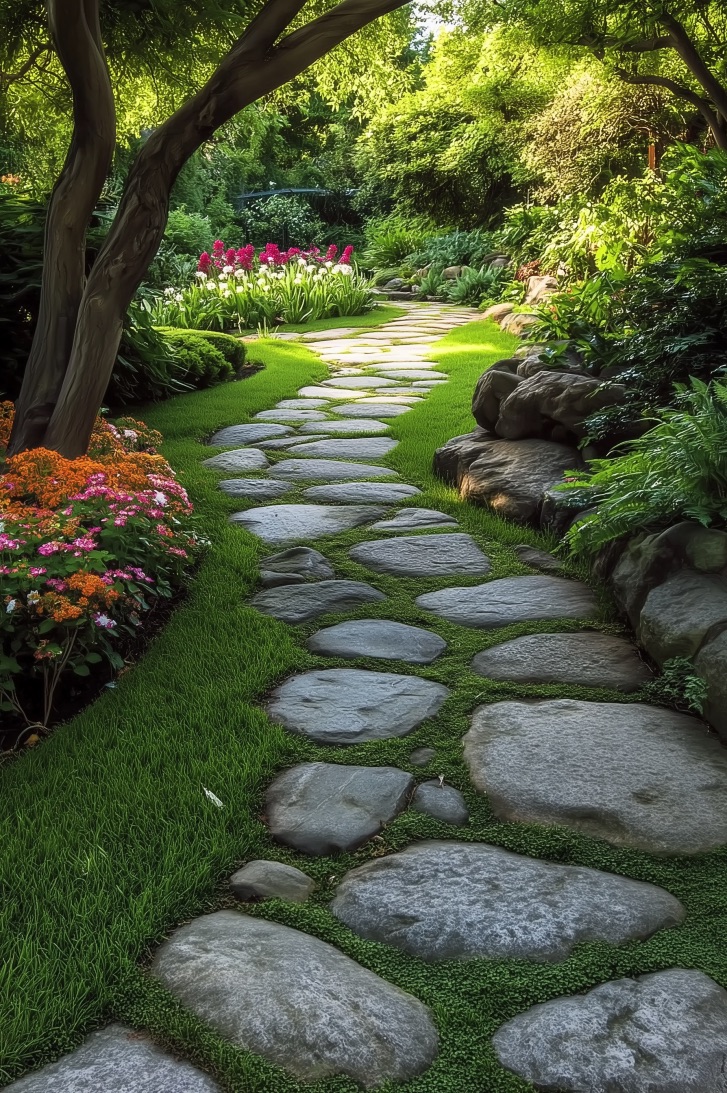
Why walk in straight lines when curves feel so much more inviting? A gently meandering path suggests there’s no rush, encouraging you to notice details you might otherwise stride past.
Curves also make small gardens feel larger by concealing their boundaries. You can’t see where the path ends, so imagination fills in possibilities. The eye follows that bend around the shrub border, wondering what might be discovered. Even if it’s just the compost bin, the journey there feels more pleasant.
Curved paths transform a garden from a space you cross to a place you experience.
10. Showcase Bold Tropical Plants for a Lush Backyard Retreat
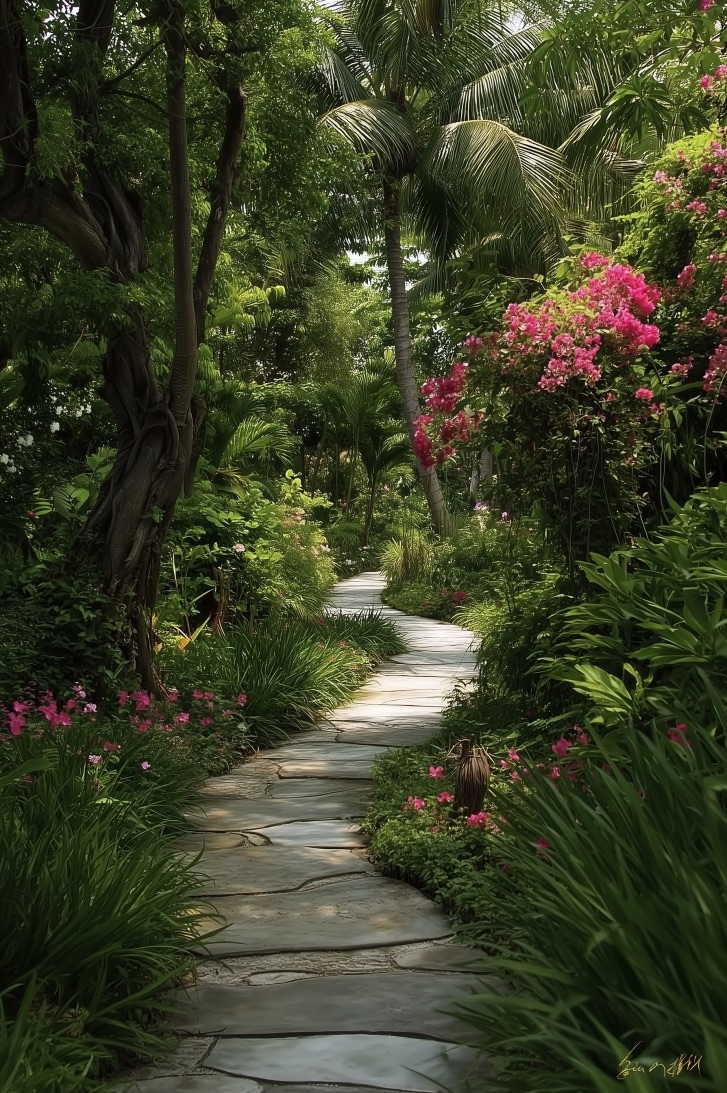
Something remarkable happens when you plant a Trachycarpus palm or banana plant beside your garden path: suddenly you’re not in suburban Britain anymore. Bold, architectural foliage creates drama that hardy perennials simply can’t match.
These statement plants need positioning where their sculptural forms can be appreciated – emerging from lower plantings beside a path, their exotic silhouettes become living art. A Chusan palm’s fan-shaped leaves cast extraordinary shadows on paving, changing throughout the day as light shifts.
The “tropical look” garden trend continues to gain followers as climate change makes previously tender plants viable in UK gardens. Stop dreaming about faraway places and create your own jungle path where tree ferns unfurl prehistoric fronds above your head.
11. Incorporate Sculptural Benches for a Relaxing DIY Seating Area
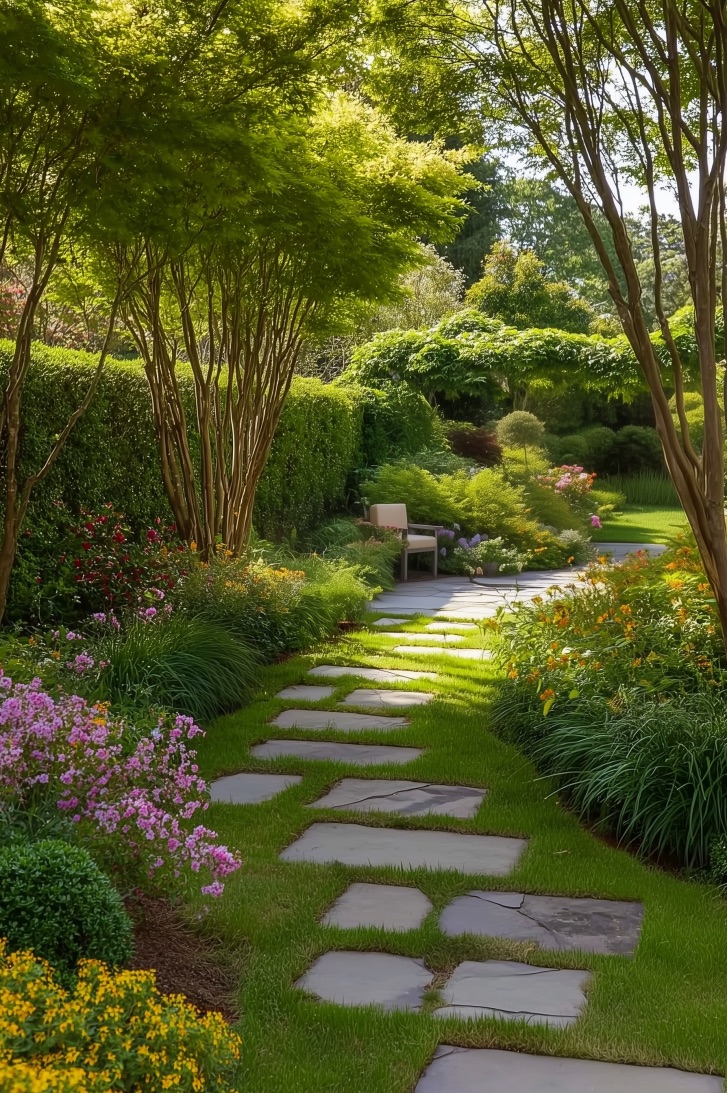
Some paths are meant for striding purposefully toward the greenhouse; others deserve seating for contemplation. The two approaches couldn’t be more different.
A bench transforms any path section into a destination rather than merely a transit route. Picture a simple wooden seat positioned where morning sun warms a south-facing wall, or where evening light gilds the border plantings. You might place it at a path junction where two routes diverge, creating a natural pause point.
Built-in stone or rendered concrete benches offer permanence and require no maintenance, though they’ll need cushions for comfortable lounging. Alternatively, a moveable hardwood bench allows you to follow seasonal sun or shade.
Some friends of mine built a curved bench around an old apple tree where their path widens – now it’s where everyone gravitates during garden gatherings.
Sculptural metalwork or weathered timber benches become focal points even when empty. Should seating be purely functional, or can it be art that happens to hold your weight?
12. Define Path Sections with Large Rocks for a Distinctive Stepping Stones Design
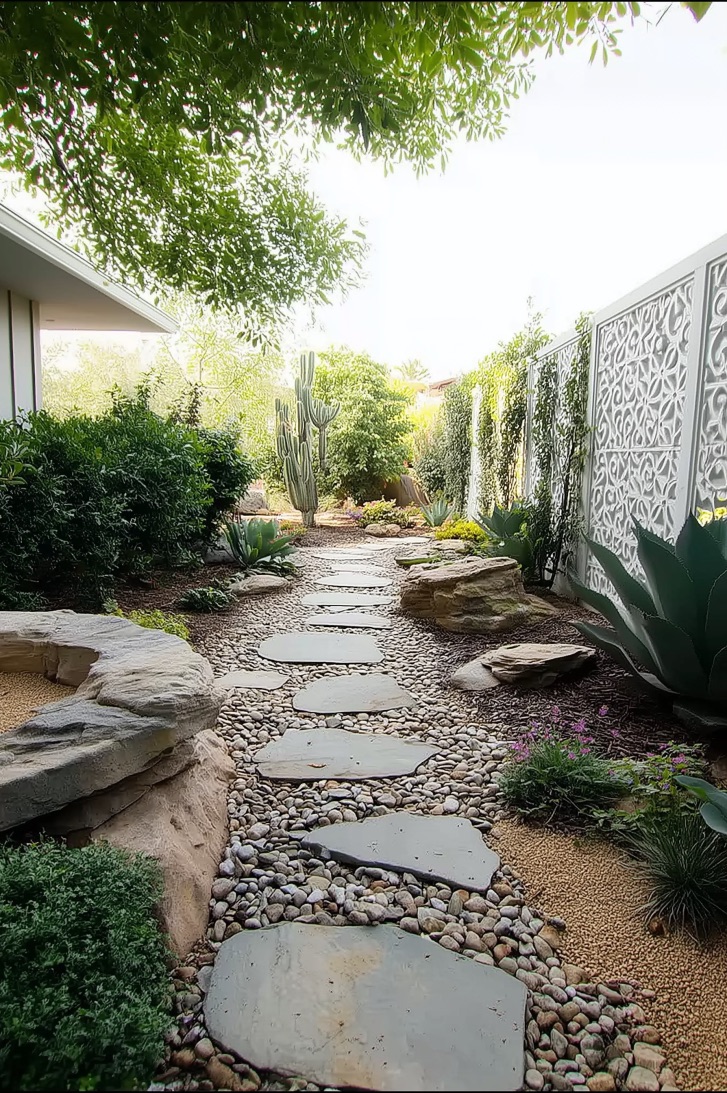
Large rocks are the punctuation marks of garden grammar – they create pauses, emphasis, and structure. Positioned beside a gravel path, substantial boulders anchor plantings while suggesting the path emerged from existing landscape rather than being imposed upon it.
Think of rocks as visual full stops between path sections. A moss-covered boulder marks where the path turns toward the pond; another signals the transition from formal to wild garden. These substantial stones develop character through weathering, and their permanence contrasts beautifully with seasonal plantings that come and go.
Japanese gardens have long understood this principle: careful rock placement creates significance. As Western gardens increasingly borrow these ideas, expect to see more pathways punctuated by deliberate stone placement – not rockeries of tumbled pebbles, but considered placement of individual statement rocks that tell a story.
13. Space Wooden Planks for a Contemporary Stepping Stones and Gravel Look
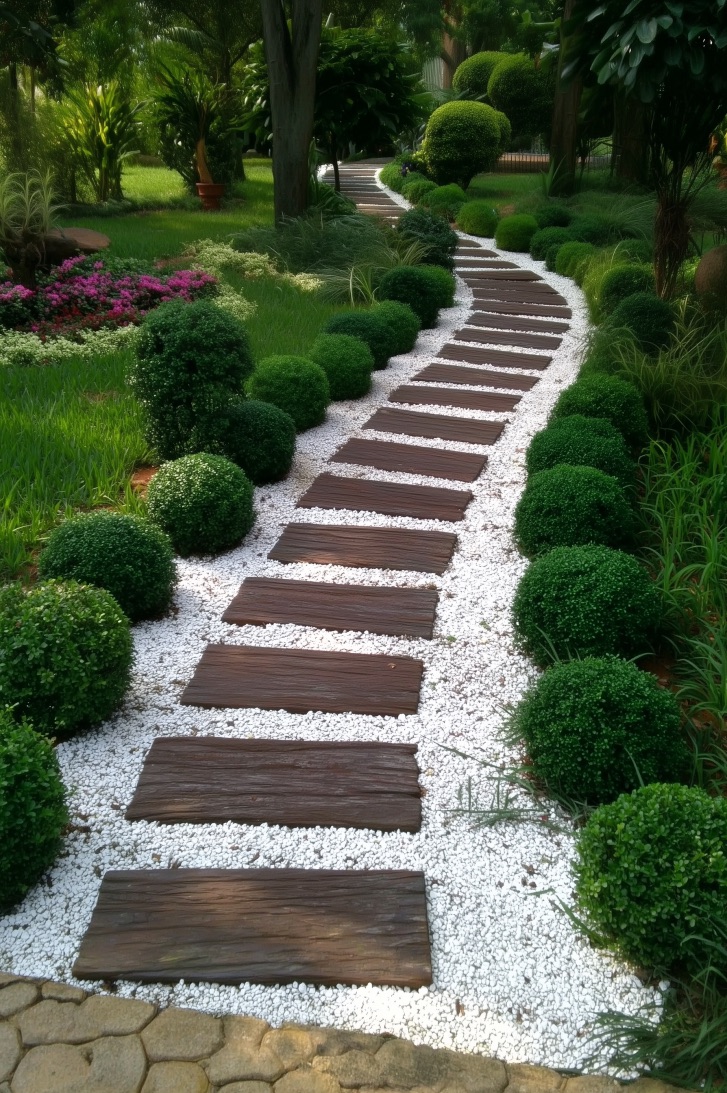
Building on that stepping stones idea from earlier, timber planks offer a more architectural interpretation. Railway sleepers or chunky hardwood sections laid perpendicular to your path’s direction create strong horizontal lines, especially striking when spaced across pale gravel.
This look emerged from Japanese and minimalist Scandinavian design traditions, where natural materials are deployed with restraint and precision. The gaps between planks allow gravel to show through, creating rhythm and preventing the heavy slabs from dominating.
Hardwoods like oak or tropical timber alternatives withstand weather better than softwoods, though they’ll still weather to silver-gray. From here, it’s a small step to explore other linear materials – perhaps Cor-ten steel strips or porcelain pavers – that create similar graphic impact along your garden routes.
14. Paint Garden Gates Black for a Sleek Modern Entrance
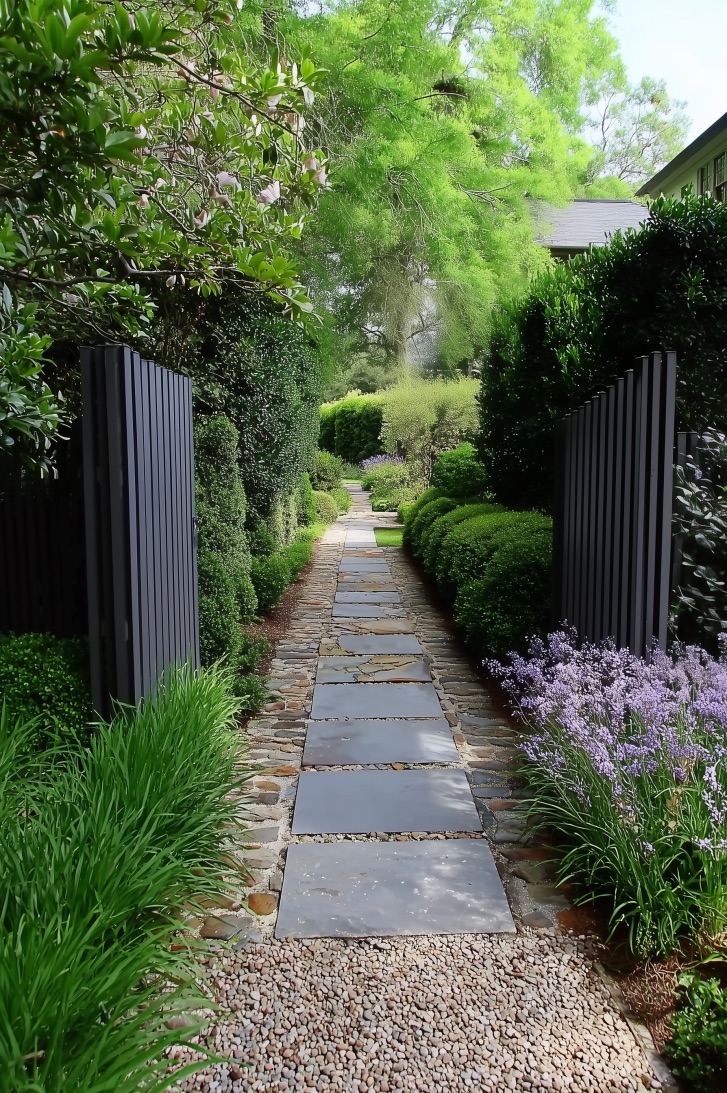
What transforms an ordinary garden entrance into a statement? Sometimes it’s as simple as a paint tin and a weekend afternoon.
Black-painted gates and fencing create instant sophistication, particularly when contrasted against pale rendered walls or weathered brick. The dark frame draws attention to what lies beyond – lush plantings appear more vibrant when viewed through or beside black structures.
This effect has made black garden elements almost ubiquitous in design magazines.
Black absorbs rather than reflects light, so painted timber appears to recede, making the gate itself less visually prominent while paradoxically creating stronger presence. Your path gains a clearly defined beginning that announces “the garden proper starts here.”
15. Trellis Climbing Vines for a Romantic Cottage Garden Touch
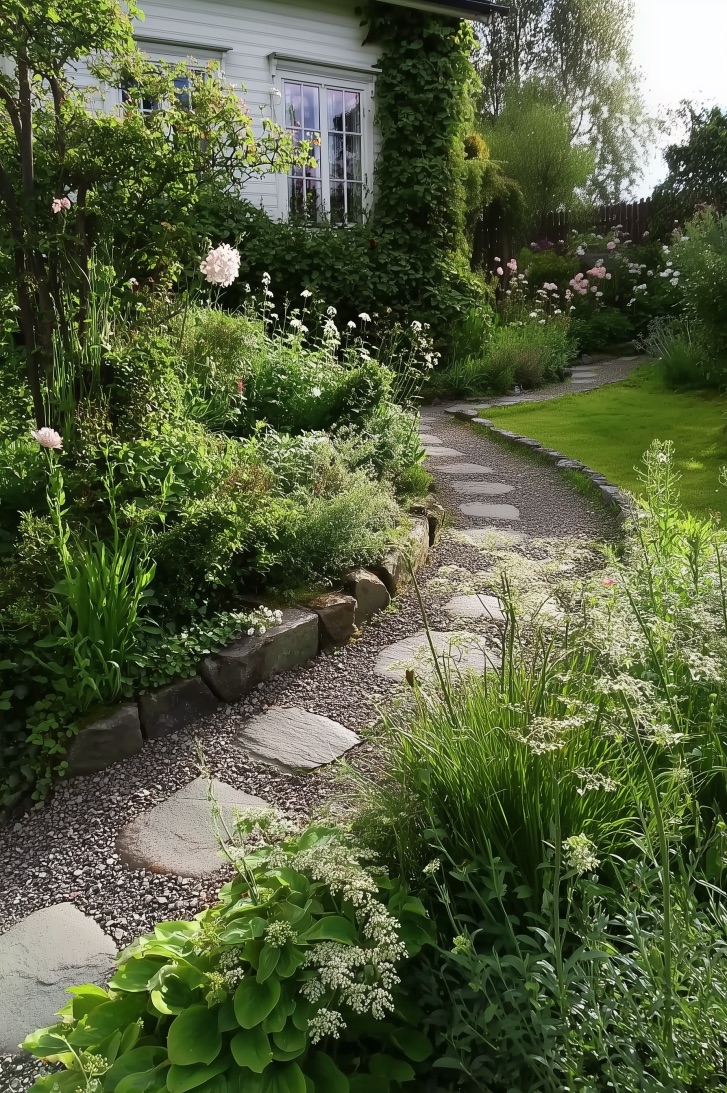
Here’s an interesting tidbit: the word “trellis” comes from the Latin “trichila,” meaning bower or arbor – even its etymology speaks of romantic garden spaces. Those old gardeners understood something we’re rediscovering: vertical planting turns paths into immersive experiences.
Climbing roses, clematis, or honeysuckle trained on simple wooden trellis beside your path creates that layered, abundant aesthetic that defines cottage gardens.
The British cottage garden style emerged from necessity – working-class gardeners maximizing productivity in limited space – but it became an aspirational aesthetic because it feels so abundantly alive.
As a consequence, your path develops a ceiling of flowers, drawing the eye upward and creating dappled shade. Fragrance matters too: jasmine or sweet peas trained overhead turn every passage into a sensory experience. The trellis itself may cost little, but what grows upon it becomes invaluable.
16. Cluster Sculpted Boxwoods for Elegant Modern Path Framing
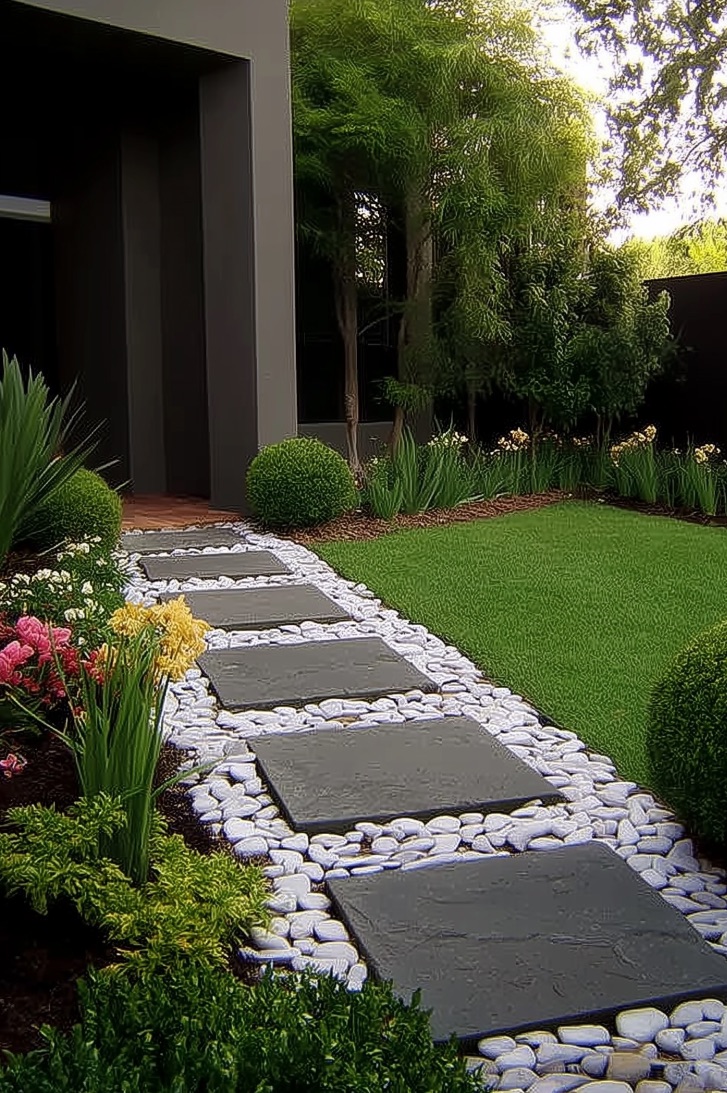
Boxwood balls and cubes often get dismissed as stuffy or overly formal, yet these sculptural evergreens anchor modern paths beautifully when deployed with restraint. Glossy, compact foliage provides year-round structure without fuss.
Rather than lining paths with identical specimens at rigid intervals, try clustering three or five clipped boxwoods at strategic points – path entrances, corners, or where you want to create emphasis.
The repetition of rounded forms creates rhythm without monotony, while their dark green provides perfect backdrop for seasonal planting that comes and goes around them.
Conclusion
Your garden path tells visitors who you are before you’ve said a word. It might whisper of cottage charm through gravel and rambling roses, or make a bold statement with architectural plants and dramatic archways.
The materials underfoot, the plants that brush your ankles, the structures that frame your journey – each choice shapes how you experience your outdoor space. Choose elements that genuinely speak to you, and don’t worry about following trends too slavishly.
Start with one idea that captures your imagination, perhaps those natural stepping stones or a simple painted gate, and let your path evolve from there. Your garden is waiting for the route that makes it feel complete.