
Have you ever wondered why fresh basil from your own garden tastes so much brighter than store-bought? Growing herbs at home transforms your cooking and connects you to something primal and satisfying.
The best part: you don’t need acres of land or advanced horticultural skills. A sunny spot and a bit of creativity will do.
1. Install a Tiered Ladder Planter for Outdoor Backyards
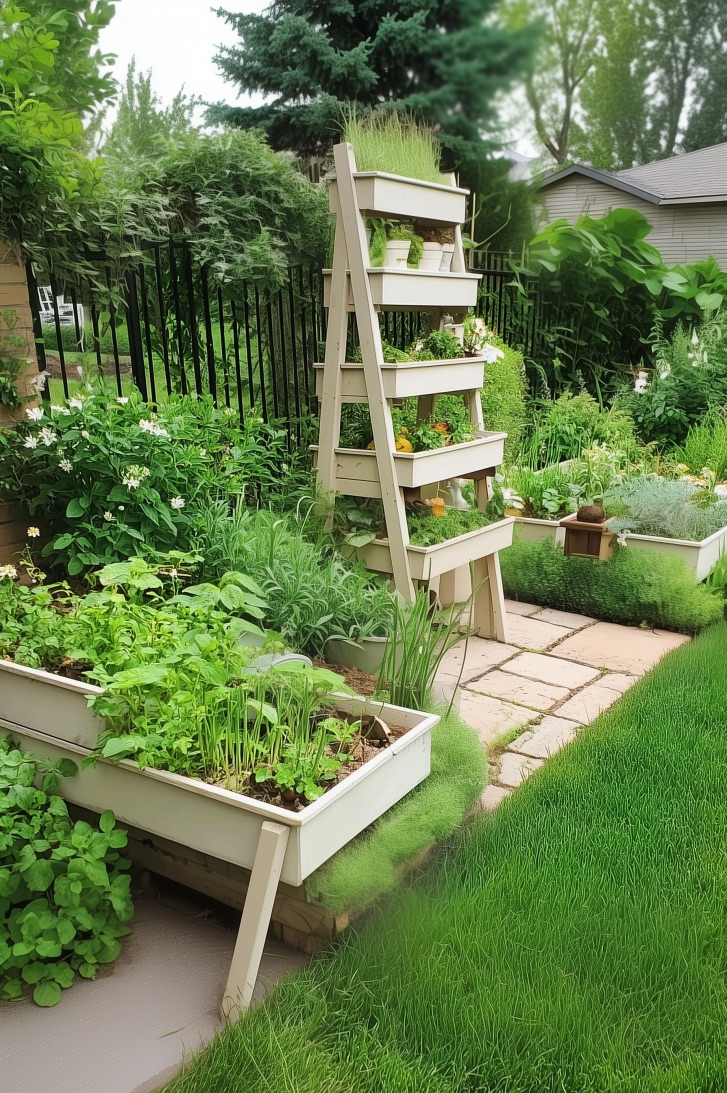
Think of a tiered ladder planter as a stairway to herb heaven. Each step holds a different variety, creating layers of green that catch the eye and make harvesting a breeze.
This arrangement works especially well if you’re dealing with limited ground space but have vertical room to spare. The ladder structure allows sunlight to reach plants on every level, preventing the shadowing that often plagues single-tier setups. You can mix sun-loving rosemary on top with shade-tolerant parsley below.
As you consider your next herb display, the ladder planter offers a natural segue into thinking vertically rather than horizontally – a theme we’ll explore further.
2. Arrange Herbs in Mismatched Pots for Balcony Charm
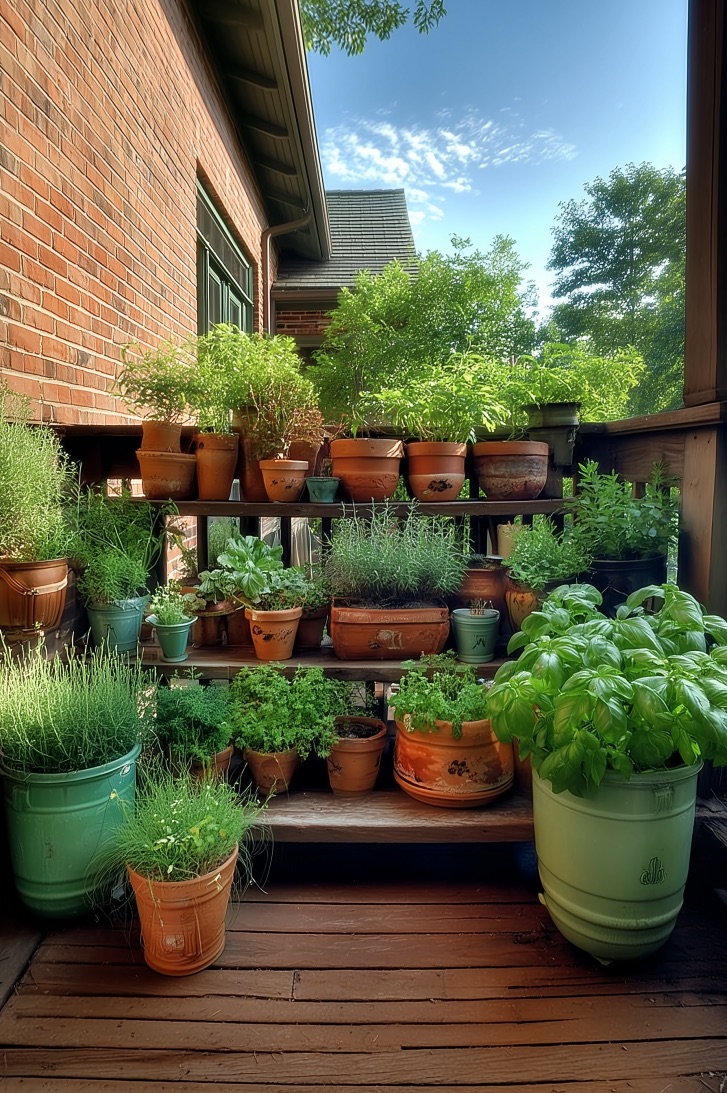
Compared to uniform planters lined up like soldiers, mismatched containers bring personality and warmth to your balcony. Each pot tells its own story – the chipped terracotta from a flea market, the painted tin can from last year’s project.
This eclectic approach works beautifully when you cluster pots of varying heights and textures together. The irregular arrangement feels collected rather than purchased, giving your small outdoor space a lived-in quality that guests always comment on.
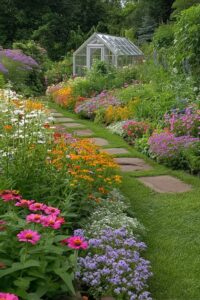
3. Line a Garden Pathway with Outdoor Potted Herbs

You’re walking the wrong way if your garden paths serve only as transit routes. Transform them into aromatic corridors where every step releases scent – brushing against mint, stepping near lavender, passing clouds of basil.
Position your potted herbs along both edges of the path, close enough that your clothes will occasionally graze their leaves. Choose varieties that respond well to this incidental contact: thyme releases its oils when touched, oregano becomes more fragrant, lemon balm practically begs to be brushed against.
The earthenware pots can be tucked between pavers or arranged in deliberate groupings that create rhythm as you walk.
One caution here: avoid placing delicate herbs like cilantro where they’ll get constantly trampled. Save those for gentler spots and reserve your pathway edges for the hardy Mediterranean types that thrive on a little roughness.
4. Build Mobile Planters with Wheels for Patio Flexibility
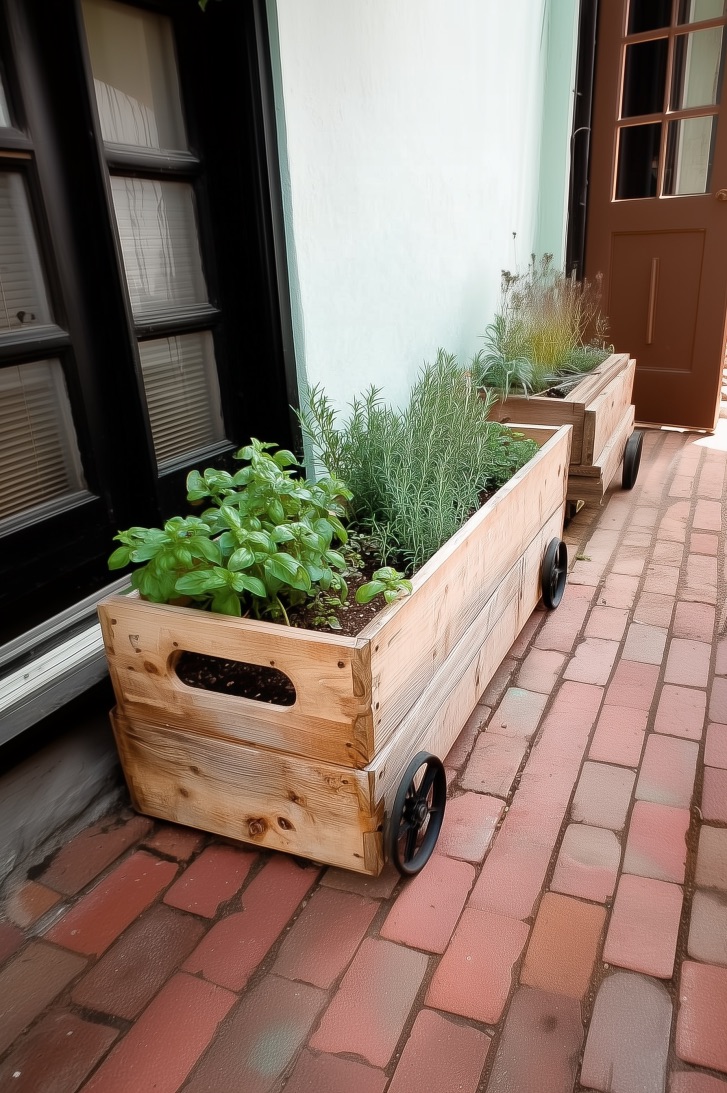
Picture this: morning sun on the east side, afternoon shade under the pergola, and your herbs follow the perfect conditions throughout the day. Attach heavy-duty casters to wooden planter boxes and suddenly your garden becomes choreographed rather than static.
I once helped a friend build these for her patio, and she moves them almost daily depending on weather and her cooking plans. When she’s grilling, the basil and cilantro roll close to the outdoor kitchen. During heavy summer sun, the more sensitive herbs retreat to partial shade.
The mobility also helps during unexpected weather – you can wheel everything under cover when hail threatens.
Consider using marine-grade plywood for the base if you’re in a wet climate. The wheels should lock, naturally, or you’ll wake up to find your oregano has rolled into the neighbor’s yard.
Here’s a tip: group three or four mobile planters together and connect them loosely with decorative rope or chain. They move as a unit but maintain individual character.
5. Showcase Sculptural Topiary for Outdoor Raised Beds Structure
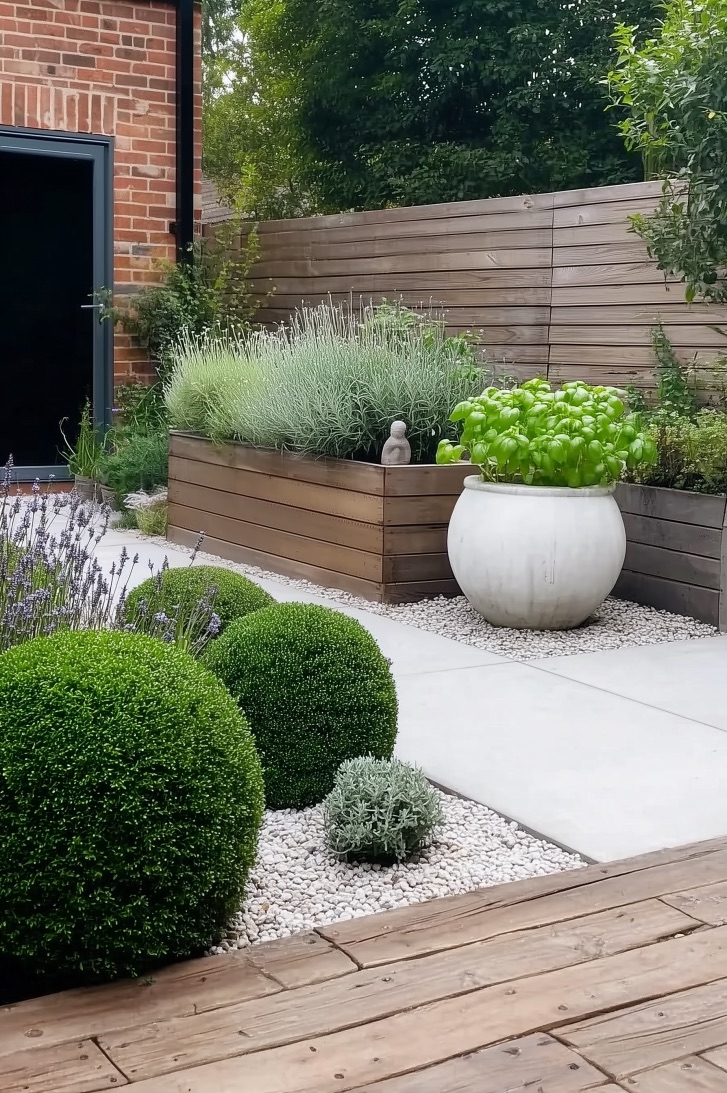
Building on the vertical ideas we’ve explored, sculptural herb topiaries add architectural weight to raised beds that might otherwise feel flat. Bay laurel and rosemary both train beautifully into spirals, globes, or standard forms.
These living sculptures anchor your herb garden visually, giving it a focal point that persists even in winter when annuals have faded. The contrast between a tightly trimmed rosemary ball and the loose sprawl of surrounding oregano creates tension that keeps the eye moving.
6. Create a Modern Geometric Look with Minimalist Raised Beds
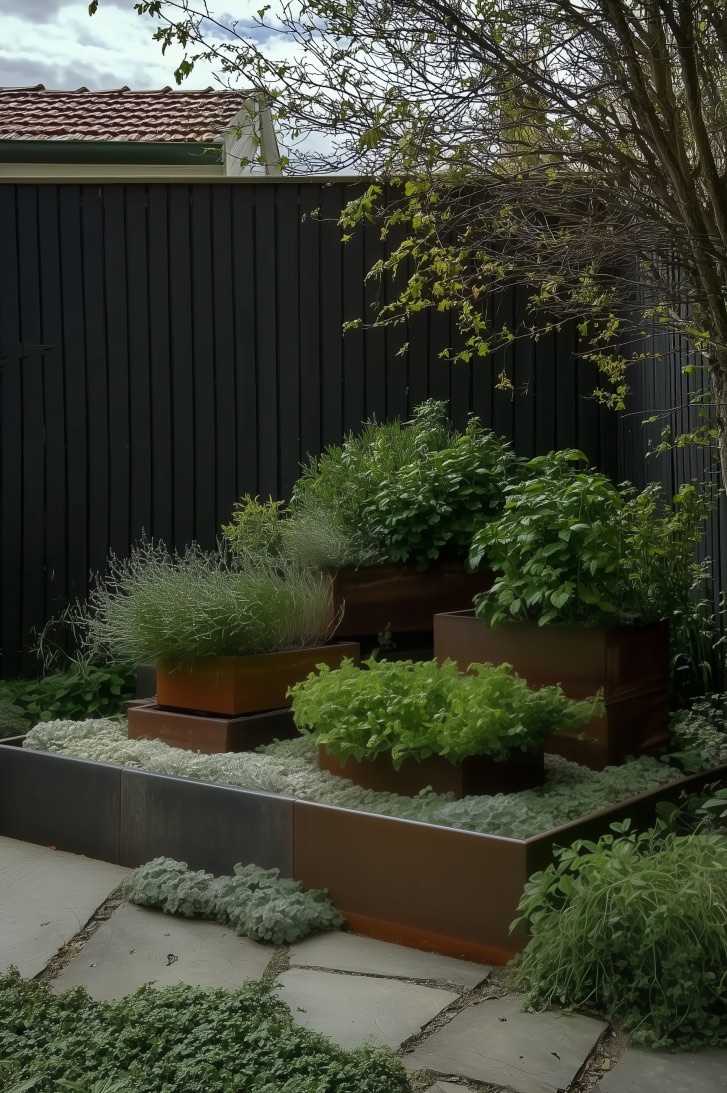
While cottage gardens celebrate abundance and overflow, a geometric herb garden embraces restraint and clean lines. Sharp-edged raised beds in squares or rectangles, perhaps bordered with steel or dark-stained wood, establish order where nature tends toward chaos.
The effect feels intentional and contemporary. Within each defined space, herbs grow lush but contained – their natural forms playing against the human-imposed structure. The repetition of shapes creates rhythm, and you might plant each bed with a single variety for maximum impact.
A grid of identical boxes, each holding a different herb, becomes both functional and meditative.
Does this approach sacrifice some of the wild joy of gardening? Perhaps, but it gains something else – a sense of clarity that some spaces desperately need.
7. Mount Wall Planters for Space Saving Outdoor DIY Herb Gardens
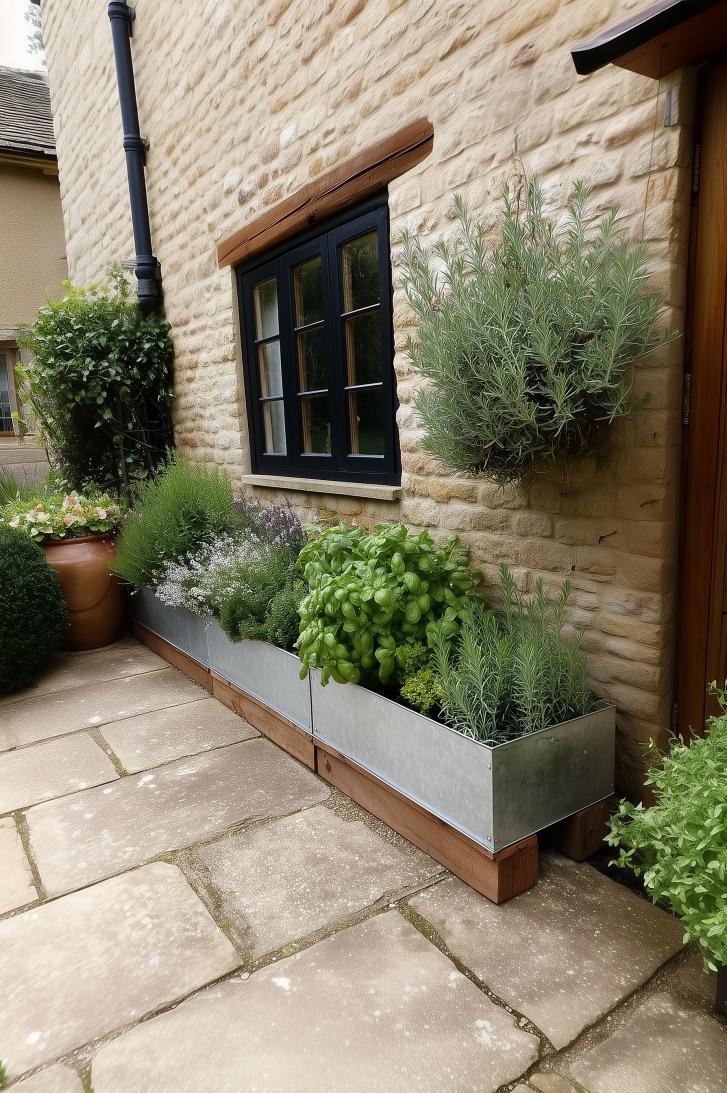
You might not realize how much unused vertical space surrounds you until you look up. That blank fence, the side of your shed, even your home’s exterior walls – all waiting to support herbs that would otherwise compete for precious ground space.
Wall-mounted planters come in countless forms, from simple terra cotta pockets to elaborate modular systems with built-in irrigation. The key lies in ensuring adequate drainage; water needs somewhere to go besides down your siding. Mount planters with a slight forward tilt and use backing material that won’t stain or rot.
The consequence of going vertical extends beyond space-saving. Herbs at eye level or higher become more visible, more tended, better harvested. You’ll use them more frequently simply because they’re in your line of sight rather than down at ankle level where you forget they exist.
8. Grow a Vertical Herb Wall for Narrow Outdoor Spaces
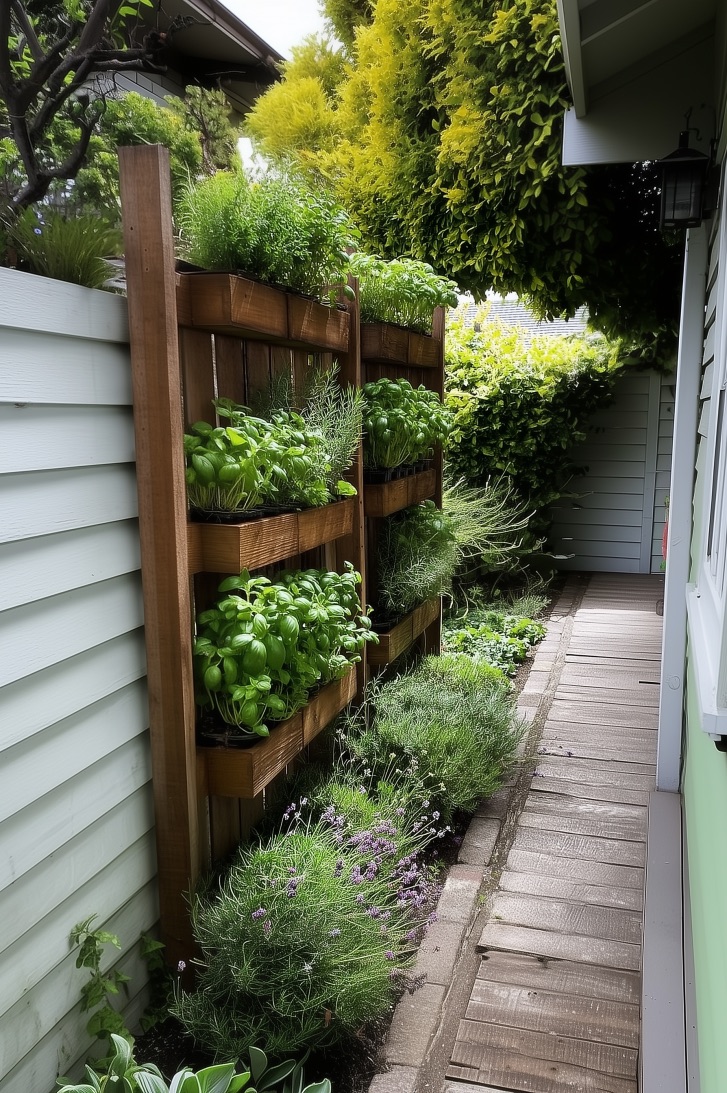
Here’s something that surprises people: you can cultivate a thriving herb garden in a space narrower than a bookshelf. A vertical herb wall compresses an entire garden into a few square feet of floor space while reaching upward to claim the air.
These systems typically involve stacked planters, pocket walls, or frame-mounted containers that create a living tapestry of green. The installation requires some initial effort – you’ll need sturdy mounting into wall studs or a freestanding frame that won’t topple in wind. But once established, a vertical wall produces abundantly.
Different herbs occupy different tiers, and you can arrange them by water needs or growth habits.
Start your vertical garden soon if you’re in a narrow courtyard or along a slim side yard. These overlooked slivers of property become productive zones that punch well above their square footage.
9. Paint Herb Planters Dark for Indoor Modern Contrast
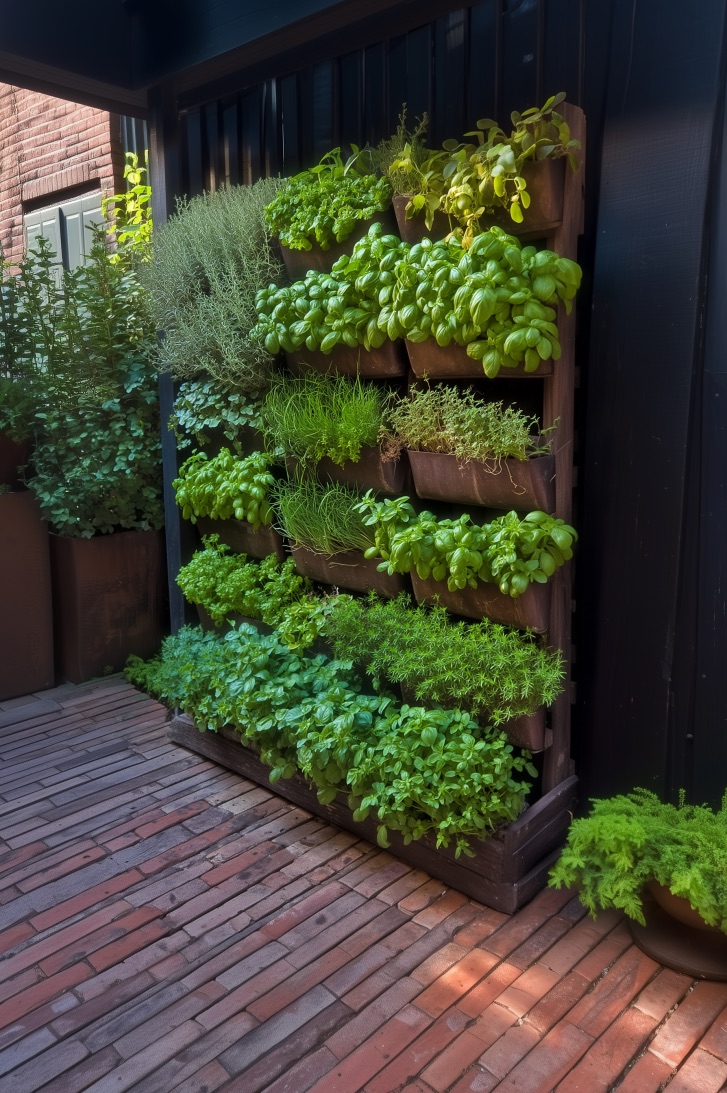
Dark containers create drama where pastel pots create calm. A charcoal planter or matte black pot makes the green of your herbs appear almost luminous by comparison.
This simple shift in color palette transforms an herb collection from sweet to sophisticated. Against white walls or light countertops, the dark vessels anchor the display with visual weight. Your basil leaves seem greener, your purple basil more intense, and even common parsley gains an air of importance.
10. Label Wooden Crates for Organized Outdoor in Ground Herb Displays
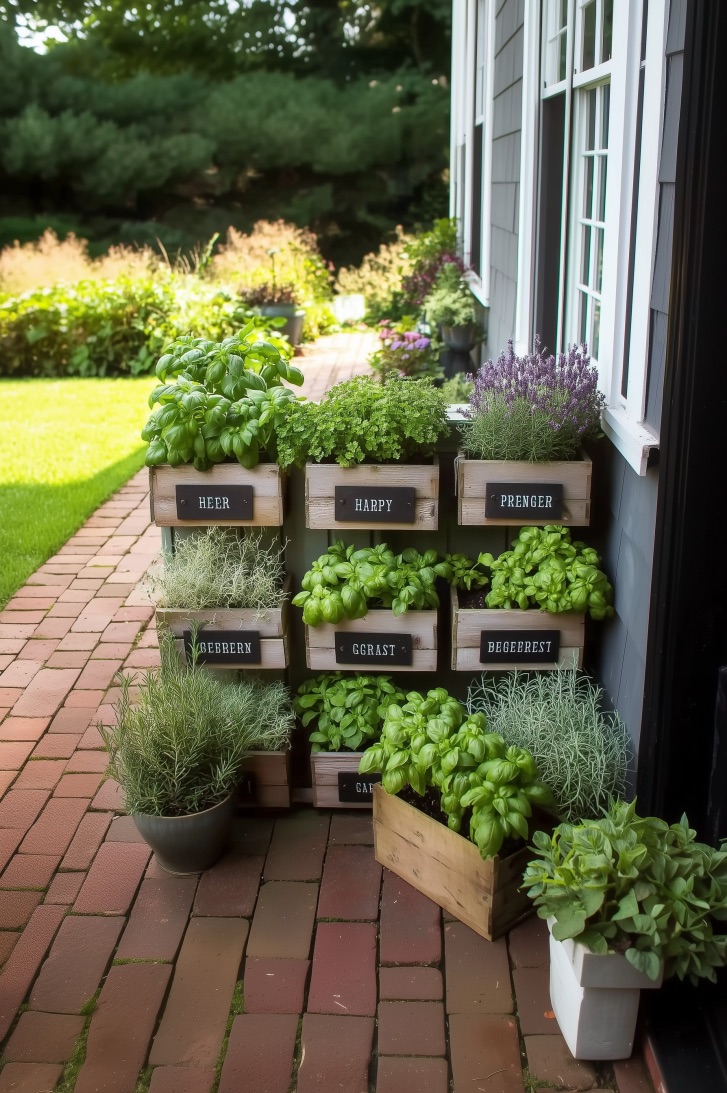
First, the crates establish boundaries between varieties. Second, labels solve the eternal problem of telling oregano from marjoram at a glance. Third, the wooden texture adds warmth that plastic never achieves.
Wooden crates – the kind you might find at farmers’ markets or buy from craft suppliers – sink partially into garden beds to create distinct zones. Each crate holds one herb type, preventing the inevitable territorial warfare that happens when mint meets everything else.
You might stencil names directly onto the wood, use chalkboard paint for seasonal rotation, or attach small metal tags that weather gracefully.
This organizational approach means you’ll always know what you’re harvesting. More importantly, visitors to your garden can identify herbs themselves, which somehow makes them more likely to pinch a leaf and experience the fragrance firsthand.
11. Place a Raised Herb Table for Easy Access Gardening
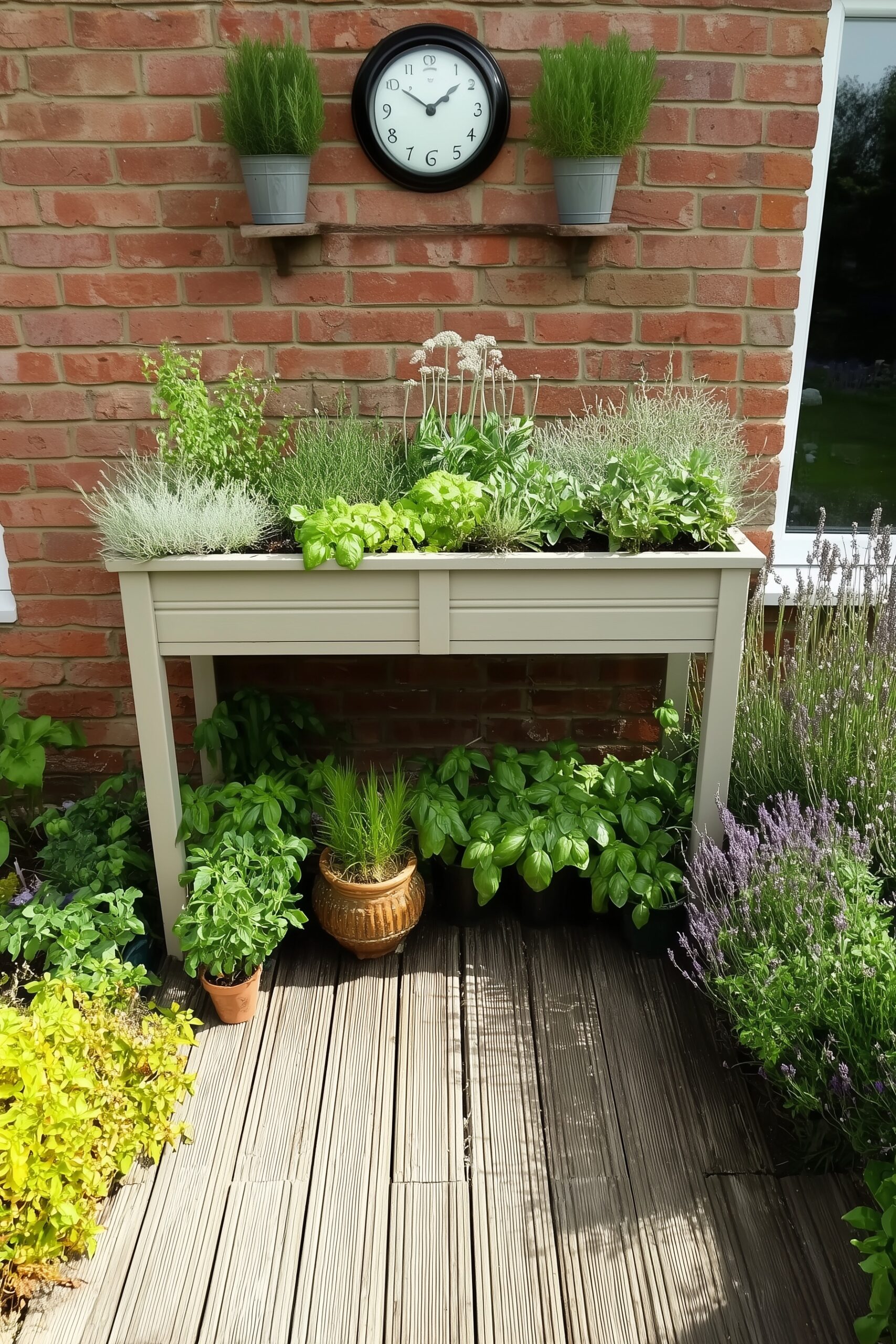
If bending and kneeling feel less appealing than they once did, a waist-high herb table changes everything. These elevated beds bring the garden up to meet you rather than requiring you to descend to meet it.
Raised herb tables emerged from accessible gardening movements but have become popular across demographics. The concept is straightforward: a sturdy table frame supporting a shallow bed of soil, positioned at whatever height suits your comfort.
You can construct these from reclaimed materials – old doors become surfaces, salvaged fence posts form legs. The elevated position also improves drainage and warms soil earlier in spring.
Looking ahead, expect to see more furniture-quality herb tables that blur the line between garden and outdoor living space. These won’t hide in back corners but will stand proudly on patios and decks as functional art.
12. Design a Staircase Herb Garden for Stylish Container Planting
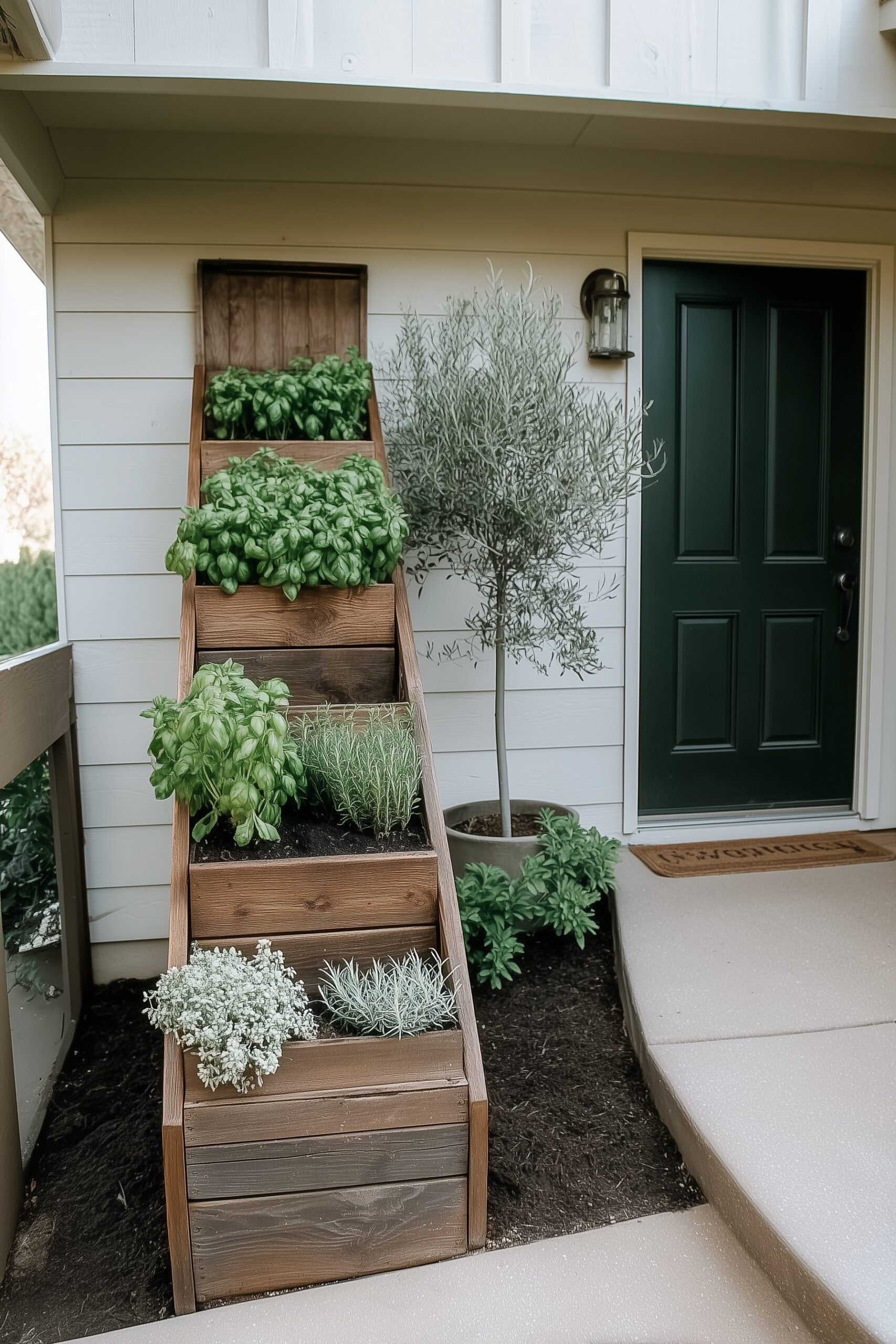
When ground space sprawls horizontally in all directions, it can feel overwhelming – where to begin? A staircase herb garden solves this by creating a clear vertical progression that guides both your planting decisions and viewers’ eyes.
Imagine a set of wooden steps, each tread wide enough to hold several pots. The lowest step might showcase trailing varieties that can spill over edges – creeping thyme or prostrate rosemary. Middle steps hold your workhorses: basil, cilantro, parsley. The top step reserves space for less frequently harvested herbs like lavender or tarragon.
One friend built hers using landscape timbers stacked and secured with rebar, creating six levels that hold twenty pots of varying sizes.
In essence: a staircase garden transforms chaos into choreography, giving structure to what might otherwise become a random pot collection.
13. Line a Wooden Slat Wall with Colorful Potted Herbs
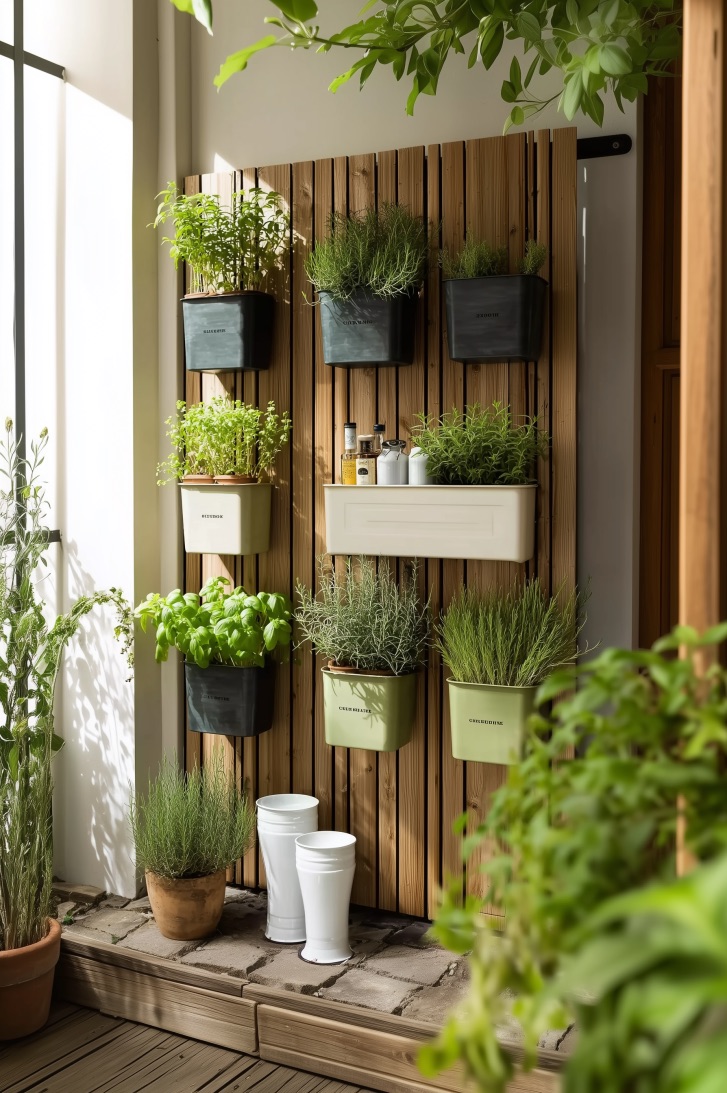
Something about horizontal slats invites hanging things from them. A wooden slat wall – whether cedar, treated pine, or reclaimed barn wood – provides infinite attachment points for herb containers in cheerful colors.
The beauty here lies in the interplay between the wall’s linear regularity and the organic shapes of growing herbs. You might hang pots at staggered heights, creating visual rhythm without strict symmetry.
Choose containers in colors that either harmonize with your outdoor scheme or deliberately pop against it – bright turquoise against weathered gray wood, sunny yellow against dark-stained cedar.
One caution: slat walls in full sun can reflect considerable heat back onto plants. Position your wall to receive morning sun and afternoon shade, or choose heat-loving herbs like rosemary and sage that won’t wilt under the additional warmth.
Conclusion
Your herb garden – however you design it – represents more than fresh ingredients. It connects you to seasons, to the satisfaction of growing something useful, to the simple pleasure of stepping outside and plucking dinner’s final touch. Choose an approach that speaks to your space and energy level, then begin.
The oregano won’t plant itself, and that first harvest tastes sweeter when you’ve tended the plants yourself.