
Introduction
Have you ever walked past a home and stopped in your tracks, captivated by its stunning container displays? The right outdoor flower pots transform ordinary spaces into vibrant sanctuaries that welcome guests and lift your spirits every time you step outside.
Container gardening offers endless possibilities for creativity and personal expression. From sleek modern planters to weathered rustic vessels, each choice tells a story about your style while bringing life and color to patios, porches, and pathways.
1. Highlight Oversized Stone Planters for Front Yards
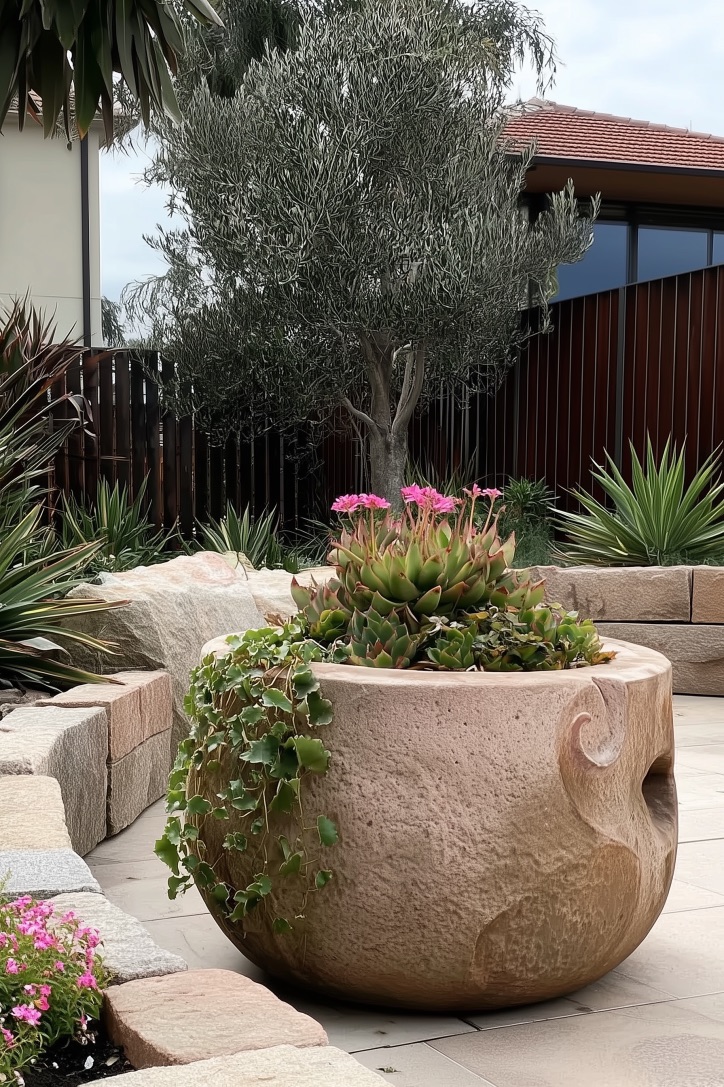
Building on classic landscaping principles, oversized stone planters anchor your front yard with commanding presence. These substantial vessels – often two to three feet in diameter – create focal points that draw the eye from the street to your entryway.
The weight and texture of natural stone brings permanence to your design. You can plant them with architectural specimens like ornamental grasses or Japanese maples that won’t get lost in the generous proportions. The rough-hewn surfaces develop character over time as moss and patina settle into crevices.
Position one on either side of your walkway for symmetrical impact. Alternatively, place a single statement piece slightly off-center to create a more organic, asymmetrical composition that feels less formal.
2. Incorporate Vibrant Mixed Plantings for Patio Container Gardening
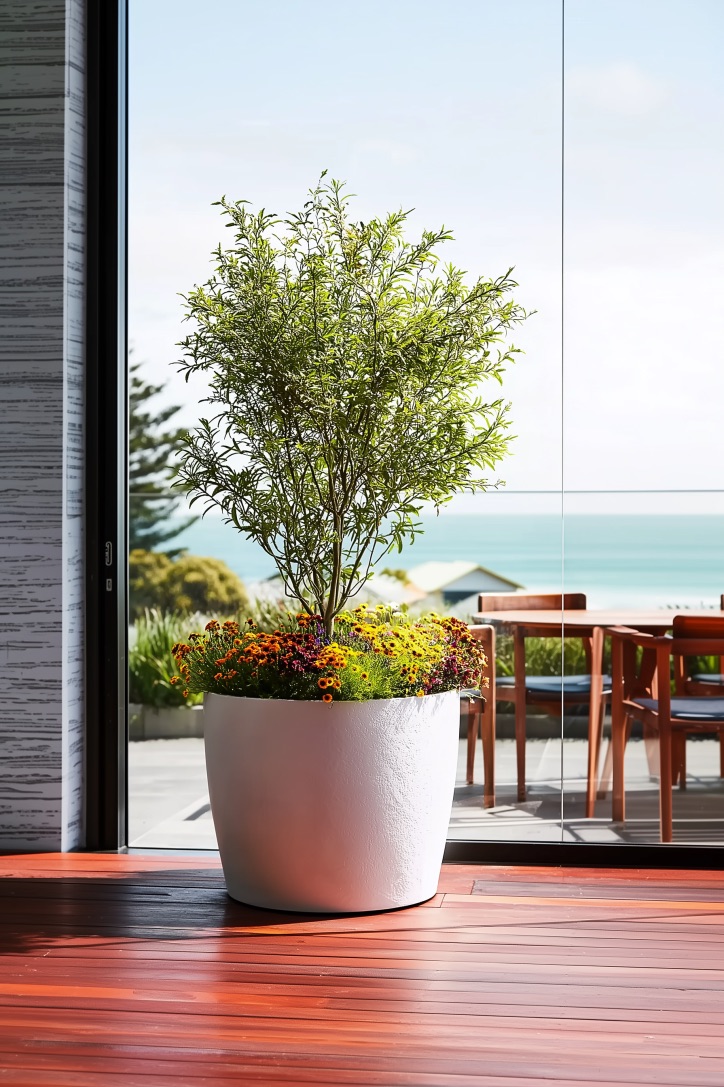
Why settle for a single variety when you can orchestrate an entire symphony of color and texture in one container? Mixed plantings combine the thriller-filler-spiller formula to create showstopping arrangements that evolve throughout the growing season.
Picture a cobalt blue glazed pot overflowing with combinations: a bold canna lily rises as your thriller, compact zinnias fill the middle zone with persistent blooms, and trailing sweet potato vine spills over the rim in chartreuse waves.
The interplay between upright forms, rounded shapes, and cascading elements keeps your eye moving through the composition.
This approach continues to gain momentum as gardeners embrace cottage-garden abundance over minimalist restraint. Expect to see even more experimental color combinations pushing beyond traditional pairings in the seasons ahead.
3. Accent Textured Planters with Succulents for Full Sun
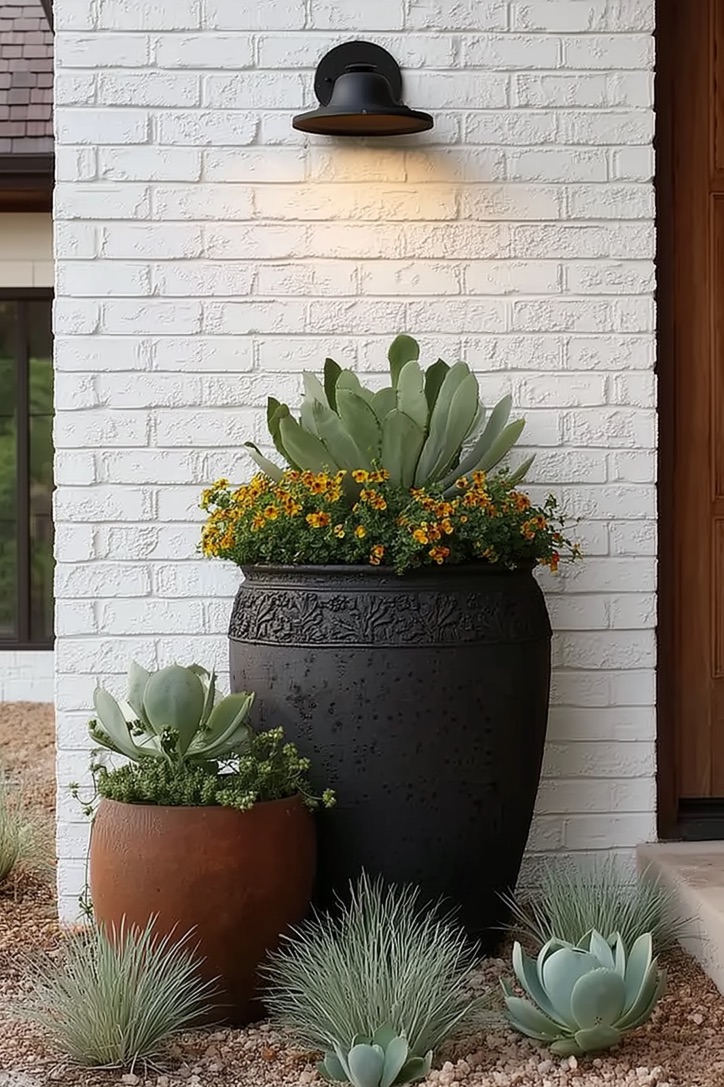
Transform bare corners and sun-baked patios into low-maintenance showcases. Textured planters – think ribbed concrete, woven fiber, or hammered metal – provide the perfect canvas for drought-tolerant succulent arrangements that thrive in blazing sunshine.
The relationship between container texture and plant form matters more than you might initially realize. Smooth, geometric succulents like echeveria rosettes pop against rough-cast concrete, while spiky agaves complement the linear ridges of corrugated metal containers.
You’re creating dialogue between surfaces that makes each element more compelling.
These arrangements practically care for themselves once established. A weekly drink during summer heat keeps them plump and vibrant, while their water-storing leaves carry them through occasional neglect. The sculptural quality of both vessels and plants means your display remains striking even when not in active bloom.
Could your sunniest, most challenging spot become your most admired feature with this pairing?
4. Pair Tall Grasses with Petunia for Striking Height Contrast
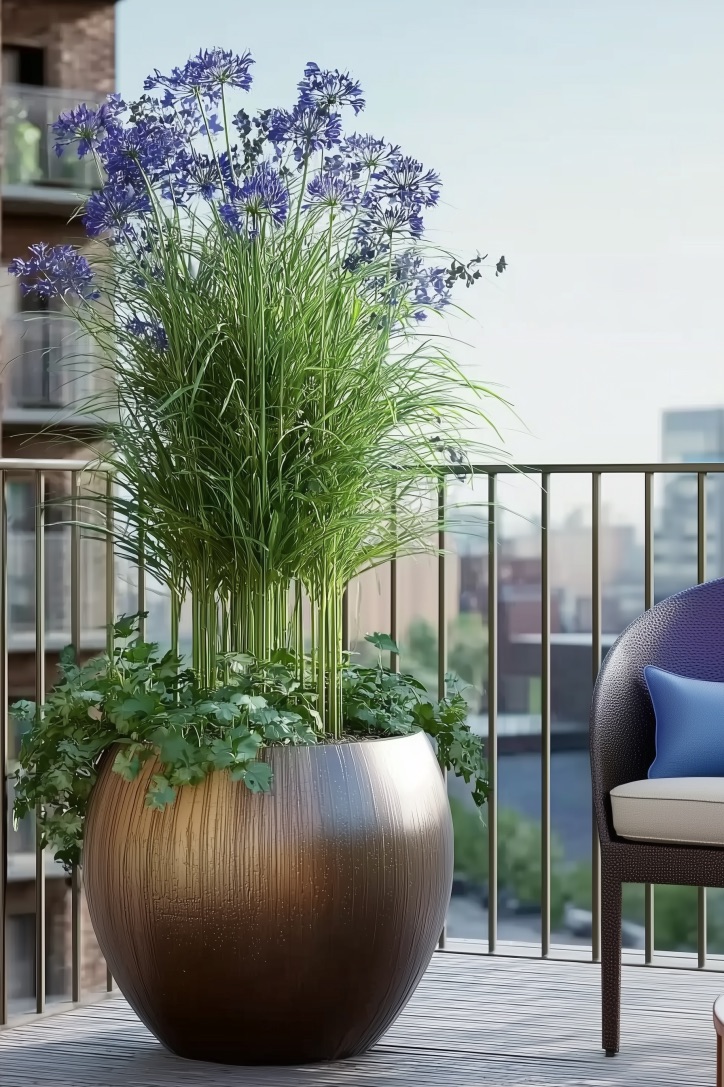
Today’s gardens increasingly celebrate dramatic vertical elements that add movement and structure. This pairing taps into that zeitgeist by combining fountain grass or purple millet – varieties that can reach three to four feet – with cascading petunias that soften the container’s base.
The grasses sway with every breeze, their feathery plumes catching light and creating kinetic interest. Below, wave petunias tumble downward in purple, pink, or white streams that bloom relentlessly from late spring through frost.
The contrast between airy, linear grass blades and dense petunia flowers creates tension that feels both natural and designed.
5. Group Varying Planter Heights for Dynamic Visual Interest
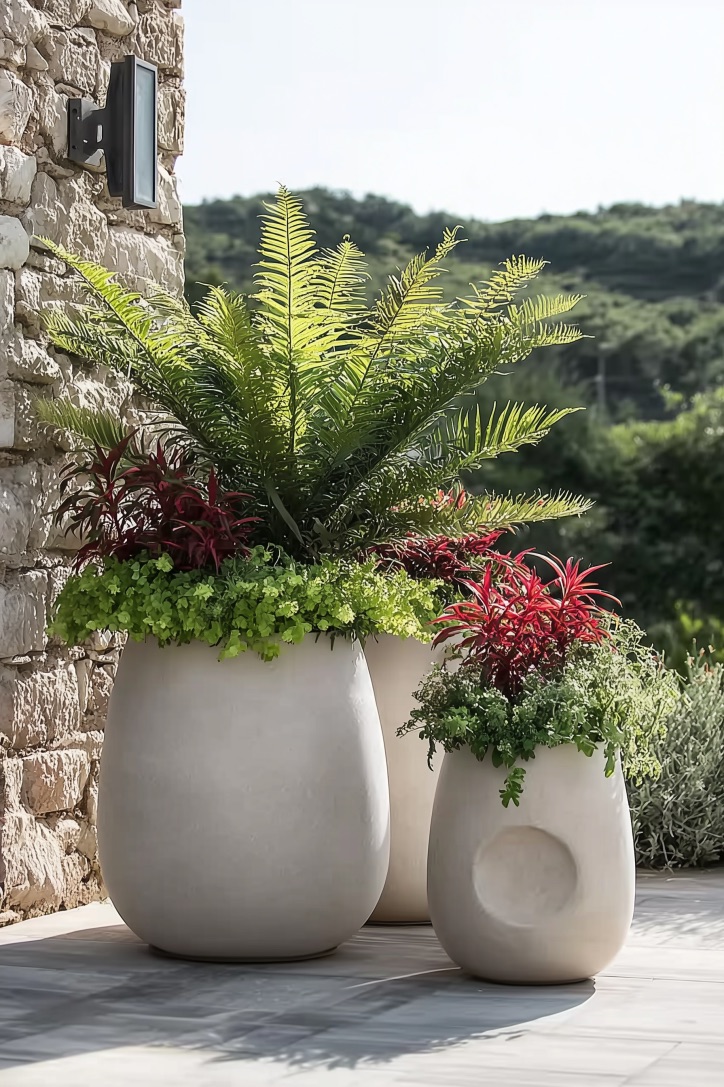
You’ve probably noticed how museum galleries stagger artwork at different eye levels to maintain engagement. Apply this same principle to your outdoor containers by clustering pots of different heights – short bowls, mid-height cylinders, and tall urns – to create landscape layers that mirror natural growing patterns.
This arrangement guides the viewer’s gaze upward and downward, creating rhythm across your patio or deck. Short sedums anchor the ground plane, mid-height herbs occupy the comfortable viewing zone, and tall dracaena spikes draw eyes skyward. The result feels abundant without appearing cluttered, sophisticated without seeming staged.
Start with three containers in graduated sizes and expand from there as your confidence grows.
6. Showcase Driftwood Planters for Organic Outdoor Texture
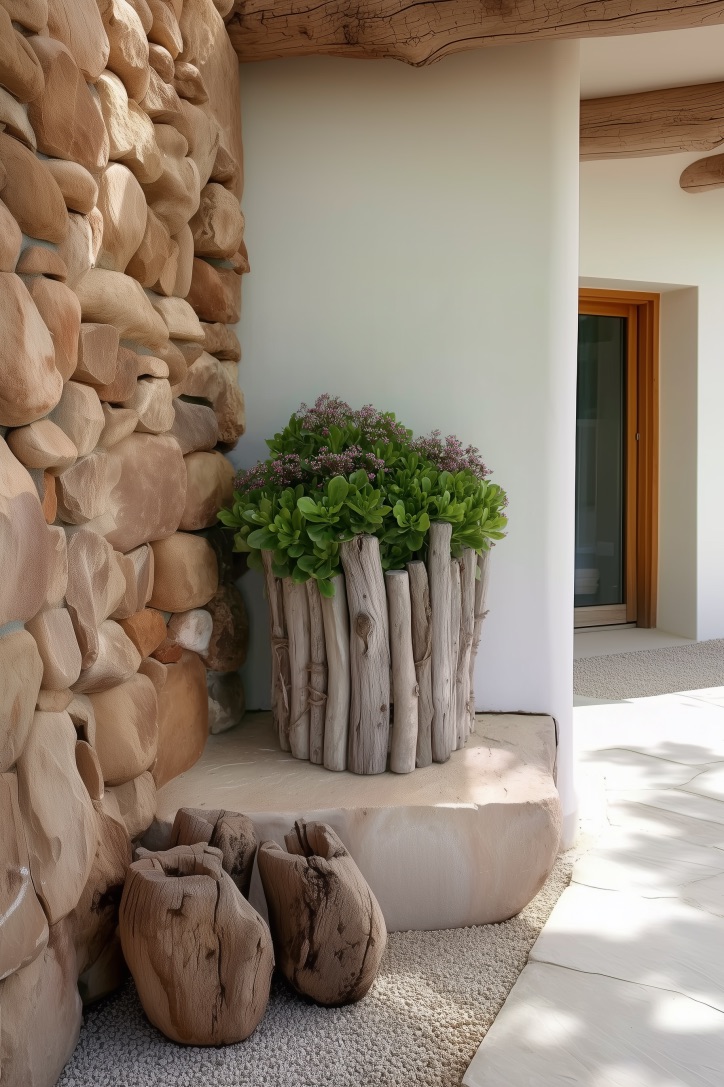
Like beach treasures preserved in glass, driftwood planters capture coastal serenity and bring it home. These weathered wood vessels – whether hollowed logs, carved stumps, or purpose-built boxes with bark still intact – introduce raw, untamed elements that contrast beautifully with manicured gardens.
The silvered grain and natural imperfections tell stories of time and transformation. They pair exceptionally well with shade-loving ferns, hostas, and impatiens that don’t mind the moisture-retentive properties of wood. The organic container feels like it grew there rather than being placed, blurring the line between wild and cultivated.
For extended life, line the interior with landscape fabric or plastic sheeting before adding soil. This simple step prevents accelerated decay while allowing drainage through pre-drilled holes. The planter develops even richer patina as seasons pass, becoming more beautiful as it ages.
7. Incorporate Evergreen Boughs and Red Branches for Winter Interest
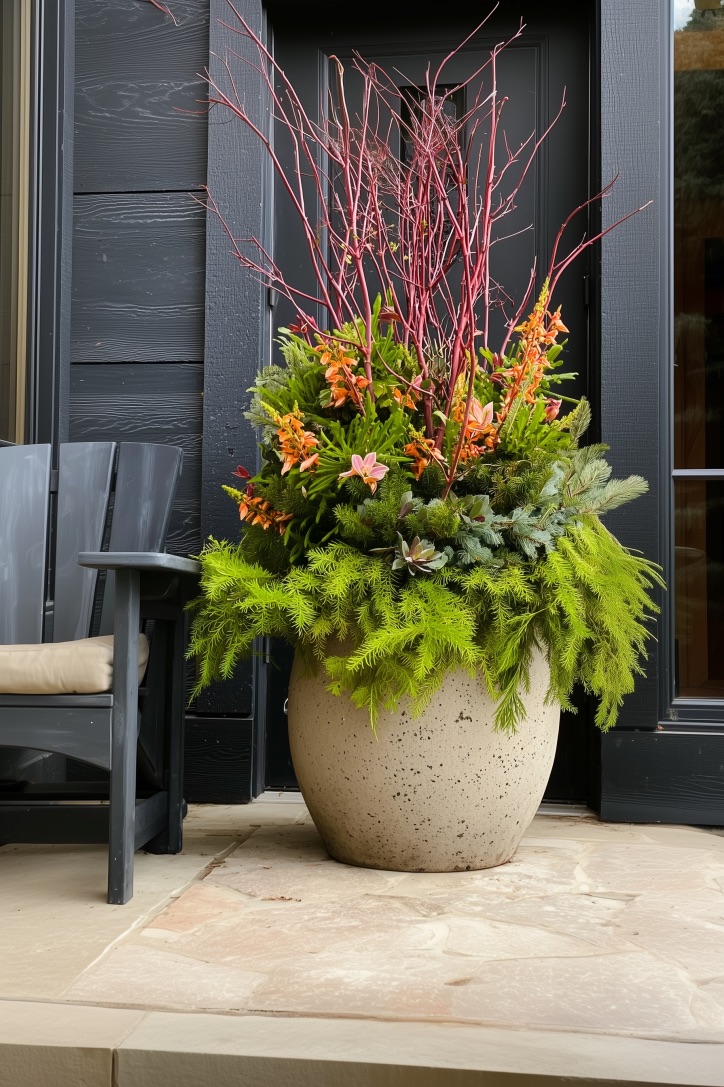
Most gardeners overlook the colder months when planning container displays, yet winter offers unique opportunities for architectural beauty. Fill large planters with cut evergreen branches – pine, fir, or cedar – interspersed with red or yellow dogwood twigs that glow against snow and grey skies.
This seasonal approach emerged from Scandinavian traditions where bringing greenery indoors during dark months lifted spirits. By extending this practice to outdoor containers, you maintain visual interest when perennials have retreated underground.
Add some winterberry branches with their persistent red fruits, and you’ve created habitat for overwintering birds while decorating your entrance.
8. Position Large Greenery Filled Pots Beside Your Front Door
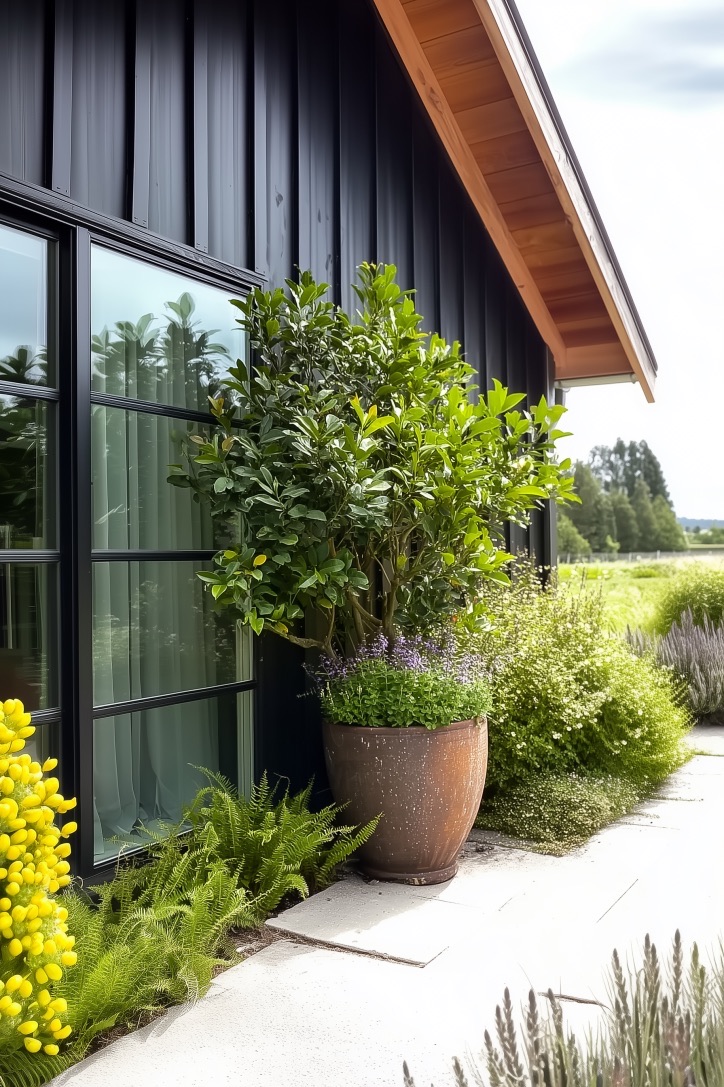
Three elements define a welcoming entrance: scale, symmetry, and verdant life. Large planters flanking your front door check all these boxes, creating a threshold moment that signals the transition from public sidewalk to private sanctuary.
Imagine arriving home after a long day to find two substantial containers – perhaps 20-inch diameter urns – overflowing with boxwood topiaries or tropical ti plants depending on your climate. The greenery frames your doorway like living architecture, making even modest entries feel grand.
During holidays, you can nestle lights into the foliage or add seasonal accents without disturbing the foundation planting.
This arrangement communicates care and attention to detail. Guests unconsciously register the well-maintained greenery as evidence that the home beyond the threshold receives equal devotion, setting expectations before they ever ring the bell.
9. Feature Patterned Black Planters for Contemporary Outdoor Style
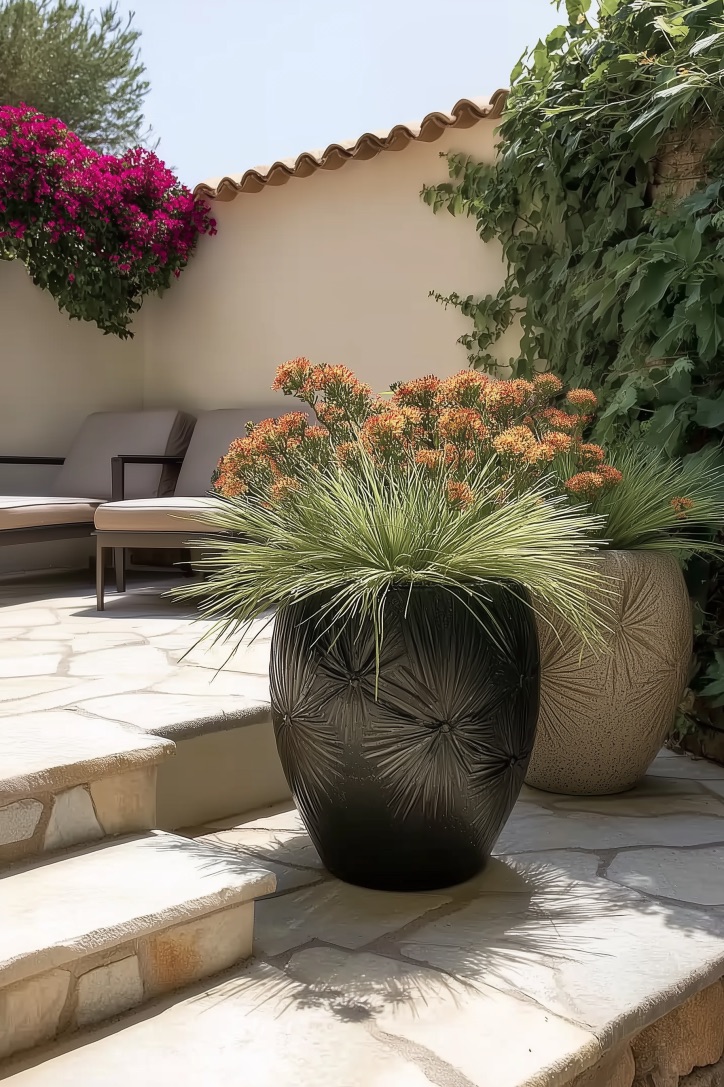
Here’s something curious: black containers actually make plants appear more vibrant rather than darker. The high contrast between deep matte vessels and bright foliage creates visual pop that lighter containers simply can’t match.
Patterned black planters – geometric cutouts, carved reliefs, or raised designs – add another dimension to this effect. The shadows cast by three-dimensional patterns shift throughout the day, creating changing displays that reward close observation.
Fill them with chartreuse coleus, variegated hostas, or white calibrachoa to maximize the dramatic interplay between container and contents.
10. Create Layered Plant Arrangements for Part Shade Settings
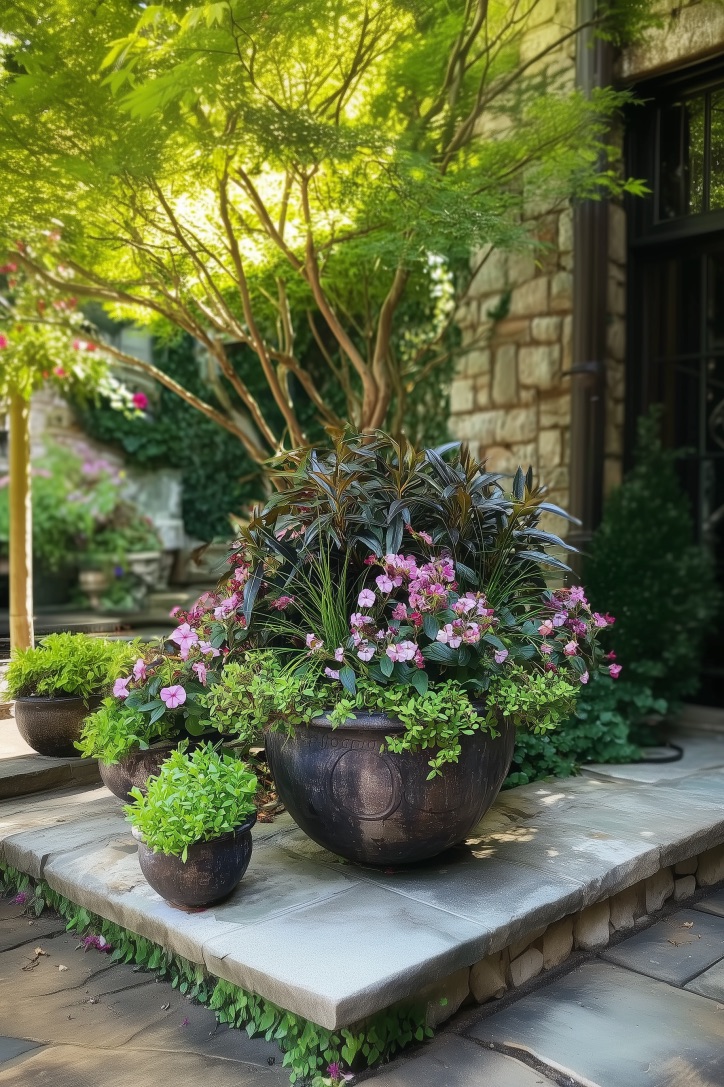
While full sun gardens grab all the glory, part shade containers offer subtler pleasures through layered leaf textures and varied greens. Rather than chasing constant color, you build intricate tapestries of foliage that reveal complexity over time.
These arrangements celebrate the quiet beauty often missed in showier displays. Layer broad hosta leaves as your foundation, add the delicate fronds of Japanese painted fern for mid-level interest, then finish with trailing lamium or creeping Jenny that spills over the rim.
The result has depth and sophistication that monochromatic sun plantings sometimes lack.
One caution, though: resist overstuffing these containers. Part shade plants need air circulation to prevent fungal issues, so leave breathing room between specimens even when the sparse look feels uncomfortable at planting time.
11. Use Cool Grey Planters with Petunia for a Fresh Summer Look
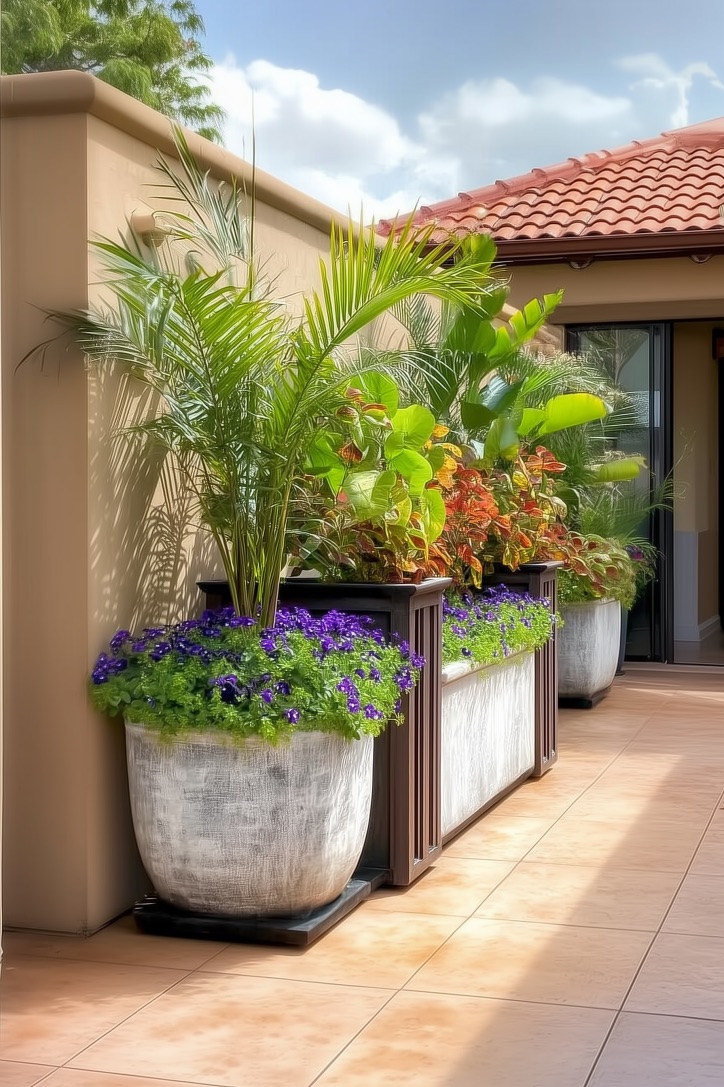
Notice how certain color combinations simply feel like a season? Grey containers paired with petunias in coral, magenta, or pure white embody summer’s light, airy spirit without the heaviness of terracotta or the formality of black.
The neutral grey – whether smooth concrete, glazed ceramic, or lightweight resin – recedes enough to let flowers command attention while providing enough presence to ground the composition. This balance emerged from Scandinavian design principles where muted backgrounds allow colorful elements to sing without competing visual noise.
12. Experiment with Tropical Palms for Patio Container Gardening
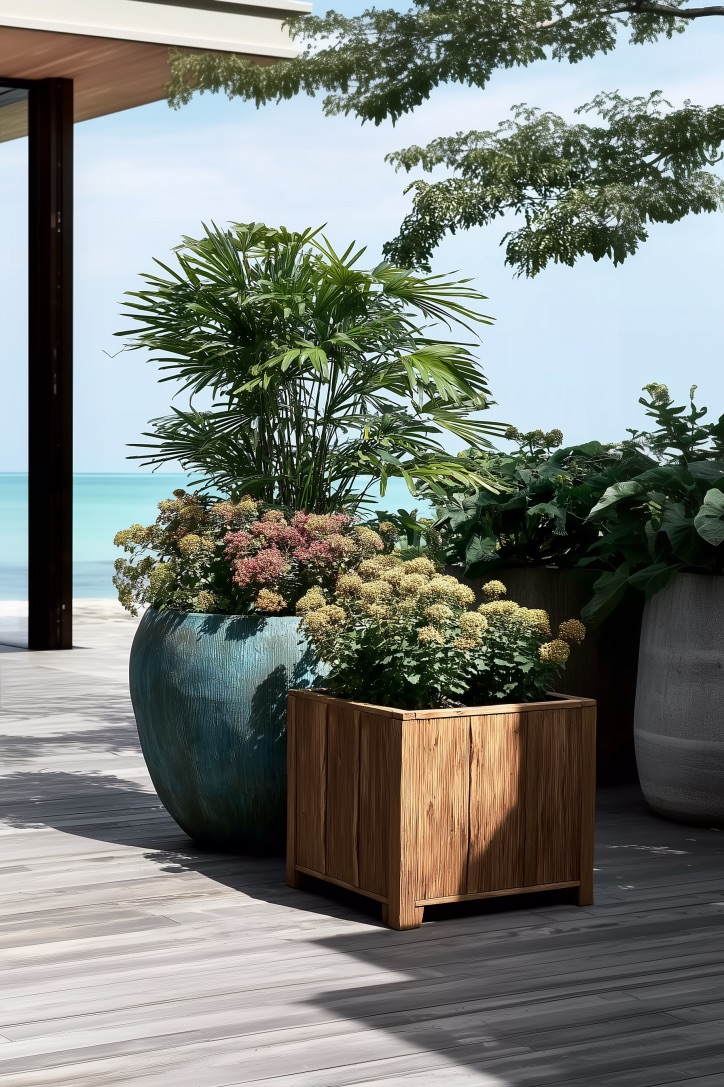
Compared to traditional patio plantings, palms inject instant vacation vibes that transport you mentally to warmer latitudes. Sago palms, windmill palms, or even true tropical varieties grown as annuals transform ordinary decks into resort-worthy retreats.
The architectural foliage creates dramatic shadows on nearby walls and paving, adding another layer of visual interest beyond the plant itself. As fronds catch evening breezes, they produce gentle rustling sounds that enhance the sensory experience of your outdoor room.
Even in temperate climates, you can enjoy these exotic specimens from late spring through early fall before moving them indoors or treating them as seasonal investments.
In essence, palms deliver maximum impact with minimal effort – just consistent water and occasional feeding.
13. Arrange Lantern Accents Beside Outdoor Pots for Patio Fire Pits

Let’s be honest: nobody wants to navigate a dark patio while carrying drinks and trying to look graceful. Positioning lanterns – whether traditional metal, modern LED, or flickering candle versions – beside substantial planters solves this problem while creating ambient magic.
This pairing works by anchoring light sources at regular intervals around your seating area. The planters provide visual weight that prevents the lanterns from appearing randomly scattered, while the lanterns extend usability of the space well past sunset.
During gatherings around your fire pit, these illuminated vignettes create multiple focal points that distribute attention across the entire patio rather than concentrating everyone in one tight cluster.
Choose lantern styles that complement your planter materials – rustic iron with terracotta, sleek copper with concrete – for cohesive design that feels intentional.
14. Select Sleek Black Trough Planters for a White and Green Palette
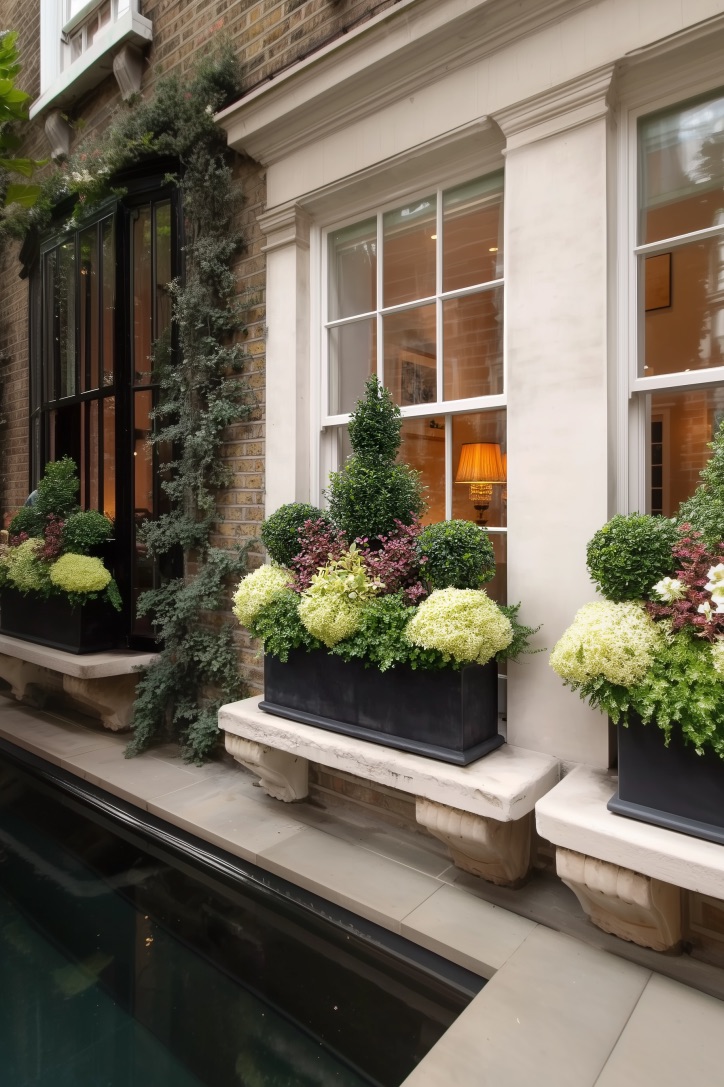
What if minimalism isn’t boring but actually liberating? Sleek black trough planters filled exclusively with white flowers and green foliage challenge the “more is more” approach to prove that restraint creates its own form of luxury.
Consider a long rectangular trough – perhaps 36 inches – planted with white geraniums, variegated ivy, and compact boxwood. The monochromatic scheme feels crisp and deliberate, like a perfectly edited wardrobe where every piece serves a purpose.
The black vessel disappears into the background against dark mulch or shadow, leaving the white blooms to float ethereally above the greenery.
This approach particularly suits modern architecture with clean lines and neutral palettes. It whispers rather than shouts, drawing admirers closer to appreciate the subtle variations in leaf shape and the pristine perfection of each white petal.
The consequence? Your space feels more spacious and serene, proving that sometimes subtraction creates stronger impact than addition.
15. Set Up Outdoor Bean Bags Beside Flower Pots for Relaxed Diy Appeal
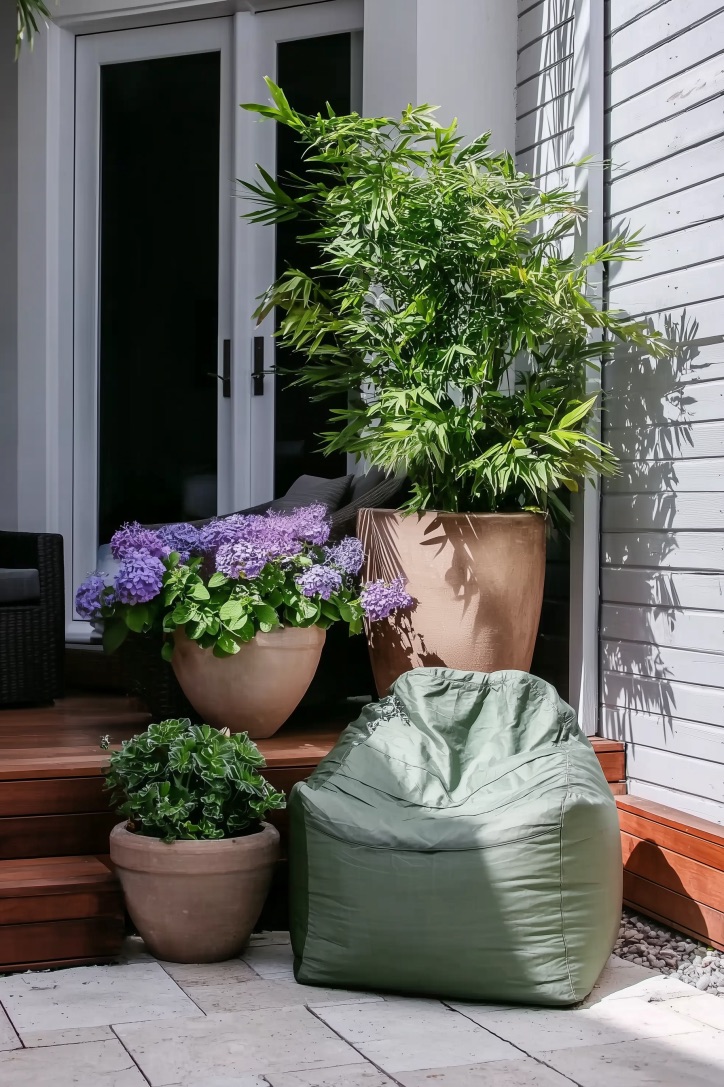
If you’re tired of stuffy, magazine-perfect outdoor spaces that nobody actually uses, this casual combination might restore functionality to your garden. Weather-resistant bean bags positioned near lush container plantings create invitation zones that encourage lingering rather than just passing through.
This trend emerged from rooftop and urban gardens where traditional furniture felt too formal for everyday relaxation. By pairing low-slung, moveable seating with fragrant herbs or trailing flowers at eye level when seated, you create intimate conversation nooks or solo reading retreats.
The informality signals that this space welcomes bare feet, spilled drinks, and spontaneous afternoon naps.
Add solar string lights overhead and a small side table improvised from an upturned planter, and you’ve created a destination within your larger yard.
16. Frame Modern Black Planters with Fragrant Herbs for Sun
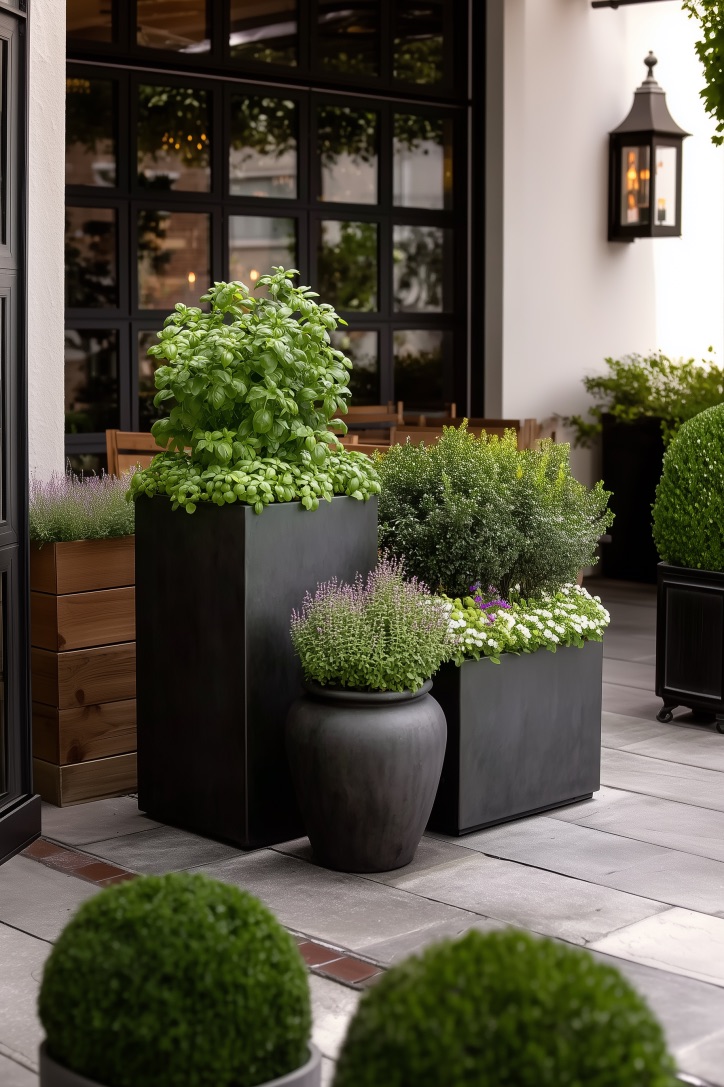
Struggling to make your patio feel like an extension of your kitchen rather than just outdoor storage? The solution combines form and function by surrounding sleek black containers with an herb garden that engages multiple senses while looking undeniably sharp.
The benefits extend beyond aesthetics into daily usefulness. Basil, rosemary, thyme, and oregano thrive in full sun containers, developing concentrated oils that intensify their flavors.
The black planters heat up in sunshine, creating the warm root conditions Mediterranean herbs crave while the dark color makes the grey-green and deep green foliage tones appear more vibrant.
Position these containers within arm’s reach of your grill or outdoor dining table for convenient harvesting. As you brush past rosemary to grab the salt, its piney fragrance releases into the air, creating sensory memories that connect food preparation with garden pleasure.
Choose containers with adequate drainage – herbs despise wet feet – and group them in odd numbers (three or five) for visual balance that feels organic rather than regimented.
17. Contrast Rustic Stone Walls with Smooth Ceramic Planters
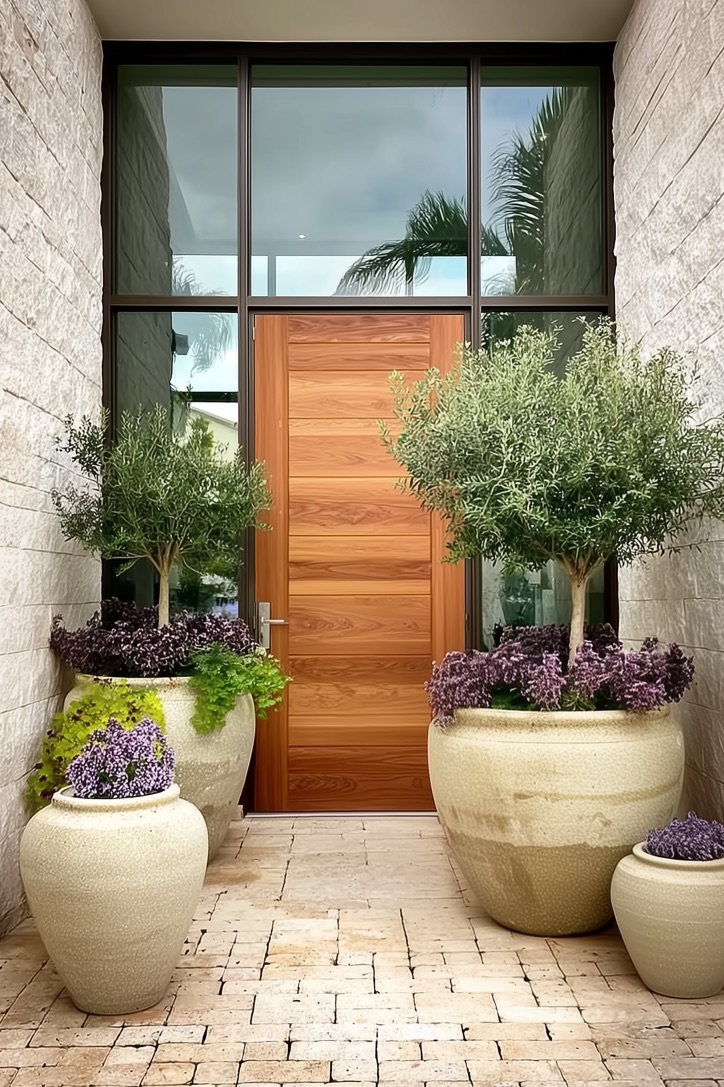
Surprisingly, the most striking combinations often pair opposites rather than matching elements. Smooth, glazed ceramic planters pop against rough stone walls or rustic brick, creating dialogue between refined and raw that elevates both components.
This design principle dates back to Japanese gardens where polished elements intentionally contrast with natural rocks and raked gravel. The tension between surfaces creates visual energy – your eye moves between the silky glaze and craggy mortar, appreciating each more fully because of the comparison.
A turquoise ceramic bowl becomes more luminous against grey fieldstone; a pristine white cylinder appears even cleaner beside weathered brick.
The context matters, though. In ultra-modern settings, this contrast might feel jarring rather than intentional, so evaluate your existing architecture before committing.
Would introducing one perfectly smooth element against your roughest outdoor surface create an accent worth pursuing?
18. Feature Playful Face Shaped Planters with Ferns for Whimsical Style
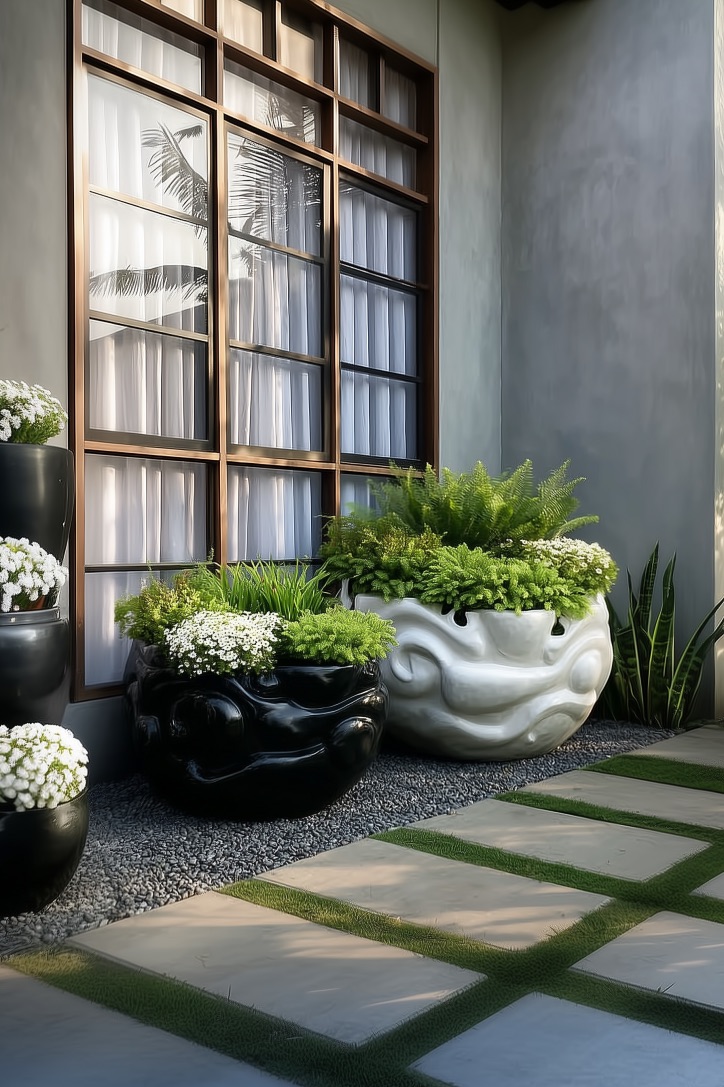
Face planters transform functional containers into personality-filled characters that make gardens feel less serious and more approachable. These novelty vessels – ranging from subtle classical profiles to exaggerated cartoon features – pair exceptionally well with ferns whose fronds cascade like wild hair or elaborate headdresses.
The humor works precisely because it’s unexpected in garden contexts that typically take themselves quite seriously. A stern classical face softens considerably when maidenhair fern spills from the top like delicate curls. An oversized head with wide eyes becomes comedic when Boston fern erupts in an impossible green explosion.
You’re anthropomorphizing plants while simultaneously using greenery to complete the sculptural concept.
These containers suit shaded porches and protected corners where their details remain visible without sun-bleaching. They spark conversation and signal that your garden welcomes playfulness alongside botanical beauty – a refreshing counterpoint to the perfection-seeking that dominates garden media.
Expect this trend to expand as younger gardeners reject formality in favor of spaces that reflect quirky personal style rather than design magazine ideals.
19. Mix Decorative Planters with Lush Green Palms for Summer
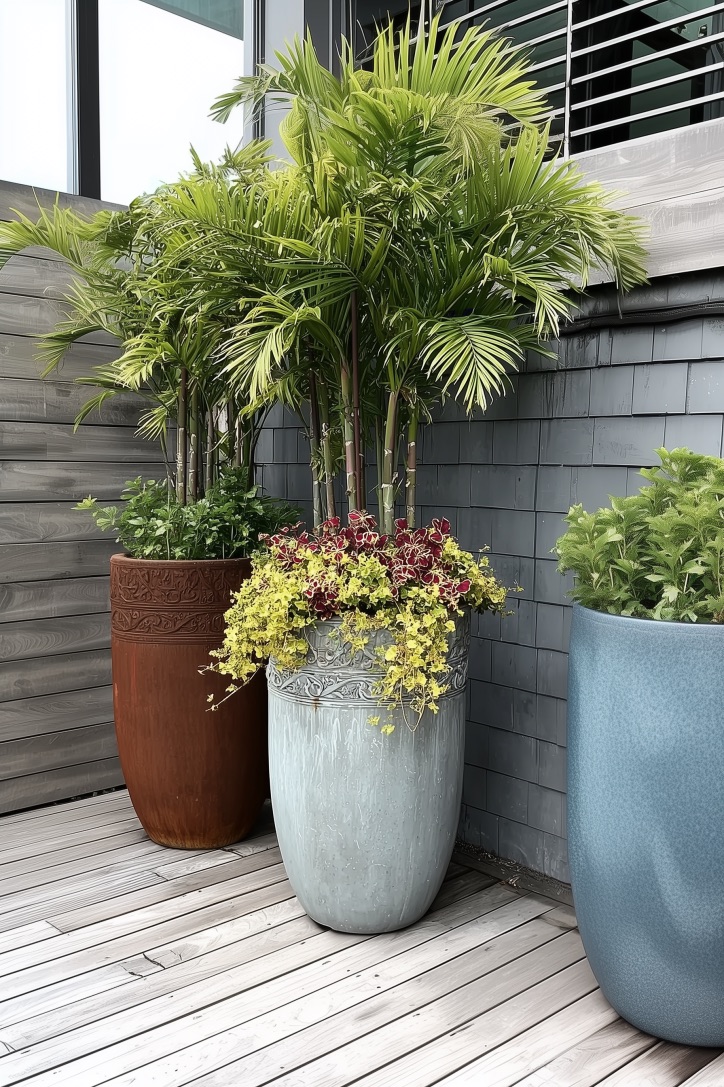
Notice how restaurant patios always seem more inviting than home versions? The secret often lies in generous tropical plantings that create instant jungle vibes signaling relaxation and escape.
Decorative planters – perhaps hand-painted ceramics, carved wood, or embossed metal – filled with areca palms, parlor palms, or even banana plants create this resort atmosphere in your own backyard. The lush greenery cools surrounding air through transpiration while the decorative vessels add artisanal touches that mass-market furniture can’t provide.
As palm fronds sway overhead, they create dappled shade that makes outdoor dining comfortable even during midday heat.
This combination particularly shines on patios with neutral flooring where the containers introduce pattern and the palms provide vertical relief from horizontal surfaces.
The effect lingers in memory long after summer ends, becoming the mental image you return to during winter when planning next year’s outdoor room.
20. Embrace Globe Shaped Planters for Large Outdoor Statements
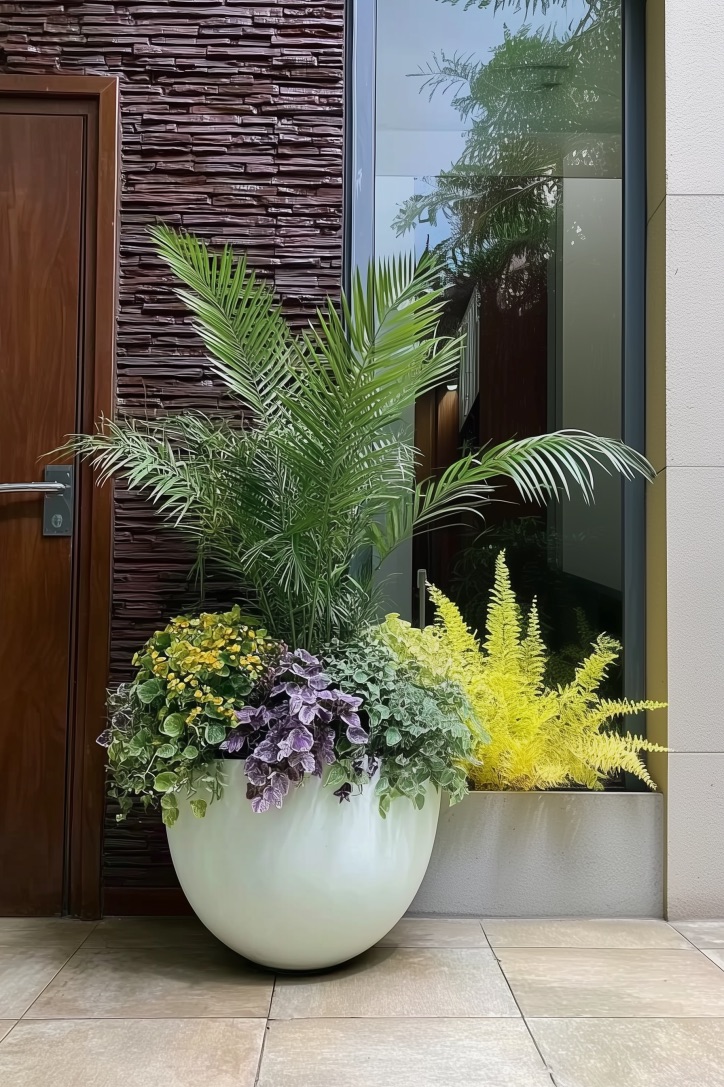
Make a statement that can’t be ignored by choosing spherical planters that defy container conventions. These globe-shaped vessels – whether perfect circles or slightly flattened orbs – command attention through pure geometry and substantial scale.
The benefits extend beyond novelty into practical advantages. Spherical containers maximize soil volume relative to surface area, giving roots ample room while maintaining compact footprints. They also shed water efficiently, preventing the soil saturation issues that plague flat-based planters.
Fill them with single-variety plantings like a cloud of white petunias or a perfectly rounded boxwood that echoes the container’s geometry.
Position one as a garden centerpiece where pathways intersect, or flank an entrance with a matched pair that reads as sculptural architecture rather than mere planters. The bold form deserves equally confident placement – timid positioning in corners wastes their dramatic potential.
Choose globe planters that challenge your comfort zone slightly; this tension between familiar container gardening and artistic statement creates the visual interest that makes designs memorable.
Conclusion
Your outdoor spaces wait for transformation through thoughtful container choices and creative plantings. Start with one idea that resonates with your style, then expand as confidence grows. The beauty of container gardening lies in its flexibility – you can rearrange, replant, and reimagine as seasons change and your vision evolves.
Step outside and begin creating the welcoming garden you’ll enjoy for years to come.