
Have you ever wandered through your yard and felt something was missing – a spark, perhaps, or a sense of permanence? Perennials offer that gift, returning year after year with fresh blooms and evolving textures that transform outdoor spaces into living tapestries.
Unlike annuals that demand replanting each spring, perennials root themselves into your landscape’s story. They mature, they spread, they surprise you with their resilience and beauty.
1. Highlight a Curved Pathway Border with Shade Plants
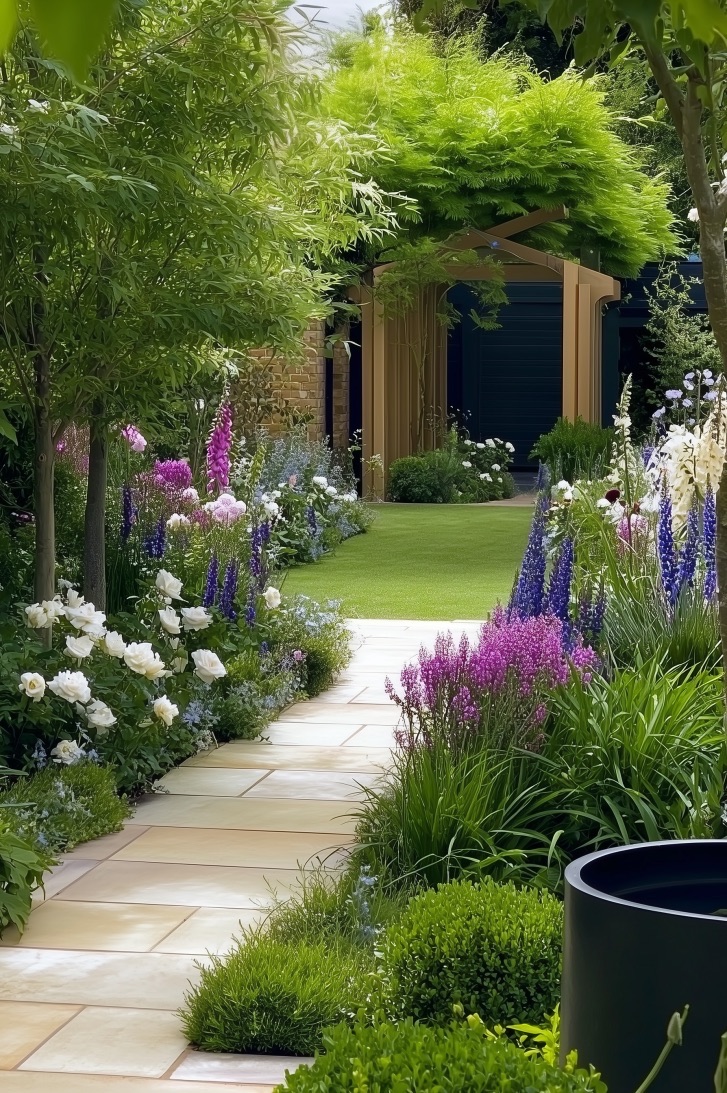
Lately, gardens seem to be shedding their rigid lines in favor of organic curves that mirror nature’s own design vocabulary. A winding pathway edged with shade-loving perennials taps into this contemporary desire for softness and flow.
Picture hostas unfurling their broad leaves alongside delicate bleeding hearts, their foliage creating layers of green that shift from chartreuse to deep forest. Ferns add feathery punctuation, while astilbe sends up plumy flowers that catch dappled light filtering through tree canopies.
The curved edge itself becomes a living ribbon that draws your eye forward, inviting exploration rather than merely connecting points A and B.
These shade dwellers thrive where sun-hungry plants would languish, turning what many consider problem areas into lush showcases. The pathway feels less like a utilitarian route and more like a journey through a woodland sanctuary you’ve created in your own backyard.
What mood do you want visitors to experience as they follow that graceful arc through your garden?
2. Layer Flower Beds for Colorful Full Sun Impact
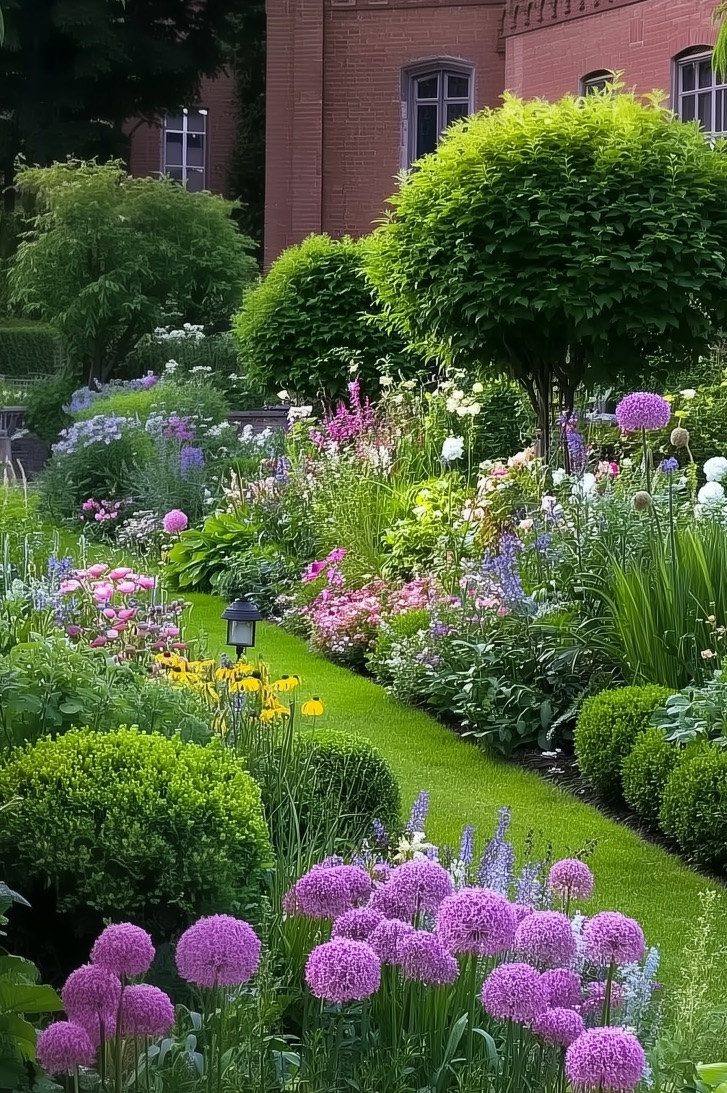
Think in three distinct tiers: ground-huggers at the front, mid-height bloomers in the middle, and towering specimens at the back. This staggered arrangement ensures every plant gets its moment in the spotlight while creating visual depth that photographs beautifully.
Creeping phlox or candytuft anchors the lowest level, followed by coneflowers or black-eyed Susans at eye level, then dramatic Joe Pye weed or delphinium rising behind. The effect resembles an amphitheater where each performer has been positioned for maximum visibility and impact.
3. Frame a Greenhouse Entrance with Vibrant Perennials for Front Yards
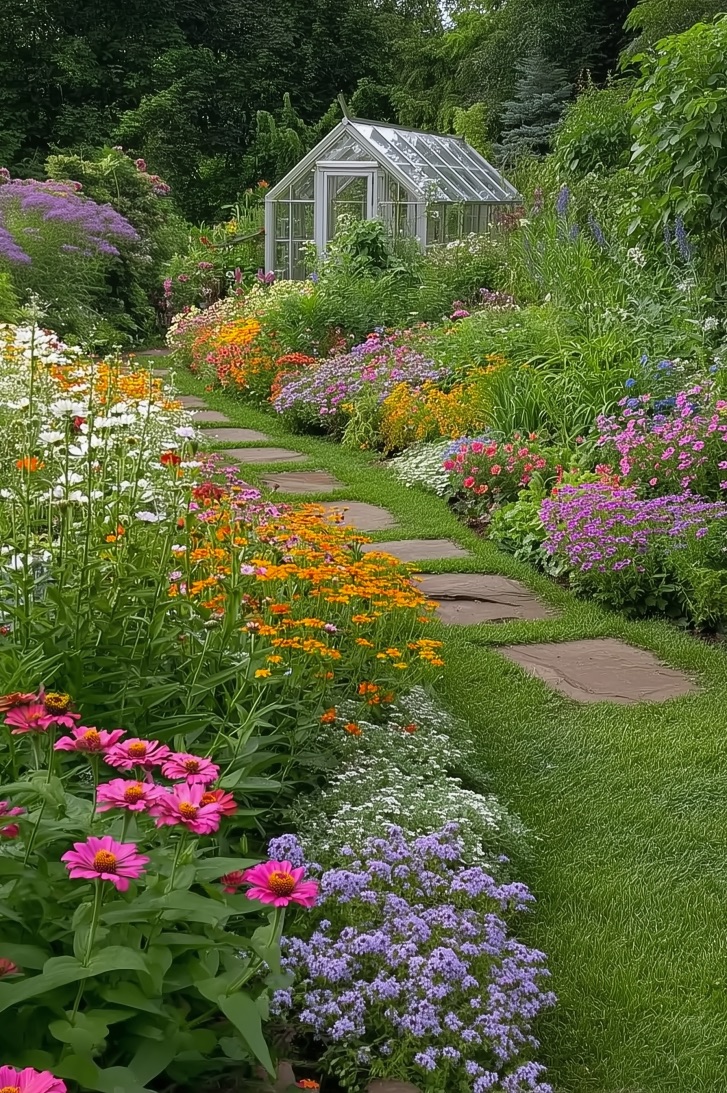
Here’s something unexpected: the approach to a greenhouse can steal the show from the structure itself. When you flank that glass sanctuary with exuberant perennials, you’re creating theater – a botanical curtain call that changes with each season.
Greenhouses already signal a gardener’s serious intentions, but the surrounding plantings tell a fuller story about your relationship with growing things. In Minnesota’s climate, you might choose cold-hardy catmint spilling onto pathways, paired with spiky salvia in purples that echo twilight skies.
Coreopsis adds sunny punctuation marks, while Russian sage creates a hazy lavender backdrop that seems to shimmer on hot afternoons.
The entrance becomes a transitional space where outdoor exuberance meets indoor cultivation. Visitors pause here, caught between two worlds of green.
This framing strategy transforms a functional building into a destination, making the journey toward it as rewarding as what awaits inside those foggy panes.
4. Incorporate Ornamental Grasses for Low Maintenance Texture
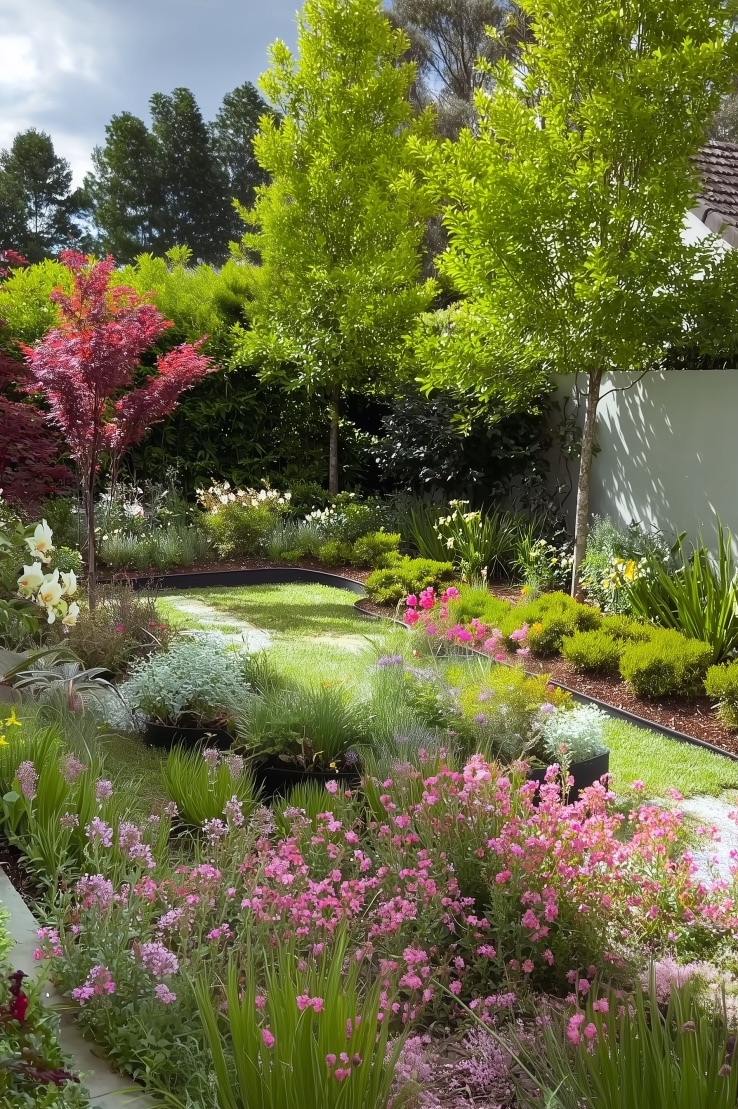
Tired of plants that demand deadheading, staking, and constant fussing? Ornamental grasses solve that problem while delivering movement and sound that flowering perennials simply can’t match.
Varieties like Karl Foerster feather reed grass stand rigid and architectural through winter storms, while maiden grass sways with every breeze, creating whispers and rustles that add an auditory dimension to your garden. Their seed heads catch frost and snow, providing four-season interest that justifies their space.
Fountain grass forms neat mounds topped with bottlebrush plumes, and little bluestem transitions from blue-green to copper-orange as temperatures drop.
In short, grasses give you maximum visual payoff for minimal intervention – they’re the set-it-and-forget-it investment every time-strapped gardener secretly craves.
5. Showcase Gravel Pathways Surrounded By Lush Ground Cover
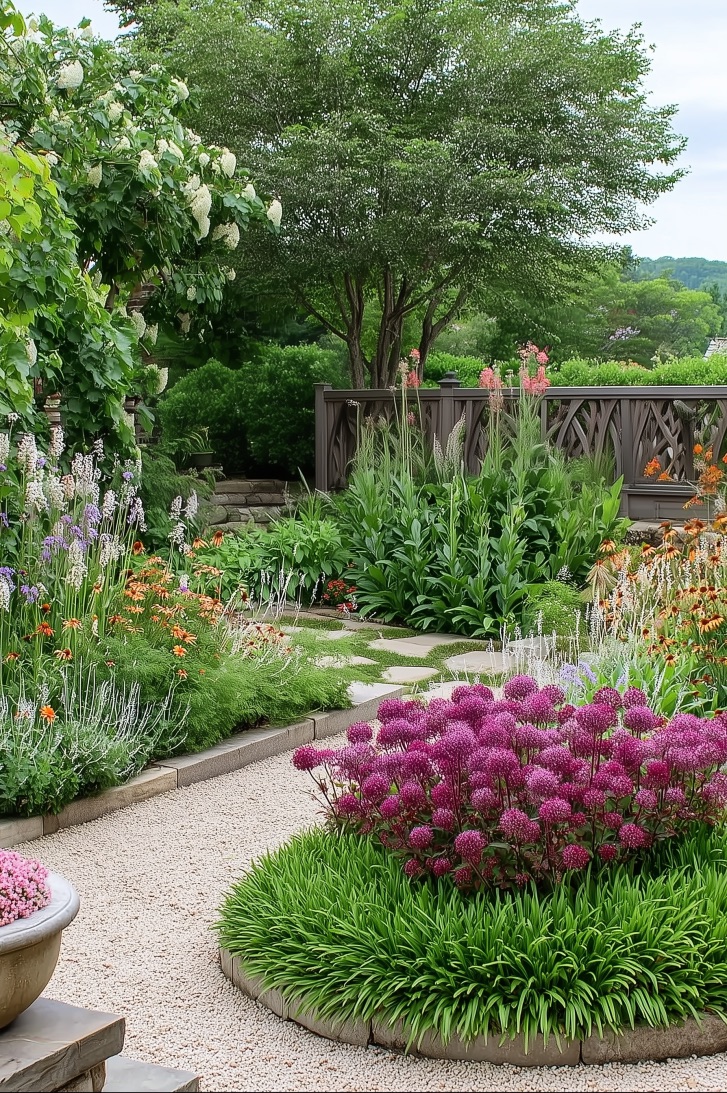
Create contrast by letting sprawling perennials soften hard edges. A crisp gravel path feels purposeful and clean, but when creeping thyme or sedum spills over its boundaries, the scene gains romance and that slightly untamed quality that distinguishes memorable gardens from merely tidy ones.
Consider creeping Jenny threading its chartreuse coins between stones, or woolly thyme releasing fragrance when you brush past it. Mazus forms purple carpets that tolerate foot traffic, while snow-in-summer lives up to its common name with billowing white flowers in late spring.
These ground-huggers need the gravel’s firm edge to truly shine – the juxtaposition makes both elements more striking.
Walk that path weekly during growing season, and make adjustments where plants encroach too enthusiastically or where bare spots need reinforcement.
6. Position a Stone Bench to Create a Peaceful Partial Shade Retreat
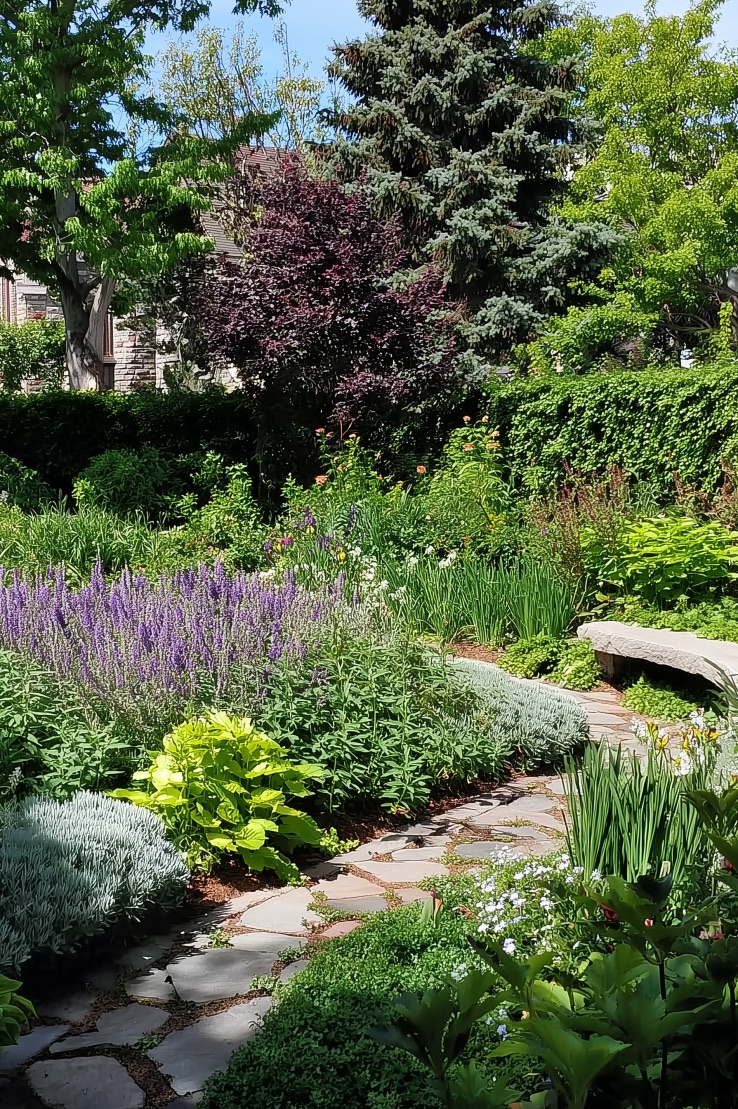
While a bench in blazing sun becomes more punishment than reward, one nestled in dappled shade invites lingering. The difference resembles choosing between a spotlight and candlelight – both illuminate, but only one makes you want to stay.
Surround your seating with shade-tolerant bloomers that don’t mind afternoon shadows: coral bells with their jewel-toned foliage, foamflower sending up delicate spikes, lungwort offering spotted leaves and pink-to-blue flowers. These plants thrive in the transition zones beneath tree edges where light comes and goes throughout the day.
The stone itself absorbs coolness from the shade, staying comfortable even on warm days. You’ve created not just a place to sit, but a reason to pause – a vantage point for observing how light shifts across foliage, how bees work the flowers, how your garden breathes and changes when you’re still enough to notice.
7. Plant Tall Perennials for Dramatic Full Sun Zone 3 Structure
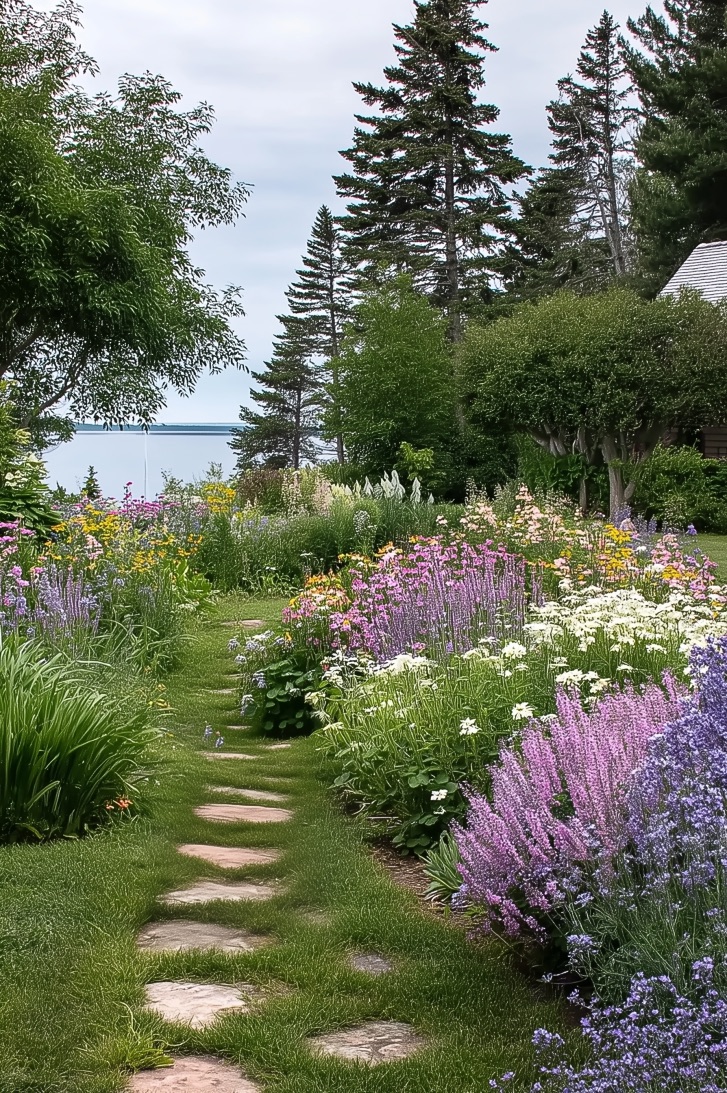
Most gardeners play it safe with knee-high selections, but that cautious approach sacrifices vertical drama. In Zone 3’s challenging climate, bold height might seem risky – yet certain perennials laugh at cold winters and tower skyward regardless.
Ligularia ‘The Rocket’ sends up yellow spires that can reach six feet, while meadow rue creates airy clouds of tiny flowers that seem to float above the border. Maximilian sunflower grows so tall you might need to crane your neck upward in late summer when it erupts with golden blooms.
These architectural specimens create structure that anchors surrounding plantings and provides scale that makes spaces feel deliberately designed rather than accidentally planted.
However, don’t get carried away and plant only giants – you’ll create a wall rather than a garden, blocking sightlines and creating dead zones behind them.
8. Contrast White Daisies Against Lush Greenery for Easy Appeal
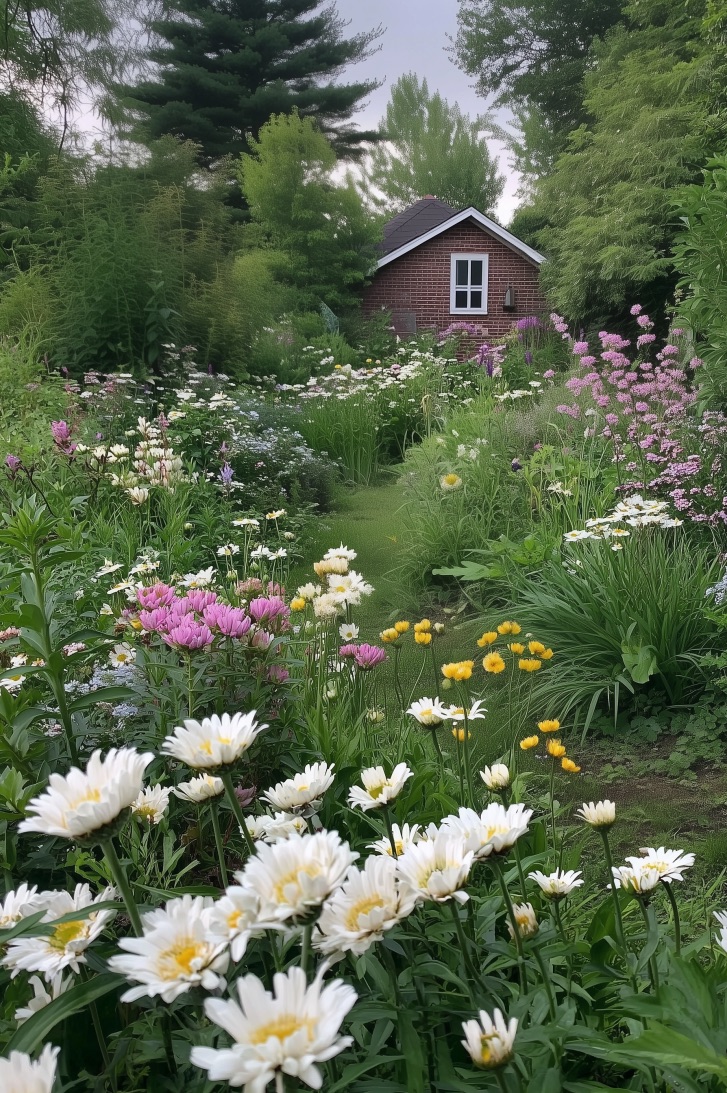
Let’s be honest: sometimes we overthink color schemes until our gardens look like committee decisions. White daisies – whether Shasta, Montauk, or oxeye varieties – offer an escape from that paralysis by pairing with literally everything.
These unpretentious flowers have been gracing gardens for generations, earning their place through reliability rather than trendiness. They emerged in cottage gardens, formal borders, and meadow plantings alike, proving their versatility across design styles.
The simple form reads as fresh and clean against darker foliage, creating contrast without clashing. Bees adore them, which means your garden hums with life throughout their bloom period.
Looking ahead, white flowers seem poised for a resurgence as gardeners embrace simplified palettes that let plant forms and textures take center stage.
9. Frame a Modern Home Entrance with Mixed Perennials for Minnesota
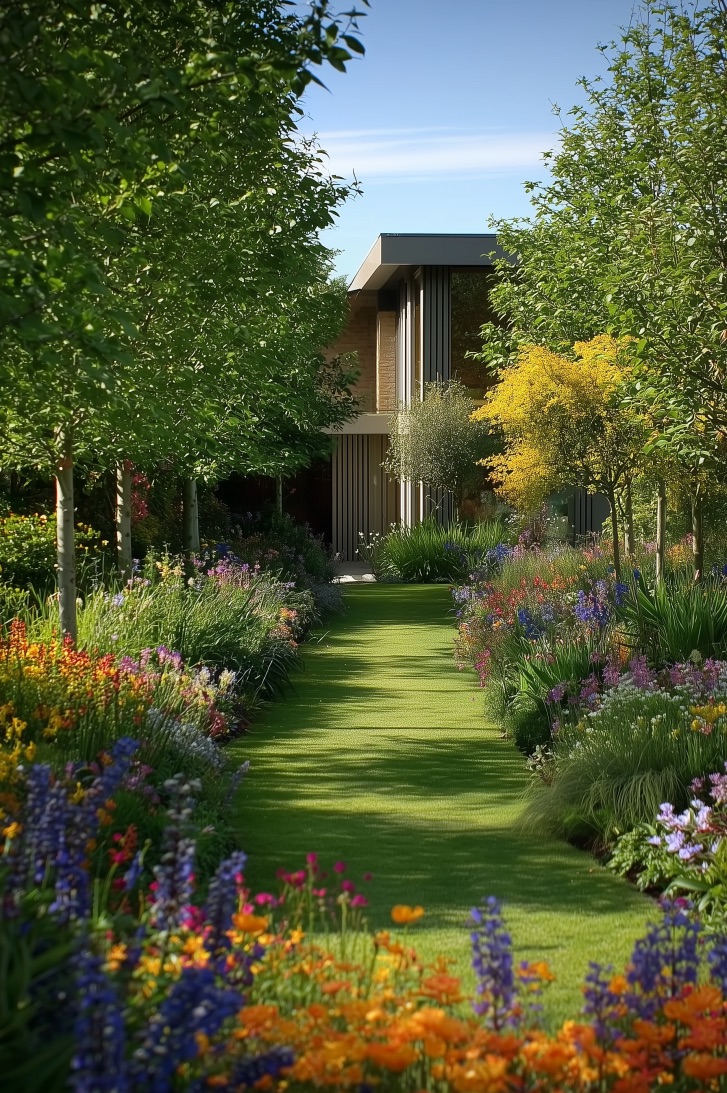
Here’s a quirky fact: Minnesota’s plant hardiness spans three zones, meaning gardeners in Duluth and those in the Twin Cities might as well be on different continents. This range creates opportunities for tailored entrances that acknowledge specific conditions rather than fighting them.
Mixing perennials of varying heights, bloom times, and foliage types prevents that “just installed” look that screams landscaper-special. Layer threadleaf coreopsis with purple coneflower, tuck in some penstemon for hummingbirds, and anchor corners with Karl Foerster grass.
The modern home’s clean lines benefit from plantings that echo rather than compete – structured but not stiff, colorful but not chaotic.
One tip worth remembering: odd-numbered groupings (threes, fives, sevens) create more natural-looking drifts than paired plantings, which can read as too symmetrical against contemporary architecture.
10. Showcase Daylilies for a Vibrant Zone 6 Display
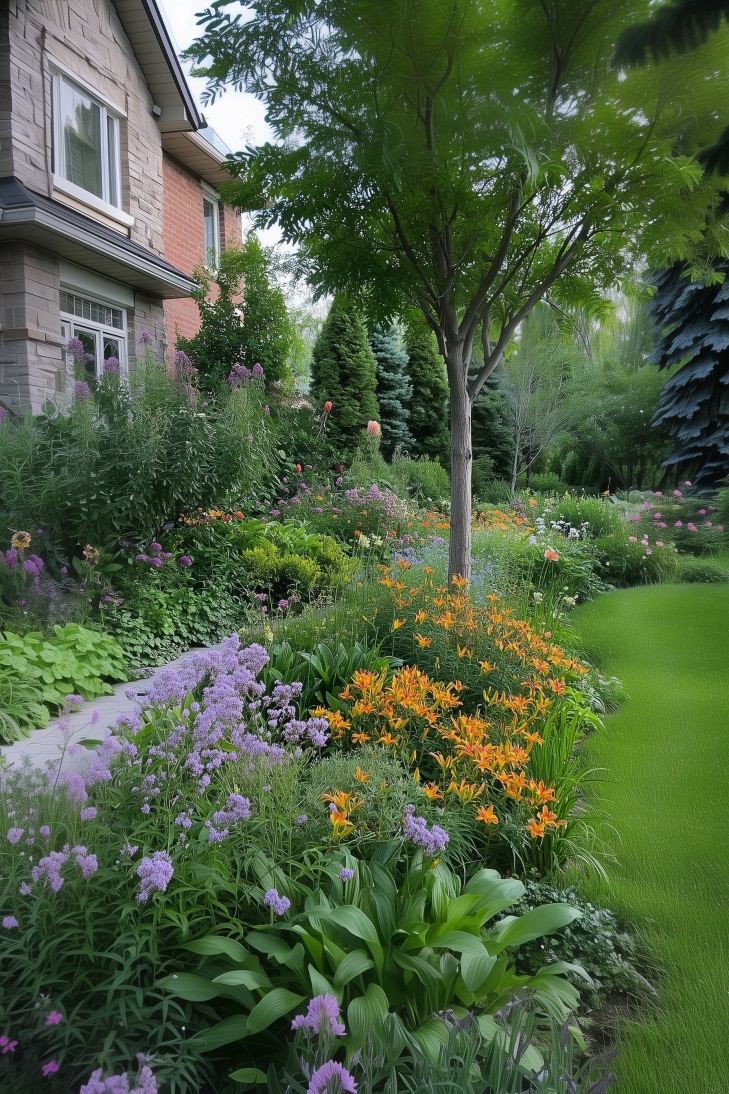
Daylilies function as the workhorses of perennial borders – not glamorous terminology, perhaps, but utterly accurate. Each flower lasts only a day (hence the name), but established clumps produce so many buds that the show continues for weeks.
Picture a drift of ‘Stella de Oro’ repeating its golden performance from late spring through fall, or ‘Happy Returns’ living up to its name with waves of lemon-yellow blooms. Burgundy varieties like ‘Pardon Me’ add depth, while coral and pink selections soften borders.
The foliage itself – arching and grass-like – contributes texture even when flowers pause between flushes.
11. Feature a Winding Pathway Lined with Dense Shade Plants
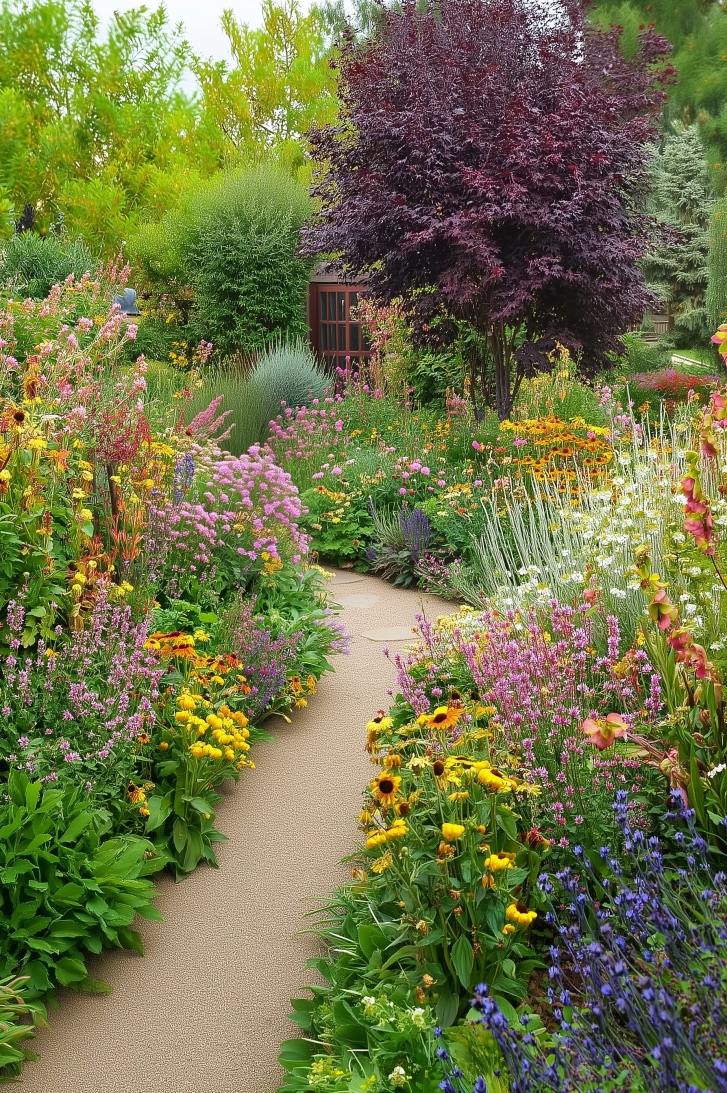
Shade often gets dismissed as a limitation, but it’s really an invitation to work with a completely different palette of textures and subtle colors. A serpentine path through this shadowy realm becomes a journey into cooler, quieter spaces that offer respite from sunny expanses.
Dense plantings along such a path create a tunnel effect without feeling claustrophobic – think of it as garden architecture built from living material rather than lumber.
Rodgersia contributes massive, horse-chestnut-like leaves; brunnera offers heart-shaped foliage dotted with forget-me-not flowers; epimedium forms a weed-suppressing carpet beneath taller companions. The path itself disappears and reappears as it winds, creating mystery about what lies around each bend.
This design approach transforms shade from a problem you tolerate into an asset that defines your garden’s character and provides experiential variety that flat, sunny plots simply can’t match.
12. Arrange Irregular Stone Stepping Paths for Front Yards Landscape Design Full Sun
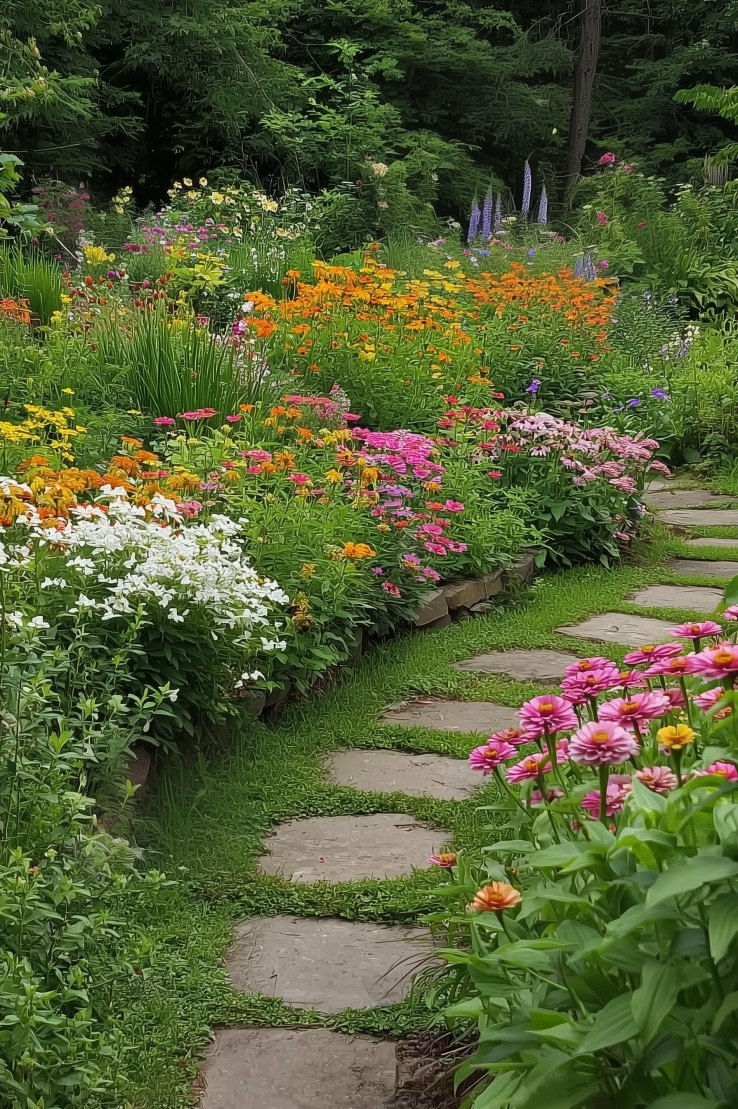
People often overlook how the negative space – the actual path material – shapes garden perception as much as the plants themselves. Irregular stones, placed with intentional randomness rather than military precision, suggest age and establishment that even mature plantings can’t fake on their own.
For instance, you might use flagstone pieces of varying sizes, spacing them so ground-cover perennials like creeping thyme or blue star creeper colonize the gaps. This softens the stone’s hardness while releasing fragrance underfoot.
In full sun, the stones absorb heat that many perennials appreciate, creating microclimates along the path edge where borderline-hardy plants might thrive.
The transition between path and planting bed becomes blurred rather than hard-edged, creating a more organic feel that seems to have evolved over time rather than having been installed last Tuesday.
Conclusion
Your perennial garden awaits – not as a distant dream, but as a series of achievable steps that begin with a single plant choice, one pathway decision, or that perfect bench placement. Start where you stand, with the conditions you have, and let each season teach you something new.
The beauty of perennials lies not just in their return each spring, but in how they reward your attention with years of evolving color, texture, and discovery. Grab your gloves and make something grow.