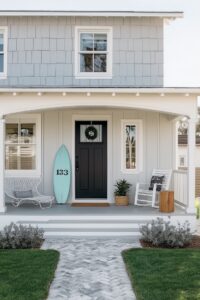

Growing vegetables in compact urban yards presents a real challenge. Traditional ground-level plots demand perfect soil and eat up precious space.
Raised beds solve both problems at once. They bring the garden up to you, creating defined growing zones that transform even the smallest concrete patio into a thriving green retreat.
1. Frame Raised Beds with Rustic Stone Borders for Landscaping Charm
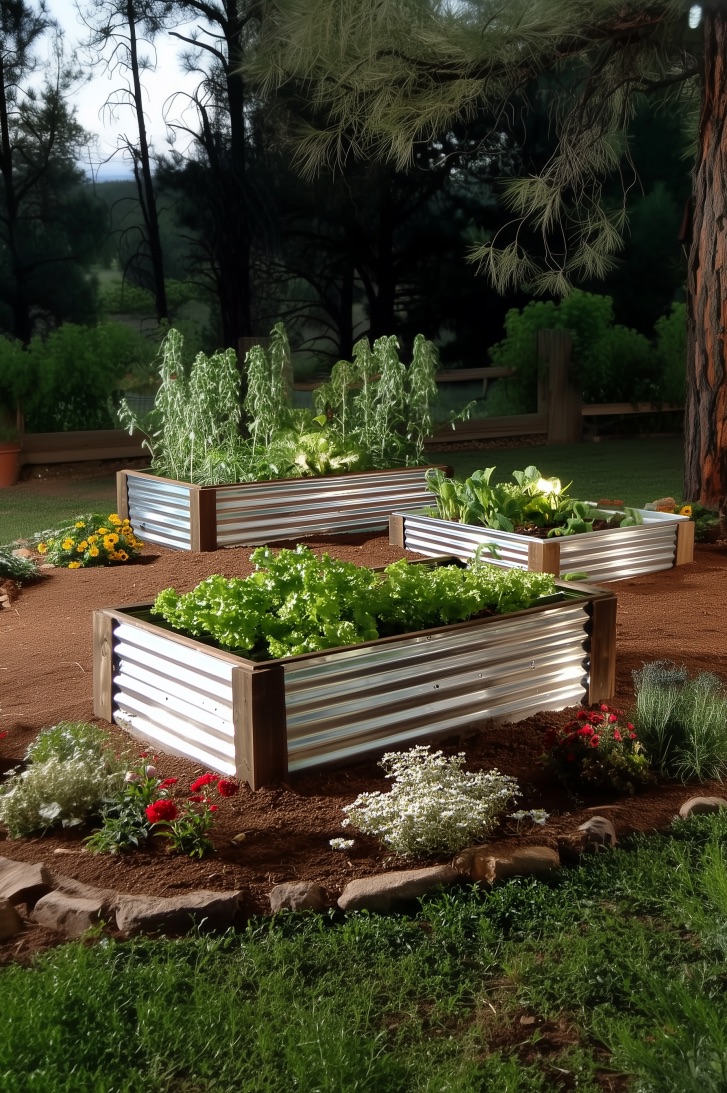
Stacked fieldstone seems like a leftover from another era, yet it grounds a raised bed like nothing else. The irregular edges and earthy tones create an instant connection to older European gardens, the kind where vegetables and flowers grow side by side without fuss.
Stone holds heat beautifully, warming the soil inside for earlier spring planting. The weight stabilizes even tall beds, and unlike wood, stone never rots or needs painting. Your herbs and greens nestle against cool rock faces that look better with every passing season.
This natural framing turns a simple growing box into a permanent landscape feature you’ll admire year-round.
2. Line Raised Beds Along Fence for a Defined Backyard Layout
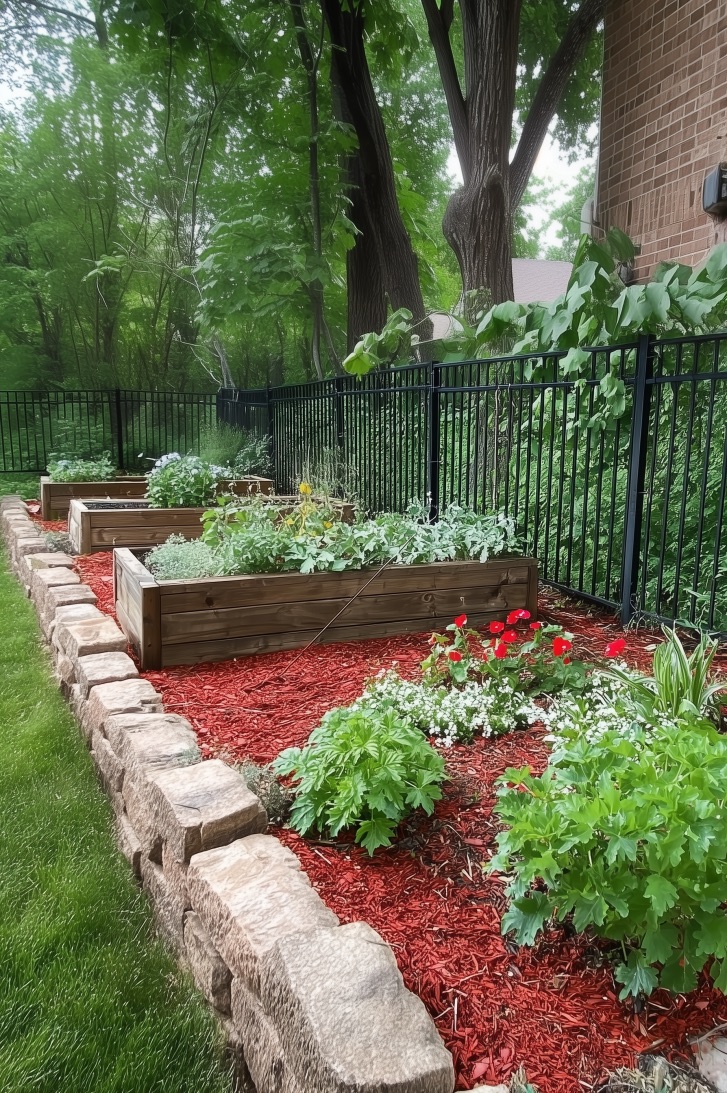
Position your beds parallel to the fence line, leaving about two feet between them for access. This arrangement maximizes your growing space while keeping pathways clear and purposeful.
A row of beds hugging the perimeter creates natural zones in your yard – gardening happens along the edges while the center stays open for seating or play. You might plant tomatoes in the sunniest stretch, then transition to shade-loving lettuce where the fence casts afternoon shadows.
The repetition creates rhythm, and suddenly your backyard has structure it never had before.
Leave the bed closest to the kitchen for herbs you’ll snip daily without tracking through wet grass.
3. Highlight Contrasting Raised Bed Materials for Dynamic Design
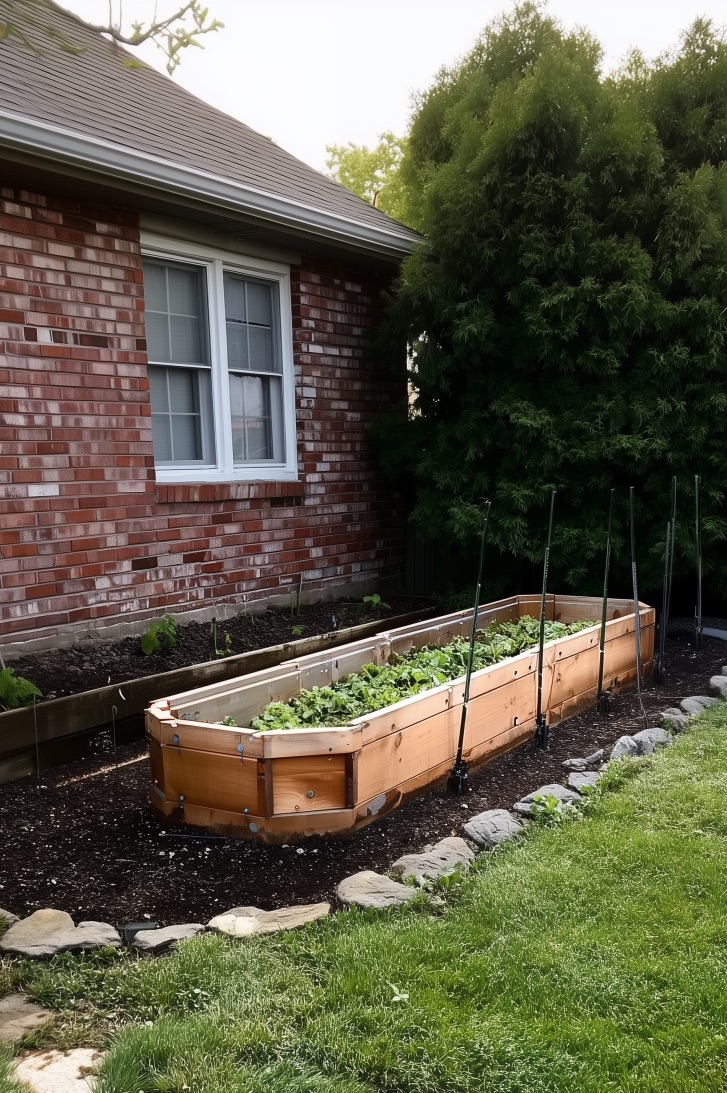
You expect uniformity in a garden, rows of identical boxes marching across the yard. But pairing weathered reclaimed wood with sleek composite boards creates tension that makes people look twice.
The contrast tells a story about old meeting new. Perhaps your front beds use crisp white vinyl that matches the house trim, while the vegetable garden out back sprawls in rough cedar planks. Or you might alternate – dark stained wood, then galvanized metal, then painted boards in sage green. Each material catches the light differently.
The variety suggests the garden evolved over time, that it grew organically rather than appearing fully formed in a single weekend.
This deliberate mismatch gives your outdoor space depth and character that cookie-cutter uniformity never achieves.
4. Incorporate Corrugated Metal Sides for Durable Diy Appeal
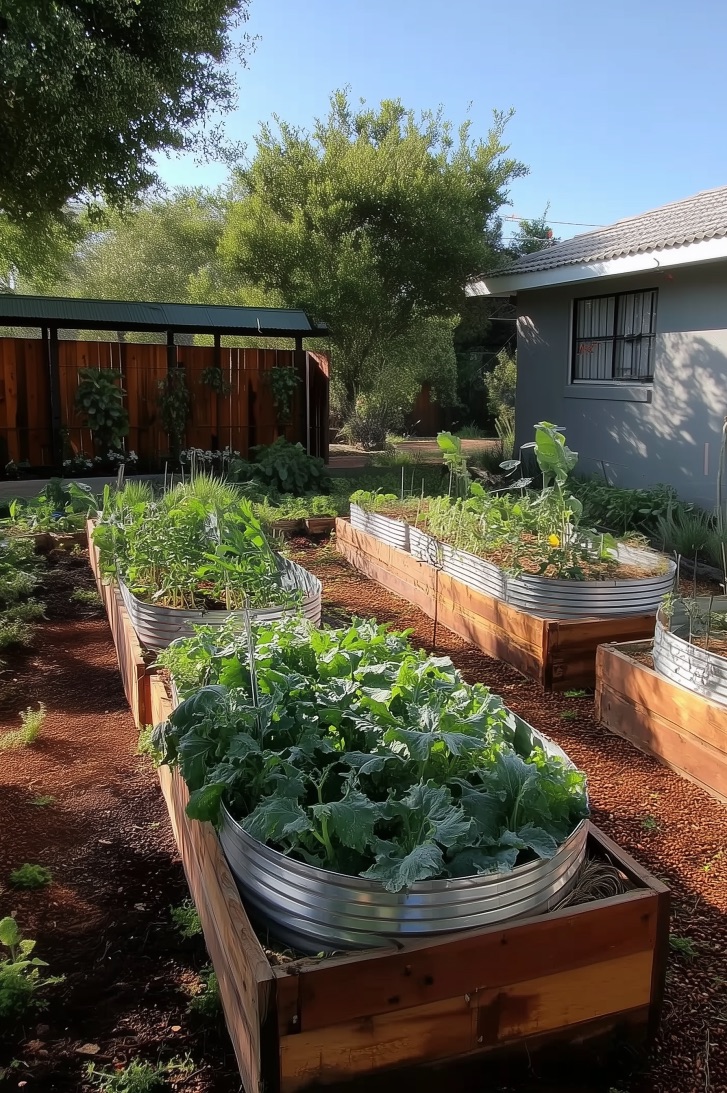
You might remember corrugated metal from old barns or industrial buildings, but it’s finding new life in contemporary gardens. The ribbed panels are inexpensive, nearly indestructible, and surprisingly easy to work with using basic tools.
The metal conducts heat, warming your soil faster in spring – though you’ll want to line the interior with landscape fabric to keep roots from direct contact. Rain drums against the sides with a satisfying sound, and the galvanized finish develops a soft patina as zinc weathers to matte gray.
Cut panels to any height you need, bolt them to wooden corner posts, and you’ve got beds that will outlast you.
Expect to see more of these utilitarian materials creeping into residential landscapes as gardeners embrace the functional aesthetic.
5. Install a Wooden Trellis for Vertical Flower Ideas
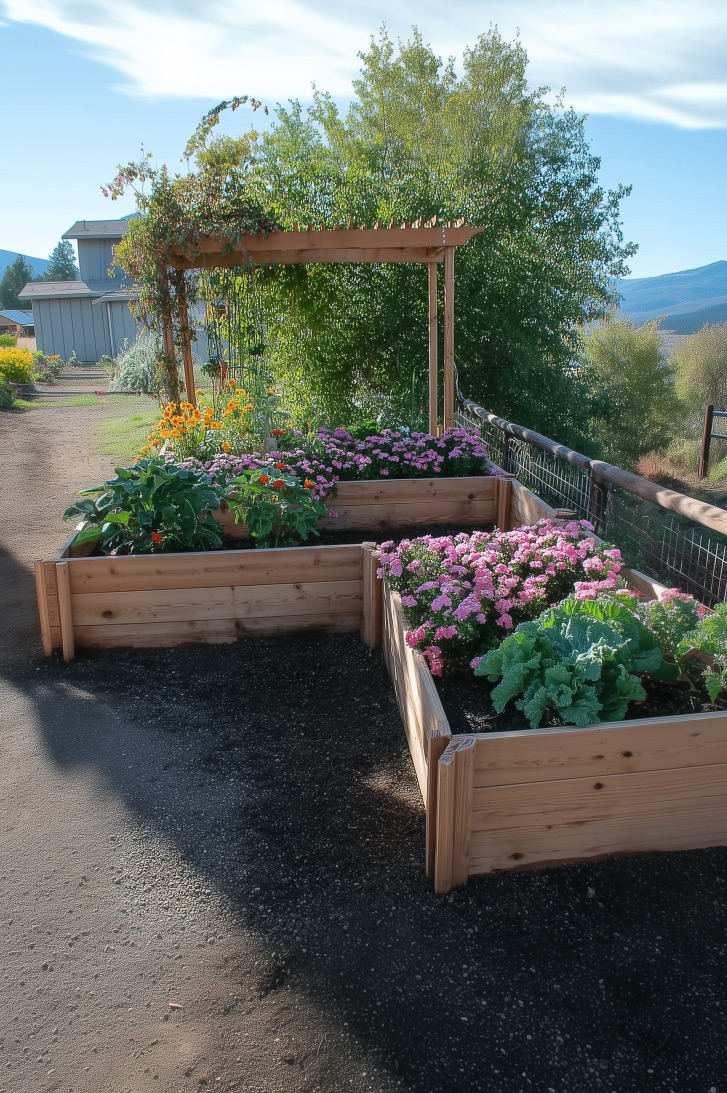
Tall plants need support, and a trellis attached directly to your raised bed gives climbing vegetables and flowers exactly that. The vertical structure doubles your growing capacity without claiming more ground space.
Trellises have anchored gardens for centuries, training peas and beans skyward while keeping fruits clean and easy to harvest. Modern versions might use welded wire panels or woven willow, but the principle remains unchanged. Build it sturdy – eight-foot posts sunk deep beside the bed, with horizontal slats or mesh for tendrils to grip.
As vines scramble upward, they create a living wall that screens views and provides shade for heat-sensitive greens planted below.
What could you grow if your garden went up instead of out?
6. Feature Lush Greenery Against Dark Railings for Striking Backyard Contrast
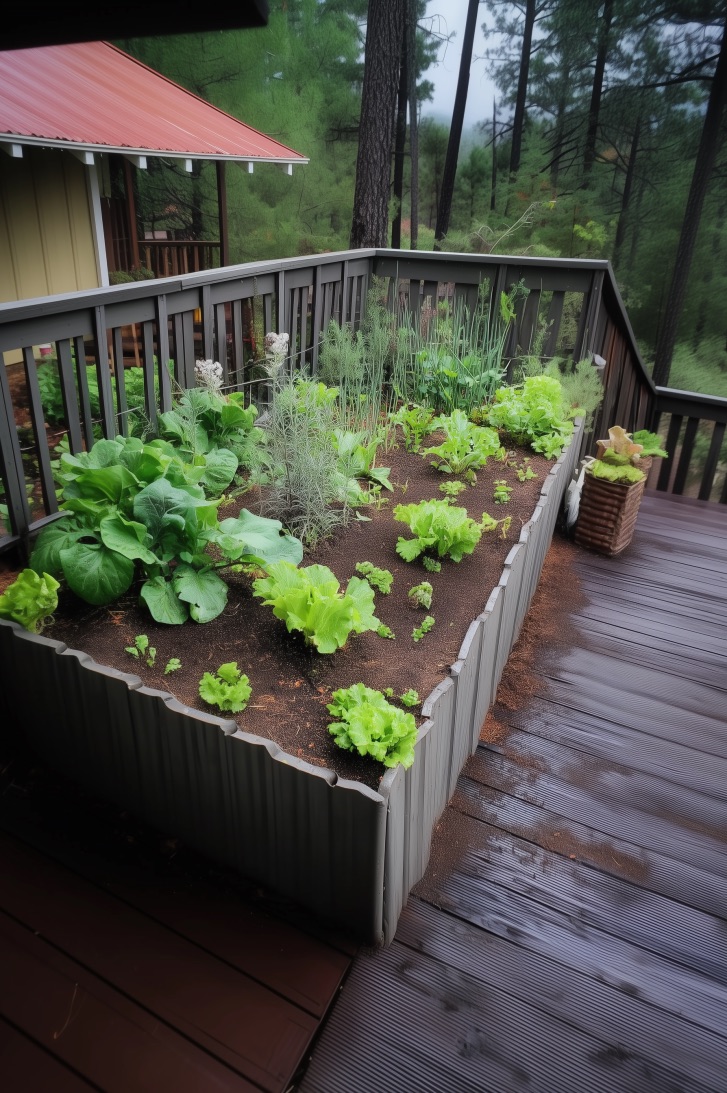
Building on the contrast idea from earlier, dark painted railings or fence boards make the perfect backdrop for raised beds overflowing with foliage. Charcoal gray or black amplifies every shade of green.
The dark surface recedes visually, pushing the plants forward. Lime-colored lettuce positively glows against matte black, while blue-green kale leaves seem to float in space. This theatrical effect costs nothing but paint, yet it transforms ordinary beds into focal points that draw the eye across the entire yard.
7. Curve Raised Garden Bed Edges for Unique Layout Design
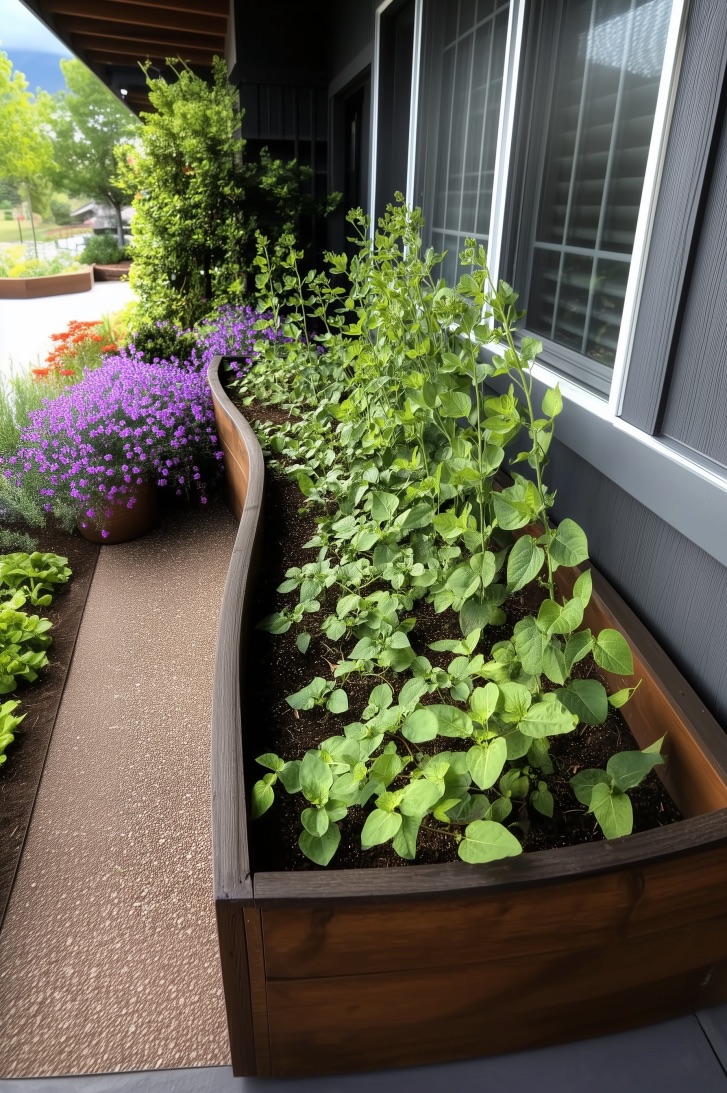
Straight lines dominate modern landscapes, but organic curves are staging a comeback in residential gardens. Flowing bed edges soften hard architectural lines and create movement through the space.
Flexible composite boards or thin metal edging bend easily into gentle arcs and kidney shapes. You might design a serpentine bed that winds along a pathway, or create circular islands that float in lawn or gravel. The curved forms feel more natural, as if the beds grew there rather than being imposed on the landscape.
They invite you to follow their contours, discovering new views and planting combinations as you move.
Installing curves takes more planning than straight runs – you’ll need to stake out the shape with garden hoses or spray paint before building. But the extra effort pays off in visual interest. Even subtle curves, just a gentle bow to a long rectangular bed, break up monotony and add unexpected grace to your garden layout.
8. Pair Raised Beds with Decorative Trees for Striking Backyard Ideas
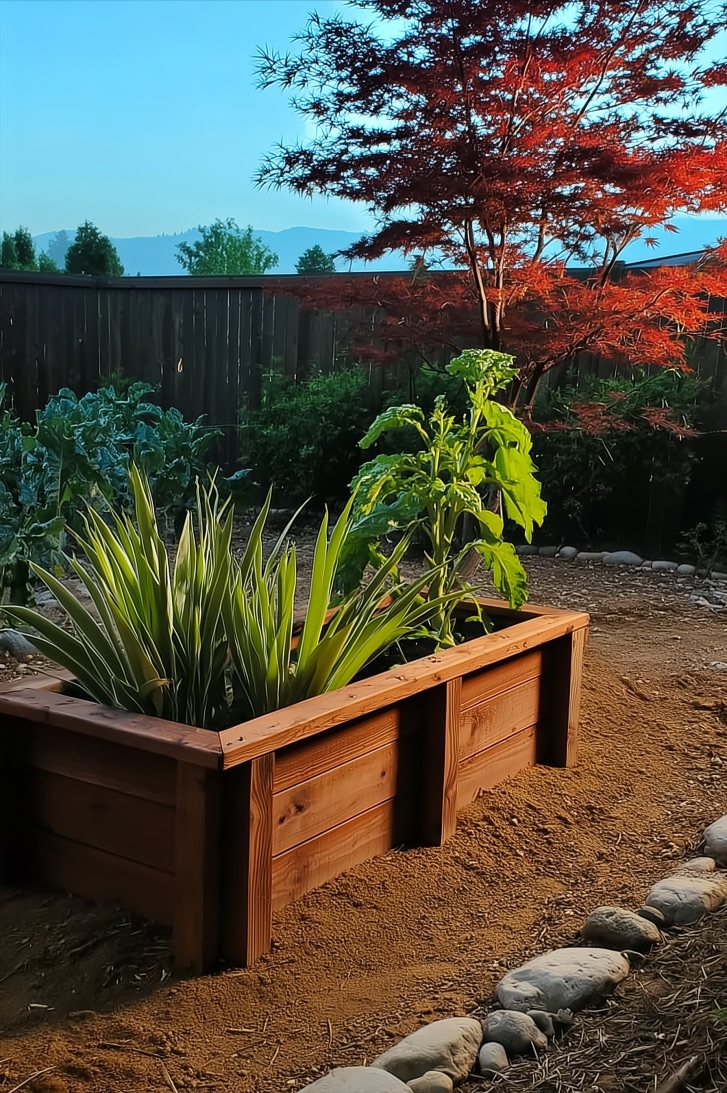
Ancient Romans planted fruit trees among vegetable plots, understanding that gardens need vertical anchors. A Japanese maple or flowering dogwood planted near raised beds creates height variation and seasonal drama.
The tree provides afternoon shade for cool-season crops and acts as a visual exclamation point among low-growing vegetables. Choose ornamental varieties that won’t spread aggressive roots – you want neighbors, not competitors.
The tree’s canopy filters harsh summer sun, its branches frame views of the beds, and in autumn the falling leaves become mulch. This layered approach mirrors natural ecosystems where plants coexist at different heights.
Don’t plant moisture-hungry trees too close, or they’ll steal water from your vegetables and turn your raised beds into dry, struggling plots.
9. Accent Raised Beds with Gravel Paths for Easy Diy Layout
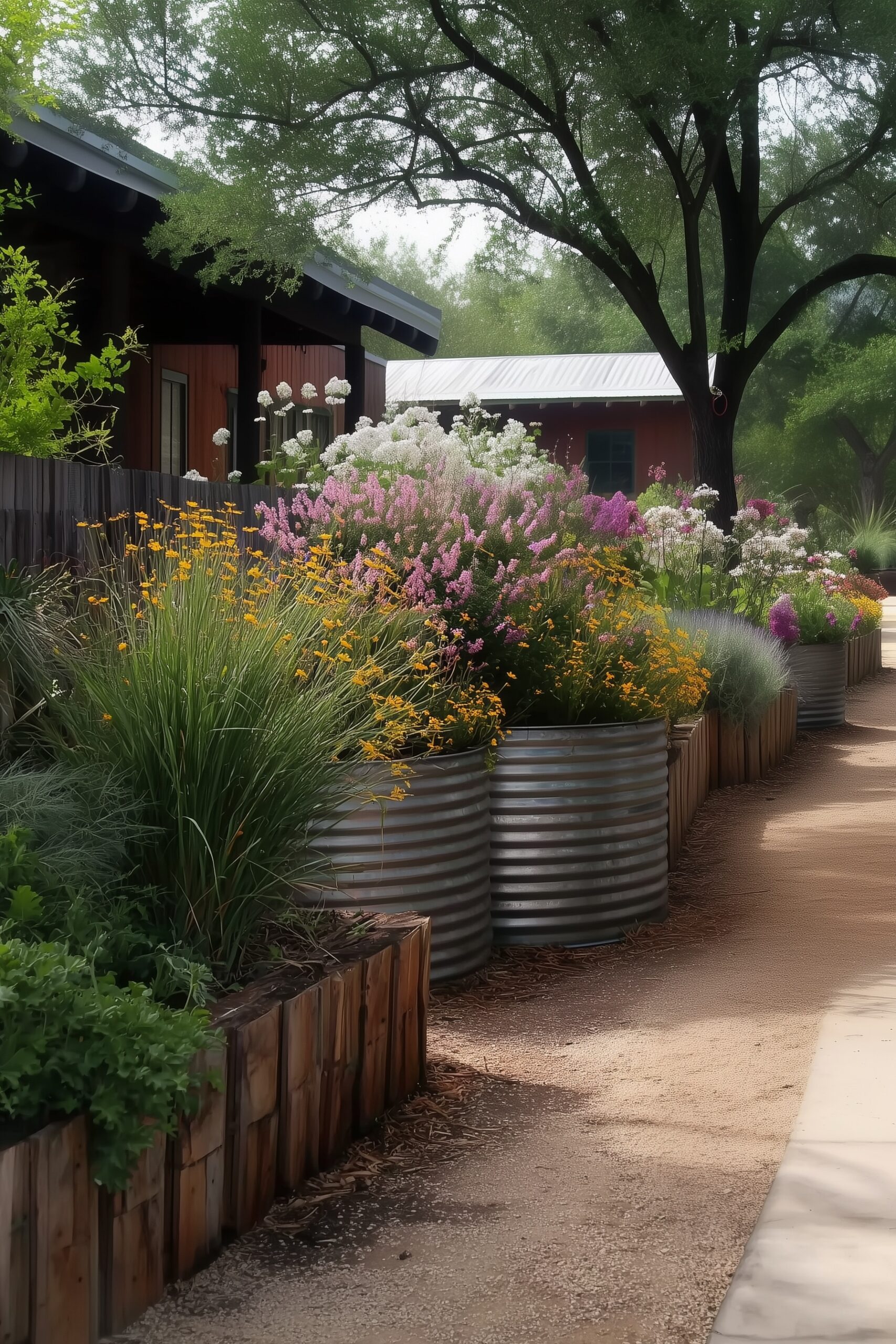
How do you keep mud from tracking everywhere during spring rains? Gravel pathways between beds drain instantly and never turn soggy.
A three-inch layer of pea gravel or crushed stone creates firm, all-weather access. You might edge the paths with steel or aluminum strips to keep gravel from migrating into beds, then add stepping stones at intervals for firmer footing.
The neutral tones complement any bed material, and the crunching sound underfoot signals transition from lawn to garden. Gravel suppresses weeds better than mulch and costs far less than pavers or concrete.
This simple addition transforms your raised bed area from a collection of boxes into an organized outdoor room with clear circulation patterns.
10. Arrange Raised Beds in Tiers for Visual Backyard Impact
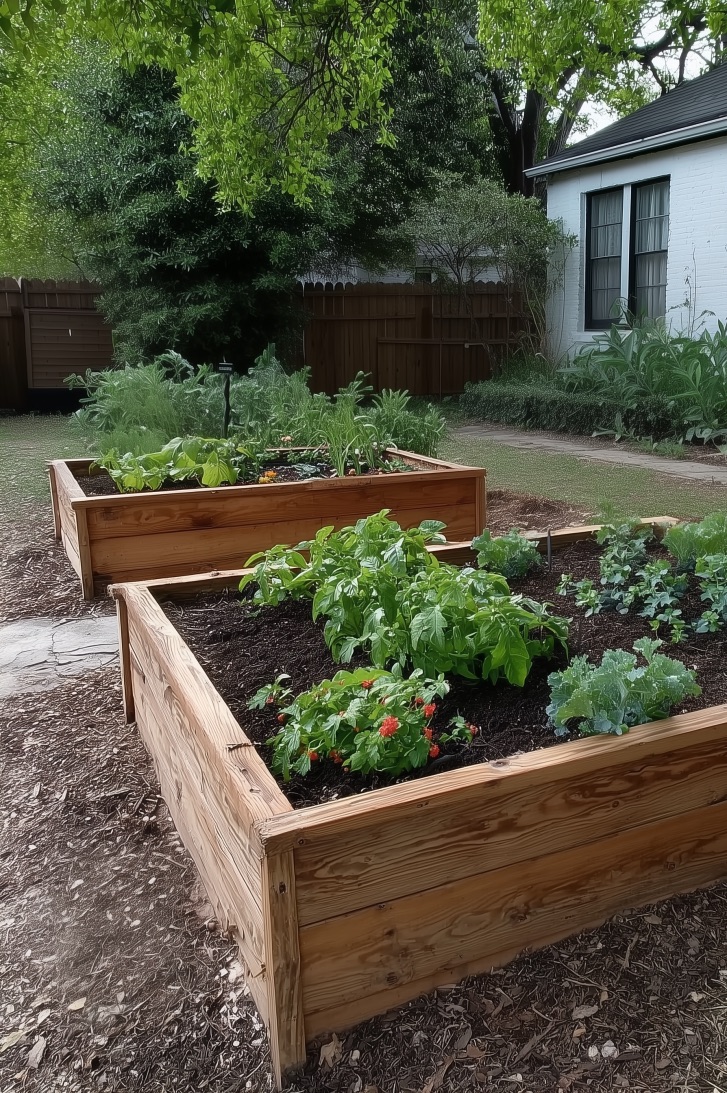
Three elements create compelling garden design: height variation, repetition, and focal points. Tiered beds deliver all three simultaneously.
Stepping beds up a slope in graduated heights creates drama while solving drainage challenges – water naturally flows downward, irrigating each level in sequence. Even on flat ground, varying bed heights from eight inches to twenty-four inches adds dimension.
Tall beds in back, medium in the middle, short in front – the arrangement frames your plantings like stadium seating. You gain easier access to every plant, better air circulation reduces disease, and the layered effect makes even a small collection of beds feel abundant.
Could this tiered approach finally solve that awkward slope where nothing wants to grow?
11. Integrate Tall Privacy Fencing for Modern Backyard Design
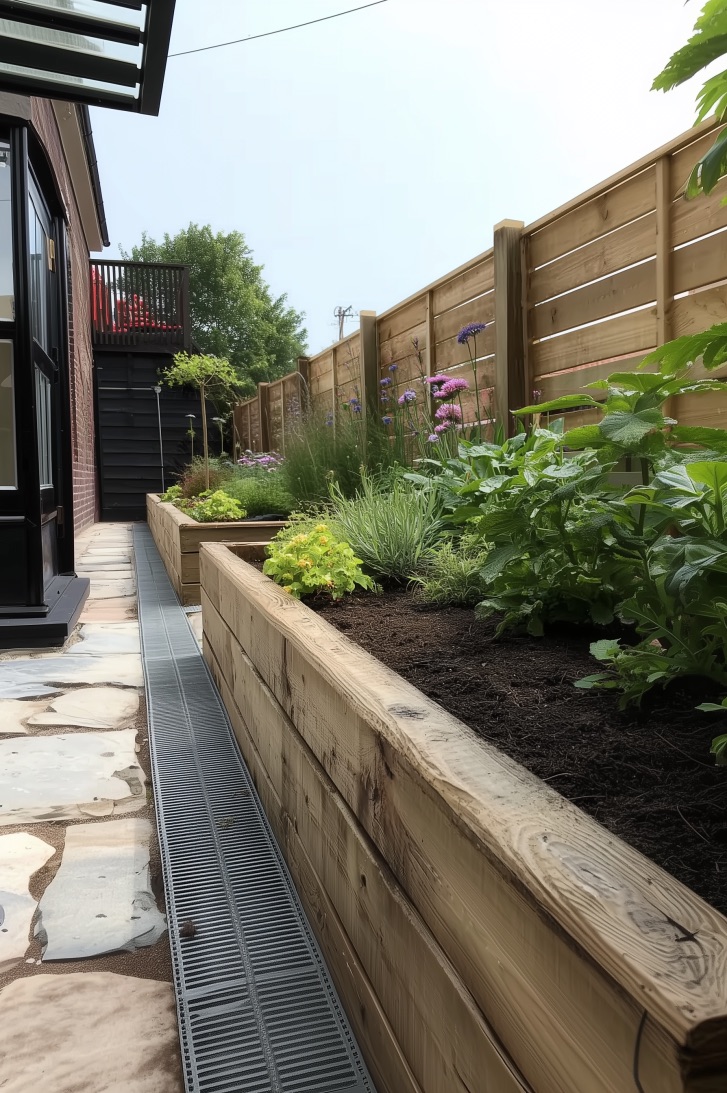
Exposed gardens feel vulnerable, especially in tight urban lots where neighbors overlook everything. A tall fence behind raised beds solves the privacy problem while creating a neutral backdrop.
Modern horizontal slat fencing in dark stain or natural cedar establishes boundaries without feeling fortress-like. The fence blocks wind, reflects heat toward plants, and gives you a surface for hanging tools or decorative elements. Six to eight-foot panels transform your garden from public display to private sanctuary.
You’ll relax more knowing you can weed in pajamas without an audience.
The fence and beds work together, the vertical and horizontal elements creating a layered composition. Mount simple hooks on the fence for hanging baskets, string lights along the top rail for evening ambiance, or train espaliered fruit trees against the flat surface to maximize every square foot of your garden retreat.
12. Add Lattice Fence Panels for Stylish Backyard Separation
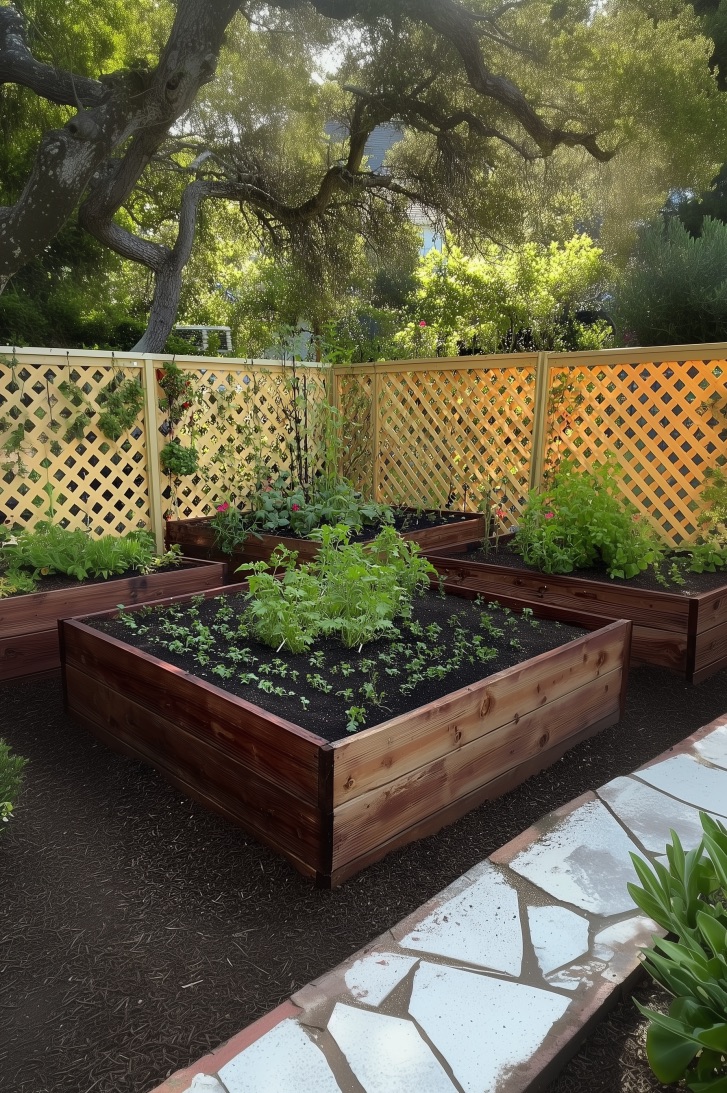
If solid fencing feels too heavy, lattice panels offer separation without complete isolation. The crisscrossed pattern filters views while maintaining airflow and a sense of openness.
Lattice creates semi-private zones, suggesting boundaries without rigid division. You might install panels between raised bed sections to define a working garden area separate from ornamental plantings. The diagonal grid adds texture and casts interesting shadows as sun angles change throughout the day.
Vines quickly weave through the openings – clematis, morning glory, or passion flower – transforming functional screening into living artwork. Paint the lattice to match your home’s trim, or leave cedar natural to weather into silver-gray.
The key is proportional scale: pair delicate lattice with smaller beds and save solid fencing for larger installations. Choose closed-grid patterns for more privacy, open squares for lighter separation. Lattice works especially well in side yards where you need some screening but can’t sacrifice much width to thick fences or plantings.
Secure panels firmly to pressure-treated posts – lightweight lattice catches wind like a sail and will rip loose from inadequate supports.
13. Space Raised Beds Equally Apart for a Balanced Layout
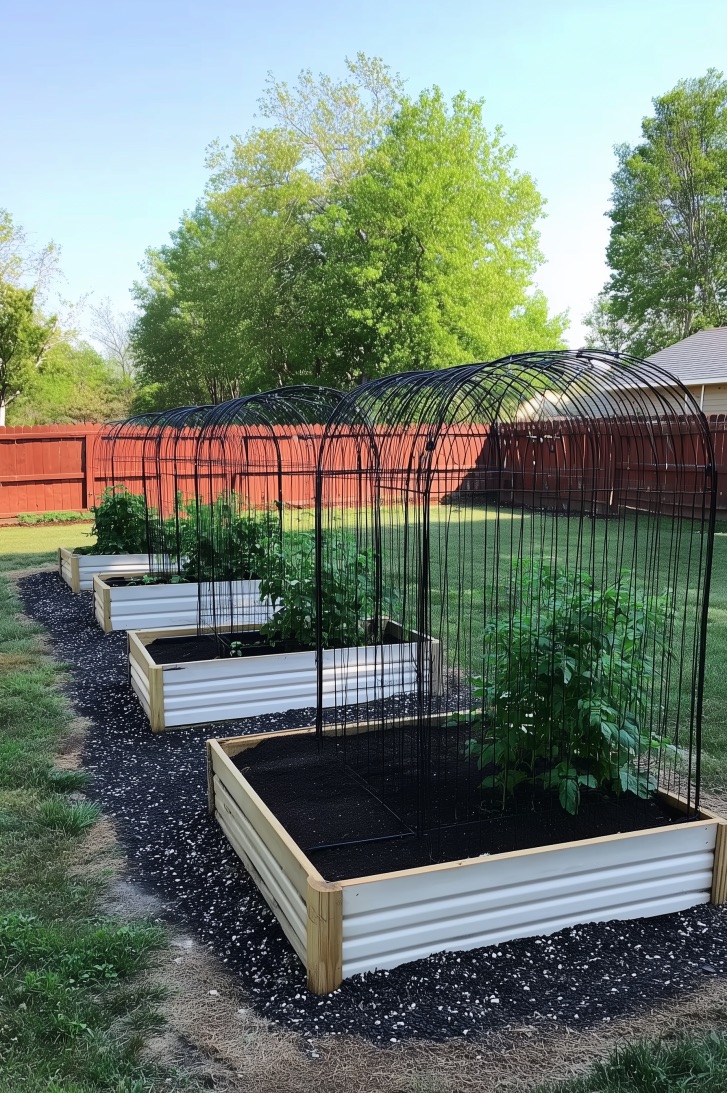
Random spacing looks careless, almost accidental, as if beds landed wherever they fell. Precise, equal intervals between beds create intentional geometry that signals thoughtful design.
Consistent spacing – whether eighteen inches or three feet – establishes visual rhythm. Your eye can predict the pattern, finding satisfaction in the repetition. This regularity also standardizes pathway widths, ensuring you can maneuver wheelbarrows or carts without constantly adjusting course.
The uniformity paradoxically makes individual beds stand out more, like frames around paintings. Each planting becomes a distinct composition within the larger organized whole.
Measure carefully during installation because correcting uneven spacing later means relocating entire beds filled with soil and plants.
14. Elevate Raised Beds on Legs for Accessible Diy Gardening
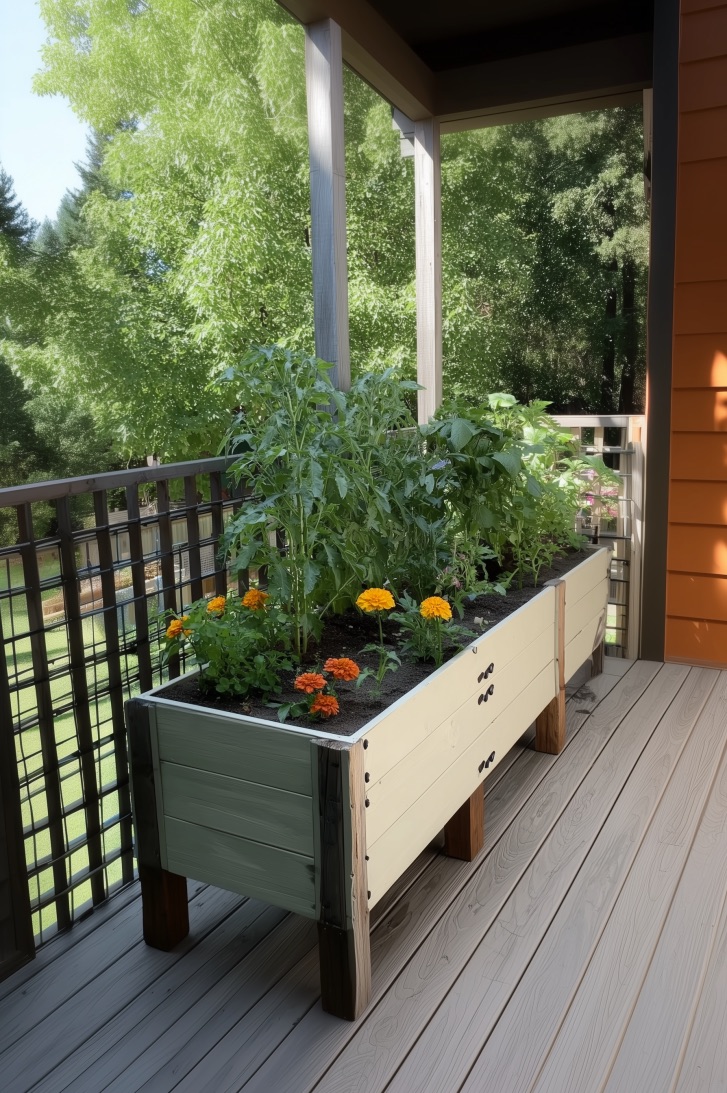
Watch anyone over sixty garden in ground-level beds – the constant bending strains backs and knees. Beds mounted on sturdy legs bring plants to waist height, eliminating the stoop.
These elevated tables, essentially large containers with good depth, let you garden standing up or seated on a stool. The height deters some pests like slugs and provides storage space underneath for tools and supplies. Drainage improves since water flows freely through without pooling.
Build them thirty to thirty-six inches tall using treated lumber or metal frames, ensuring the legs won’t rot or rust where they contact the ground.
15. Add Colorful Blooms for Fresh Backyard Ideas
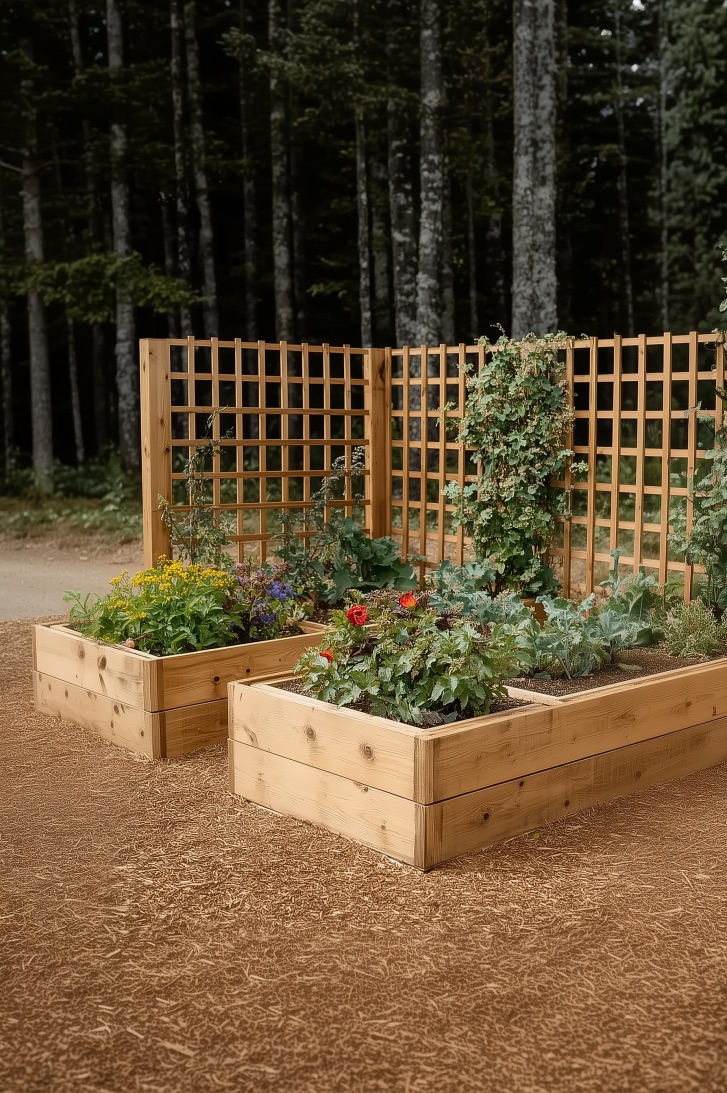
Vegetable gardens tend toward green monotony – lettuce, kale, tomato leaves, cucumber vines. But raised beds need not be purely utilitarian spaces devoted to food production alone.
Interplanting flowers transforms practical beds into celebrations. Marigolds along the edges aren’t just pretty – they deter aphids and other pests. Nasturtiums spill over sides in orange and red cascades while their peppery leaves add bite to salads. Zinnias and cosmos rise between pepper plants, attracting pollinators that increase fruit set.
The colors satisfy something deeper than hunger, feeding your need for beauty alongside nutrition.
Even a few flowering plants scattered among vegetables shifts the mood from farmyard to cottage garden, making the space somewhere you’ll want to linger beyond harvest time.
Conclusion
Your backyard holds more potential than you’ve tapped so far. Start with one raised bed this weekend – frame it with stones, line it with metal, or curve its edges into something unexpected.
Plant what you’ll actually eat, add flowers for color, and watch how quickly that first bed fills with life. You’ll be planning the second before harvest arrives.