

Picture waking up in a space where Swedish hygge meets Japanese zen – where every texture whispers calm and each corner breathes simplicity. The Japandi aesthetic isn’t just another design trend; it’s a philosophy that transforms bedrooms into restorative havens.
This fusion style strips away the noise of modern life, leaving only what nurtures your well-being. You’ll discover how natural materials, muted palettes, and purposeful minimalism can reshape your sleeping quarters into something extraordinary.
1. Balance Soft White Bedding with Warm Earth Tone Accents For Cozy Appeal
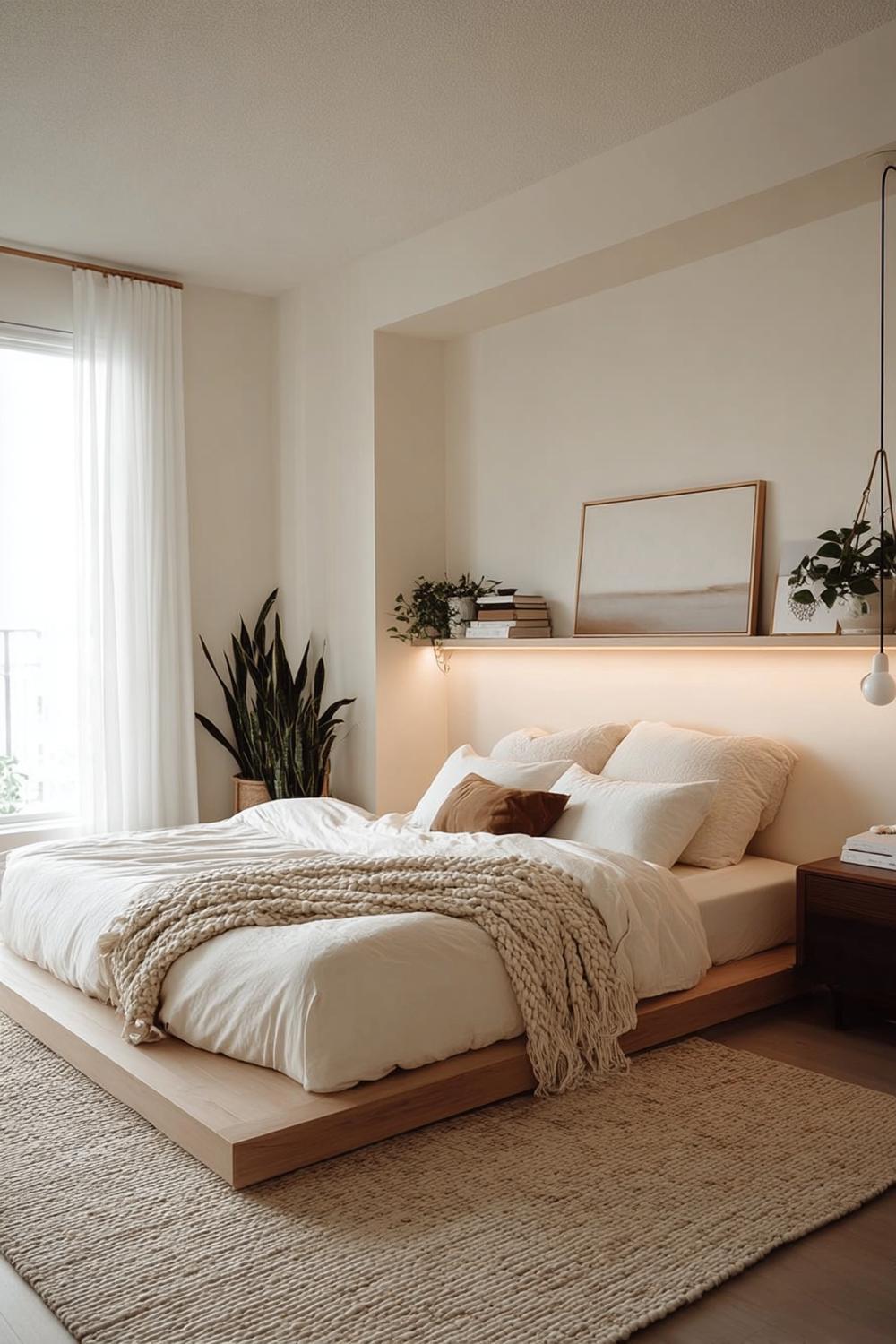
Did you know that the Japanese concept of “kanso” (simplicity) pairs beautifully with Scandinavian “lagom” (just the right amount)? This philosophical marriage comes alive when you layer crisp white linens against warm terracotta cushions or sandy beige throws.
The magic happens in the contrast – pure white sheets create breathing room while ochre and umber accents ground the space. You might drape a camel-colored wool throw across the foot of your bed, then scatter a few rust-toned pillows against the headboard.
These earth tones pull warmth from the wood grains in your furniture, creating visual threads that tie everything together.
When you master this balance, your bedroom transforms from merely functional to deeply restorative. The white expands the space visually while the earth tones cocoon you in comfort – it’s this duality that makes Japandi bedrooms feel both spacious and intimate.
2. Incorporate Natural Wood Furniture For Cozy Warmth
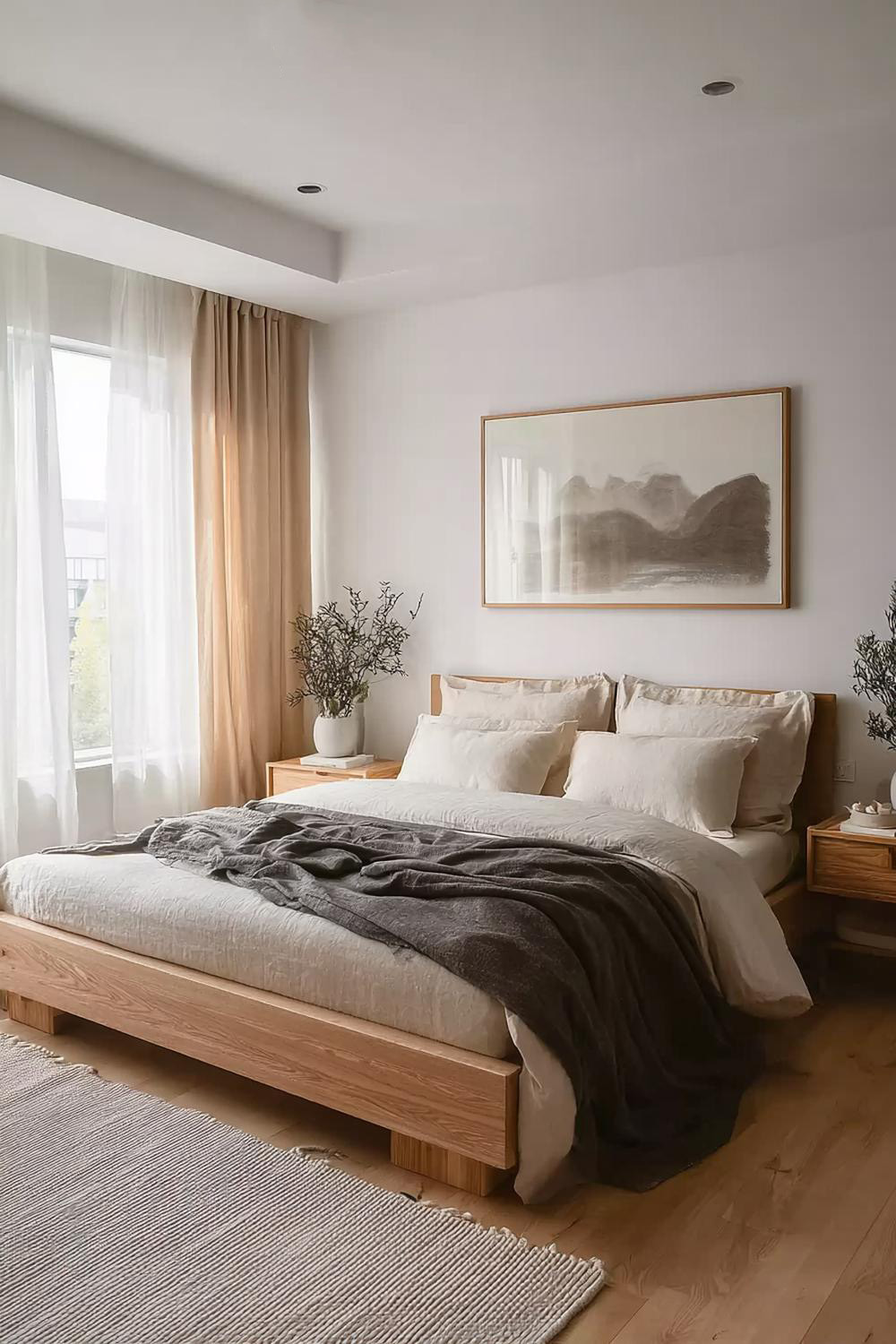
While sleek metal frames dominate modern bedrooms, Japandi spaces embrace the raw beauty of oak, walnut, or ash. These woods bring life into your room – each grain tells its own story, each knot adds character.
A low wooden bed frame anchors the space, perhaps paired with matching nightstands that showcase the wood’s natural imperfections. The warmth radiates outward, softening hard edges and creating an organic flow that synthetic materials simply can’t replicate.
3. Create Cozy Ambiance with Soft Natural Linen Bedding
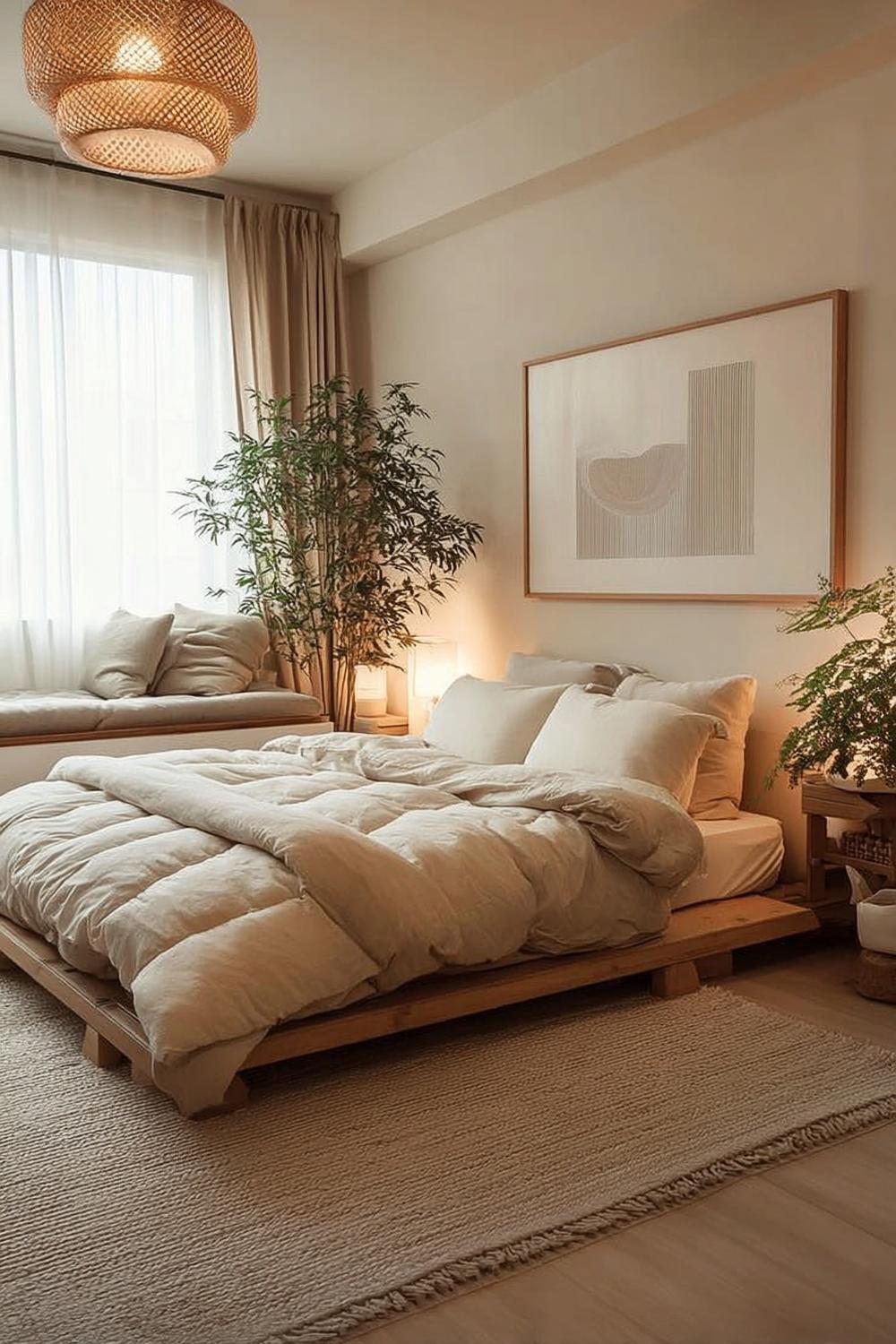
Building on those natural wood tones, linen bedding becomes the perfect textural companion – its slightly rumpled appearance echoes the wabi-sabi principle of finding beauty in imperfection.
Linen has this wonderful quality of looking effortlessly elegant even when it’s not perfectly pressed. European flax linen, with its subtle variations in weave and color, brings depth to your bed that cotton sheets can’t match.
The fabric breathes with the seasons, keeping you cool in summer and cozy during winter months – though it seems this material was designed specifically for the Japandi aesthetic.
As you layer different linen pieces – perhaps a stone-gray duvet cover with natural oatmeal pillowcases – you create a bed that invites touch and promises comfort.
4. Add Textured Throws and Pillows For Cozy Comfort
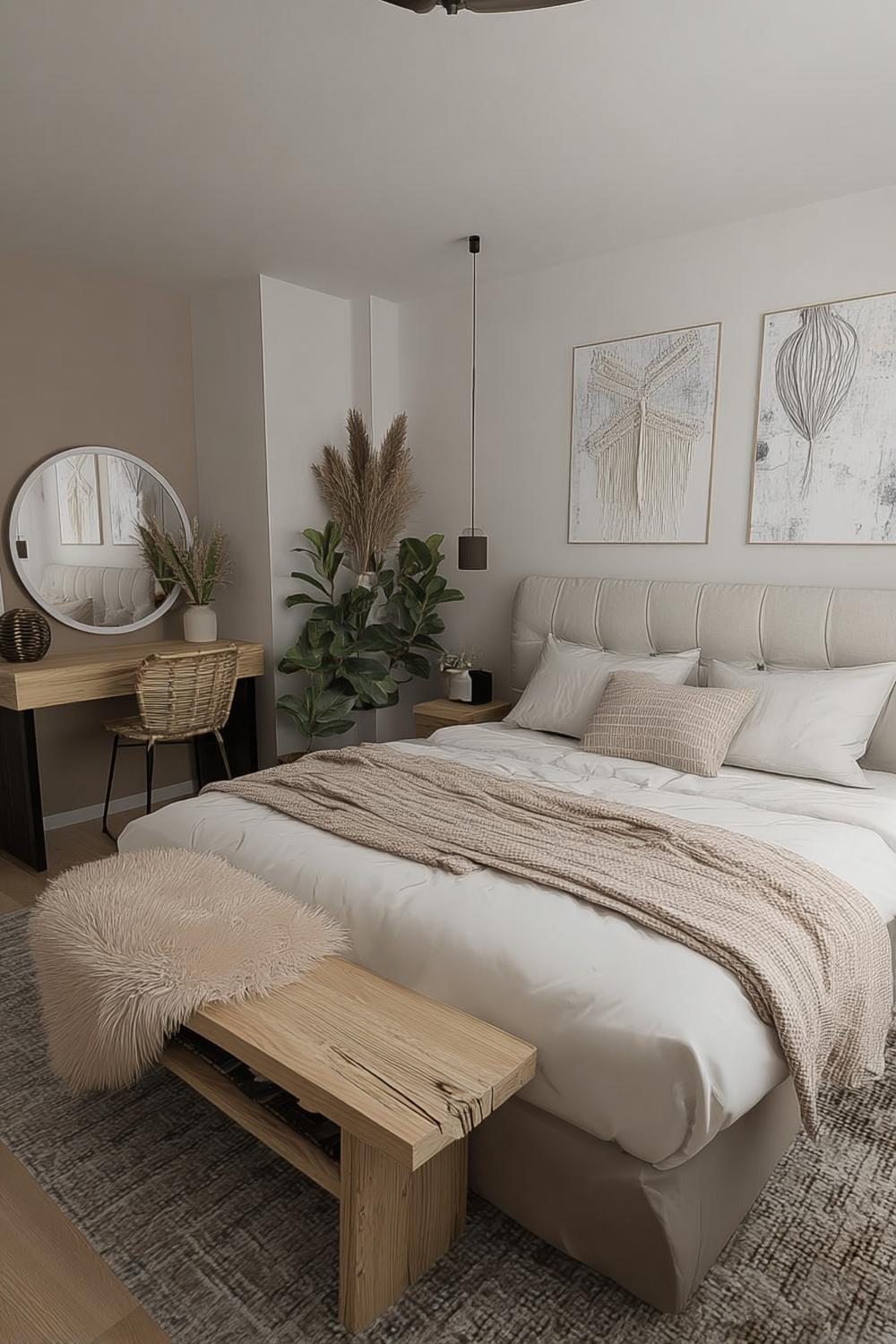
Too many bedrooms suffer from what I call “texture blindness” – everything feels the same. But when you introduce chunky knit throws, nubby wool cushions, or smooth silk accent pillows, suddenly your bed becomes a landscape of tactile experiences.
The interplay of textures creates visual interest without cluttering the space. A boucle throw draped casually over your linen bedding adds dimension, while a single velvet cushion provides an unexpected touch of luxury. These layers invite you to sink in, to nestle, to truly inhabit your space rather than just sleep in it.
This textural mixing appears to be gaining momentum as more people discover that minimalism doesn’t mean boring – it means being selective about what truly enhances your daily rituals.
5. Elevate Floor Bed Design For Modern Minimal Comfort
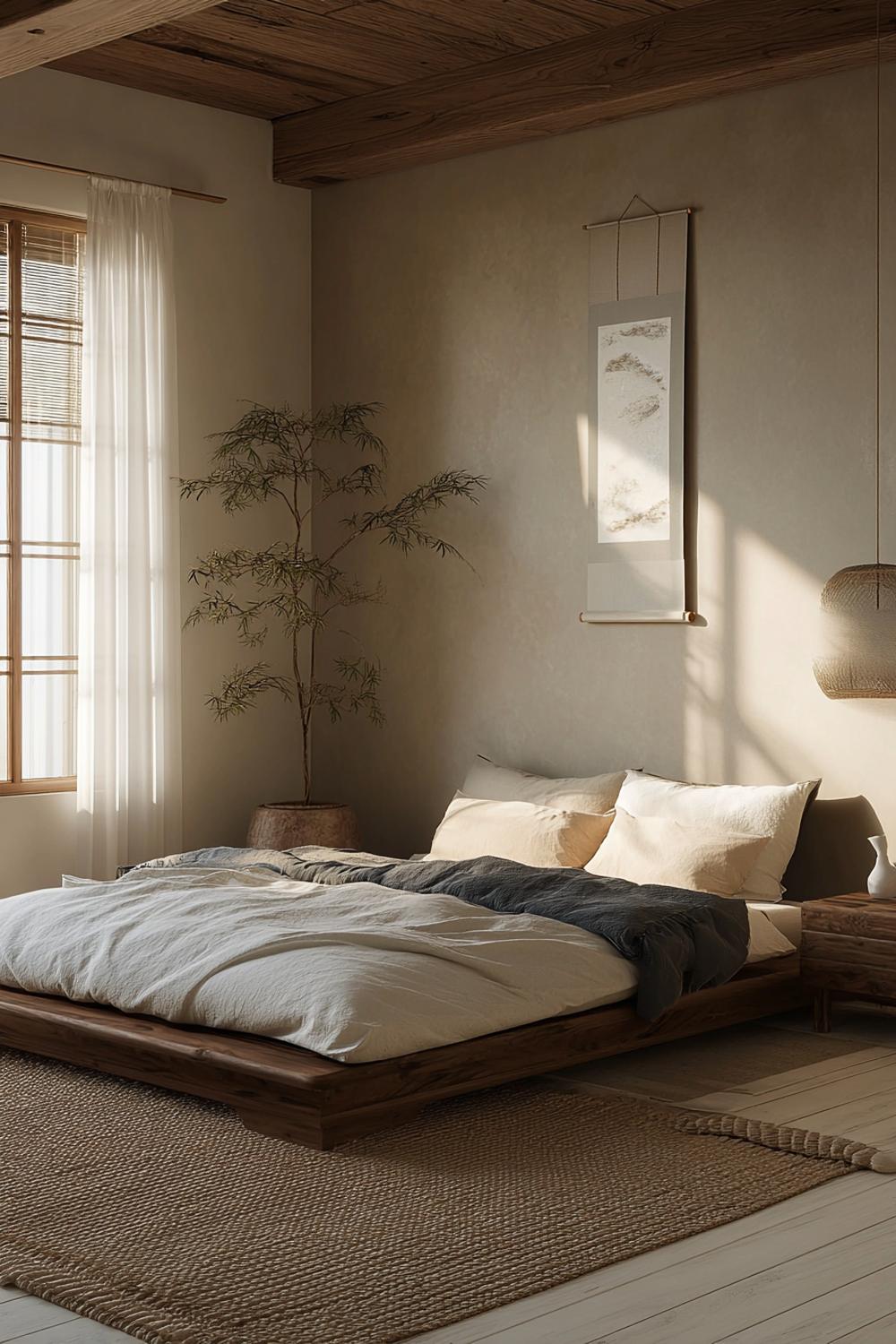
Here’s something unexpected: ditching your traditional bed frame for a floor-level sleeping arrangement might be the most luxurious choice you make.
Japanese futons have evolved into sophisticated platform designs that sit just inches off the ground. You create an entirely different relationship with your space – the low profile makes ceilings feel higher, rooms feel larger.
Add a thick memory foam mattress on a simple wooden platform, surround it with soft area rugs, and suddenly you’ve crafted a sleeping nest that feels both grounding and freeing.
Floor beds transform bedrooms into versatile spaces where boundaries between sleeping, reading, and relaxing blur beautifully.
6. Incorporate Rattan Bench Seating For Cozy Japandi Texture
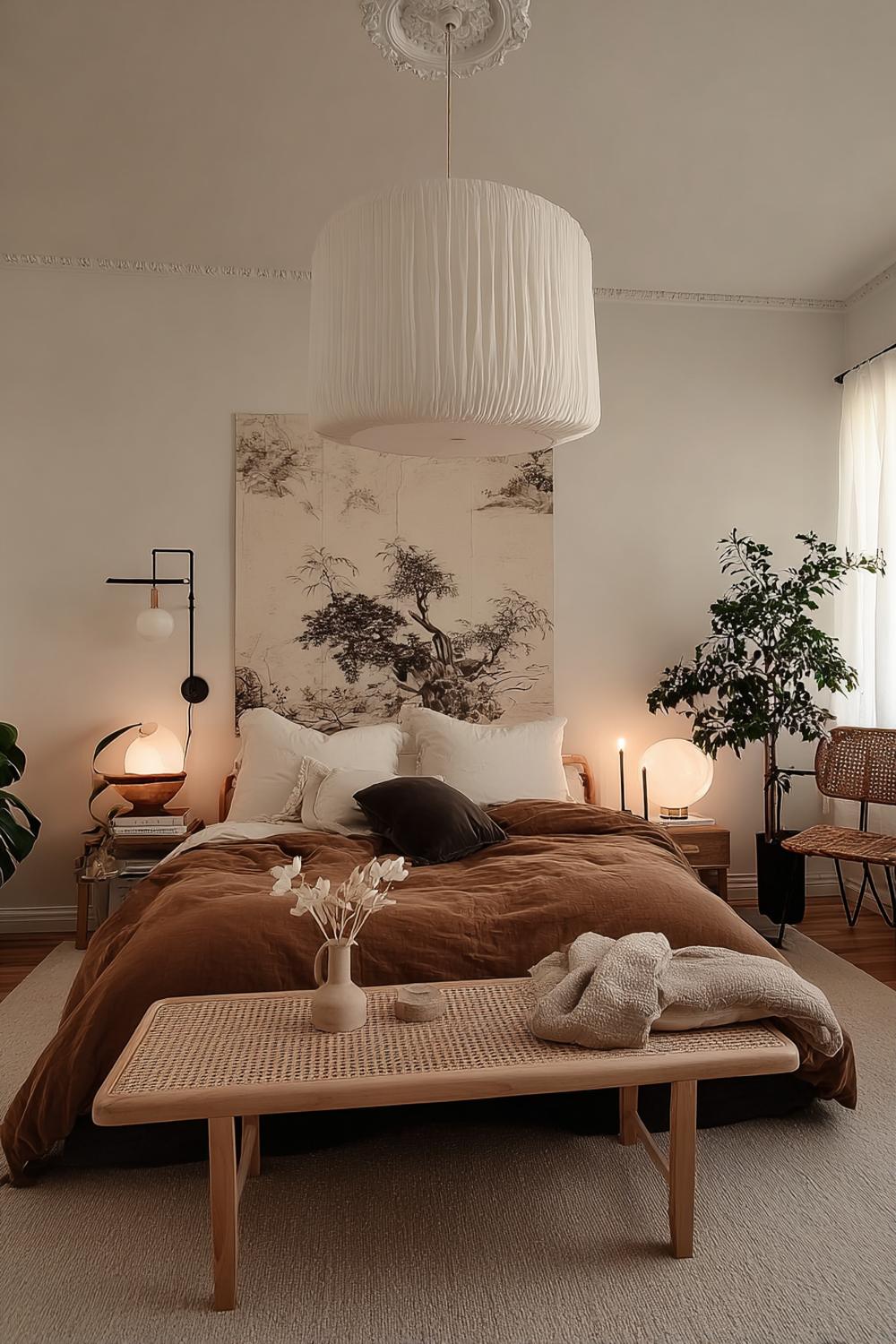
You know that awkward space at the foot of your bed? A rattan bench transforms it from dead zone to design statement, adding both function and that essential natural texture Japandi rooms crave.
The woven patterns catch morning light differently throughout the day, creating subtle shadow play that brings your bedroom to life. Beyond aesthetics, this bench becomes your morning perch for putting on shoes, a landing spot for tomorrow’s outfit, or simply a place to sit and enjoy your tea while gazing out the window.
Rattan’s flexibility means it works with both warm and cool color palettes – adapting like a chameleon to your existing decor.
Could there be a more perfect marriage of Scandinavian functionality and Japanese natural beauty?
7. Add Floating Shelves with Greenery For Cozy Natural Touch
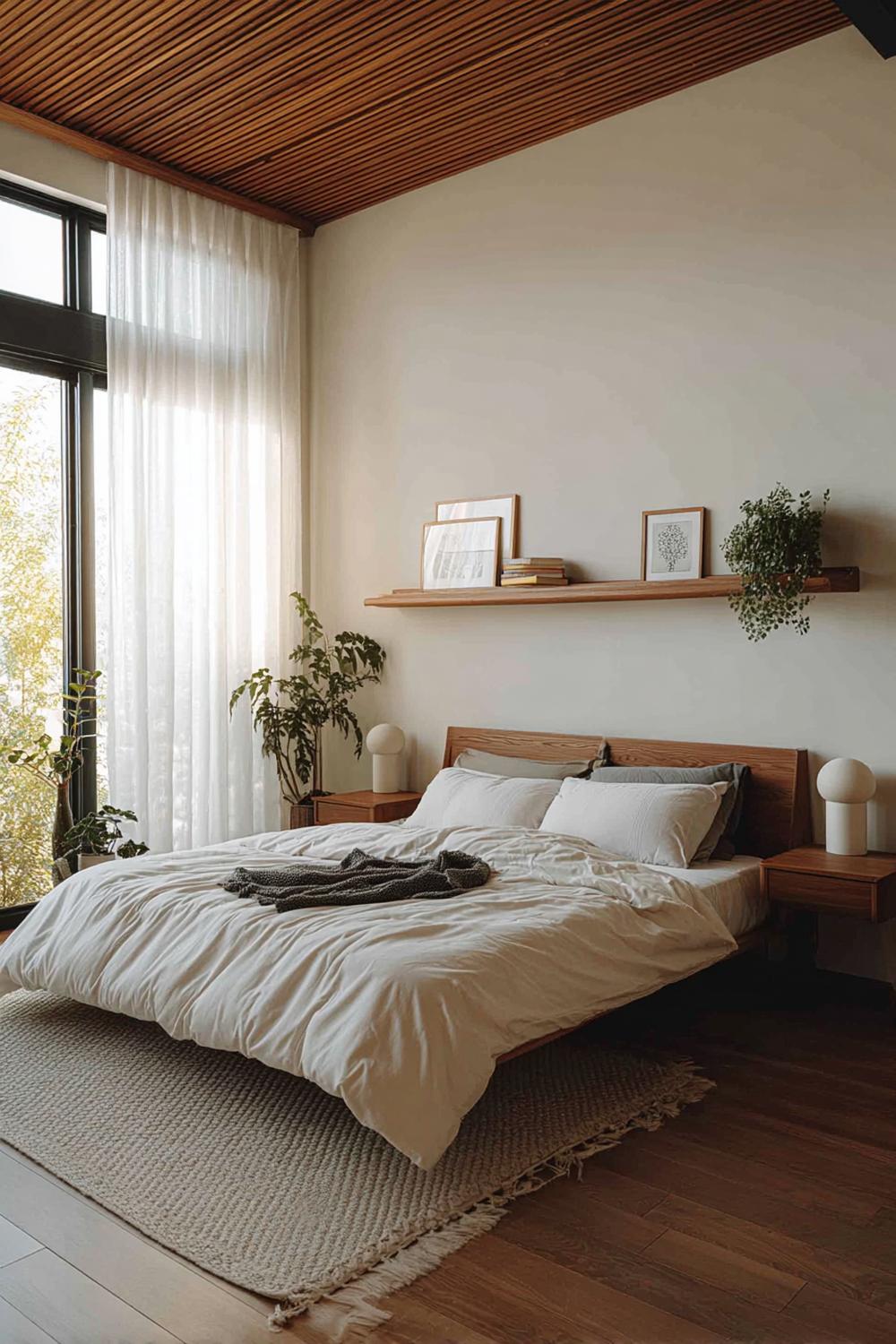
What if your walls could breathe? Floating shelves dotted with cascading pothos, sculptural snake plants, or delicate ferns turn vertical surfaces into living art.
Picture this: slim oak shelves at varying heights, each holding a different plant in a simple ceramic pot. A trailing philodendron spills over one edge while a compact jade plant sits stoically on another. These green moments break up the neutral palette just enough, adding life without chaos.
The plants also improve air quality – though let’s be honest, their real job is making you smile every morning.
Just remember: too many plants and you’ve got a jungle, not a Japandi bedroom. Three to five well-chosen specimens create impact without overwhelming your zen.
8. Highlight Bamboo Blinds For Modern Minimal Window Treatment
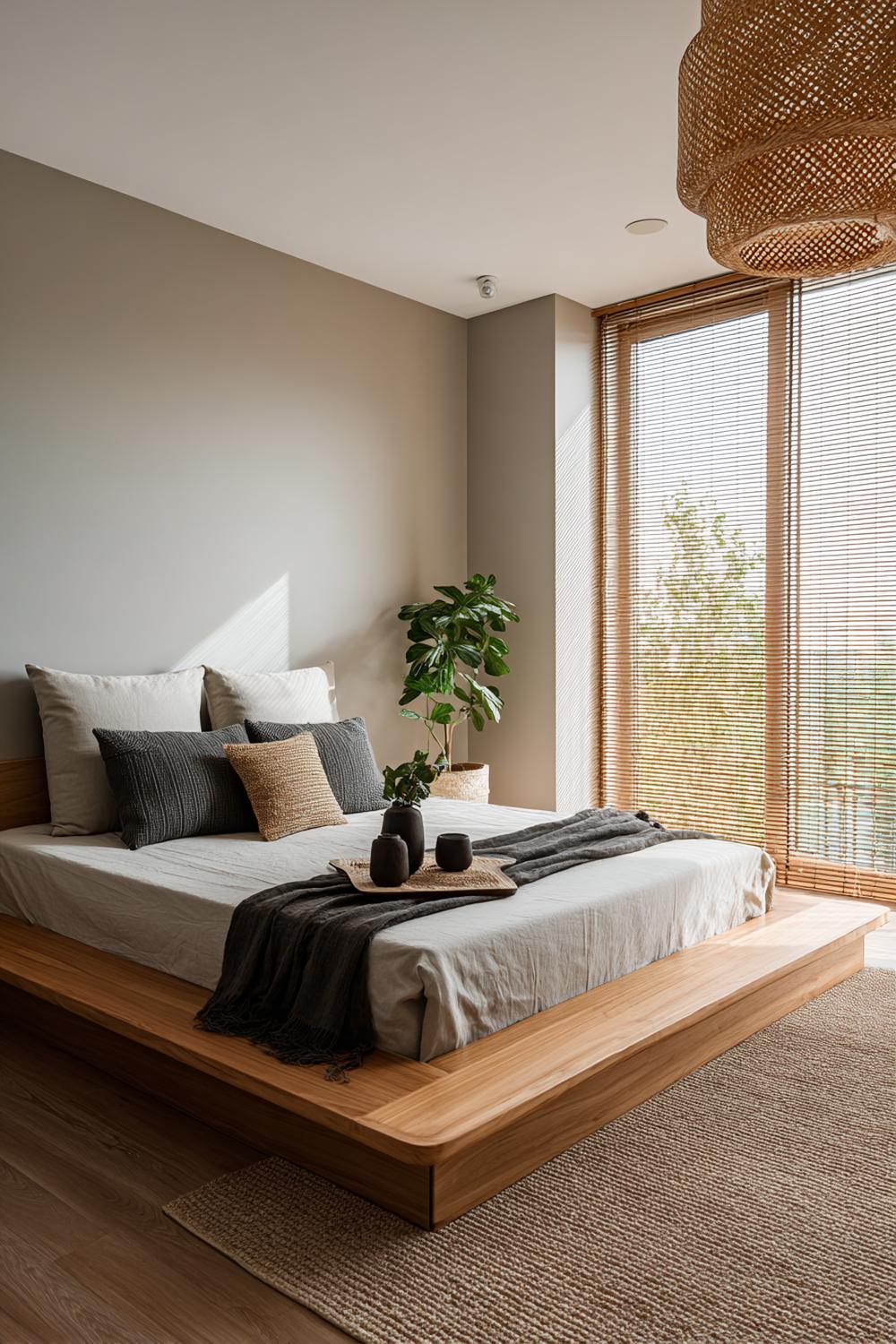
Forget those heavy curtains that block every ray of light – bamboo blinds filter sunshine into something magical, creating patterns that dance across your floors.
When closed, they provide privacy while still allowing gentle illumination to seep through. Raised, they nearly disappear, maintaining clean lines that honor both Japanese minimalism and Scandinavian simplicity. The natural bamboo echoes other wood elements in your room, creating cohesion without trying too hard.
9. Use Slatted Wood Screens to Add Modern Japandi Texture
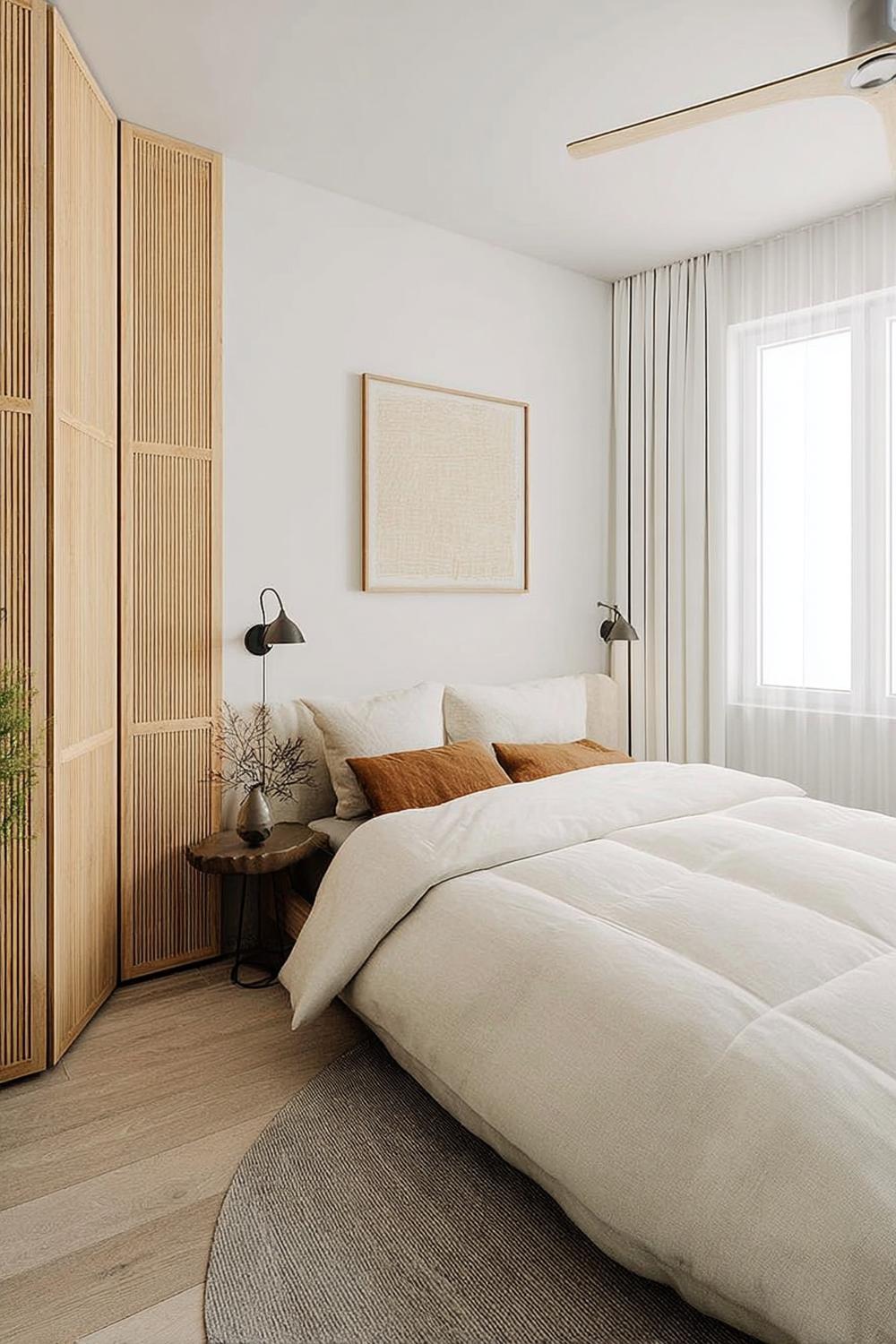
Most people think room dividers are only for studios, but a slatted wood screen in your bedroom? That’s pure design genius waiting to happen.
These architectural elements serve multiple purposes – they might section off a reading nook, create a dressing area, or simply stand as a sculptural piece against a bare wall. The vertical lines draw your eye upward, making rooms feel taller, while the gaps between slats maintain openness.
Light filters through creating ever-changing patterns that shift with the sun’s movement.
Choose lighter woods like birch or pine for Scandinavian leanings, or go darker with walnut for a more Japanese feel. The beauty lies in how these screens add complexity to your space without adding clutter – they’re functional art that defines zones while maintaining flow.
10. Anchor the Room with a Low Platform Bed For Modern Minimal Style
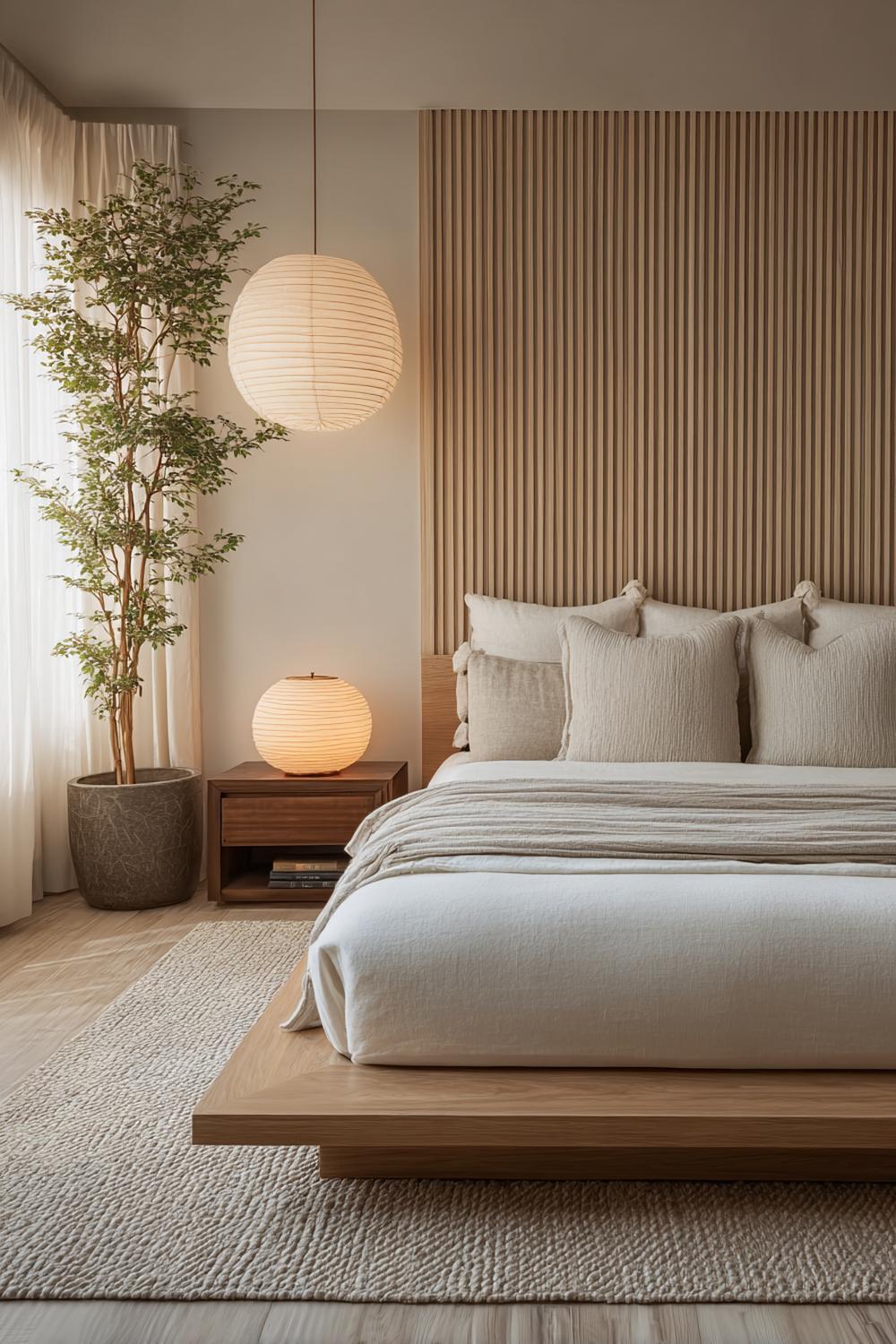
First things first: a low platform bed isn’t just furniture – it’s the foundation of your entire Japandi bedroom aesthetic.
Consider the Japanese platform bed that sits perhaps 8-12 inches off the ground, crafted from solid oak with no unnecessary ornamentation. Place it centrally in your room, allowing negative space to frame it like artwork. Add only essential pieces around it – maybe floating nightstands that don’t touch the floor, maintaining that sense of lightness.
Some designs incorporate built-in side tables as part of the platform itself, eliminating the need for additional furniture.
This grounded approach to sleeping creates a ripple effect throughout your space – suddenly everything else must justify its presence, leading to a room that breathes with intentionality.
11. Make Natural Light the Focus For Cozy Serenity
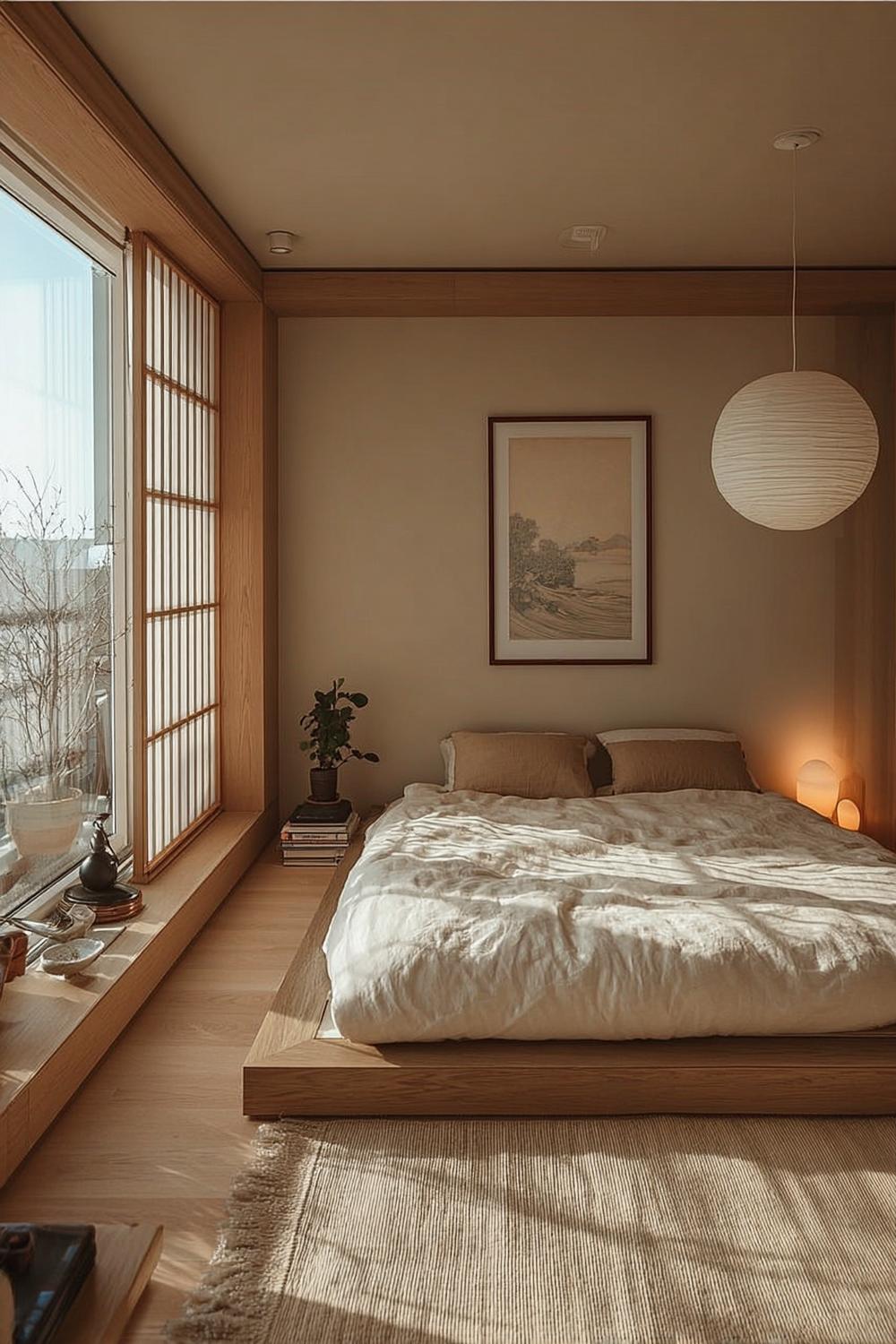
If you’re blessed with good windows, working with natural light – rather than against it – transforms your bedroom from dawn to dusk.
Position your bed to catch morning rays (though perhaps not directly in your eyes), and keep window treatments minimal. The changing quality of light throughout the day becomes its own decoration – golden morning glow, bright midday clarity, soft evening amber.
You might add a mirror strategically placed to bounce light into darker corners, multiplying that natural illumination without adding a single lamp.
12. Use Earth Tone Textiles to Create Cozy Japandi Warmth
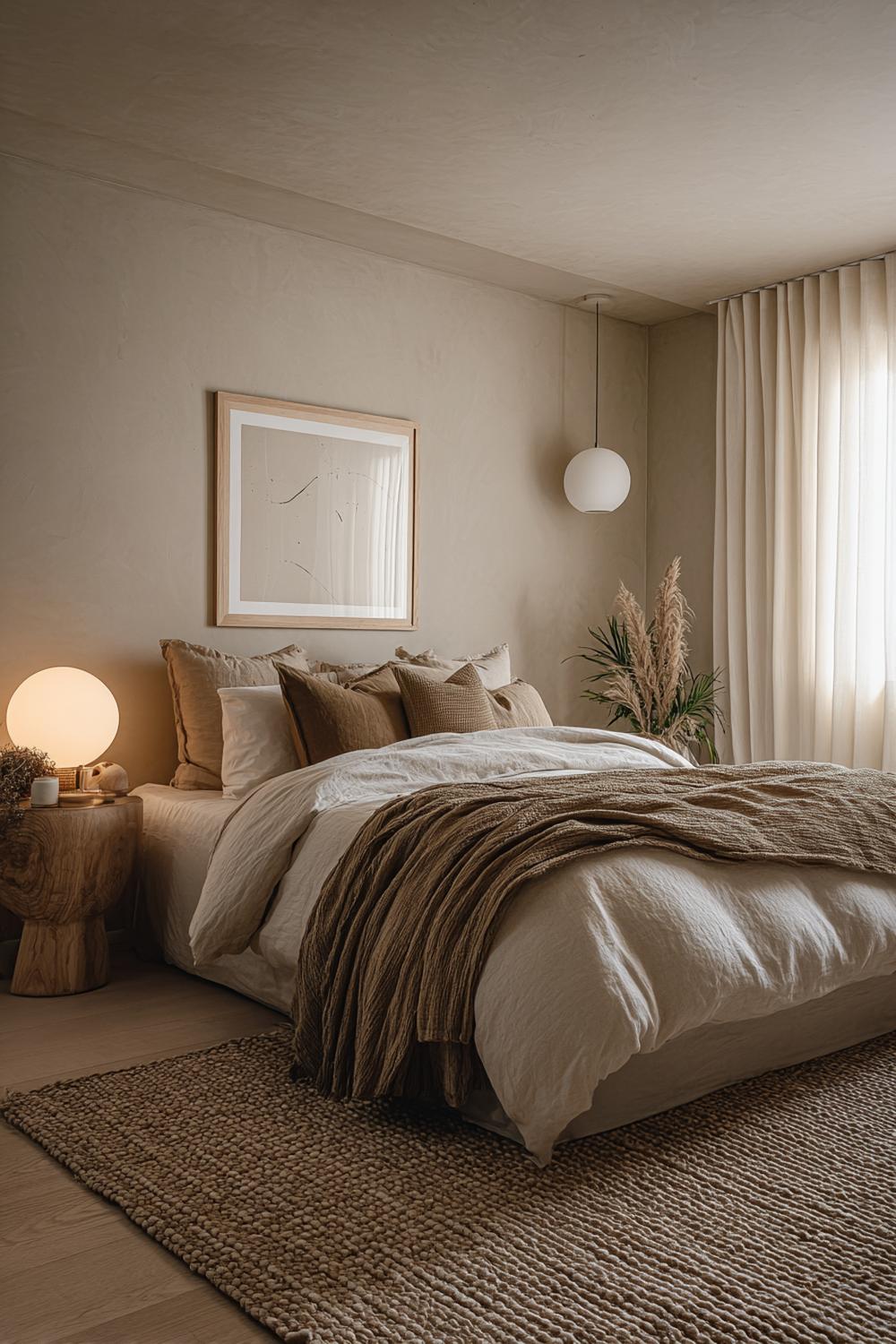
Often overlooked in favor of stark whites and grays, earth-toned textiles bring the outside in – think desert sand, dried clay, weathered stone.
These hues stem from both Japanese shibui (subtle beauty) and Scandinavian connection to nature. Layer a mushroom-gray throw over terracotta sheets, or pair sage green pillowcases with a warm taupe duvet. The palette draws from nature’s own neutral spectrum – colors that have coexisted for millennia without clashing.
The warmth these tones provide goes beyond visual – they create a psychological cocoon that signals your brain it’s time to unwind. Unlike bold colors that energize, earth tones settle your nervous system, preparing you for rest before you even slip under the covers.
Consider creating a luxury bedroom atmosphere by layering these earth-tone textiles with premium materials and thoughtful design elements.
For a cohesive look, explore white bedroom designs that pair beautifully with your earth tone textiles and create a sophisticated, calming atmosphere.
Discover how bedroom white palettes complement natural textures wonderfully in creating serene spaces.
13. Feature Pendant Lighting For Modern Japandi Elegance
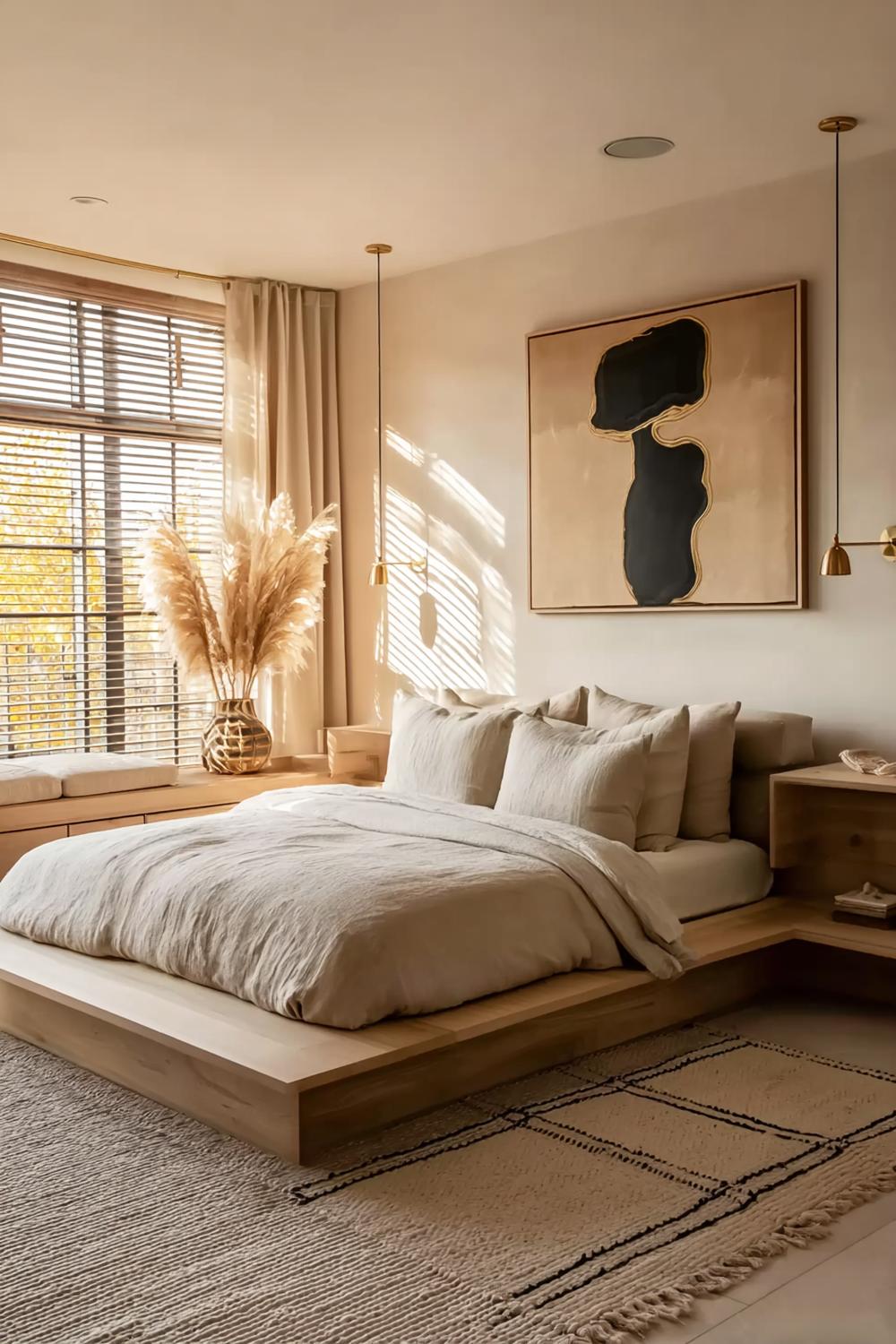
Light fixtures in Japandi bedrooms are like jewelry – the single perfect piece that completes the entire look without overwhelming it.
A paper lantern pendant or woven rattan shade casts intricate shadows while providing soft, diffused light that flatters both your space and your mood. Position it off-center, perhaps over a reading chair rather than dead-center in the room. The asymmetry adds visual interest while the natural materials echo your overall aesthetic.
When lit, these fixtures become sculptural elements that change the room’s entire atmosphere.
Choose dimmable options to shift from bright morning preparation to evening wind-down mode with just a touch.
14. Highlight Woven Pendant Lighting For Cozy Natural Vibe
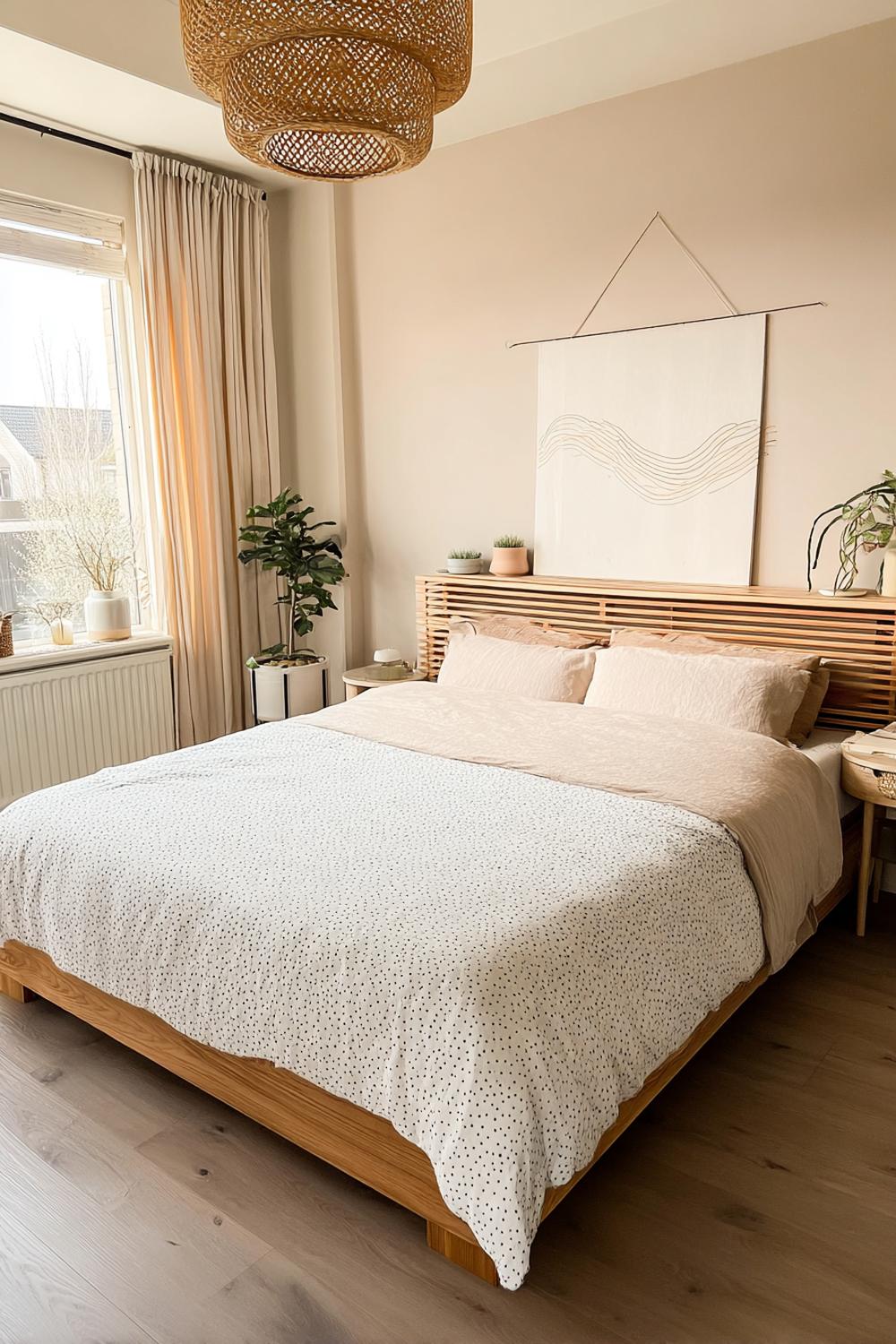
They say good lighting makes everything look better – but have you seen what happens when sunlight hits a woven pendant at just the right angle? Pure magic, that’s what.
These fixtures do double duty, providing ambient lighting while adding that crucial textural element Japandi spaces thrive on. The shadows cast through the weave create patterns on your walls and ceiling, turning plain surfaces into dynamic canvases. During the day, even unlit, they stand as sculptural pieces that draw the eye upward.
Materials like rattan, bamboo, or even woven paper connect to both Japanese craft traditions and Scandinavian natural materials.
Moving forward, we’re seeing these organic fixtures replace harsh overhead lighting in bedrooms everywhere – and for good reason.
15. Emphasize Platform Bed Frame For Modern Minimal Style
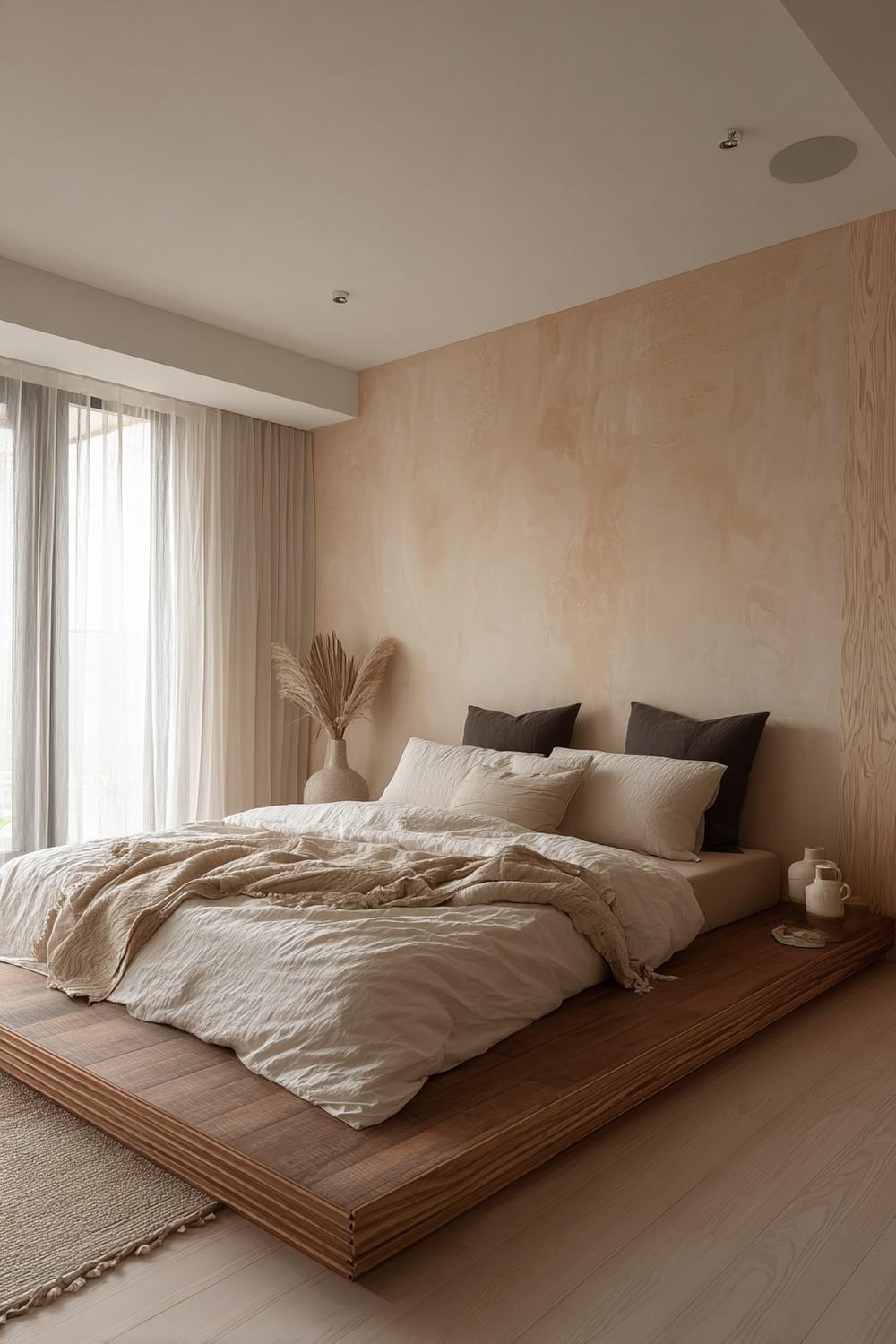
Unlike the floating bed trend that dominated minimalist bedrooms for years, the platform bed keeps you grounded – literally and figuratively – while maintaining those clean lines Japandi lovers crave.
A solid wood platform, perhaps in white oak or ash, extends slightly beyond your mattress dimensions, creating a frame within a frame. Some versions incorporate subtle legs that lift the platform just enough for easy cleaning underneath. Others sit flush with the floor for that authentic Japanese aesthetic.
You might find designs with integrated bedside surfaces, eliminating the need for separate nightstands – talk about functional minimalism.
Ready to revolutionize your sleep space? Start with the bed – everything else will naturally fall into place around this anchor piece.
16. Introduce Soft Sheer Curtains For a Minimal Ambient Glow
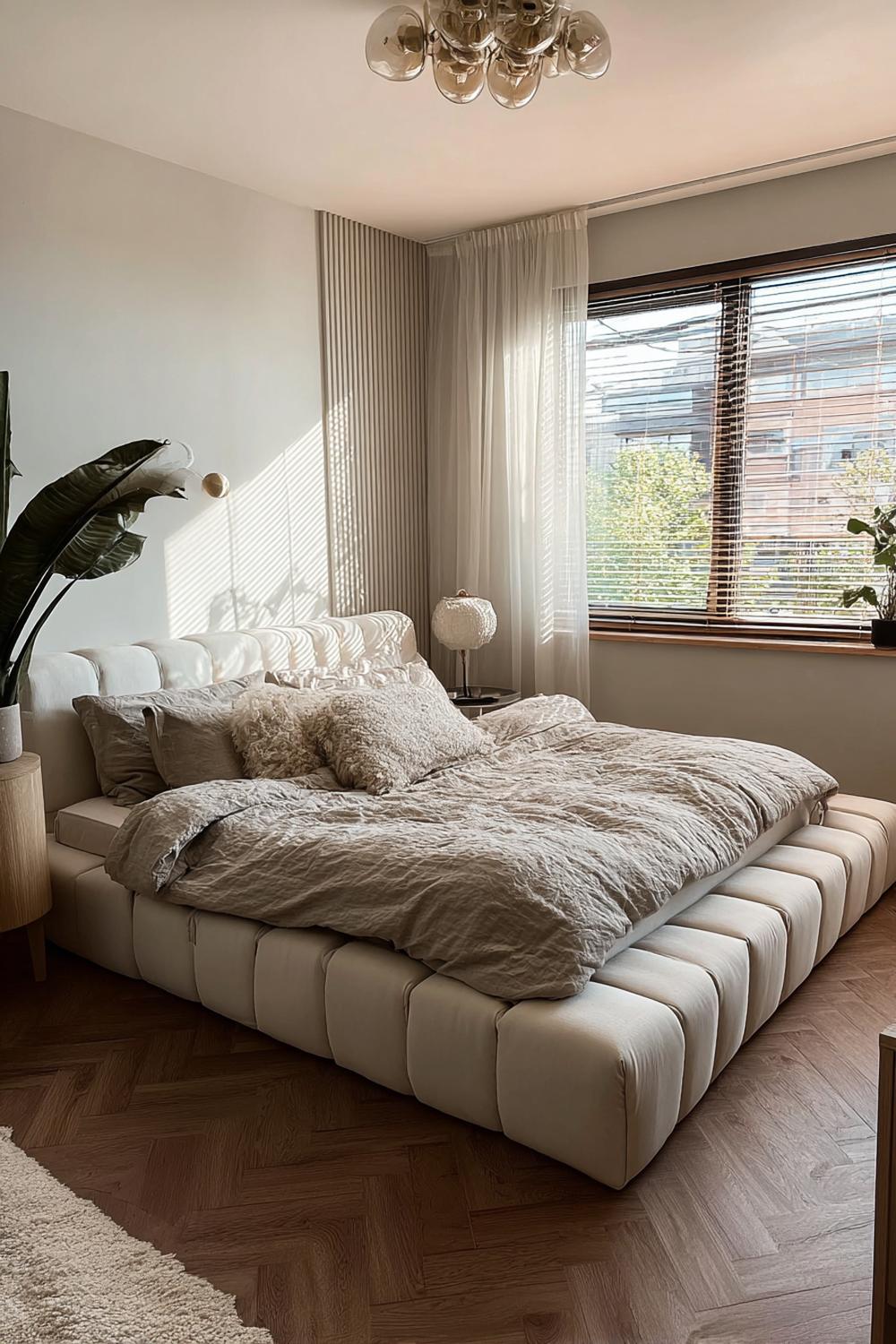
Sheer curtains filter harsh sunlight into something altogether more poetic – a soft, diffused glow that makes your bedroom feel like it exists in perpetual golden hour.
These whisper-thin panels originated from the Japanese use of shoji screens, which created privacy while maintaining connection to natural light. In your Japandi bedroom, white or natural linen sheers hung from ceiling to floor create vertical lines that elongate your space.
They move gently with air currents, adding subtle motion to otherwise still spaces. Layer them with bamboo blinds for versatility – sheers for day, blinds for night.
The gentle filtering effect seems to be exactly what our screen-tired eyes need – soft, natural illumination that changes throughout the day, reminding us of the world beyond our walls.
If you’re drawn to softer hues and want to expand your color palette, consider how a bedroom pink palette could complement your Japandi aesthetic with delicate, muted rose tones that enhance the overall serenity.
Transform Your Space Today
You’ve discovered sixteen ways to infuse Japandi serenity into your bedroom – from grounding platform beds to dancing shadows cast by woven pendants. Each element works in harmony, creating a space that nurtures both rest and rejuvenation.
Start small if you must – perhaps with new linen bedding or a single floating shelf adorned with greenery. But don’t wait for the “perfect” moment. Your bedroom deserves to be more than just a place to sleep; let it become your personal sanctuary where Scandinavian comfort meets Japanese tranquility.