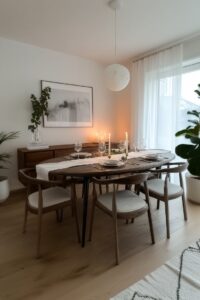

Creating a dining room that feels warm and inviting requires more than just choosing the right furniture. Many homeowners struggle to blend rustic charm with modern comfort, often ending up with spaces that feel either too polished or overly staged.
The farmhouse aesthetic solves this dilemma by embracing natural materials, vintage finds, and lived-in textures. These carefully curated elements transform ordinary dining spaces into gathering spots that celebrate both heritage and hospitality.
1. Showcase Reclaimed Wood Ceiling Beams for Rustic Charm
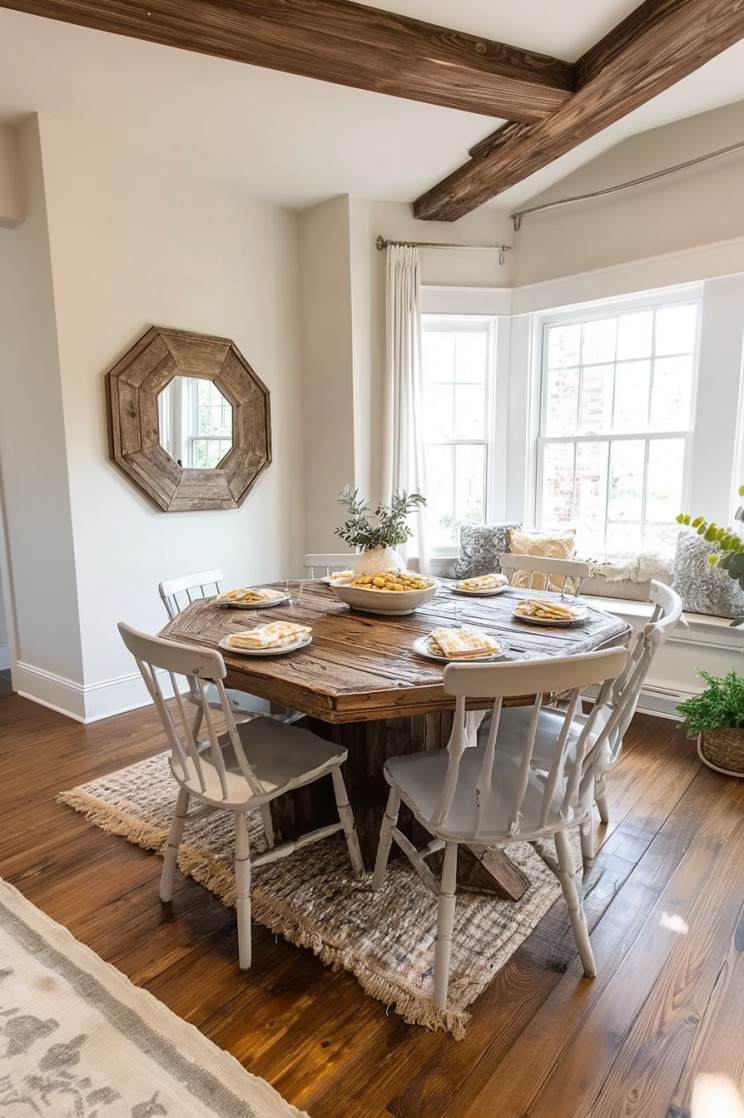
While sleek modern ceilings offer clean lines, exposed wooden beams bring architectural drama that painted drywall simply can’t match. Reclaimed beams carry stories in their weathered grain, adding instant character above your dining table.
These structural elements draw the eye upward and create visual interest in otherwise plain rooms. You’ll notice how the wood’s natural variations – knots, nail holes, and subtle color shifts – add depth without overwhelming the space.
The beams work particularly well in rooms with higher ceilings, though even standard eight-foot heights can accommodate thinner profiles.
Expect to see more homeowners seeking out salvaged timber from old barns and warehouses as this trend continues gaining momentum in coming seasons.
2. Layer a Textured Neutral Rug to Ground Your Dining Table

Why does your dining room feel like it’s floating? A substantial rug anchors the furniture and defines the eating area, especially in open-plan homes.
Choose natural fibers like jute, sisal, or wool in cream, taupe, or soft gray. The texture underfoot softens hard flooring while protecting surfaces from chair scrapes and spills – though you’ll want to size it generously so chairs remain on the rug even when pulled out.
3. Highlight Vintage Dishware Collections on Open Display Shelving
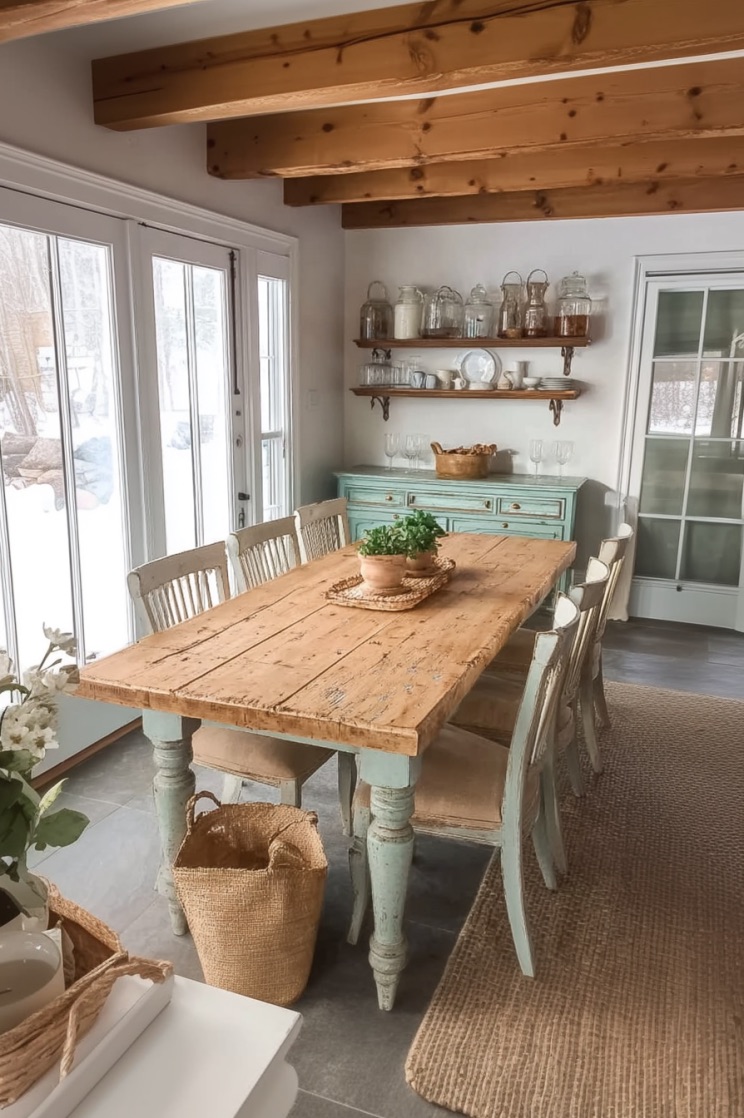
Most people hide their prettiest dishes behind closed cabinet doors where no one sees them. Open shelving flips this approach, turning everyday china and serving pieces into wall art that reinforces the farmhouse aesthetic.
Picture mismatched ironstone platters leaning against the wall, stacks of transferware in various blue patterns, or cream-colored pitchers clustered on upper shelves. The beauty lies in the imperfect arrangement – these aren’t museum displays but working collections you actually use for Sunday suppers and holiday gatherings.
Start by grouping items by color or pattern, then adjust until the composition feels balanced but not overly styled. White and cream pieces create a cohesive backdrop, while pops of color from vintage tins or pottery add visual breaks between dish stacks.
You might rotate seasonal pieces in and out, swapping heavy crockery for delicate teacups depending on the time of year. This flexibility keeps the display fresh and gives you an excuse to hunt for new treasures at antique markets.
4. Incorporate Mismatched Dining Chairs for an Eclectic Country Vibe
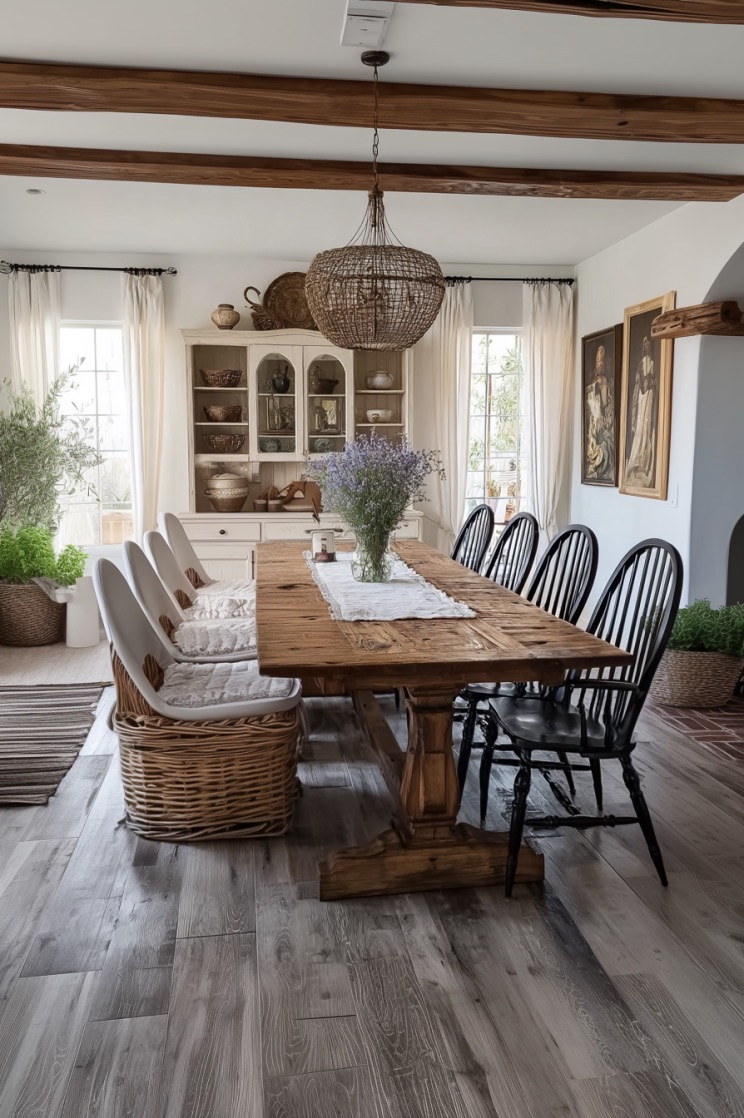
Ditch the matching chair set and embrace the collected-over-time look that defines authentic farmhouse style. Mix wooden Windsor chairs with painted ladder-backs, or pair upholstered host chairs at the table ends with simpler seating along the sides.
One approach combines all wooden chairs in different styles but similar tones – imagine oak, pine, and walnut pieces that share warm undertones even as their shapes vary. Another strategy uses a unifying element like white paint across diverse chair styles, or identical neutral cushions tied to different frames.
This approach creates a dining room that looks like it evolved organically rather than arriving all at once from a furniture showroom.
5. Brighten the Space with Expansive White Paneled Walls
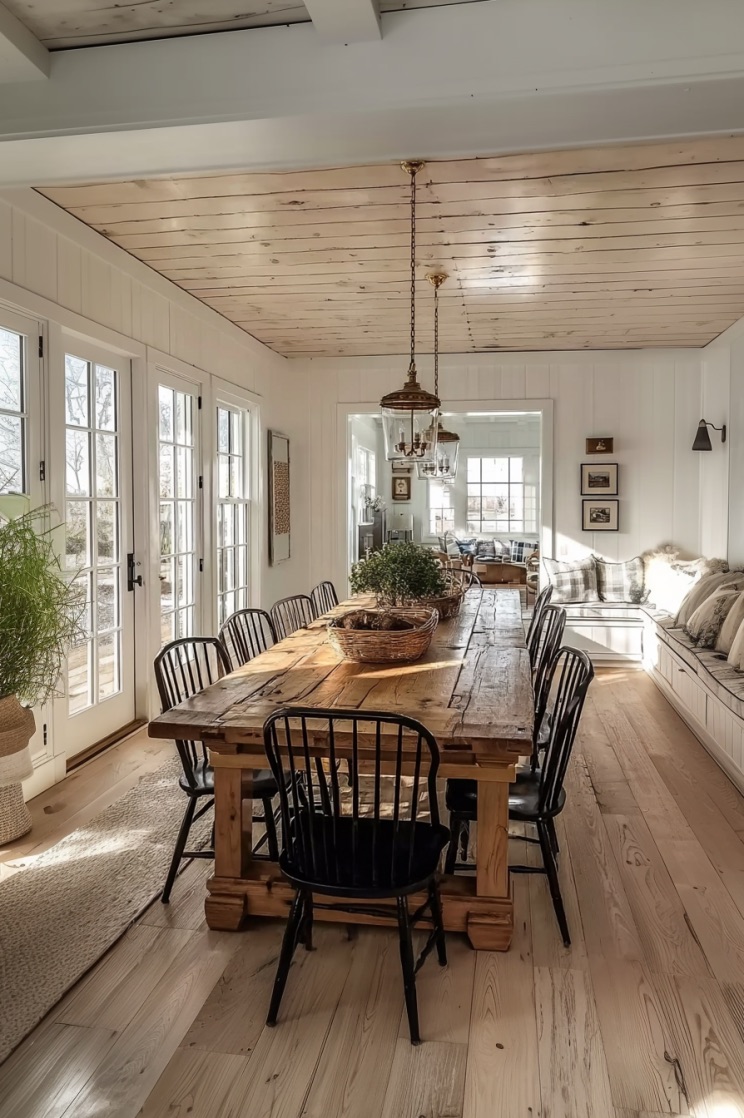
You might assume farmhouse style requires dark wood everywhere, but crisp white shiplap or board-and-batten actually amplifies natural light and makes rooms feel larger. The horizontal or vertical lines add architectural detail without cluttering the visual field.
White paneling reflects daylight beautifully while providing a neutral canvas for darker furniture and decor. The subtle shadows between boards create dimension that flat painted walls lack, and the forgiving finish hides minor dings and scuffs that come with active family life.
6. Arrange Fresh Florals As a Cozy Centerpiece for Your Table
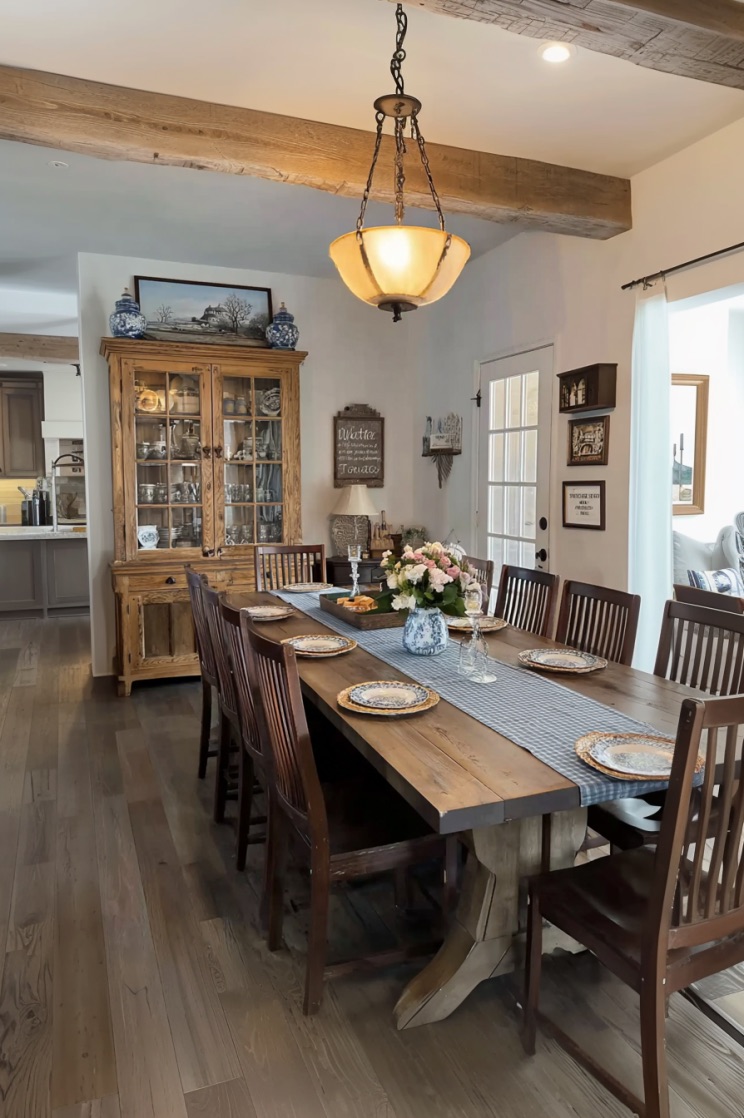
What transforms a dining table from functional surface to gathering spot? Often it’s something as simple as a mason jar filled with garden roses or a pitcher of wildflowers from the farmer’s market.
The farmhouse aesthetic celebrates natural, unfussy arrangements rather than formal floral designs. You’ll find that grocery store bunches look charming when trimmed to different heights and clustered in vintage containers – white enamelware, old milk bottles, or ceramic crocks all work beautifully.
Seasonal branches, herbs, or even vegetables like artichokes can supplement traditional blooms.
The arrangement doesn’t need to be precious or perfect; sometimes the slightly disheveled look of stems casually placed feels more welcoming than rigid symmetry. How will you bring the outdoors to your next dinner gathering?
7. Frame Tall Windows with Billowy White Curtains for Airy Elegance

If you want to soften the hard edges of window frames while maintaining light flow, floor-length linen panels in crisp white create movement without heaviness. The fabric catches breezes and filters harsh afternoon sun into a gentle glow.
These curtains work best when hung higher than the window frame and wider than the glass – a trick that makes windows appear larger and ceilings seem taller. The natural wrinkles in linen add texture rather than looking messy, and the light fabric pools slightly on the floor for a relaxed, unstructured finish.
This window treatment transitions seamlessly from casual weekday meals to more dressed-up holiday dinners, adapting to whatever occasion fills your dining room.
8. Install an Oversized Woven Chandelier for Striking Modern Lighting
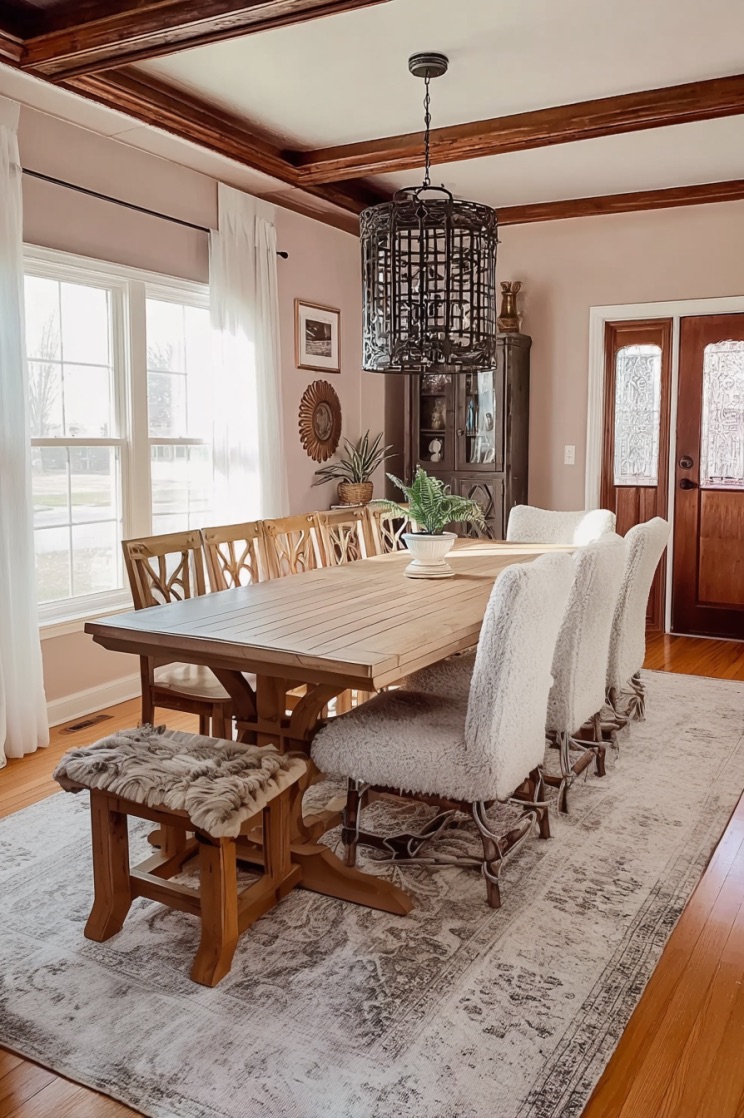
Generic dining room lighting fails to make a statement, leaving the space feeling flat and uninspired. A substantial chandelier woven from natural materials solves this problem while bridging rustic and contemporary styles.
Consider a large basket-weave pendant in rattan or seagrass suspended low over the table – about 30 to 36 inches above the surface works well for standard ceiling heights. The woven texture casts fascinating shadow patterns on walls and ceiling when illuminated, adding another layer of visual interest during evening meals.
The unexpected scale commands attention and establishes the dining area as a destination rather than just another room to pass through on the way elsewhere.
9. Display Potted Herbs on Shelves for Functional Decor
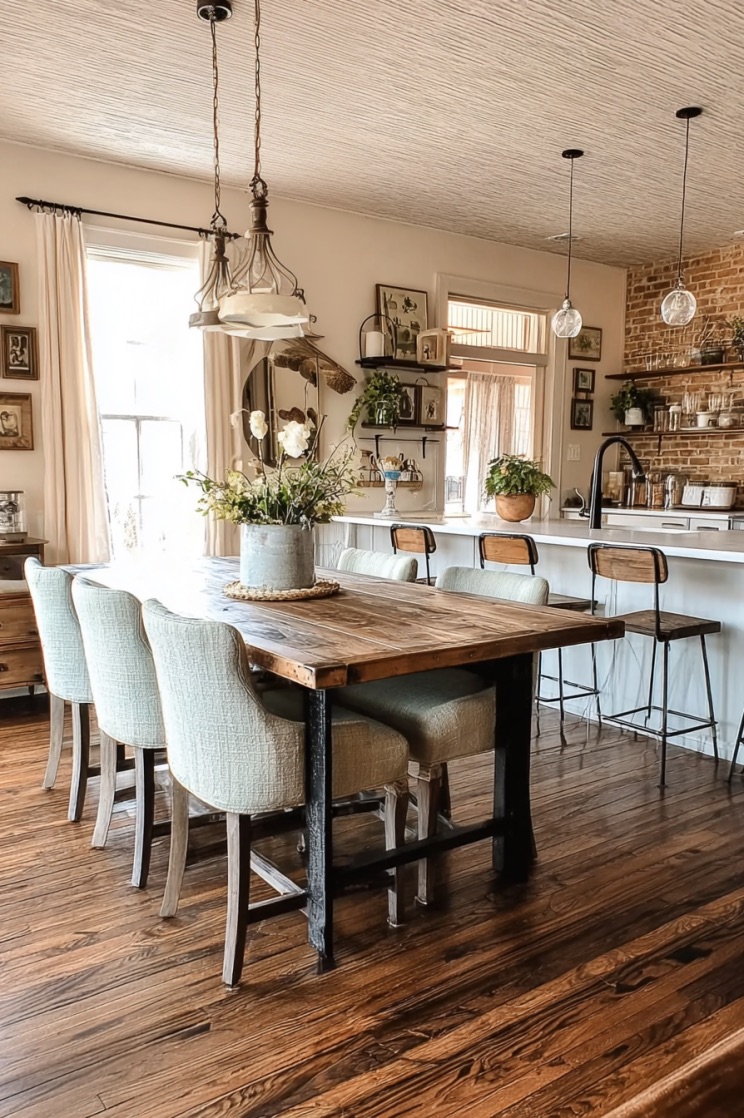
You can merge practicality with aesthetics by lining windowsills or shelves with small potted herbs in terra cotta or galvanized containers. Basil, rosemary, thyme, and mint thrive indoors with adequate light while releasing subtle fragrance.
The living greenery adds color variation throughout the year, and you’ll appreciate snipping fresh herbs for cooking without stepping outside. Cluster pots in odd numbers and varying heights for visual appeal, or line them up in matching containers for a more structured look that still feels organic.
10. Mix Plush Textured Pillows for Effortlessly Cozy Seating
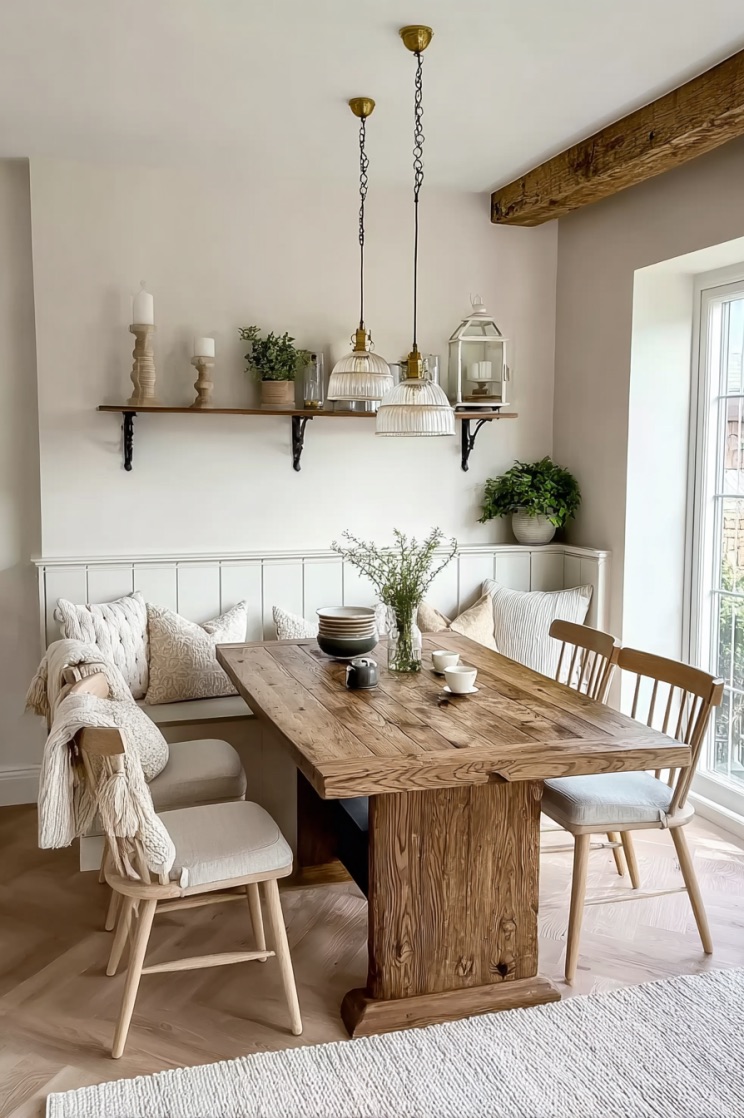
Building on the upholstered seating you’ve chosen for your farmhouse dining room, layered pillows in varied fabrics transform wooden or metal chairs into inviting spots where guests linger after meals end. Combine linen, cotton ticking stripes, grain sack patterns, and soft velvets in coordinating neutral tones.
The mix of smooth and nubby textures creates depth without requiring bold colors or busy patterns. You might pair a chunky cable-knit pillow cover with smooth Belgian linen, or layer a small lumbar pillow over a larger square cushion for back support during long conversations around the table.
Don’t you find that the most memorable gatherings happen when everyone’s comfortable enough to stay seated for hours?
11. Feature a Long Wooden Table to Anchor Your Farmhouse Dining Room
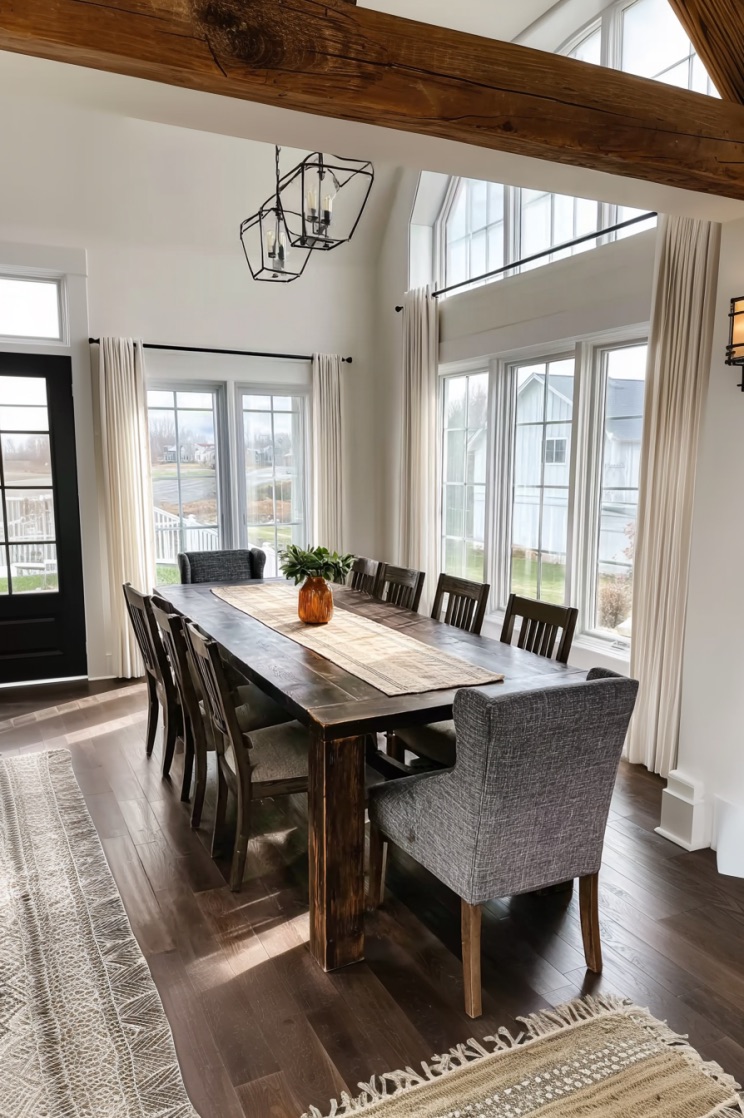
Let’s face it: the dining table is essentially the room’s heartbeat, and nothing captures farmhouse spirit quite like a substantial wooden table with visible grain and character marks. Thick planks scarred with age and use tell stories while providing a sturdy surface for everything from weeknight dinners to craft projects.
A generous table – think eight feet or longer if space allows – encourages family and friends to pull up chairs and stay awhile. The wood’s natural warmth balances cooler elements like metal light fixtures or painted chairs, and the substantial presence grounds the entire room design.
Measure your space carefully, but don’t be timid – choose the largest table your room can accommodate and watch how it transforms everyday meals into occasions worth celebrating.
12. Emphasize Contrast with Black Spindle Chairs for Modern Appeal
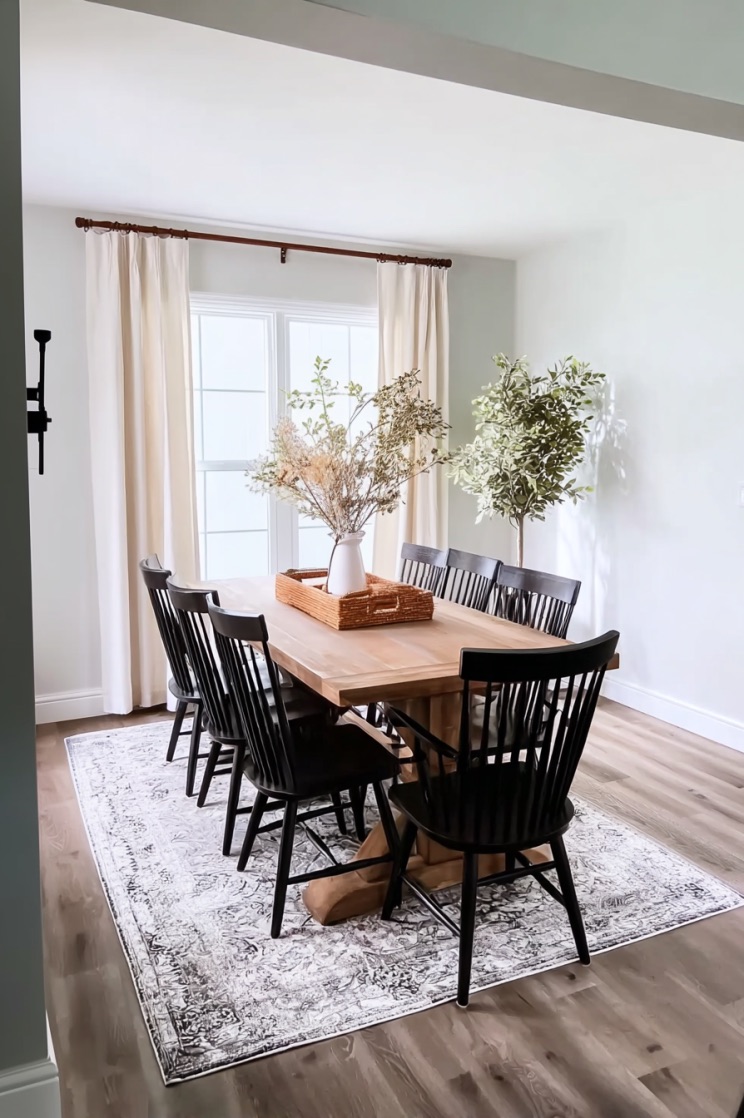
Black dining chairs are the little black dress of farmhouse interiors – they add sophistication while anchoring lighter elements throughout the space. Against white walls and natural wood tables, dark spindle-back or Windsor chairs create crisp definition that prevents the room from feeling washed out.
The contrast sharpens the overall design and provides visual weight that balances overhead light fixtures and table centerpieces. Black frames also hide everyday wear better than lighter finishes, maintaining their polished appearance through years of family dinners, homework sessions, and holiday gatherings.
You might notice how the dark silhouettes photograph beautifully too, creating striking shadow play against pale backgrounds.
In short, black chairs deliver timeless elegance that works whether your farmhouse style leans traditional or contemporary.
13. Spotlight Unique Sliding Barn Doors for Authentic Farmhouse Decor
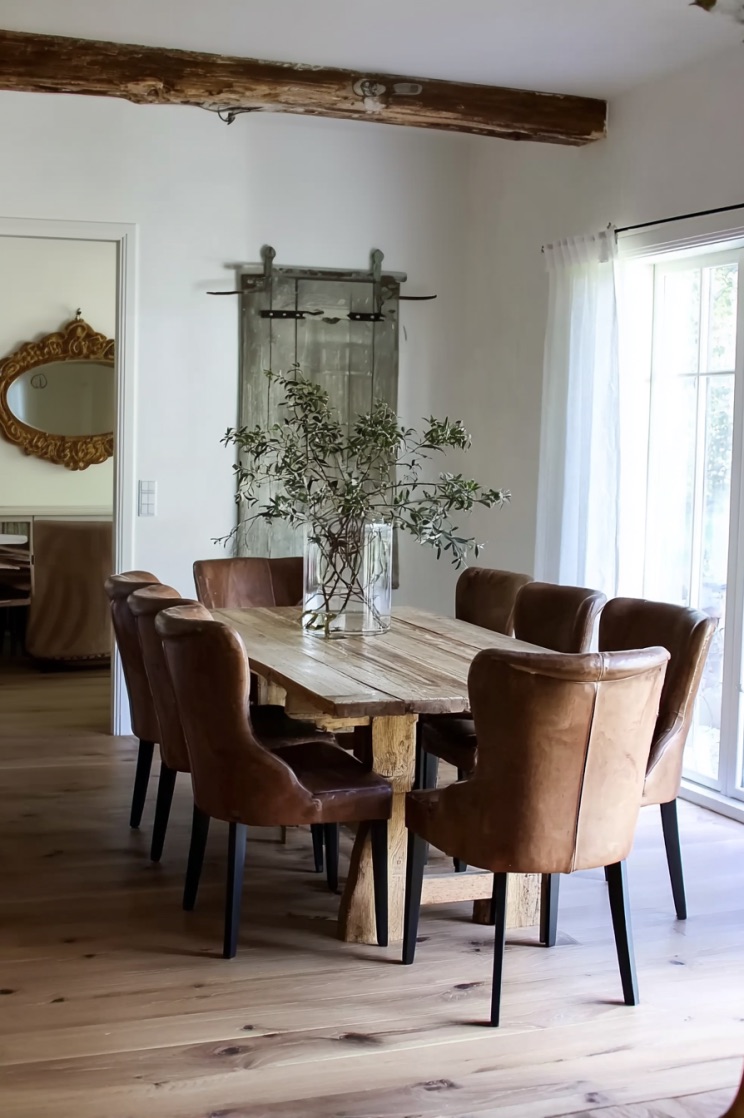
Walk into any authentic farmhouse dining room and you’ll likely spot at least one element salvaged from actual agricultural buildings. Sliding barn doors mounted on industrial hardware bring that genuine heritage into modern homes while solving practical space challenges.
These doors originated in barns where traditional swing doors would interfere with equipment and animal movement. Today’s versions serve dining rooms by separating spaces without requiring clearance for door swing – particularly useful in smaller homes or when closing off the dining area from kitchen cooking chaos during parties.
You can source authentic weathered barn wood for character-rich doors, or purchase new wood distressed to look vintage. The visible track hardware – typically black metal rollers and rails – adds industrial edge that complements farmhouse aesthetics without feeling too rustic.
Some homeowners install the doors as decorative wall elements even when no doorway exists, creating an accent wall with dimensional interest.
Choose hardware rated for your door’s weight, and mount tracks securely into wall studs rather than just drywall for safety and smooth operation.
14. Hang a Festive Wreath on Mirrors for French Inspired Charm
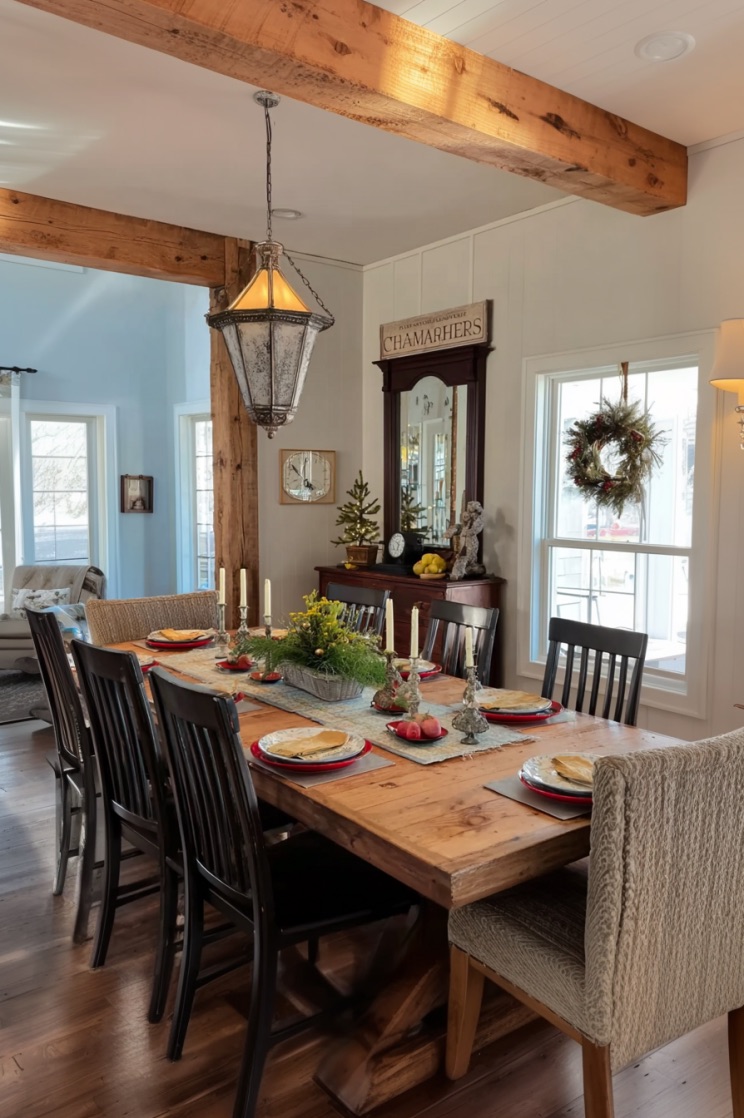
Mirrors reflect light and visually expand dining rooms, but a plain mirror can feel cold. Hanging a wreath – perhaps of eucalyptus, cotton stems, or seasonal greenery – on a large mirror adds an unexpected decorative layer.
The wreath’s organic shapes soften the mirror’s hard edges while the reflection doubles the greenery’s visual impact. You’ll notice how candlelight or chandelier glow bounces through the wreath’s openings, creating depth and sparkle during evening meals.
This simple addition shifts the mirror from purely functional object to curated decor element that changes with seasons and celebrations.
15. Paint Walls a Soft Warm Yellow for Inviting Vintage Ambience
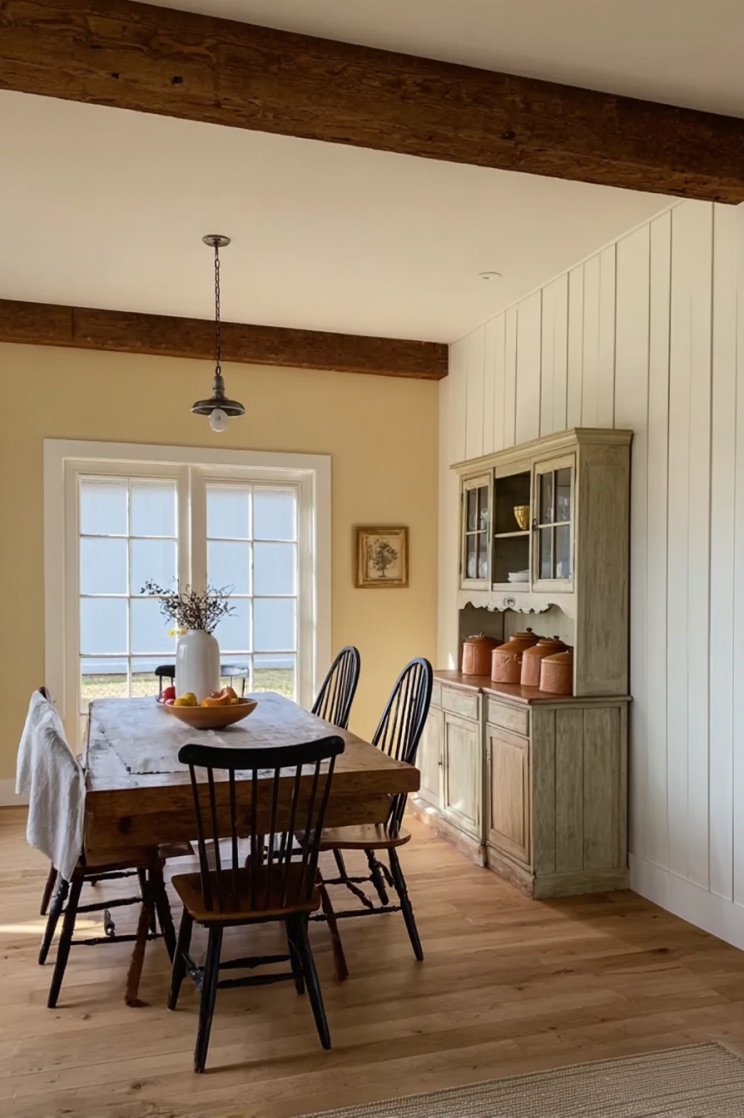
While white walls dominate farmhouse Pinterest boards, gentle buttery yellow offers something different – instant warmth and vintage character that pure white can’t deliver. These soft golden tones recall old farmhouses before bright white paint became ubiquitous.
Warm yellow enhances natural and artificial light, making north-facing dining rooms feel sunnier and evening gatherings more intimate. The color pairs beautifully with white trim, natural wood furniture, and vintage textiles, creating a cocooning effect that makes every meal feel special.
Choose shades with more cream than lemon to avoid overly bright results that might overwhelm the space.
Conclusion
Your farmhouse dining room should reflect the people who gather there rather than just copying magazine spreads. Start with one or two ideas that genuinely excite you – perhaps that reclaimed wood table you’ve been eyeing or finally painting those walls the soft yellow you love. Layer additional elements gradually, letting the room evolve naturally.
The most inviting spaces develop over time, collecting stories and character with each addition.