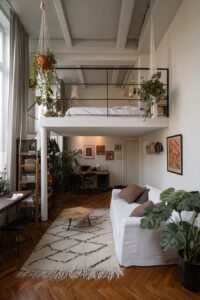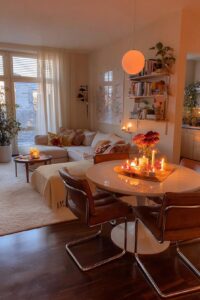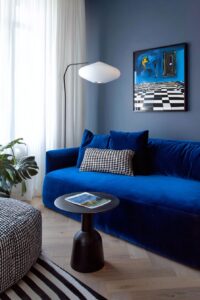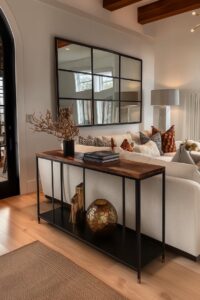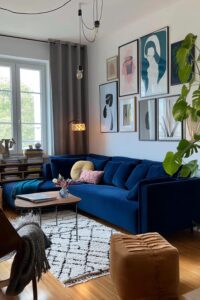

Many people think boho style means cluttering every surface with color and pattern. The truth is, a bohemian living room thrives on balance – mixing textures, natural materials, and personal treasures in a way that feels collected over time.
True boho design celebrates individuality without chaos. It’s about creating a space that wraps around you like a favorite worn-in cardigan, inviting and utterly unique.
1. Highlight Textured Pillows and Throws for a Cozy Look
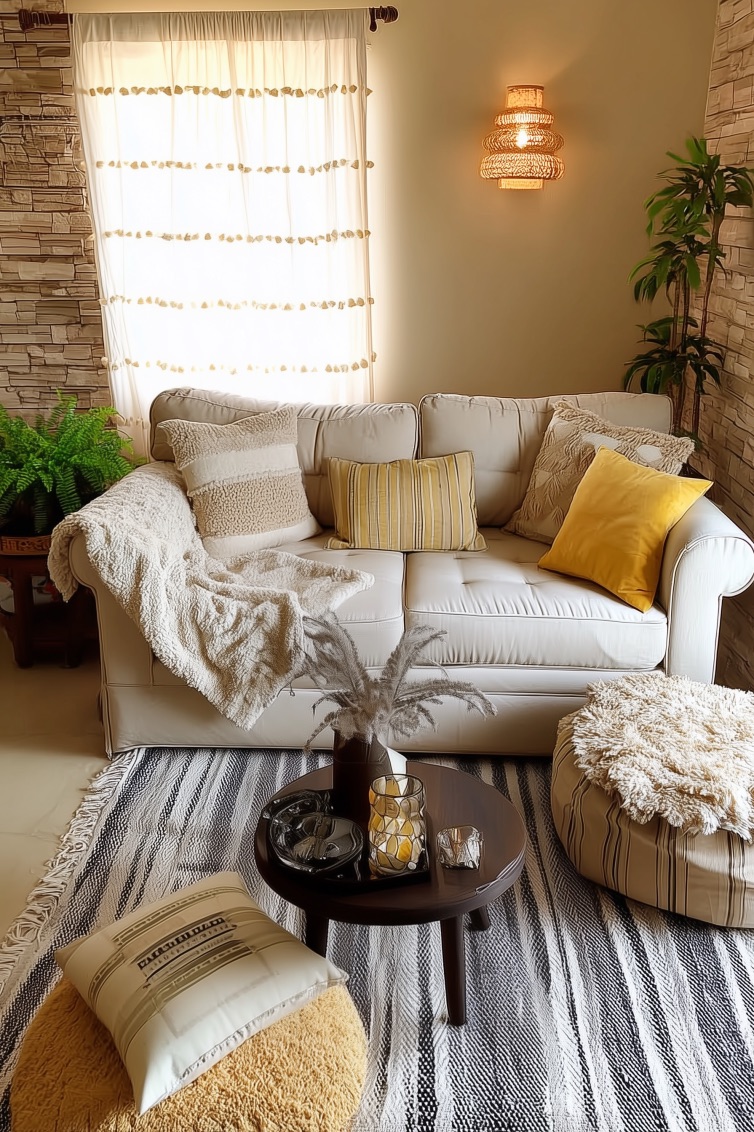
Here’s something most decorators won’t tell you upfront: the quickest route to authentic boho comfort starts with what you can touch. Textured pillows and throws transform a plain sofa into an invitation to sink in and stay awhile.
Layering different fabrics – chunky knits alongside smooth velvet, linen next to cotton tassels – creates visual depth that photographs beautifully but feels even better. Your couch becomes a canvas where moroccan-inspired embroidery meets fuzzy boucle, where fringed edges dance with macramé details.
Each piece tells its own small story while contributing to the whole.
Start with three to five pillows in varying sizes, then drape a throw casually over one arm. The “undone” look matters here – overly arranged pillows feel staged rather than lived-in.
2. Display Layered Neutral Wall Decor for a Modern Vibe
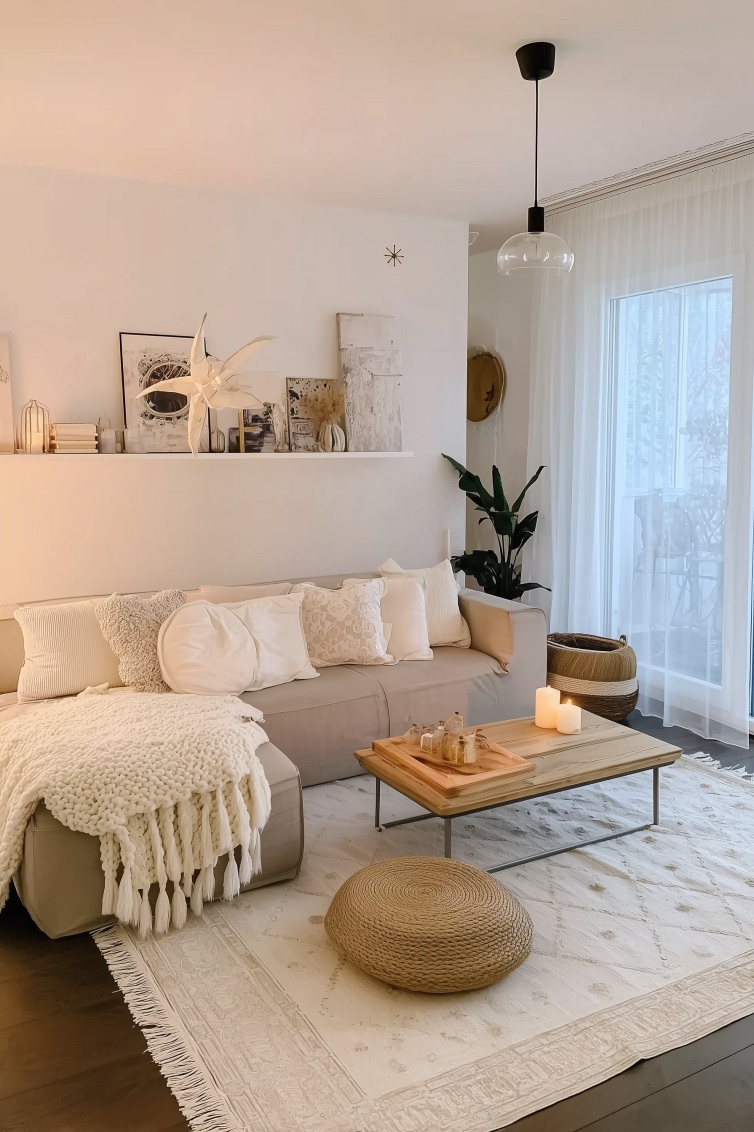
Right now, the design world is moving toward what some call “quiet luxury” – a stripped-back approach that pairs surprisingly well with boho’s free spirit. Layered neutral wall decor bridges these two worlds, creating calm rather than visual noise.
Picture this: a large rattan mirror anchoring your main wall, with a smaller woven basket hung slightly offset beside it. Below, a floating shelf holds a simple ceramic vase and a framed line drawing. Everything stays within the same warm palette – cream, tan, soft gray – but the varying textures keep it from feeling flat.
This approach makes your living room feel both current and timeless. The space breathes more easily, and you’ll find yourself actually relaxing instead of visually sorting through competing elements every time you sit down.
3. Showcase Lush Indoor Plants for an Earthy Atmosphere
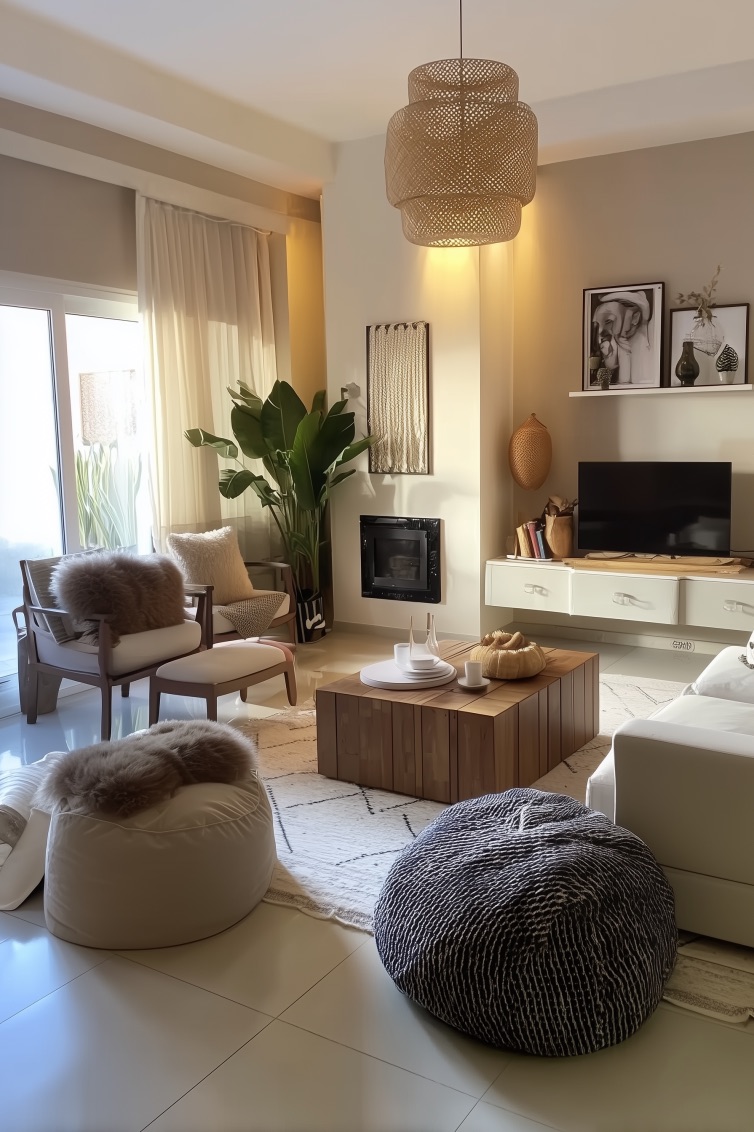
Let’s be honest: a boho living room without plants is like coffee without caffeine – technically possible but missing the point. Greenery doesn’t just decorate; it literally brings life into your corners.
Fill empty spots with cascading pothos on high shelves, place a snake plant beside your reading chair, cluster three small succulents on your coffee table.
The oxygen they release, the way light plays on their leaves, the subtle movement when air circulates – these small moments accumulate into something that feels genuinely alive rather than merely styled.
4. Bring in Woven Accessories for Subtle Western Charm
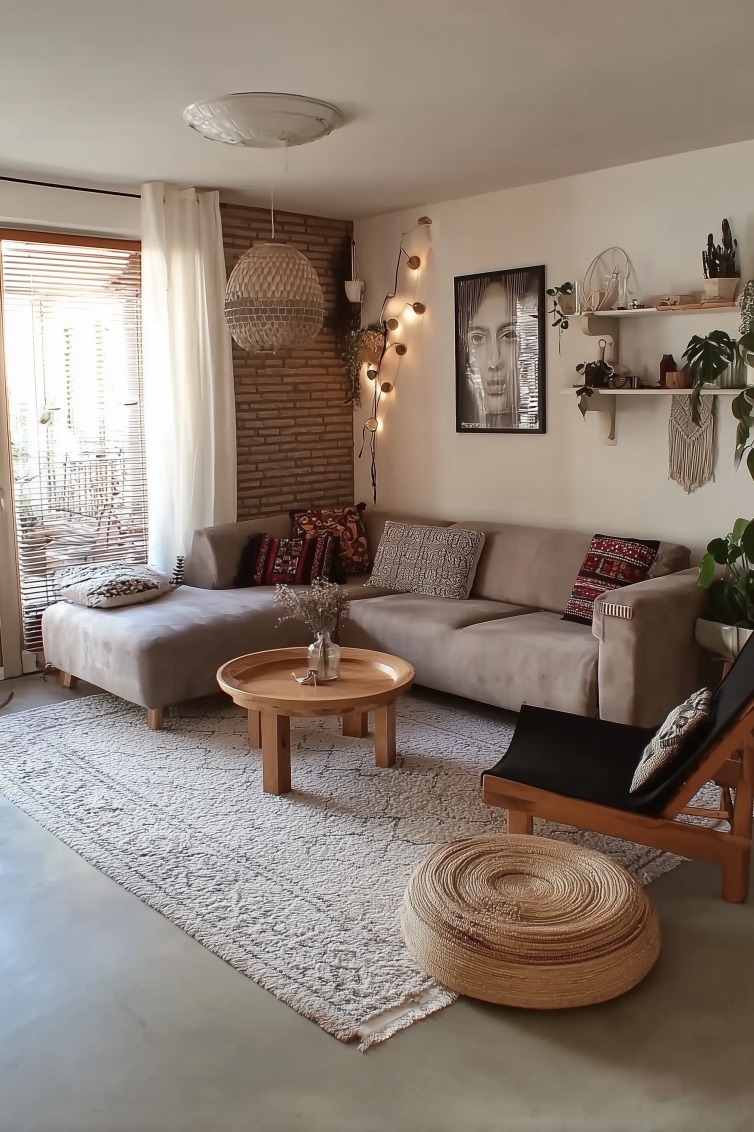
Think of woven accessories as the grammar of boho design – they connect all your other choices into coherent sentences. Baskets, wall hangings, and textured accents speak a universal language of handcraft and natural materials.
A seagrass basket tucked beside the sofa holds extra blankets while adding organic texture. A woven tray on your ottoman corrals remotes and candles. Perhaps a jute rug defines your seating area, its natural fibers grounding brighter accent pieces.
These woven elements reference both southwestern aesthetics and global traditions, creating warmth without specific cultural appropriation.
Look around your space right now. Where could a basket, tray, or woven bowl replace something plastic or metal? Start there, and watch how one natural texture invites another.
5. Spotlight a Minimalist Pouf for Relaxed Extra Seating
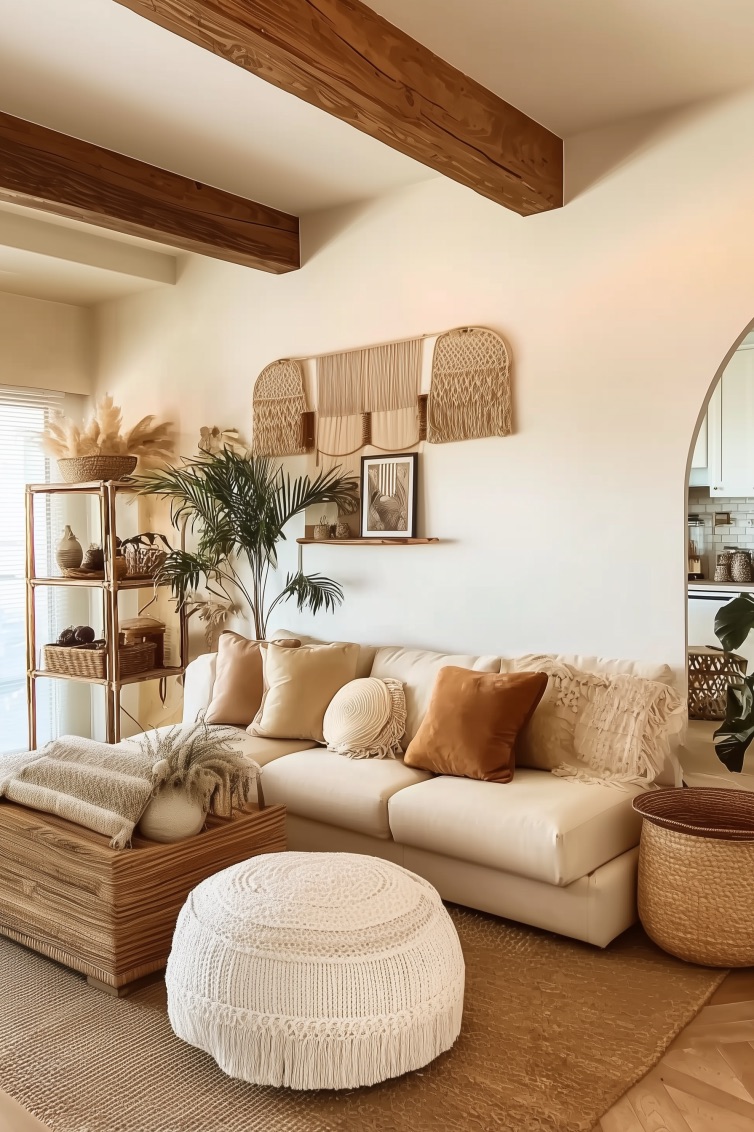
Unlike bulky ottomans that command attention and floor space, a minimalist pouf tucks into corners and slides out when friends drop by unexpectedly. It’s the difference between permanent furniture and flexible living.
Poufs gained popularity in Moroccan riads centuries ago, where households needed seating that could adapt to gatherings of varying sizes. Today’s versions – often in leather, linen, or knitted cotton – bring that same adaptability to modern apartments.
They serve as footrests during movie nights, extra perches during dinner parties, and even impromptu side tables when topped with a wooden tray.
Choose neutral tones if you want the pouf to disappear into your existing palette, or select a terracotta or dusty rose option to add a gentle pop of color. Either way, you’ve added function without visual weight, which leads us to another space-expanding strategy…
6. Incorporate Light Wood Coffee Tables for Subtle Scandinavian Decor
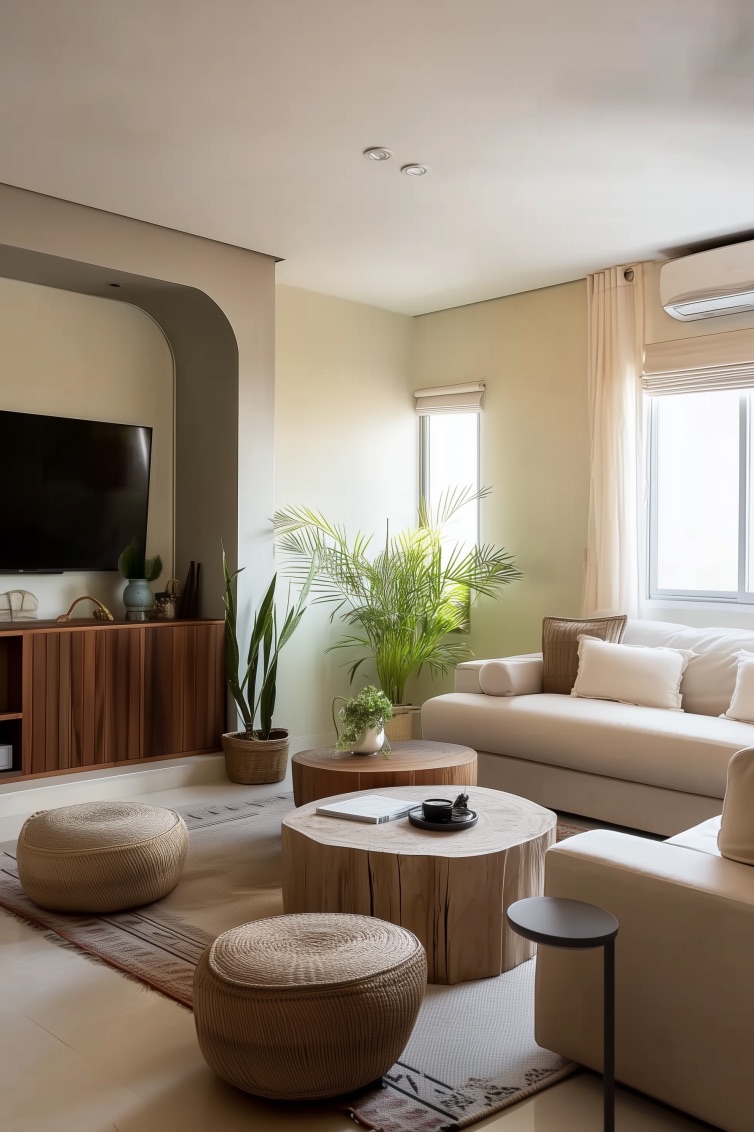
While boho often leans toward dark, carved woods, light wood coffee tables create an unexpected contrast that feels fresh. Scandinavian simplicity and bohemian eclecticism seem like opposites, yet they share a love of natural materials and livable design.
A blonde oak or light ash coffee table grounds your space without dominating it. The pale wood reflects light rather than absorbing it, making smaller living rooms feel more spacious. Its clean lines provide a calm visual anchor when surrounded by patterned pillows, layered rugs, and trailing plants.
You get the structure of Scandinavian design with the soul of boho layering.
The simple silhouette also showcases whatever you place on top – a stack of vintage books, a ceramic bowl, a small terrarium. Does your living room need more breathing room or a lighter touch? A coffee table swap might be your answer.
7. Arrange Modular Sofas to Maximize Comfort in Your Apartment
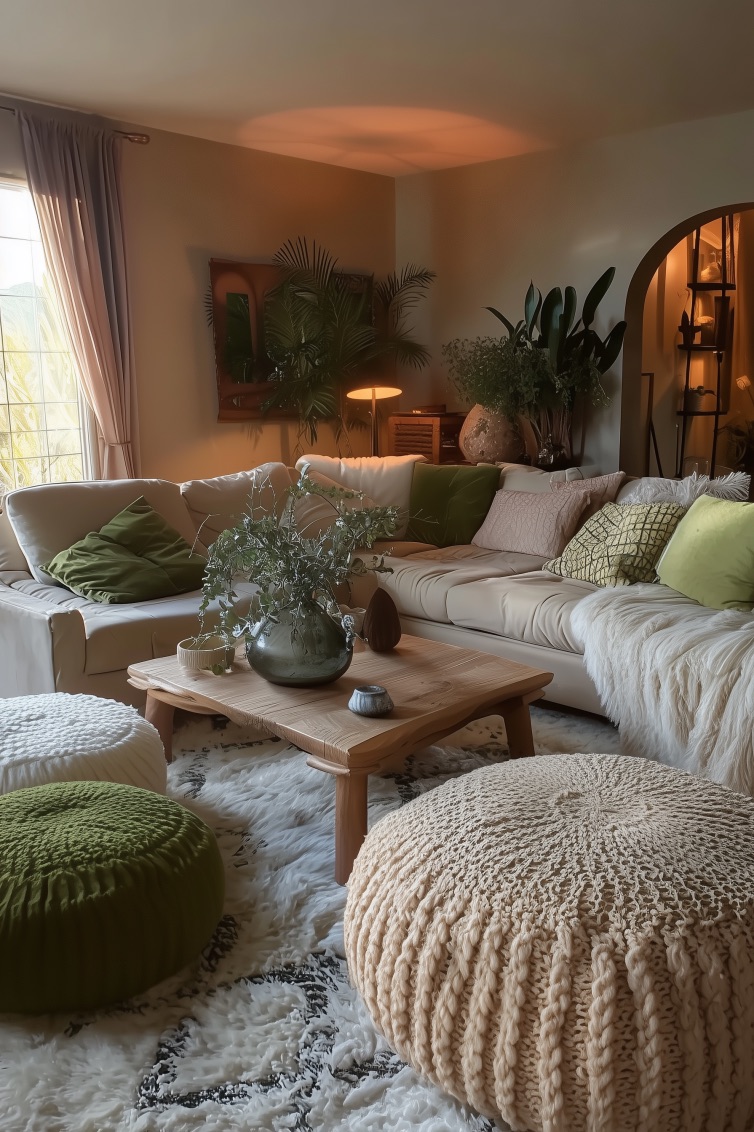
People often overlook how much their seating arrangement affects daily comfort, assuming furniture must stay where it first landed. Modular sofas flip this script entirely, offering sections you can rearrange based on who’s visiting or what you’re doing.
When configured as a traditional L-shape, modular pieces create conversation zones perfect for game nights or long talks. Separated, they offer flexible seating when you’re hosting a larger group or want to open up floor space for yoga or kids playing.
This adaptability suits the boho philosophy beautifully – your space evolves with your life rather than constraining it.
We’re seeing more renters embrace modular furniture as they move between apartments, since pieces that adapt to different floor plans eliminate the “this sofa worked in my old place” problem. It seems this trend will only accelerate as living spaces continue shrinking in urban areas.
8. Frame the Space with Sheer Curtains for an Airy Apartment
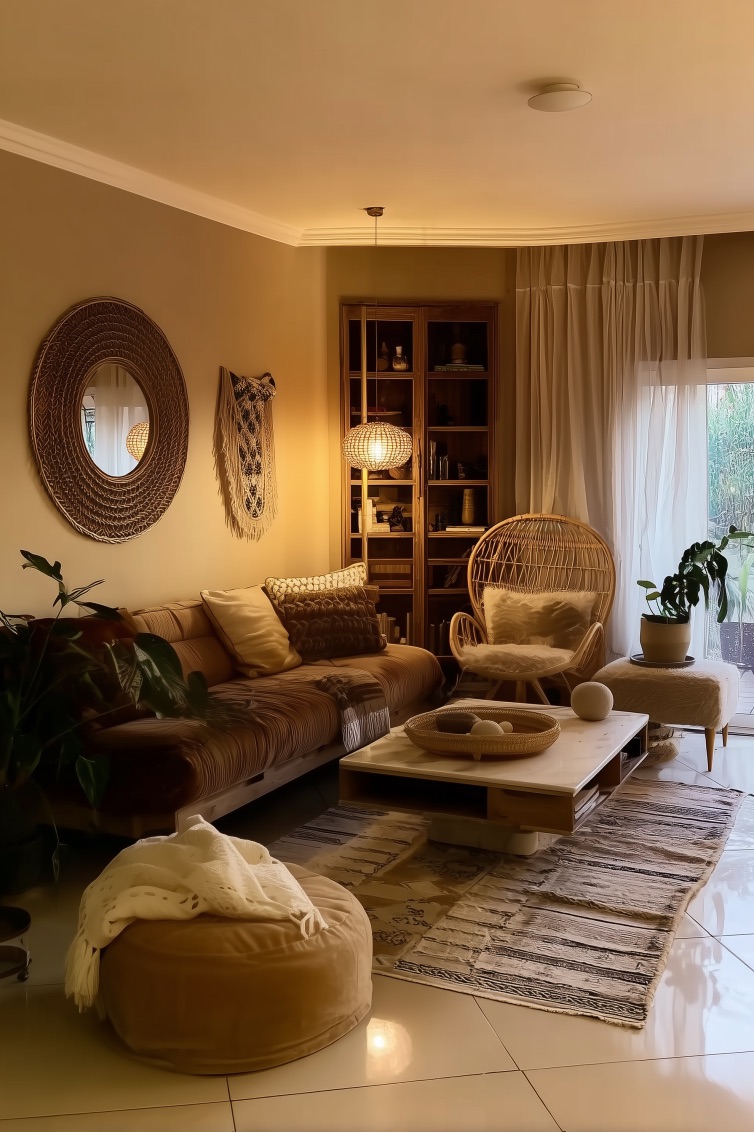
Here’s a delightful quirk of interior design history: curtains originally hung to keep out drafts and prying eyes, yet today’s sheer versions do the opposite. They invite light in while creating the gentlest boundary between inside and outside worlds.
White or cream sheers filter harsh afternoon sun into something softer, almost dreamlike. They move with the slightest breeze, adding subtle motion that makes your living room feel less static. During evening hours, they glow when backlit by streetlights or sunset, turning your windows into luminous panels that need no additional decoration.
9. Feature Sunflower Art Prints for Playful Vintage Inspiration
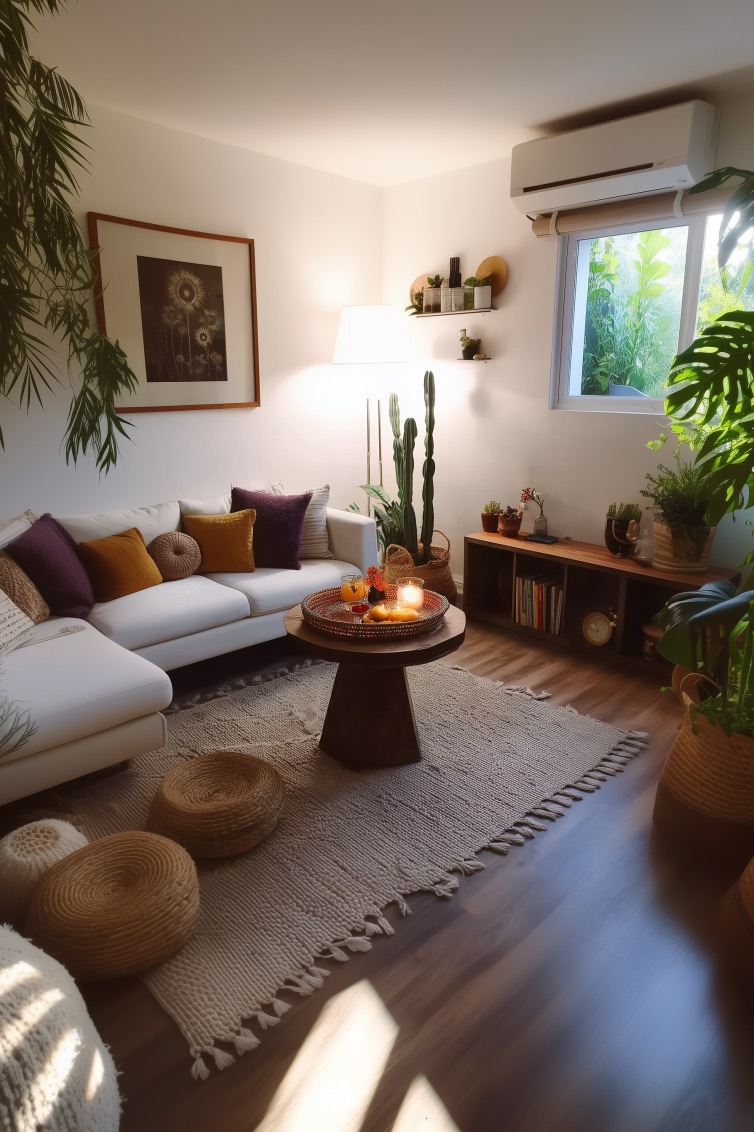
You’ve probably noticed how certain flowers cycle through design trends – peonies had their moment, then eucalyptus, now monstera leaves. But sunflowers carry a cheerful nostalgia that never quite disappears.
A vintage-style sunflower print – whether a botanical illustration or impressionist interpretation – injects warmth without demanding attention. The golden yellows complement the earth tones typical in boho palettes, while the humble flower itself feels approachable rather than precious.
Hang a single large print above your sofa, or create a small gallery wall with three smaller sunflower studies in mismatched frames.
The effect registers differently depending on your other choices. Paired with whitewashed furniture, sunflowers read as farmhouse-adjacent. Surrounded by jewel-toned pillows and brass accents, they feel more globally inspired.
This chameleon quality makes them surprisingly versatile – they adapt to your space’s personality rather than imposing their own.
10. Prioritize Large Potted Trees to Instantly Refresh Your Green Living Room
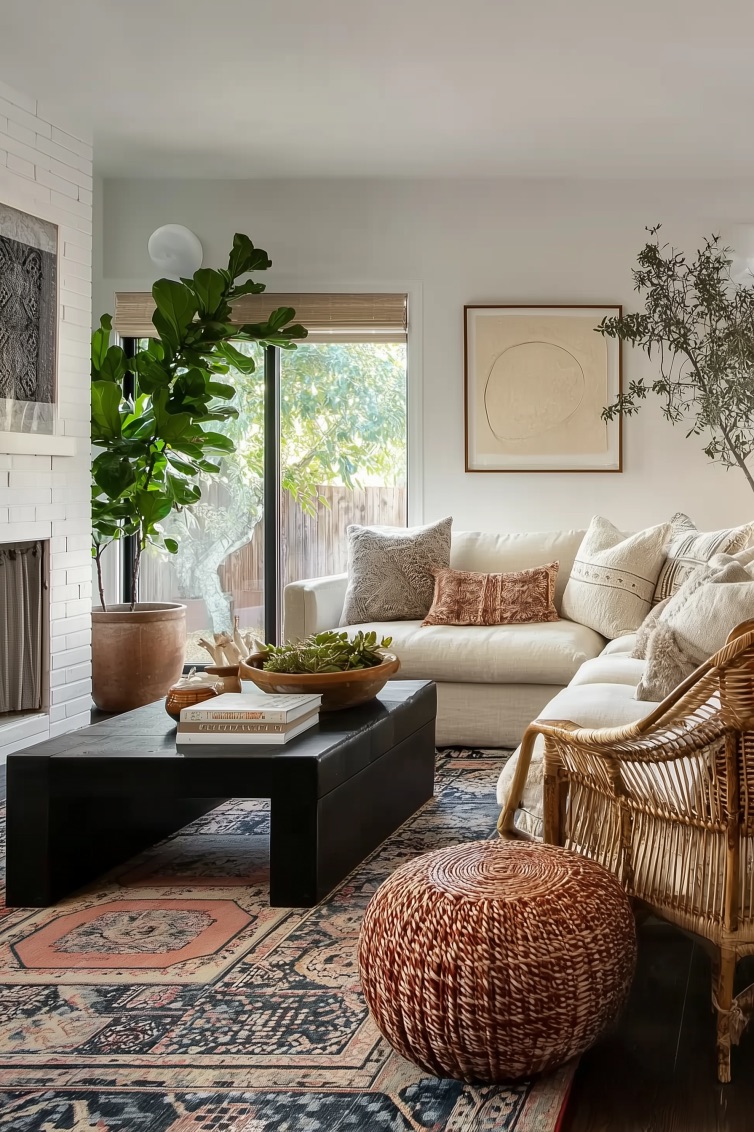
You might think adding a substantial fiddle leaf fig or bird of paradise seems excessive for an average living room. In reality, a single large potted tree delivers more impact than a dozen small plants scattered about.
That vertical drama draws eyes upward, making standard eight-foot ceilings feel taller. The broad leaves create natural partitions within open layouts, subtly defining your living area from your dining space without actual walls.
Plus, caring for one large plant often proves easier than maintaining many small ones – it’s harder to forget about something that stands five feet tall.
Just remember: large indoor trees need adequate light and consistent watering schedules. Neglect will show quickly on something this prominent, so assess your commitment honestly before bringing home that gorgeous rubber tree.
11. Show Off a Fluffy Shag Rug for Instantly Cozy Floors
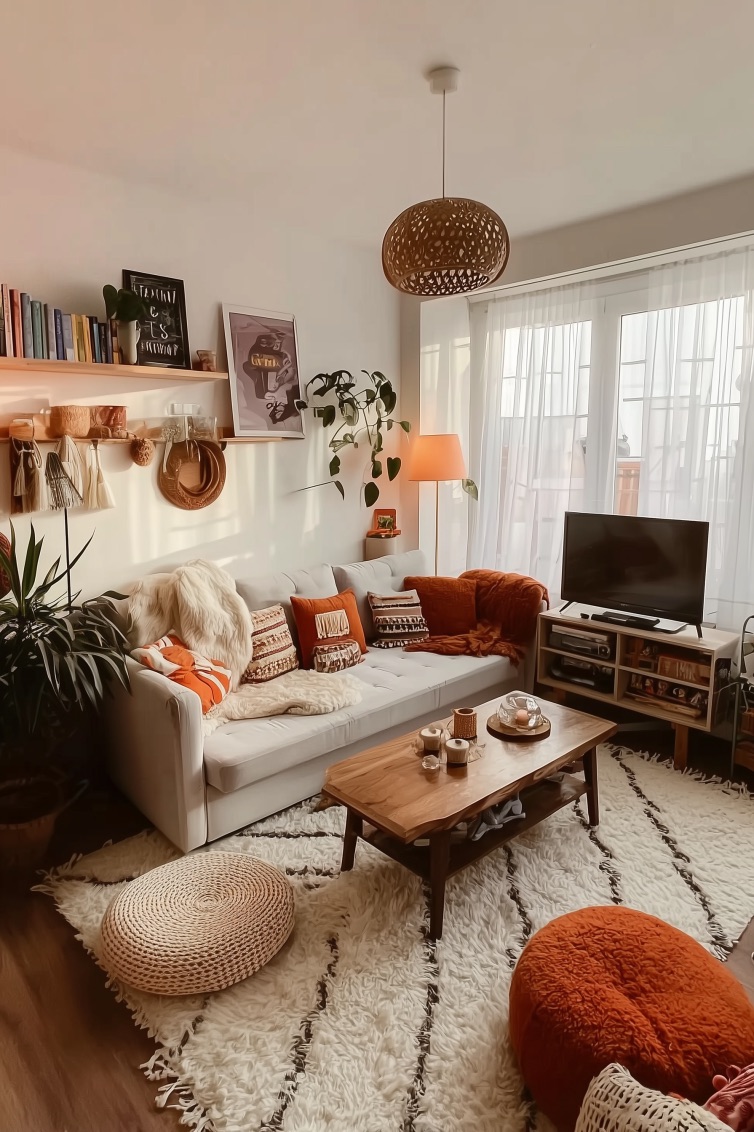
A shag rug transforms cold floors into something you’ll actually want to walk barefoot across. The deep pile creates both physical warmth and visual softness that hardwood or tile simply cannot provide alone.
Modern shag rugs have evolved beyond the polyester orange disasters of 1970s rec rooms. Today’s versions come in natural wool, soft cotton, or plush synthetic fibers in sophisticated neutrals – cream, charcoal, warm gray. The long fibers catch light differently throughout the day, adding subtle movement and dimension to your floor.
When placed under a coffee table or centered in your seating area, that plush rectangle becomes a textural anchor that invites you to kick off your shoes and settle in.
Find a spot in your living room that feels a bit cold or uninviting. Could a shag rug soften that zone and make it more welcoming? Sometimes the solution lives underfoot.
12. Choose Chunky Knit Throws for Inviting Farmhouse Texture
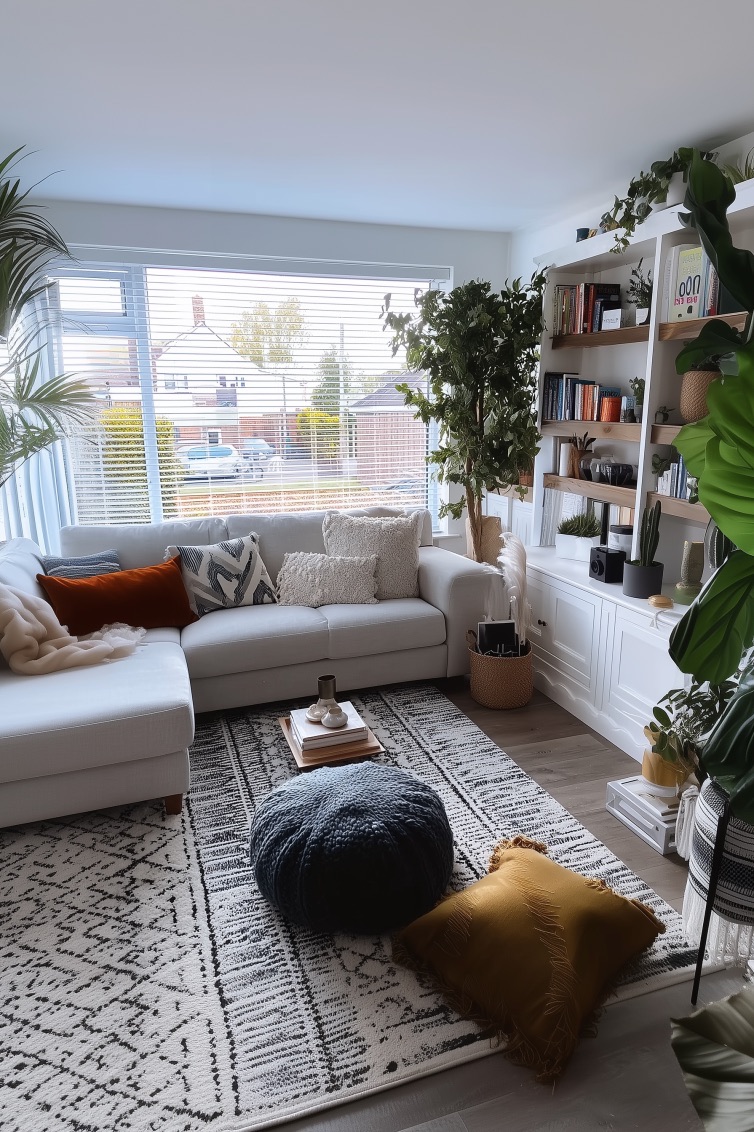
If you crave that cozy, lived-in feeling without going full rustic farmhouse, chunky knit throws bridge the gap beautifully. These oversized blankets with visible stitching add immediate texture while maintaining the relaxed vibe central to boho design.
The thick yarn creates shadows between loops, giving your sofa or favorite chair sculptural interest even when the throw sits unused. Draped casually over one arm or folded at the end of your couch, it signals comfort – this is a room for actual living, not just looking.
The weight of the knit also provides genuine coziness during chilly evenings when you’re reading or watching movies.
Look for cotton or merino wool versions if you want breathable options that work year-round. Acrylic chunky knits cost less but sometimes pill faster. Either way, you’ve added farmhouse warmth in a format that doesn’t clash with more eclectic boho elements, which brings us to an important balancing act…
13. Balance Soft and Dark Elements for Effortless Visual Contrast
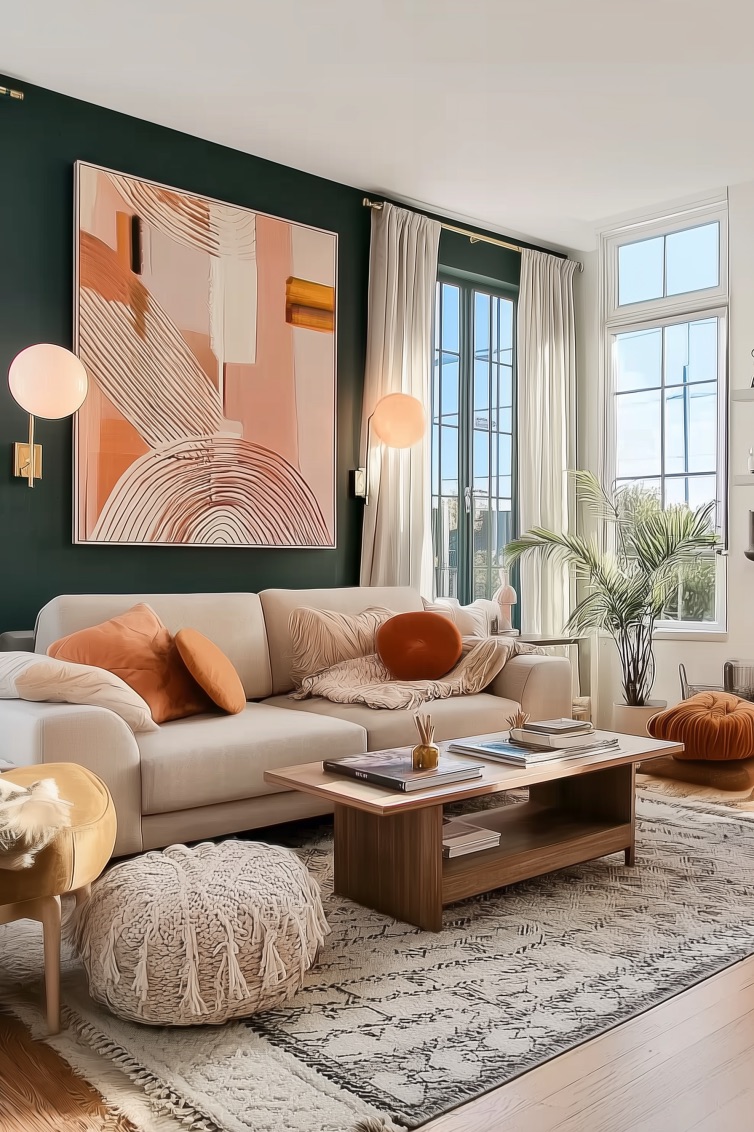
Stop trying to keep everything light and airy – that’s a recipe for a space that feels washed out. Instead, embrace darker accents that make your softer elements actually stand out.
Consider pairing cream-colored seating with charcoal throw pillows, or positioning a black metal floor lamp beside a light linen curtain. A dark wood bookshelf creates depth against white walls, while a black-framed mirror amplifies light while providing visual weight. The contrast prevents your living room from reading as bland or one-note.
This principle works at smaller scales too. A dark ceramic vase on a pale coffee table, black-and-white photography mixed with softer watercolors, even dark candles in light holders. Each pairing creates tiny moments of visual interest that accumulate into a space with genuine character rather than catalog perfection.
14. Layer Botanical Art Prints and Real Plants for Organic Decor
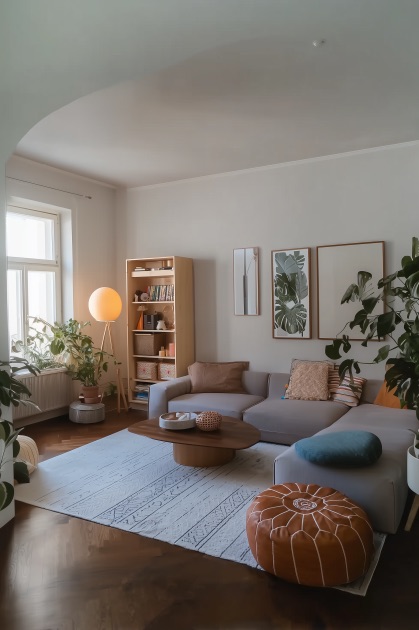
Someone once joked that decorating with plant imagery alongside actual plants is redundant, like hanging pictures of furniture in your furnished room. This misses the point entirely – layering botanical art with living greenery creates a conversation between representation and reality.
Vintage botanical prints bring scientific precision and old-world charm, their labeled specimens offering a formal contrast to the wild, organic growth of your pothos or monstera. A framed fern illustration hangs beside a shelf holding an actual fern, and suddenly you’ve created depth – linking decorative tradition with living nature.
The prints remain constant while your real plants grow and change, marking time in a subtle way.
This doubled-down approach to botanical themes feels particularly relevant now, as people crave nature connections while spending more time indoors. It seems likely that this trend toward layered, nature-heavy interiors will continue evolving rather than fading – perhaps incorporating more native plant species or seasonal rotations.
15. Hang Macramé Wall Hangings to Elevate Boho Wall Decor
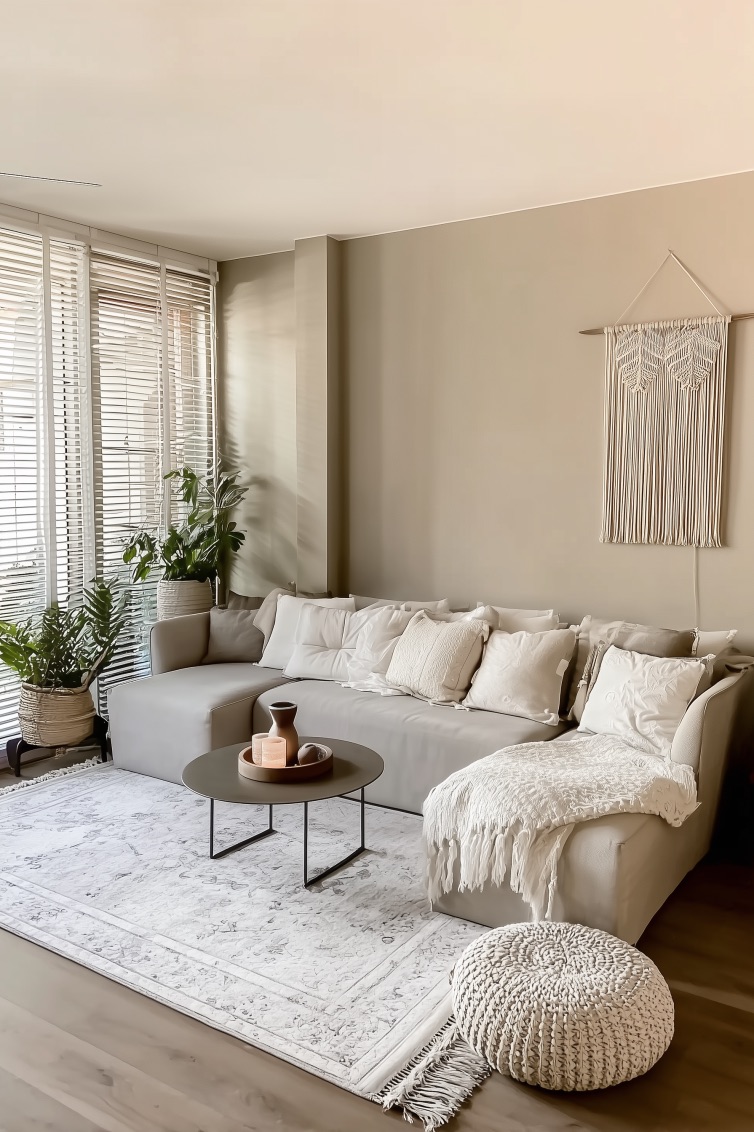
Bare walls drain energy from even well-furnished spaces, yet finding the right art can feel overwhelming. Macramé wall hangings solve this problem while delivering unmistakable boho character.
These knotted fiber pieces range from simple geometric designs to elaborate cascading creations with wooden beads and multiple tiers. The three-dimensional texture creates shadows that shift throughout the day as light changes, so your wall decor literally transforms from morning to evening.
Unlike flat art prints, macramé adds physical depth that makes walls feel less like barriers and more like textured surfaces.
Large macramé pieces work beautifully above sofas or beds, while smaller versions can cluster together gallery-style. You can even find macramé plant hangers that combine wall decoration with functional greenery display, doubling your impact. Have you considered what that empty wall above your couch really needs – more flatness or actual dimension?
Create Your Personal Boho Sanctuary Today
Your living room deserves more than cookie-cutter solutions pulled from generic design templates. Mix these boho ideas with your own treasures – that vintage bowl from your grandmother, the rug you found at a flea market, the plants you’ve somehow kept alive against all odds.
Start with one change this weekend, then watch how it transforms not just your space but how you feel within it.