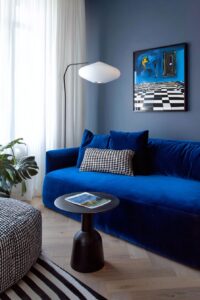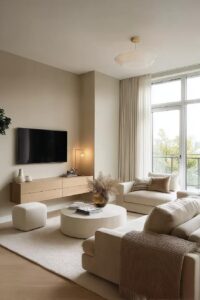

Many homeowners shy away from black, fearing it will make their living room feel cramped or oppressive. Yet when done right, black becomes the ultimate canvas for drama and sophistication.
The secret lies not in avoiding darkness, but in embracing it with intention. A well-designed black living room commands attention while offering endless possibilities for contrast and texture.
1. Layer Textured Floor Cushions For Inviting Black Living Rooms
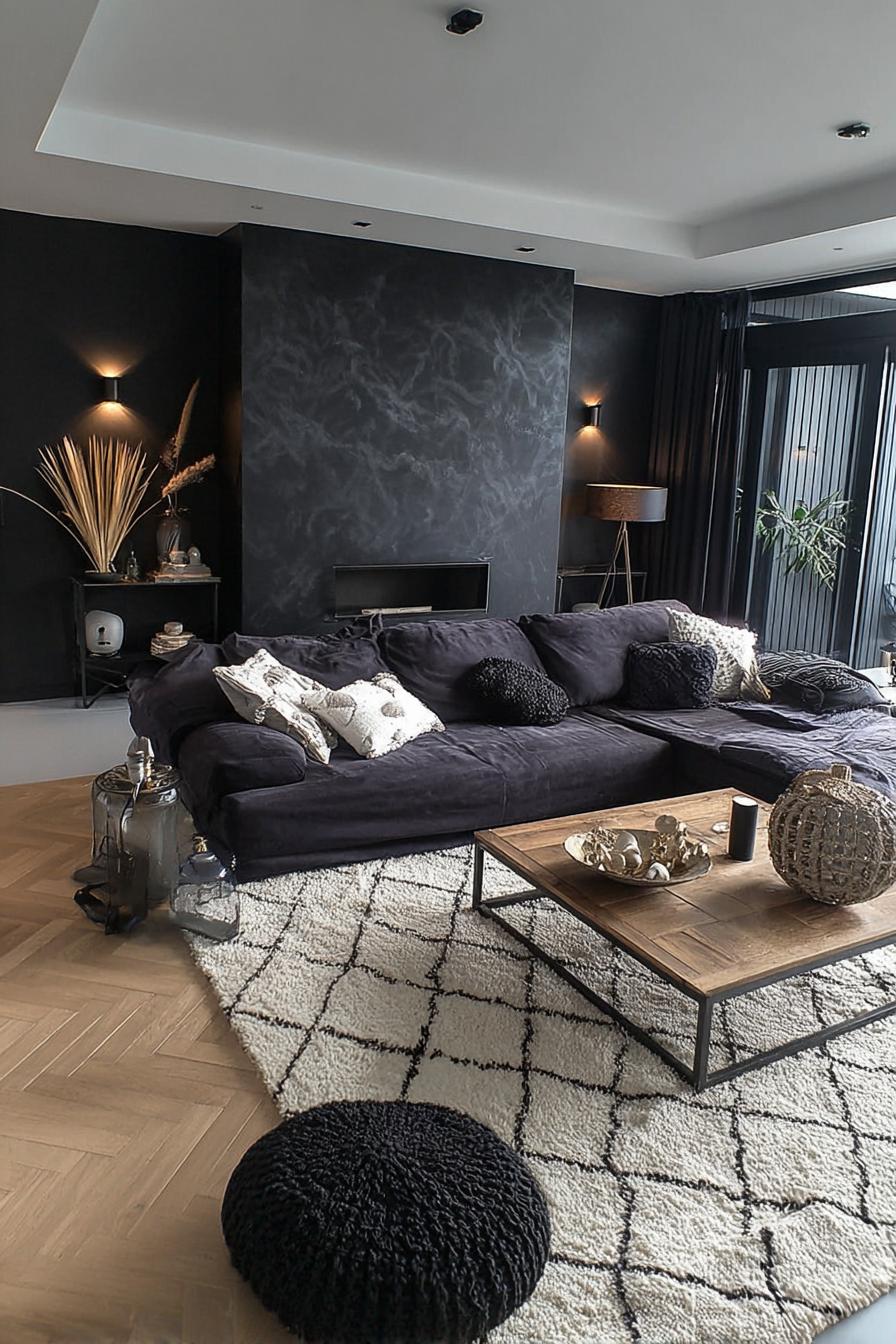
Floor seating rarely gets the attention it deserves when designing around dark palettes. Yet tossing a collection of textured cushions across your black flooring transforms the entire mood.
The interplay between plush velvet, nubby linen, and smooth cotton creates visual interest that pulls the eye downward. Your guests will gravitate toward these low-slung seating options, making the space feel both intimate and unexpectedly casual.
2. Frame Your Black Living Room with Oversized Floor to Ceiling Windows
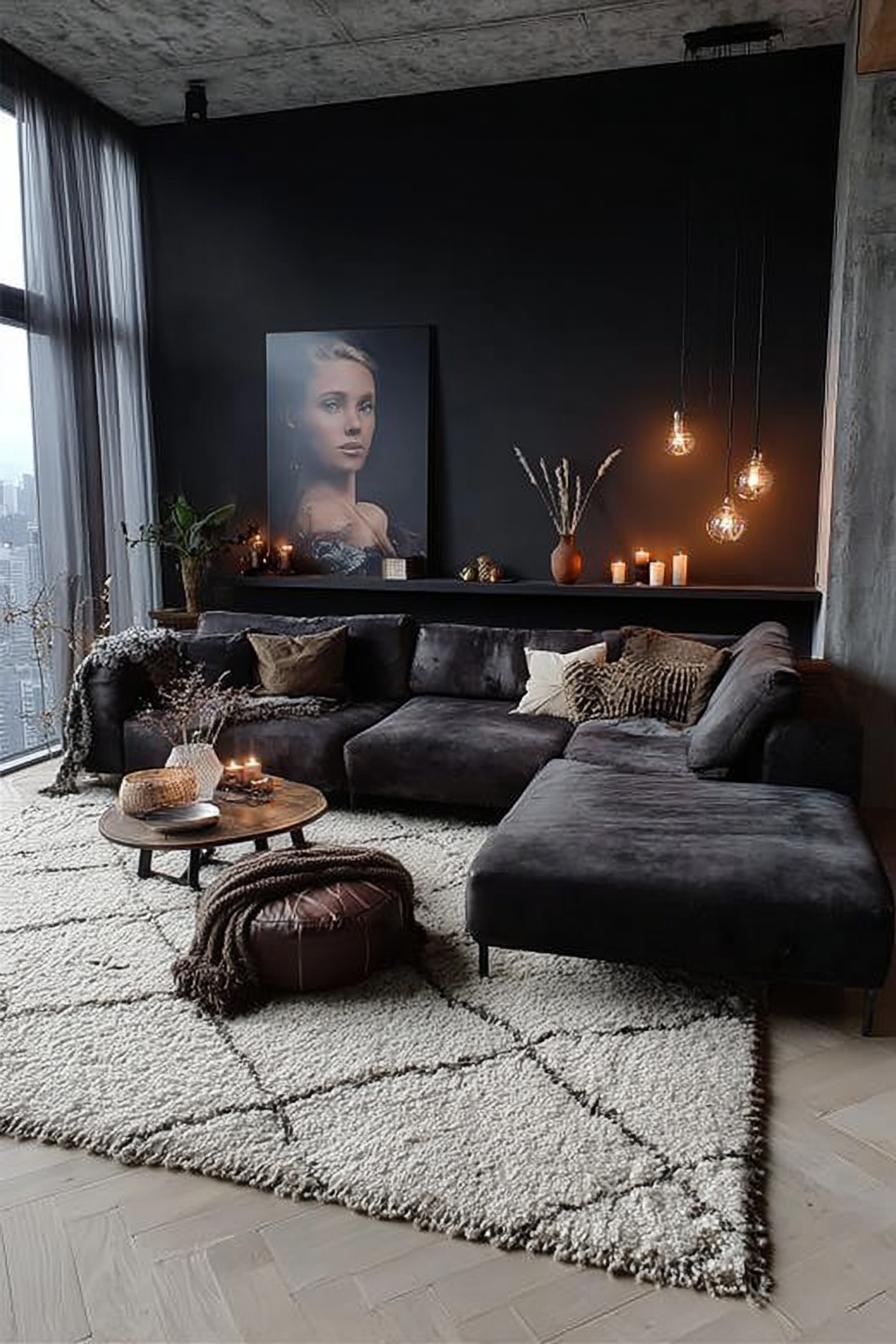
Why would anyone install dark walls only to block out natural light? The answer is they wouldn’t – at least not if they understand the power of massive windows against charcoal surfaces.
Floor-to-ceiling glass doesn’t just brighten a black room; it creates a living artwork where clouds, trees, and changing light conditions become part of your décor. The window frames act as borders around an ever-shifting landscape painting. During golden hour, those black walls will glow with reflected warmth you never expected.
One caution though: without proper window treatments, you’ll lose all that mysterious ambiance after dark when the glass turns into mirrors.
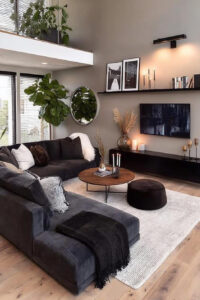
3. Highlight Bold Contrast By Pairing Black Walls with a White Rug
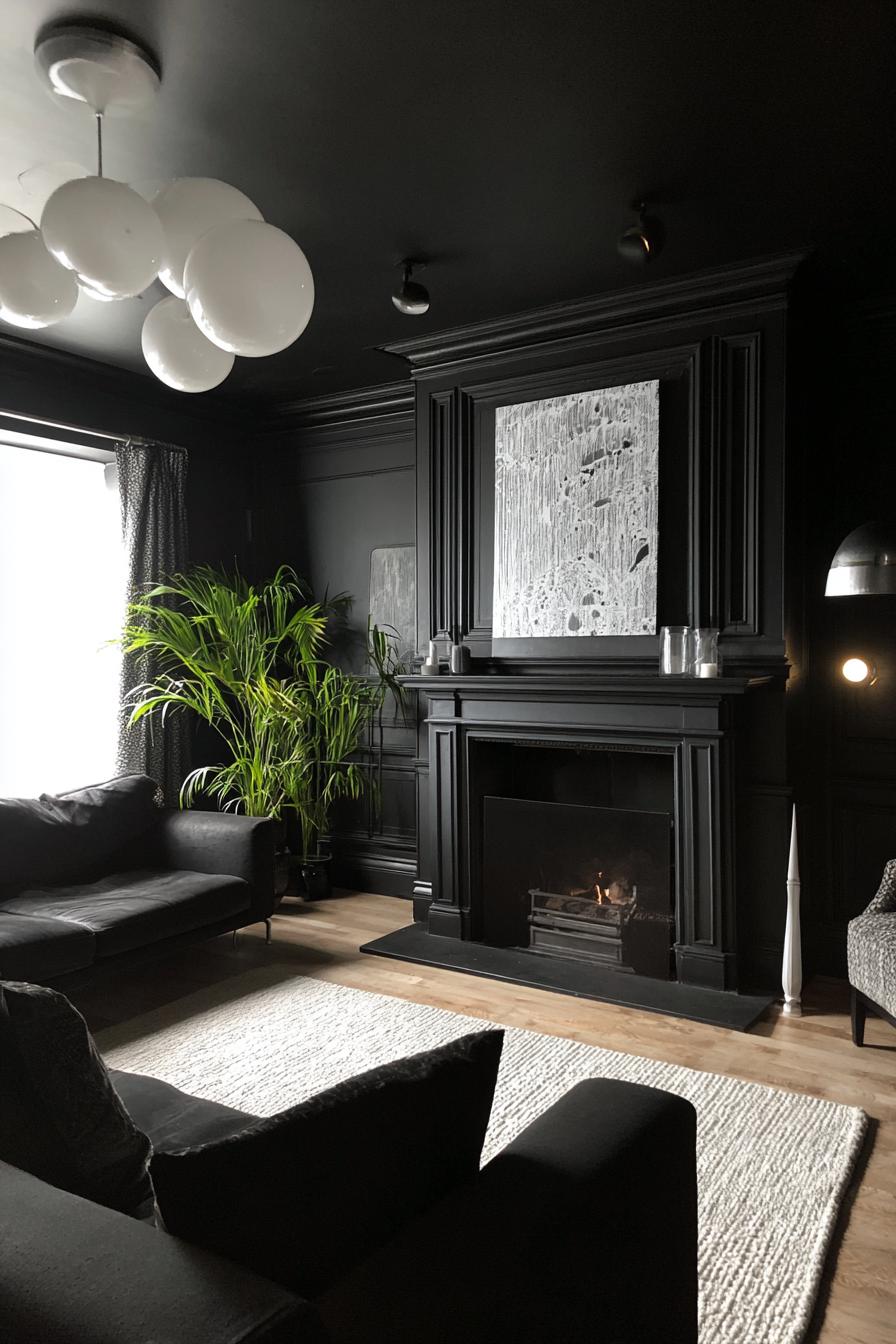
Building on the window idea from before, contrast remains your strongest tool when working with dark interiors. A crisp white rug sprawled across dark flooring creates an anchor point that grounds the entire room.
The stark division between light and dark doesn’t just look striking – it actually helps define different zones within your living space. You might place your seating arrangement entirely on the white rug, creating a bright island within the darker surroundings.
This approach works especially well in open-plan spaces where you need visual cues to separate areas.
Here’s a practical tip: choose a rug with subtle texture rather than a flat weave. The dimensional quality will prevent that white expanse from feeling too clinical.
4. Illuminate with a Dramatic Modern Chandelier For Luxurious Ambiance
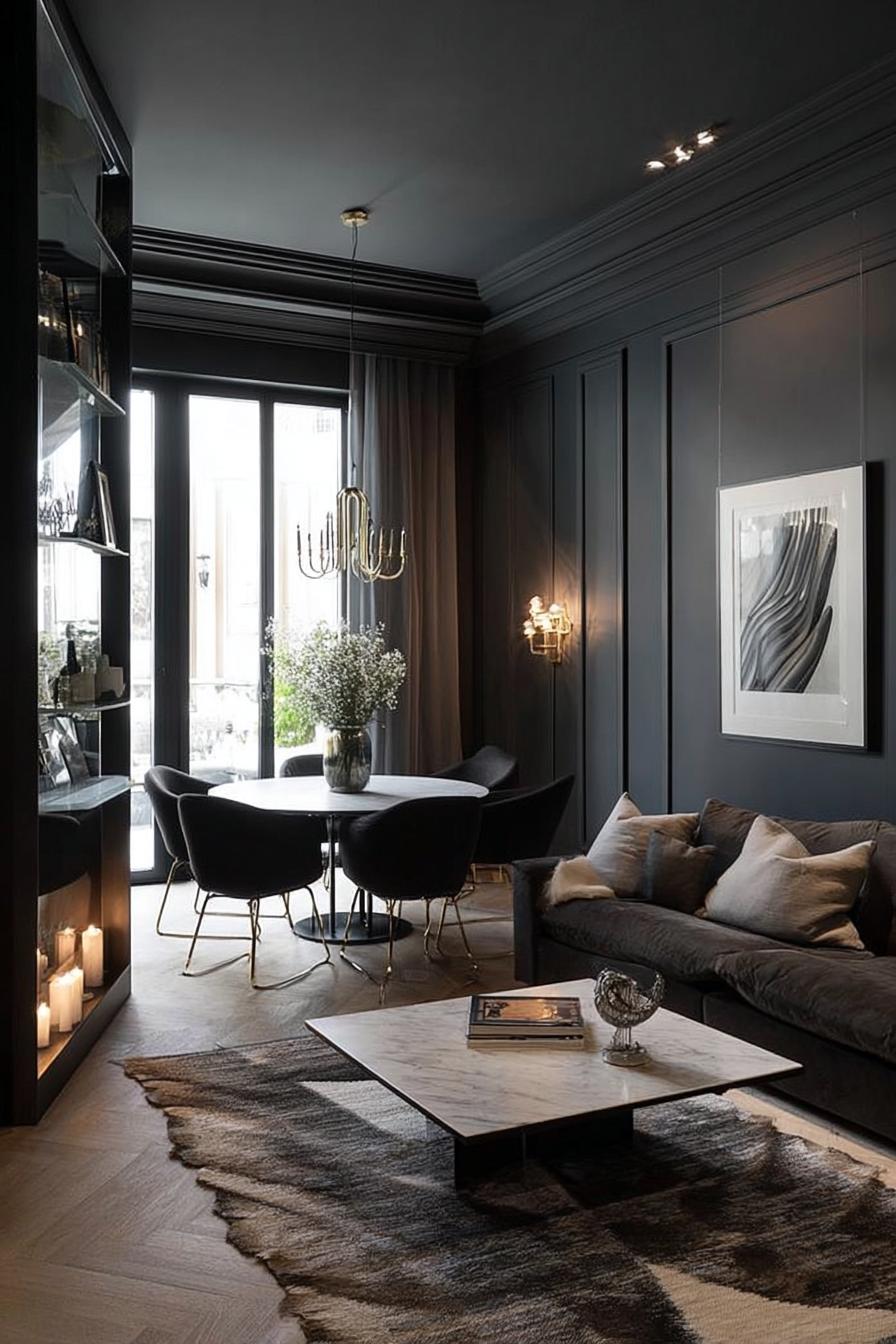
If you’re willing to invest in one statement piece for your black living room, make it an extraordinary light fixture. A sculptural chandelier becomes ten times more dramatic when suspended against dark walls or ceilings.
Consider a geometric brass piece with exposed bulbs – the metal catches and reflects light in ways that make the entire fixture seem to float. I’ve seen rooms where a single Sputnik-style chandelier transformed what could have been a cave into a jewel box.
The multiple light sources create dancing shadows across those dark surfaces, adding movement and life.
Looking ahead, we’re seeing more homeowners mix metallic finishes in their chandeliers, combining brass, chrome, and blackened steel in one fixture. This trend pairs beautifully with black backdrops.
5. Showcase Rich Texture with a Sleek Leather Couch
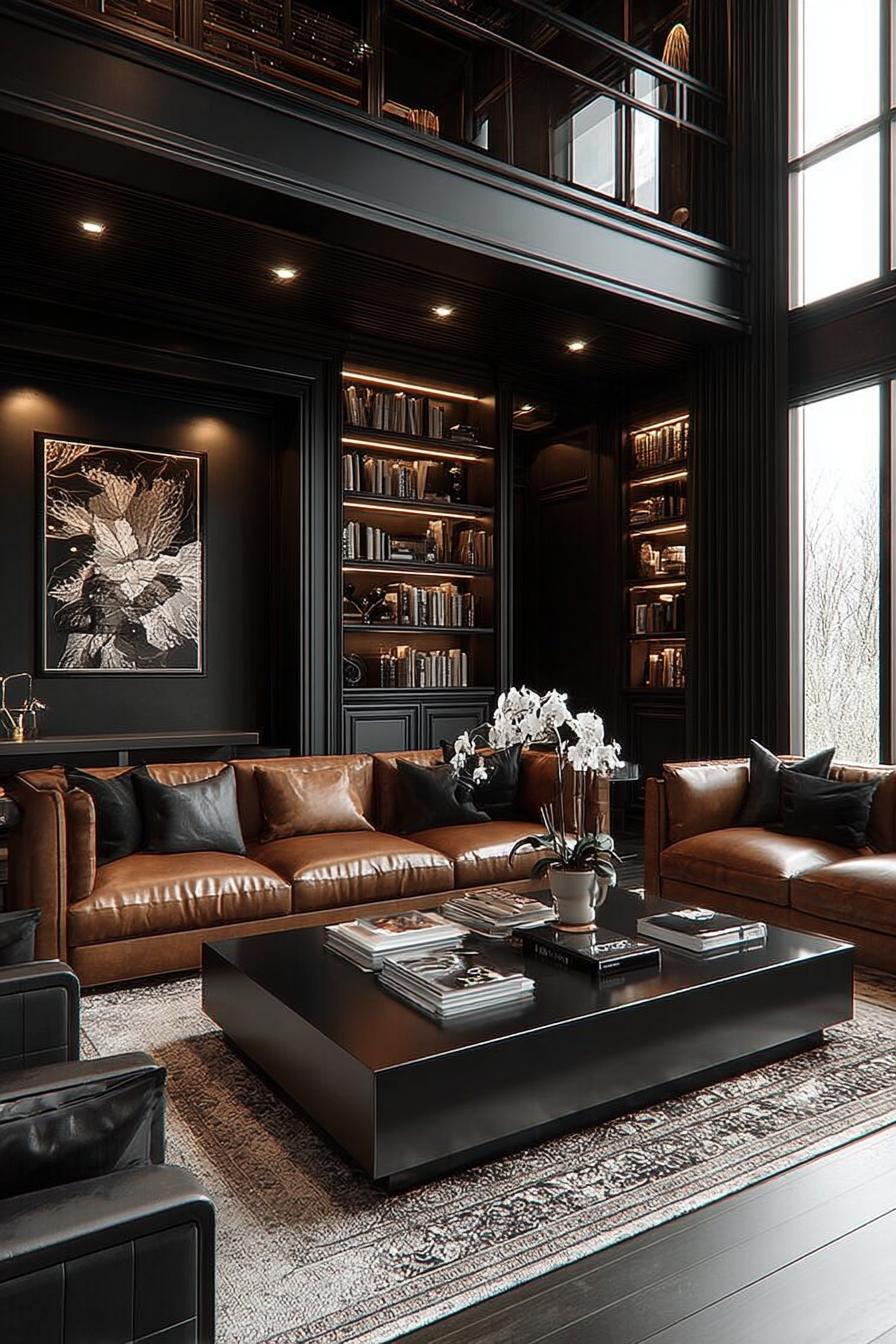
While fabric sofas offer comfort, leather brings something entirely different to dark spaces. A supple black leather couch against black walls might sound monotonous, but the sheen and grain of quality leather create enough variation to distinguish itself.
The surface catches light differently throughout the day, sometimes appearing almost charcoal, other times showing warm brown undertones. That subtle shift keeps your eye engaged without requiring bright color contrasts.
6. Let Natural Light Enhance Black Living Room Furniture
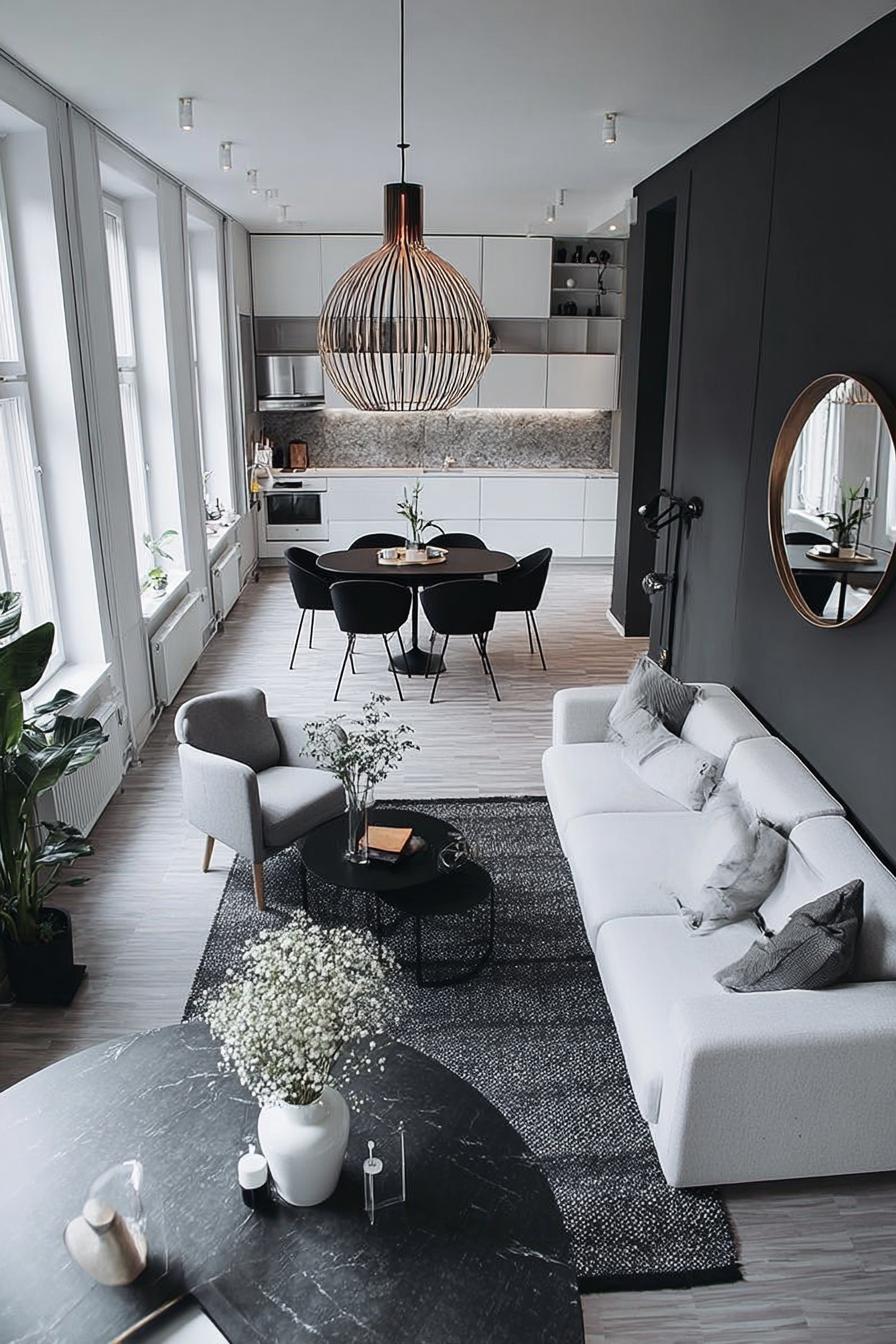
Stop treating windows like an afterthought in your black living room design. Natural light streaming across dark furniture creates the kind of depth and dimension that artificial lighting struggles to replicate.
Position your black couch perpendicular to your largest window rather than against the wall opposite it. This sideways placement means sunlight will graze across the upholstery, highlighting every fold and curve.
The same principle applies to black shelving units, media consoles, and accent chairs – let that natural light work as a spotlight, revealing textures and forms that would disappear in flat, overhead lighting.
Take a weekend to observe how light moves through your space at different times, then arrange your furniture accordingly.
7. Balance Black Walls with Light Wood Flooring

Here’s an odd truth: black rooms often feel lighter with pale wood floors than with dark ones. Something about that warm, blonde oak or ash creates a buoyancy that prevents the space from feeling like a cave.
The wood grain provides organic pattern that softens all those sharp, dark edges without introducing competing colors. It seems counterintuitive, but light floors actually make your black walls appear more intentional, more designed, rather than accidentally gloomy.
Plus, the natural variations in wood – those subtle color shifts and knot patterns – add visual texture that keeps the space from feeling too controlled.
Does your current flooring already lean dark? Light area rugs can achieve a similar balancing effect.
8. Incorporate Monochrome Artwork For a Striking Accent Wall
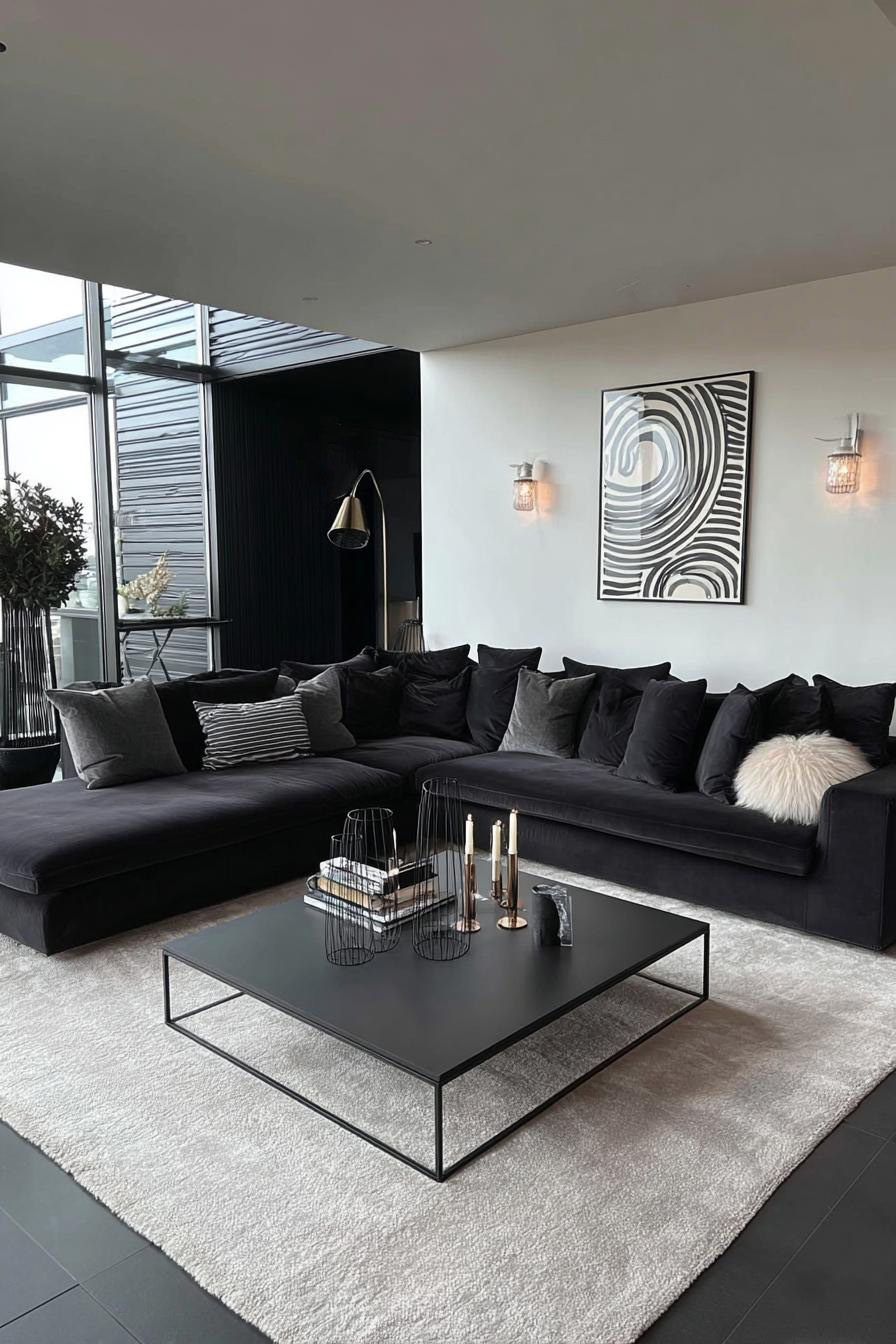
Most people assume colorful art pops best against black walls, but that’s missing an opportunity. Monochrome photography or black-and-white abstract paintings create a gallery-like sophistication that color simply can’t match.
A large-scale black and white photograph – maybe an architectural detail or a portrait – becomes meditative against dark walls. The absence of color forces you to notice composition, light, and shadow in ways you’d overlook with a vibrant piece. This restraint elevates the entire room.
The cumulative effect resembles a curated museum space where every element feels purposeful and considered.
9. Display Statement Accessories Against a Black Living Room Wall
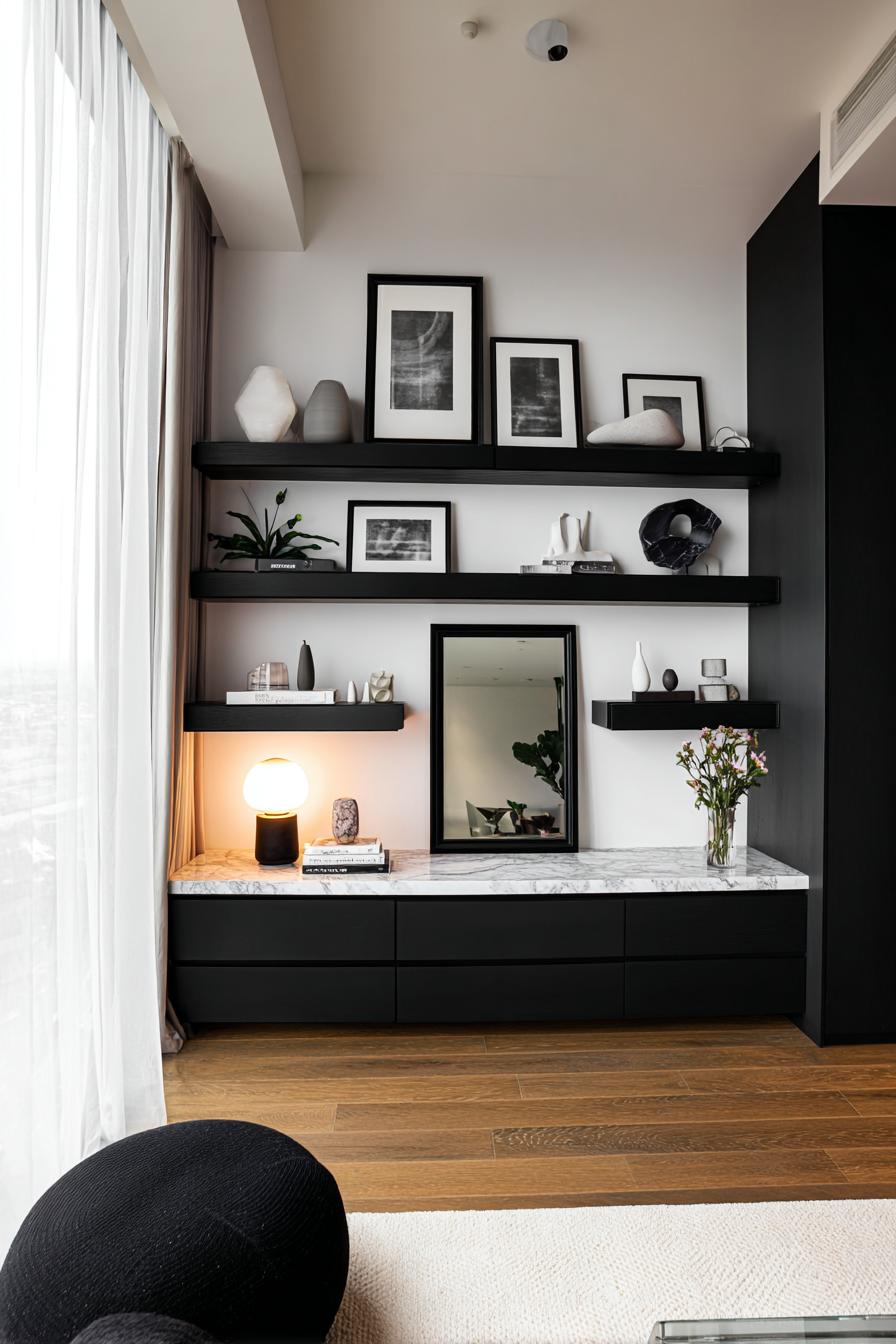
Three elements make accessories sing against black backgrounds: metallic finishes, sculptural forms, and strategic lighting. Let’s break down why each matters.
Metallic accessories – whether brass candlesticks, silver bowls, or copper vases – reflect light in ways that create visual breaks across dark surfaces. Sculptural objects with interesting silhouettes cast shadows that add another layer of depth. Without these three-dimensional forms, your black walls risk looking flat.
And focused lighting, perhaps a picture light or small spotlight, can transform a simple decorative object into a focal point.
In short: black walls make ordinary accessories look extraordinary, so choose pieces that deserve that spotlight.
10. Contrast Dark Sofas with a Crisp White Coffee Table
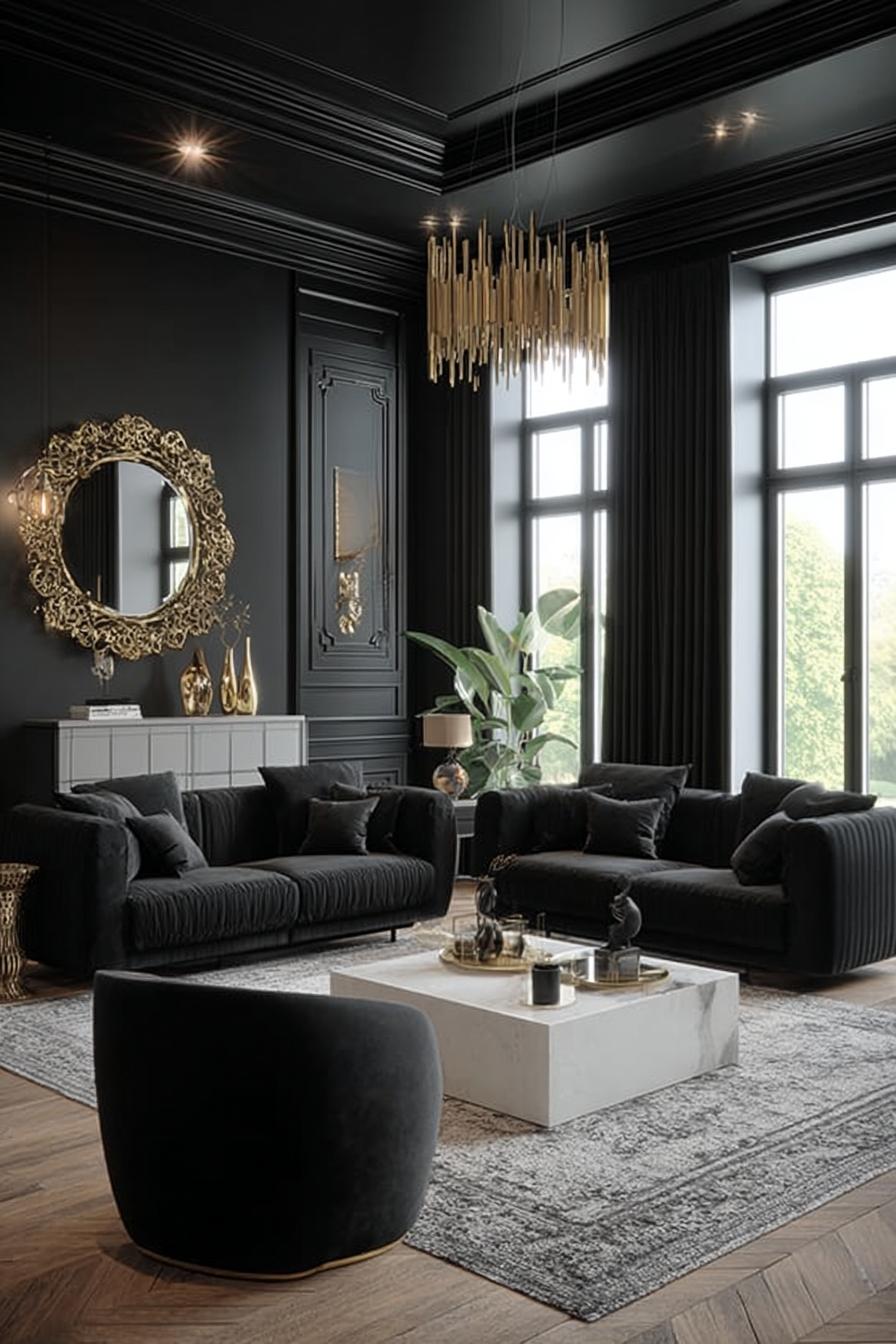
You’d never expect a glossy white coffee table to steal the show, yet in a dark living room, it does exactly that. The contrast is so sharp that the table seems to glow.
I once visited a loft where the designer paired a charcoal velvet sectional with a lacquered white coffee table that had sculptural, asymmetric legs. That single piece of furniture became the room’s focal point – more than the artwork, more than the lighting.
Guests would run their hands along its smooth surface, drawn to that bright island in the darker seating area.
Keep the table’s surface fairly clear; clutter diminishes the striking contrast you’ve created.
11. Curate a Cozy Black and White Seating Area with Plush Sofa

Dark rooms can feel cold and uninviting if you prioritize style over comfort. The solution lies in choosing a sofa so plush and inviting that it counteracts any severity from your black color scheme.
A deep-cushioned sofa upholstered in soft fabric – think bouclé or chenille – adds tactile warmth that balances visual coolness. Layer it with white and cream throw pillows in varying textures, and suddenly you’ve got a seating area that beckons rather than intimidates.
The black-and-white palette remains, but the sumptuous textures make it approachable.
This approach creates a room that’s simultaneously dramatic and deeply comfortable.
12. Arrange Lush Green Plants to Soften Dramatic Black Walls
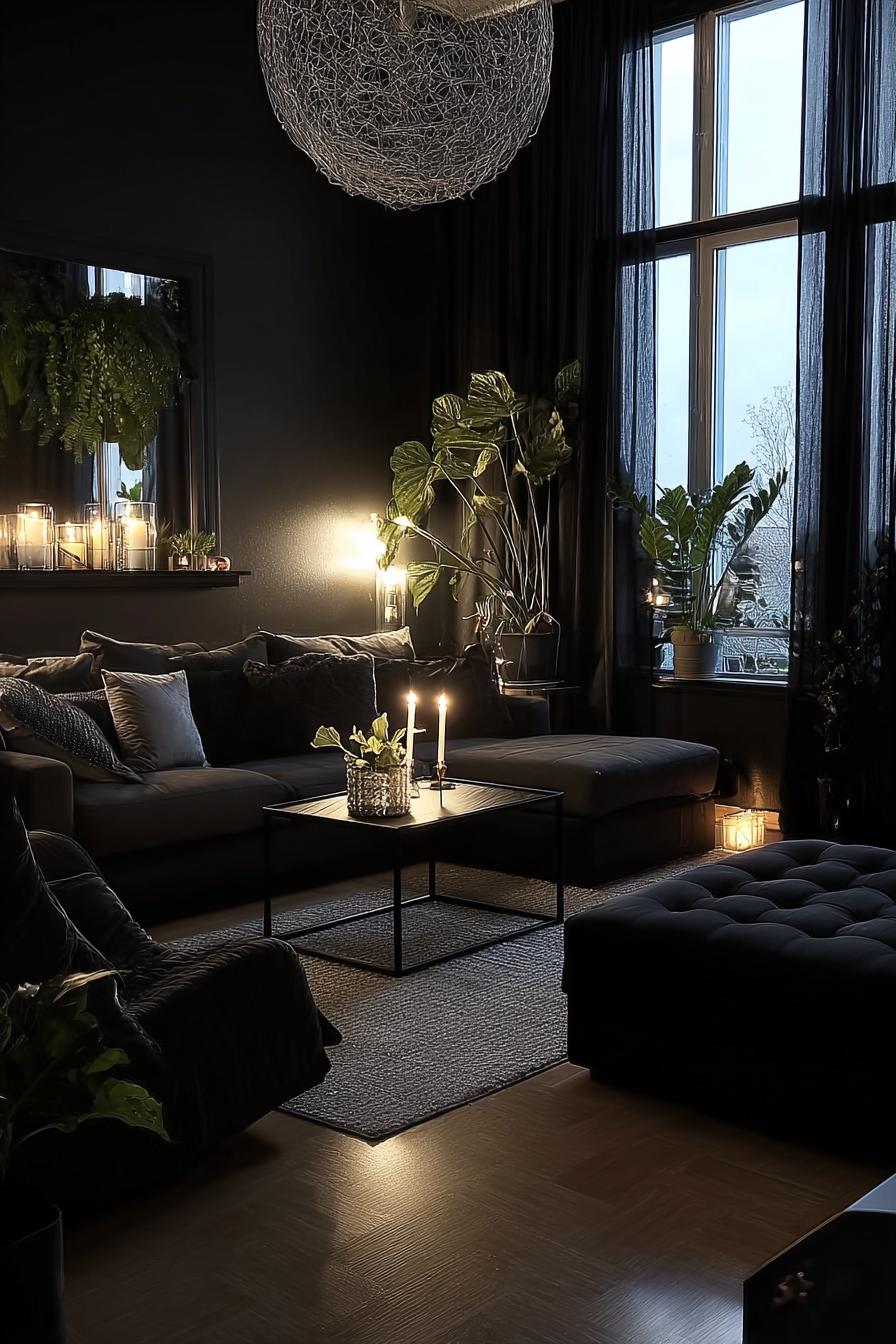
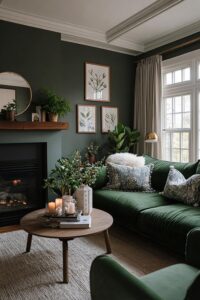
Biophilic design has moved beyond trend status into something more permanent, and nowhere does it shine more than against dark walls. Living greenery introduces the one element black interiors desperately need: life.
Large-leafed plants like fiddle leaf figs or monstera deliciosa create bold silhouettes that hold their own against strong wall colors. The green doesn’t just contrast with black – it actually makes the black appear richer and more complex.
Place plants at varying heights: a tall floor plant in one corner, medium plants on side tables, and trailing pothos on high shelves. This vertical distribution draws the eye around the room.
As you move into your next space or next redesign, consider how plants might anchor your dark palette in nature.
Conclusion
Your black living room doesn’t need to wait for some distant renovation. Start with one bold move – maybe that white rug or those floor-to-ceiling curtains you’ve been considering. Each dark surface you introduce creates new opportunities for contrast and drama.
The room you’ve been imagining is closer than you think, waiting for you to embrace the shadows.