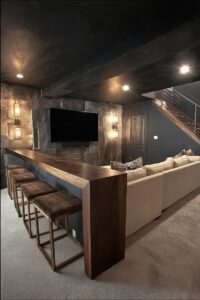

Finding room for a home office in a cramped apartment feels like solving a puzzle with too many pieces. You stare at every corner, every wall, wondering how to carve out a productive spot without sacrificing your living space.
The good news? Small doesn’t mean starved for style or function. With clever tweaks and focused choices, you can transform even the tightest nook into a workspace that fuels your best work.
1. Illuminate Your Desk Area with Cozy Table Lamps
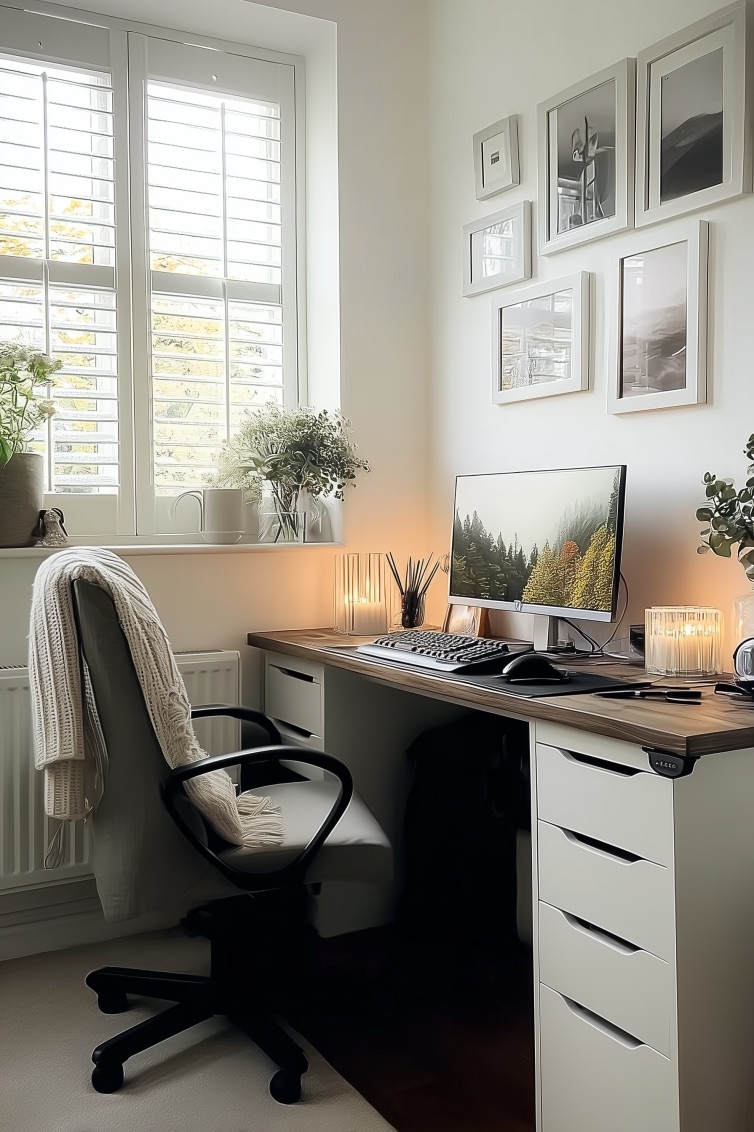
Here’s something that might catch you off guard: lighting changes everything. You might think a small office needs overhead brightness to feel open, but the opposite often rings true.
A well-placed table lamp creates pools of warm light that define your workspace without overwhelming it. The glow draws your eye to the desk, making the rest of the room fade gently into the background. This focused illumination actually makes a compact area feel more intentional rather than cramped.
Choose lamps with adjustable arms or dimmable bulbs so you can shift the mood throughout your workday. A brass fixture with a linen shade, for instance, brings a touch of elegance without shouting for attention.
Does your current lighting make you want to linger at your desk, or does it push you away?
2. Add Decorative Art for an Inspiring Small Office Setup
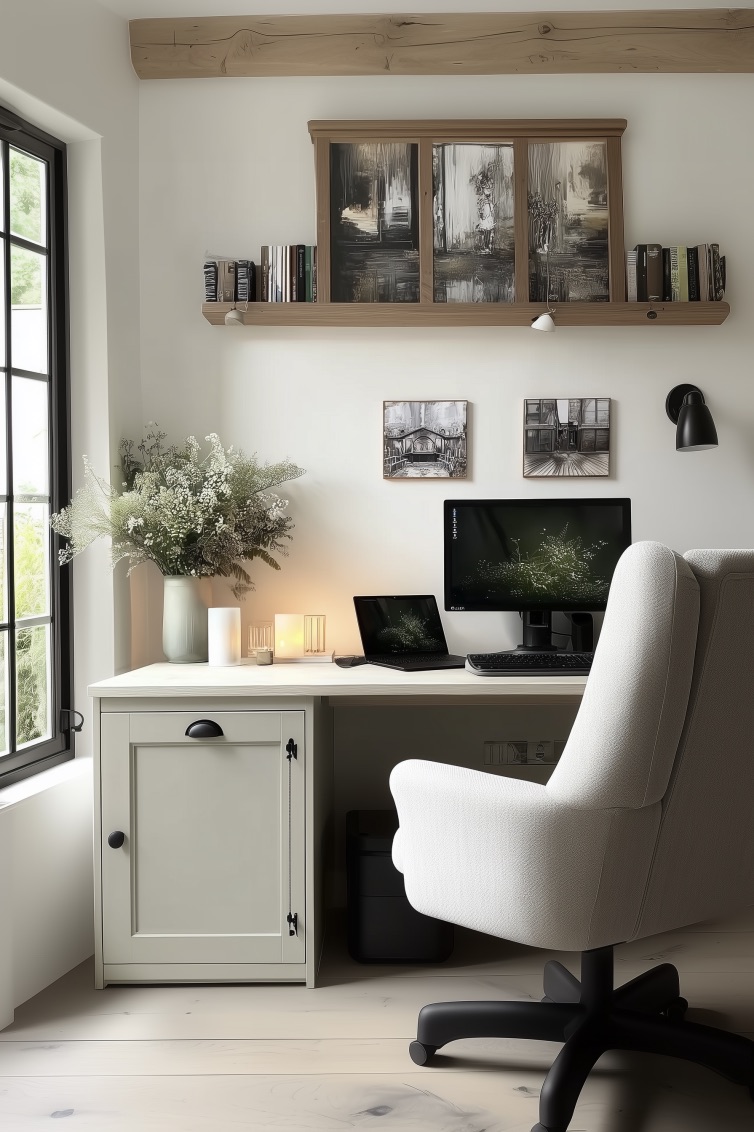
Start by picking one piece that speaks directly to you. Forget filling every inch of wall space – select art that energizes your thinking or quiets your mind when deadlines pile up.
A single abstract print in bold ochre and navy, for example, can anchor your desk area and give your eyes somewhere interesting to rest during video calls. Or consider a vintage botanical illustration that brings a hint of the outdoors inside without requiring you to remember to water anything.
Hang it at eye level when you’re seated – this creates a personal gallery moment just for you. Make this small addition your first step toward a workspace that feels less like an afterthought and more like a destination.
3. Incorporate Neutral Textiles for a Calming Home Office Space
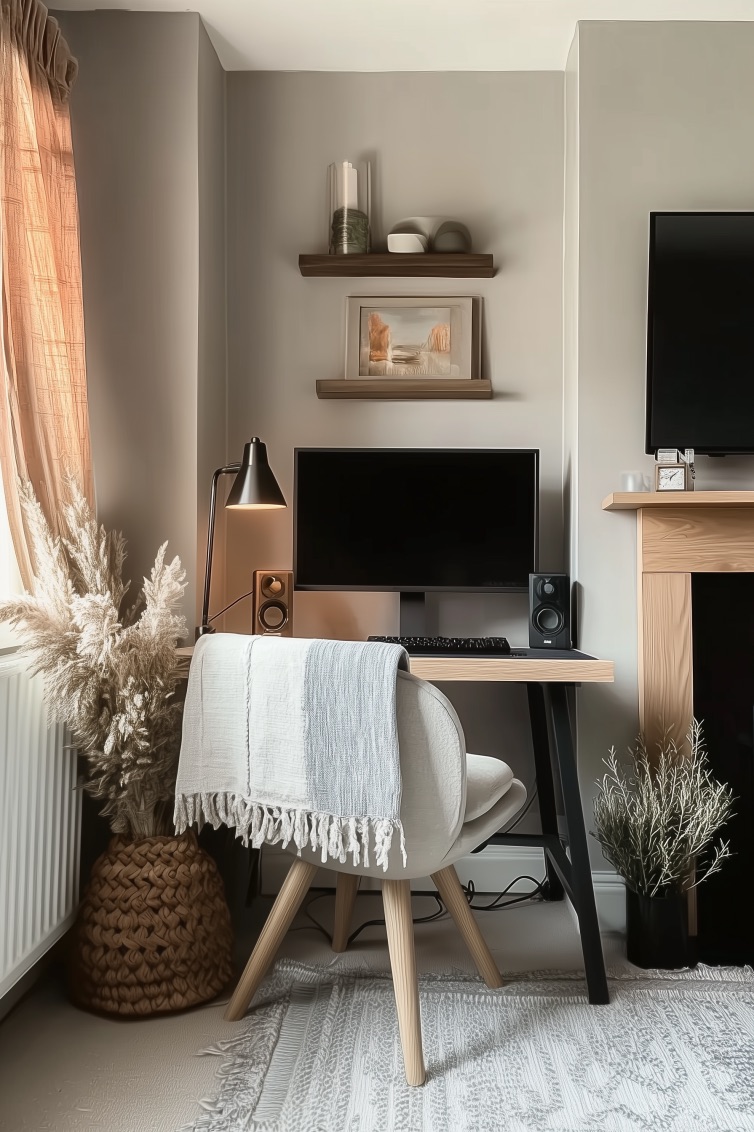
Building on that art you just hung, think about softening the hard edges around your desk. Textiles in oatmeal, stone, or warm grey tones can muffle the visual noise that small spaces tend to amplify.
Picture a linen roman shade filtering afternoon light, or a wool throw draped over the back of your chair for those moments when the air conditioning runs too cold. These layers absorb sound, too – something you’ll appreciate when you’re on your third conference call of the morning and the neighbor decides to practice violin.
Skimp on texture, and your workspace risks feeling sterile or uninviting. That coldness seeps into your productivity, making you reach for distractions more often than you’d like.
4. Highlight Built-in Shelving for Storage in a Functional Combo
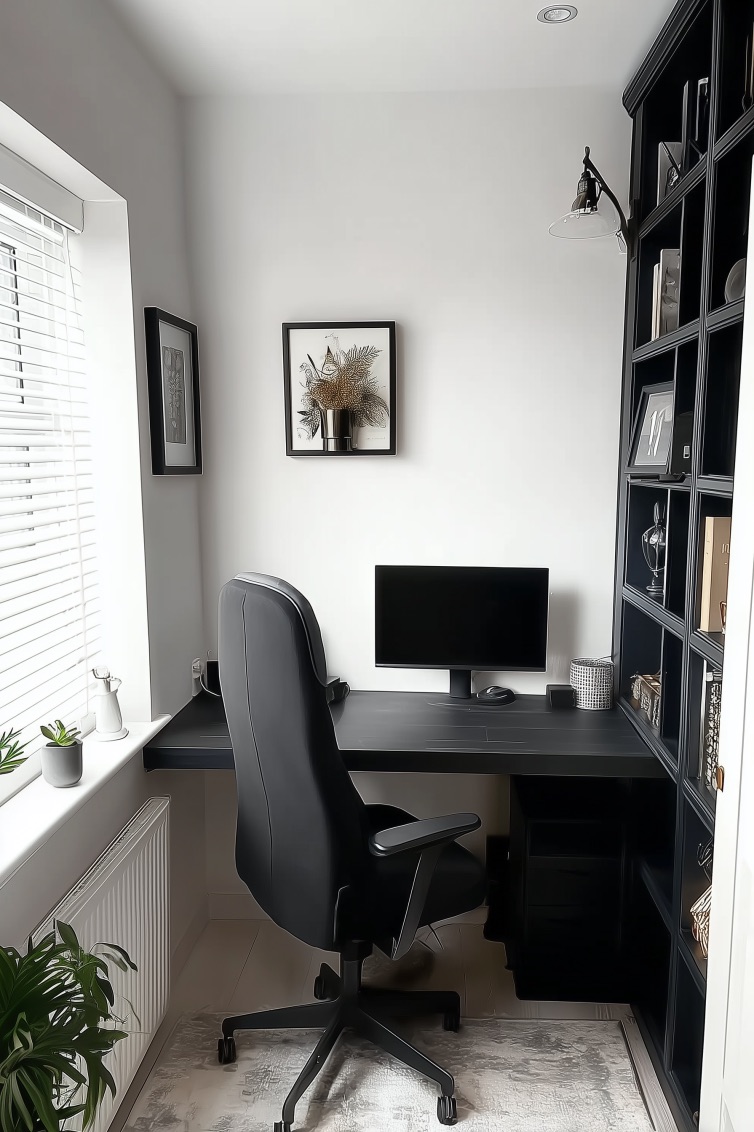
Let’s walk through the anatomy of smart storage. First, you’ve got lower shelves for bulky binders and reference books. Then mid-level cubbies hold everyday supplies within arm’s reach. Finally, top shelves display those few decorative objects that make the space yours.
Built-in shelving eliminates the need for freestanding bookcases that eat up precious floor space. When you tuck shelves into an alcove or span them across a short wall, they seem to disappear into the architecture rather than crowd it. Paint them the same shade as your walls, and they recede even further.
Consider backing each shelf with wallpaper in a subtle pattern – it adds depth without cluttering your sightline. Add small baskets or boxes to corral loose items that would otherwise create visual static.
This approach to storage is gaining traction as more people realize that built-ins don’t require a full renovation. Floating shelves with concealed brackets deliver a similar effect for a fraction of the investment, and designers increasingly specify them in compact home offices where every inch counts.
5. Showcase a Statement Map Art for Creative Inspiration
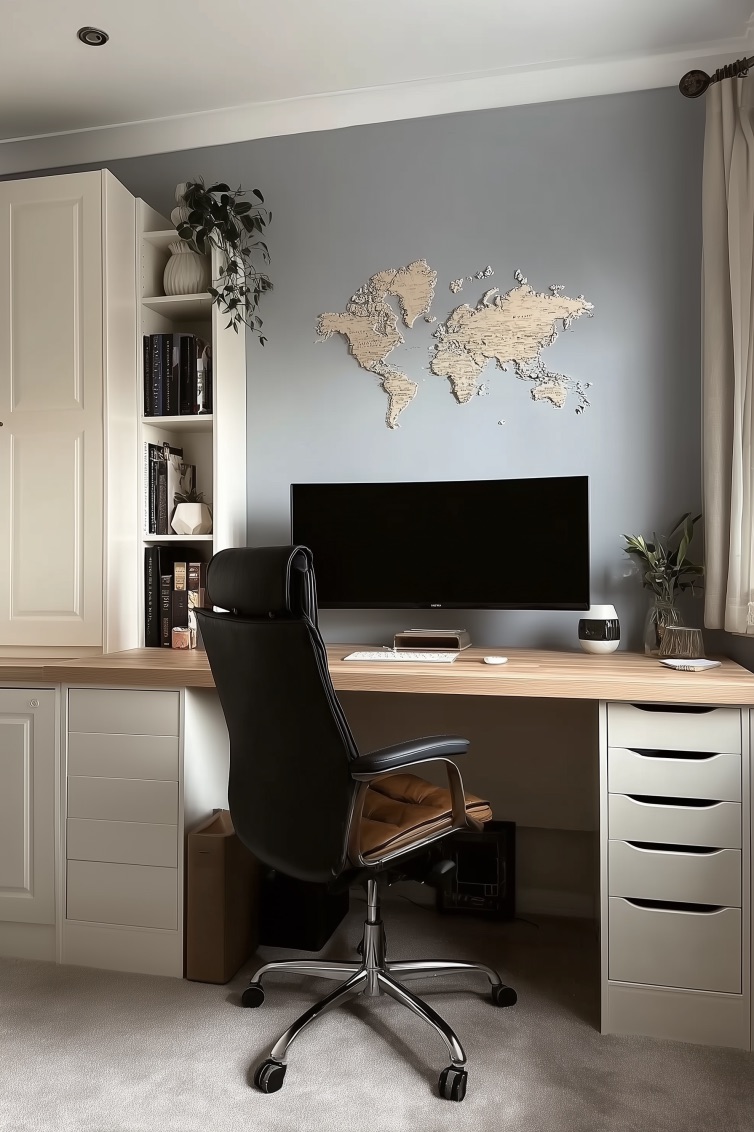
Who says you need to play it safe? A large vintage map – maybe of a city you dream of visiting or a coastline you remember from childhood – commands attention in ways a generic motivational poster never will.
Maps feed curiosity. When you hit a creative wall, your eyes wander to unfamiliar street names or imagined topographies, giving your brain a brief vacation before diving back into spreadsheets. The intricate linework and faded colors add a layer of sophistication that elevates your entire setup.
Statement map art turns a small office into a launch pad for big ideas.
6. Embrace a Green Accent Wall for a Distinctive Bedroom Workspace
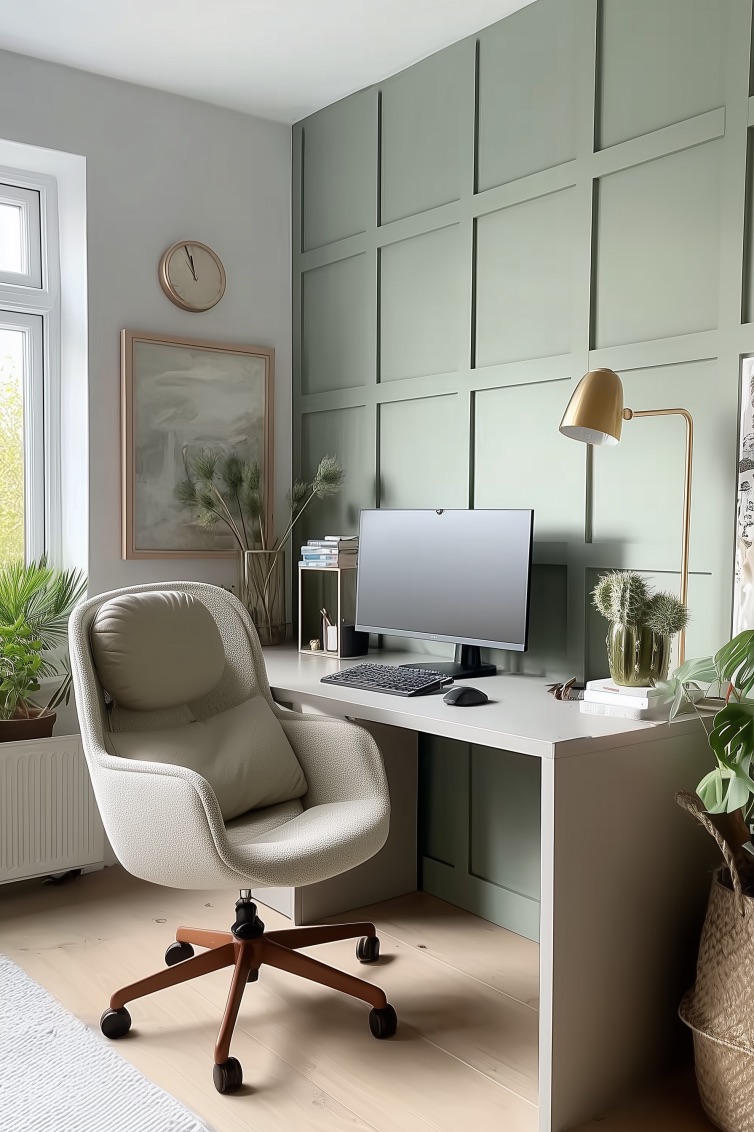
People often overlook color when they’re nervous about shrinking a room. But here’s the thing: a deep sage or forest green behind your desk actually creates definition, carving out a “room within a room” that signals work mode.
Green tones historically connect to concentration and renewal, which explains why libraries and studies have favored them for centuries. When you paint just one wall – the one your desk faces or backs up to – you create a focal point that grounds the space without overwhelming it.
The consequence? Your bedroom stops feeling like it’s doing double duty and starts functioning as two distinct zones: one for rest, one for getting things done. That mental separation helps you shut off work thoughts when you finally close your laptop.
7. Opt for Sleek Minimalist Furniture in a Compact Corner
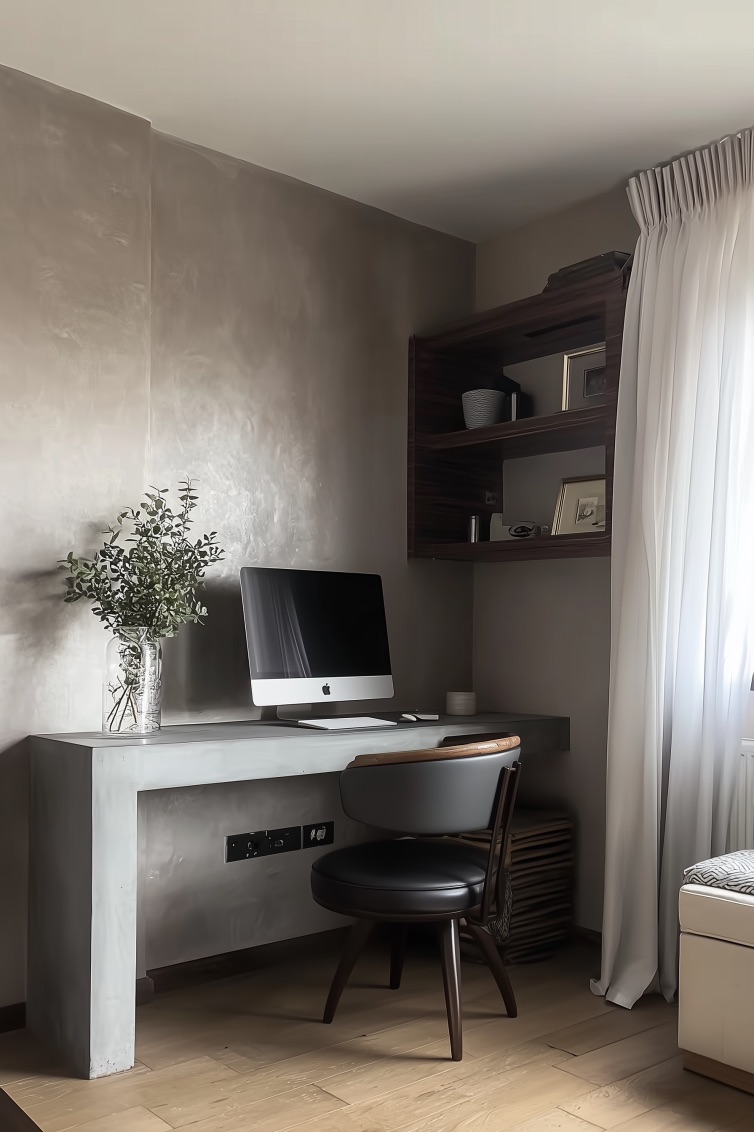
Let’s be honest: bulky furniture in a small office is like wearing snow boots to the beach. It just doesn’t fit the situation, no matter how much you love those boots.
A minimalist desk with hairpin legs or a slender floating shelf as a work surface opens up floor space and makes the whole area feel breathable. Your eyes travel underneath and beyond the furniture rather than stopping at a solid mass.
The same goes for your chair – choose something with an open frame or transparent acrylic rather than a high-backed leather throne.
This streamlined approach doesn’t mean sacrificing comfort or storage. Many minimalist pieces include clever compartments or modular add-ons that expand when you need them and tuck away when you don’t, adapting to your workflow like a well-tailored jacket.
8. Maximize Vertical Wall Shelving for Efficient Guest Room Organization
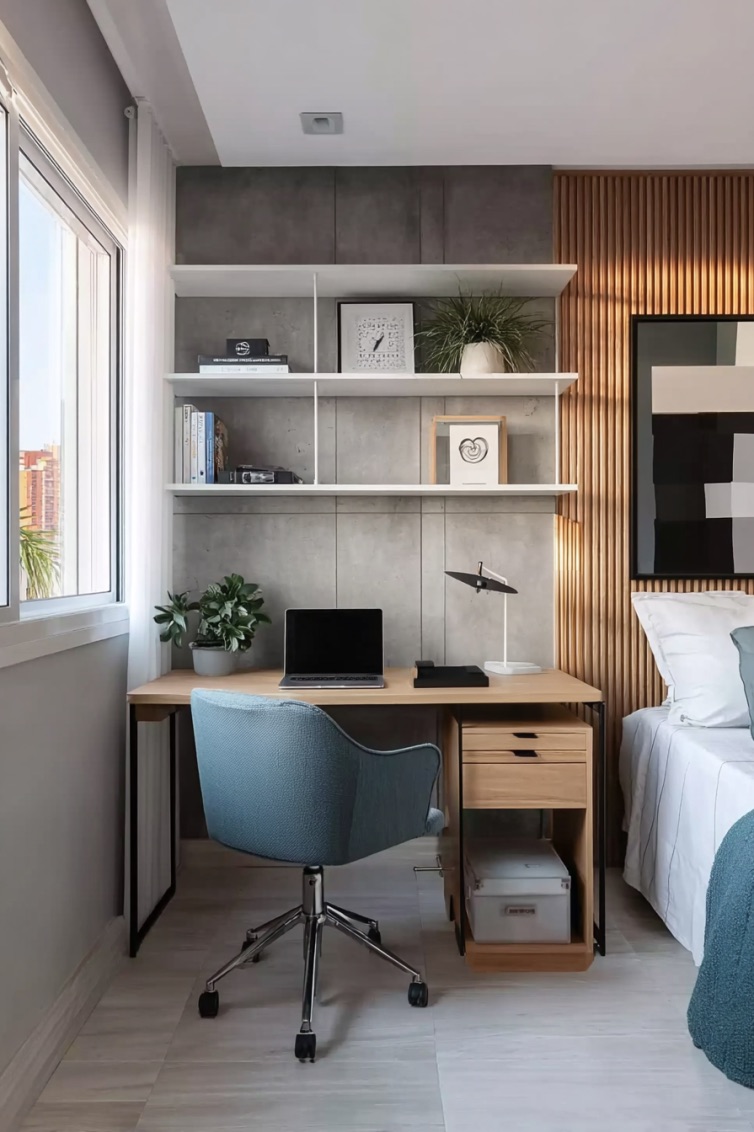
Mount shelves high and watch your storage capacity multiply. When you build upward, you keep surfaces clear and give guests room to set down a suitcase without disturbing your work setup.
Vertical shelving also draws the eye toward the ceiling, creating an illusion of height that counteracts the room’s compact footprint. You’ll wonder why you tolerated desk clutter for so long when the solution was simply looking up.
9. Select Gold-Toned Planters for a Chic Home Office Budget
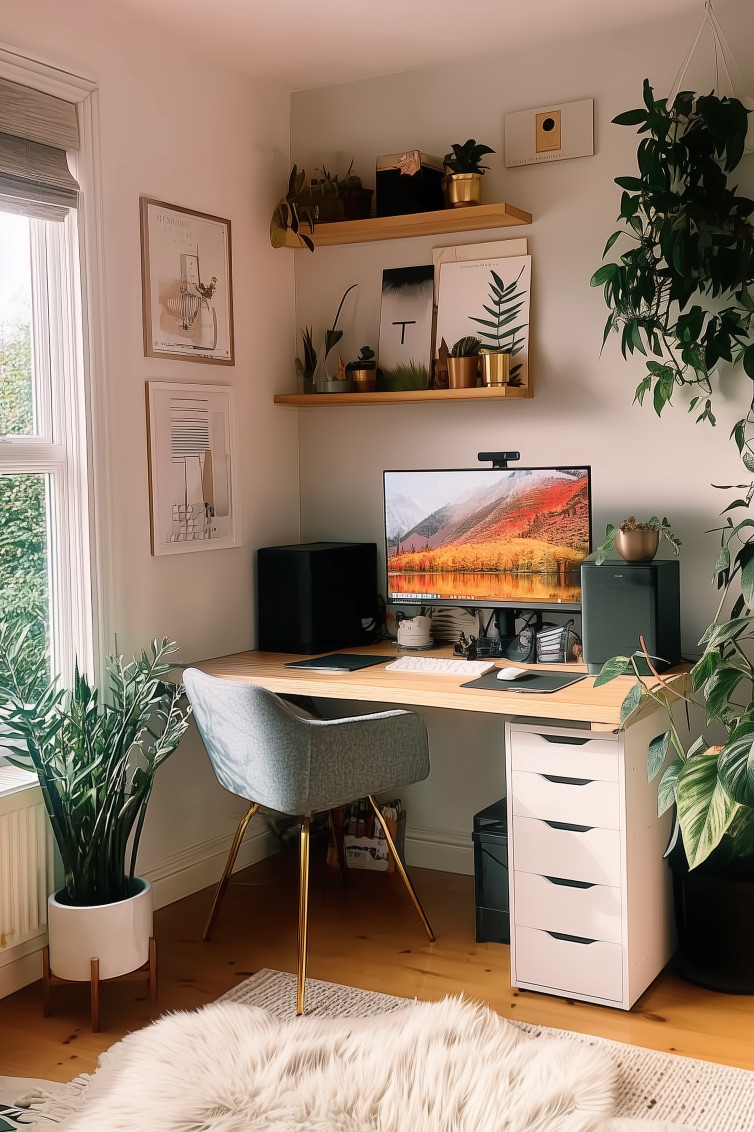
Why do certain offices feel expensive even when they’re not? Often, it comes down to small metallics that catch and reflect light.
Gold-toned planters – whether brushed brass or warm copper – elevate humble pothos or succulents into statement pieces. These finishes emerged from mid-century design traditions and never really left, which means they’ll work now and five years from now without feeling dated.
Pair them with greenery, and you’ve added life and polish for less than the cost of a desk lamp.
10. Arrange Personal Photos on the Desk for a Warm Atmosphere
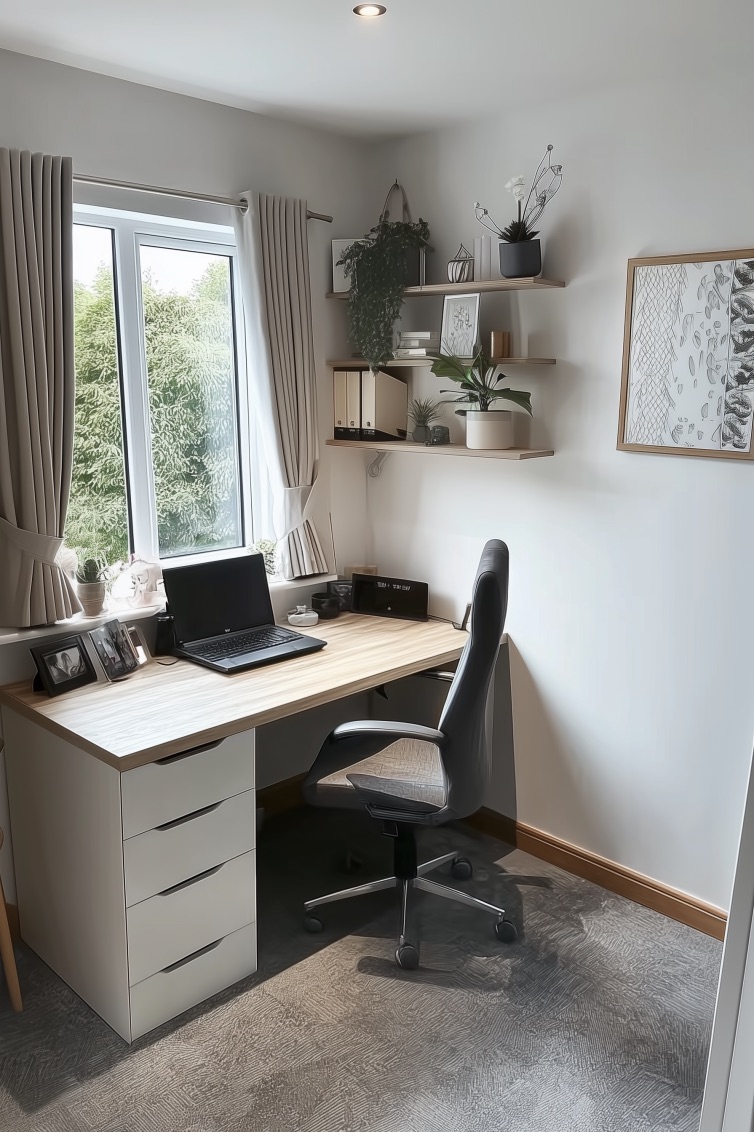
Your workspace feels anonymous, lacking any thread connecting it to the life you’ve built outside office hours. You need anchors – visual reminders that work serves something larger.
Frame two or three photos that genuinely move you: maybe your family laughing on vacation, your dog mid-leap at the park, or a landscape that makes you feel grounded. Avoid the trap of covering every surface; a few meaningful images carry more weight than a dozen casual snapshots.
These personal touches soften the transactional feeling that sometimes creeps into home offices. When you glance up from a tedious task and see a face you love, your stress response seems to ease, even if just for a moment. That brief reprieve can mean the difference between powering through and burning out.
11. Pair a Modern Swivel Chair with Your Streamlined Workspace
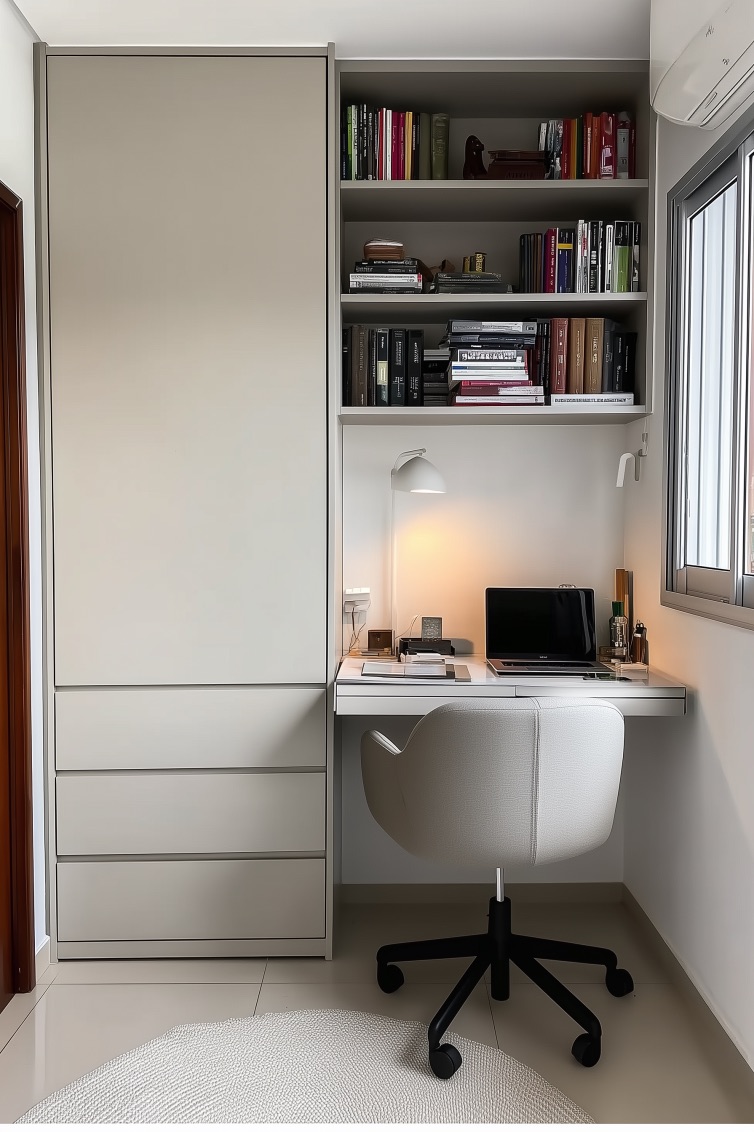
Here’s a fun fact: swivel chairs were popularized by Thomas Jefferson, who found that rotating saved him from constantly standing up to reach different documents. Seems he was onto something about efficiency.
A modern swivel chair with clean lines and ergonomic support complements a streamlined desk without competing for attention. Look for one in a neutral fabric or molded material that echoes the minimalist vibe you’ve established. The mobility lets you pivot between tasks – literally – which feels surprisingly freeing in a tight space.
Imagine swiveling from your computer to a side shelf for a book, then rotating back to jot notes. That fluidity keeps your workflow smooth and your body from locking into one rigid position.
Have you noticed how much more engaged you feel when your furniture moves with you instead of against you?
12. Style a Cozy Window Seat with Layered Pillows
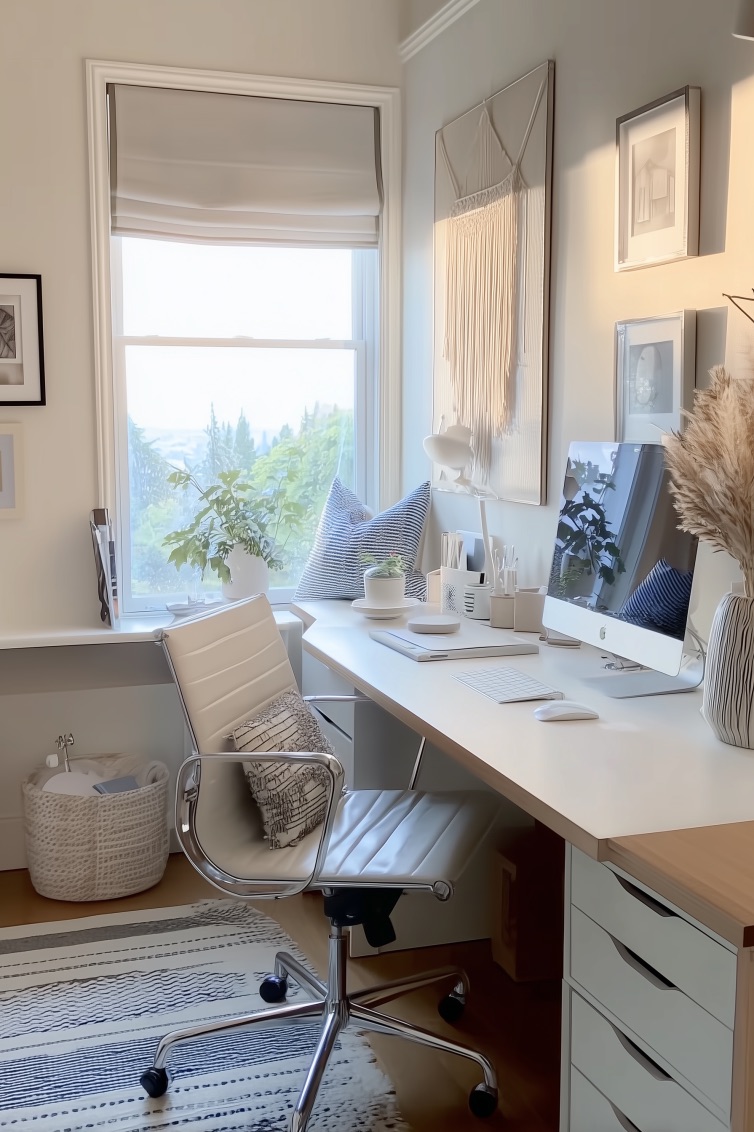
Window seats are having a moment as people seek multifunctional spaces that blur the line between work and rest. If you’re lucky enough to have a window nook, don’t waste it.
Layer pillows in varying sizes – start with a firm lumbar cushion, add a couple of softer squares, then finish with a smaller accent pillow in a contrasting texture. This creates a spot where you can read through reports, take phone calls while gazing outside, or simply sit when the desk chair starts to feel punishing.
The layered look invites you to settle in, signaling that this corner offers flexibility your rigid desk doesn’t.
13. Frame Your Workspace with Layered Botanical Wall Art
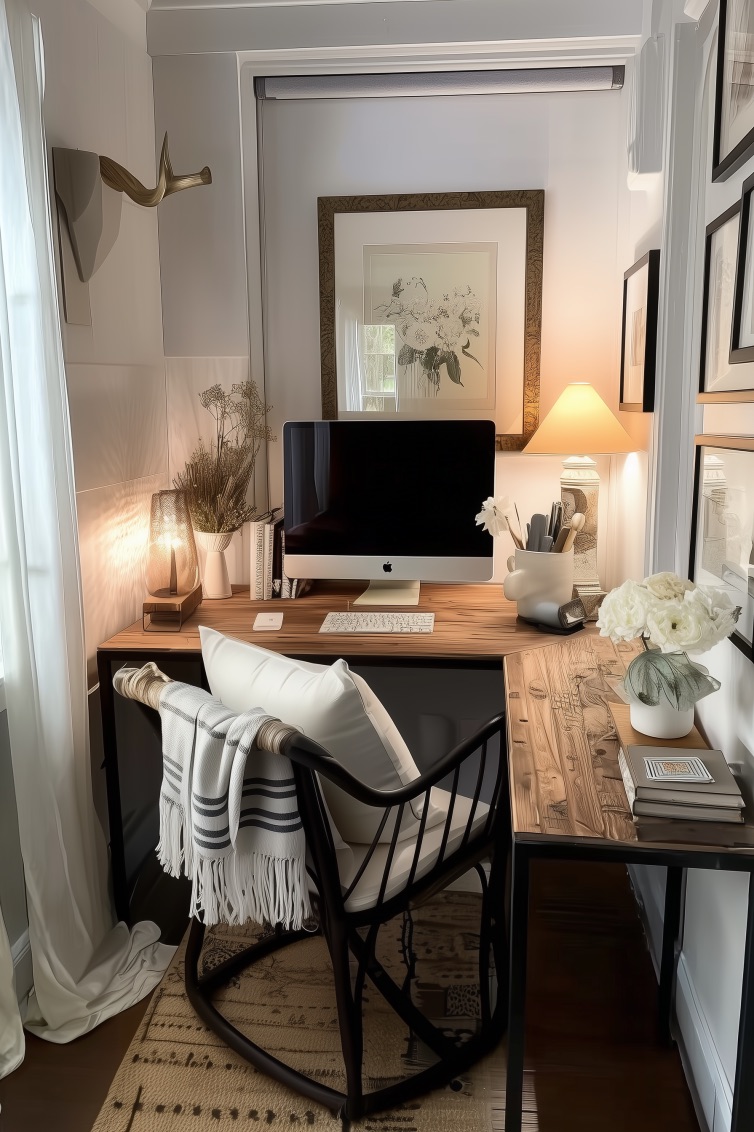
Compared to a single large frame, a gallery-style arrangement of botanical prints brings rhythm and movement to your wall. You’re creating a visual story rather than a static image.
Start with three or five prints – odd numbers typically feel more balanced – in matching frames but varying botanical subjects. Ferns, pressed flowers, herb illustrations… each adds a slightly different character. Arrange them in a loose grid or an organic cluster depending on your wall space.
This layered approach lets you adjust over time, swapping out prints when you crave something fresh without redoing the entire wall. The greenery theme connects to nature even when you’re stuck inside answering emails, and the detailed linework in botanical art gives your mind something intricate to explore during micro-breaks.
Play with different mat colors to see how warm cream versus cool white changes the overall mood.
14. Let Natural Light Flow Freely for an Energizing Office Space
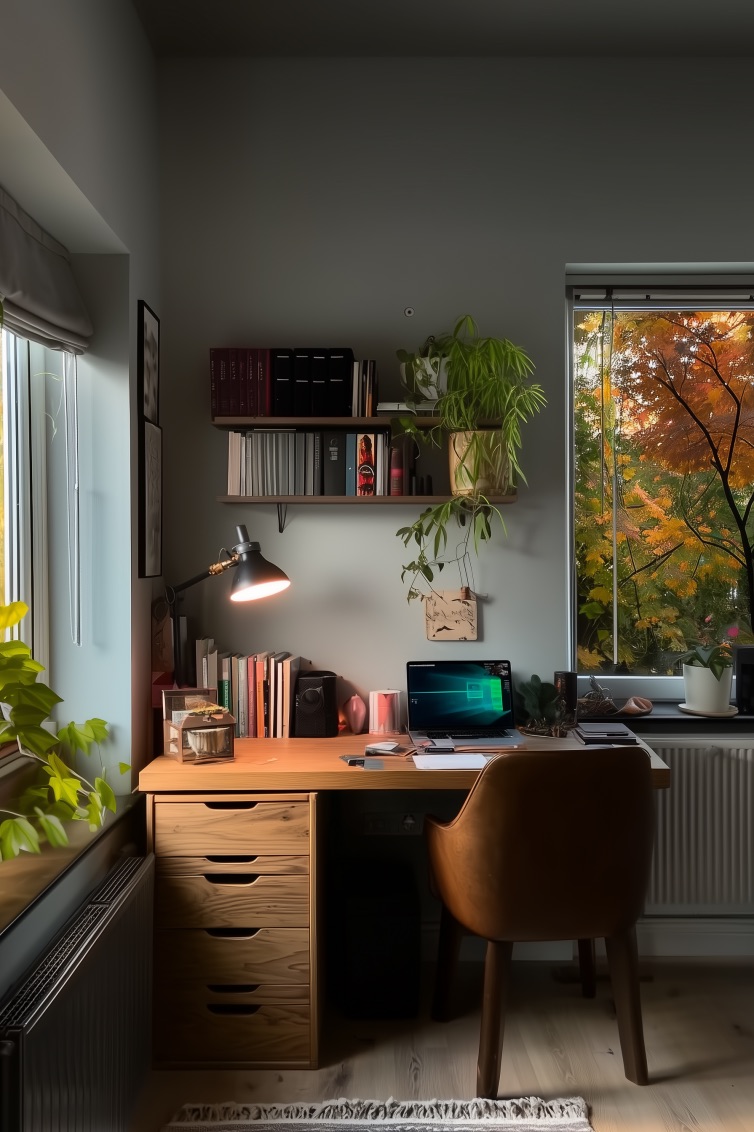
You’ve probably noticed how your energy shifts throughout the day based on available light. Morning sun seems to sharpen focus, while afternoon rays sometimes make you drowsy – but both beat the dull fatigue of fluorescent overhead lighting.
Position your desk perpendicular to windows when possible, so natural light illuminates your workspace without creating screen glare. Skip heavy curtains in favor of sheer panels or woven shades that filter brightness without blocking it entirely. This connection to the outdoors regulates your circadian rhythm better than any alarm clock.
Your mood and productivity will thank you, especially during those winter months when daylight feels scarce. Here’s a tip: if your office lacks windows, consider a daylight-spectrum bulb that mimics natural light – it won’t replace the real thing, but it helps bridge the gap.
15. Anchor Your Desk with a Textured Monochrome Area Rug
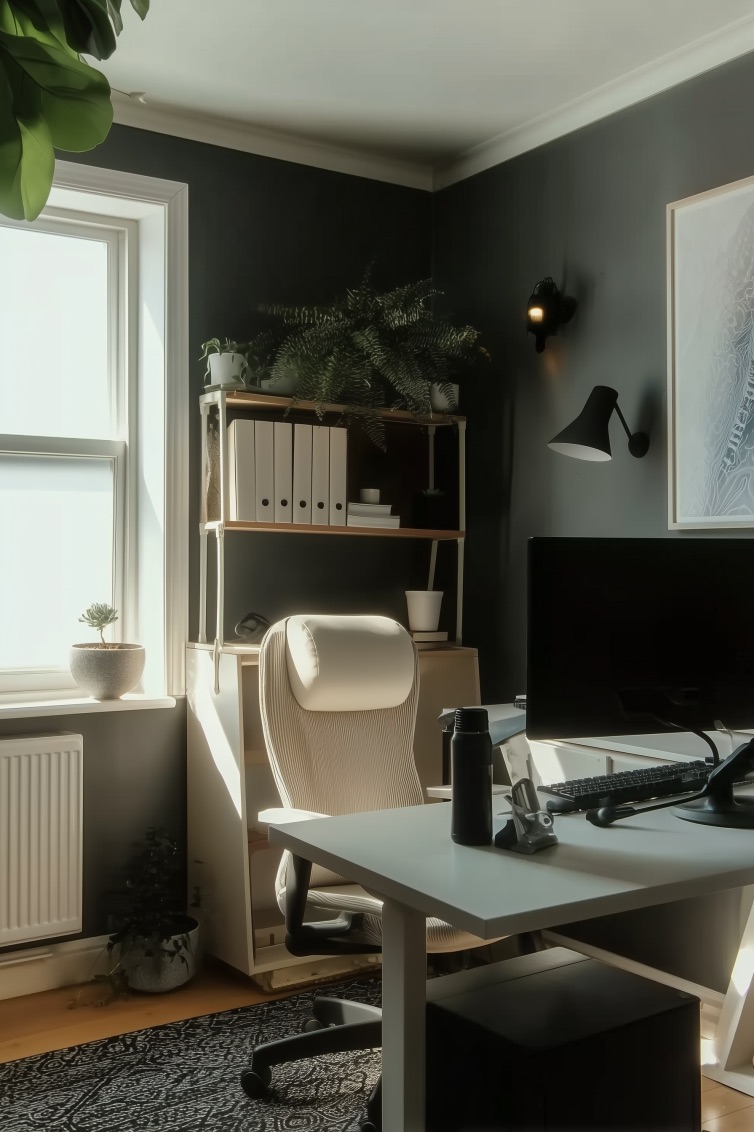
Think of your desk area as an island that needs visual weight to feel grounded. A textured rug in charcoal, cream, or warm taupe defines the workspace boundaries while adding a tactile element underfoot.
Choose something with subtle pattern variation – maybe a low-pile weave with tonal stripes or a braided design that introduces depth without competing with your wall art and furniture. The rug should extend slightly beyond your chair’s roll zone so you’re not constantly catching wheels on the edge.
This simple addition absorbs sound, warms up hard flooring, and makes your compact office feel deliberate rather than improvised.
Conclusion
Your small home office holds more potential than its square footage suggests. Pick two or three ideas from this list that resonate with your style and start there – you don’t need to overhaul everything at once. Small, thoughtful changes compound over time, transforming a makeshift corner into a workspace that genuinely supports your best work.
Take one step today, and watch how quickly function and beauty follow.