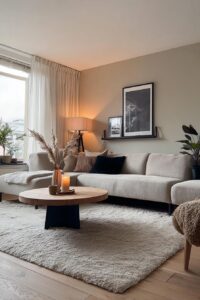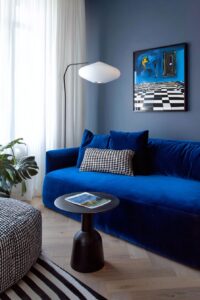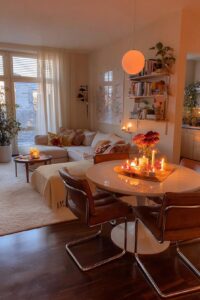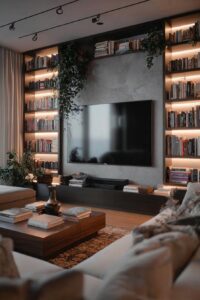

Creating a dark living room doesn’t mean sacrificing warmth or invitation – it means making deliberate choices about how light, texture, and color work together. Dark spaces can feel intimate, sophisticated, and utterly luxurious if you layer them thoughtfully.
The real challenge isn’t dimming the room; it’s balancing shadows with strategic brightness so the space breathes rather than closes in around you.
1. Illuminate with Clustered Statement Lighting For Dramatic Ceiling Ambiance
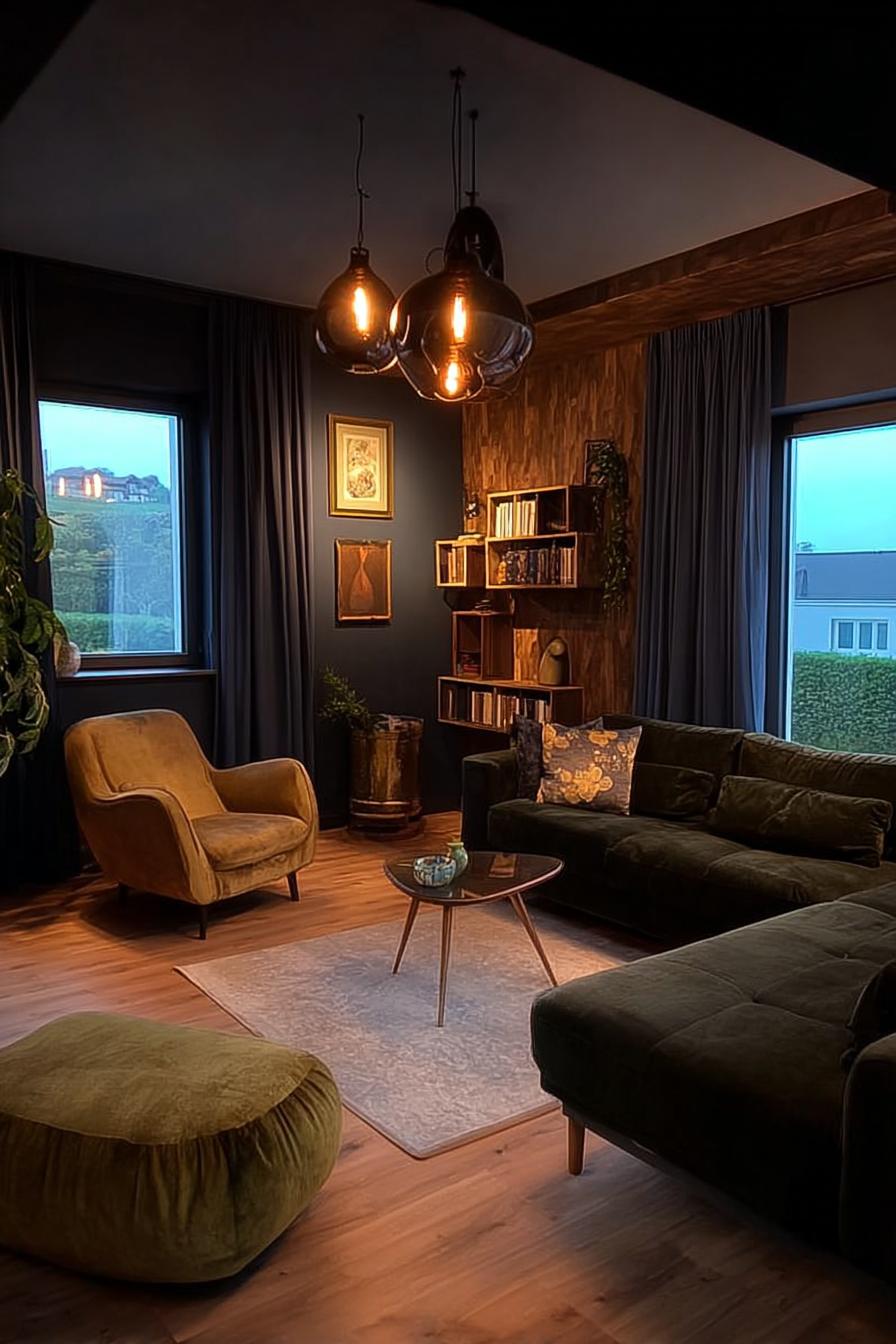
Here’s a fun fact: before Edison’s bulb, people actually preferred rooms dimmer than we do now. They saw candlelit spaces as refined and contemplative. Today’s statement fixtures – brass globes, sculptural pendants, vintage-inspired clusters – echo that sensibility while transforming your ceiling into a focal point.
Imagine three geometric brass orbs suspended at varying heights above your seating area, casting warm pools of light that sculpt the room’s architecture. This approach does more than illuminate; it choreographs how shadows play across your walls and furniture.
The clusters create pockets of brightness that make dark walls feel intentional rather than oppressive.
Does your lighting whisper sophistication, or does it shout “overhead fixture”?
2. Showcase Your Vinyl Collection For an Inviting Academia Vibe
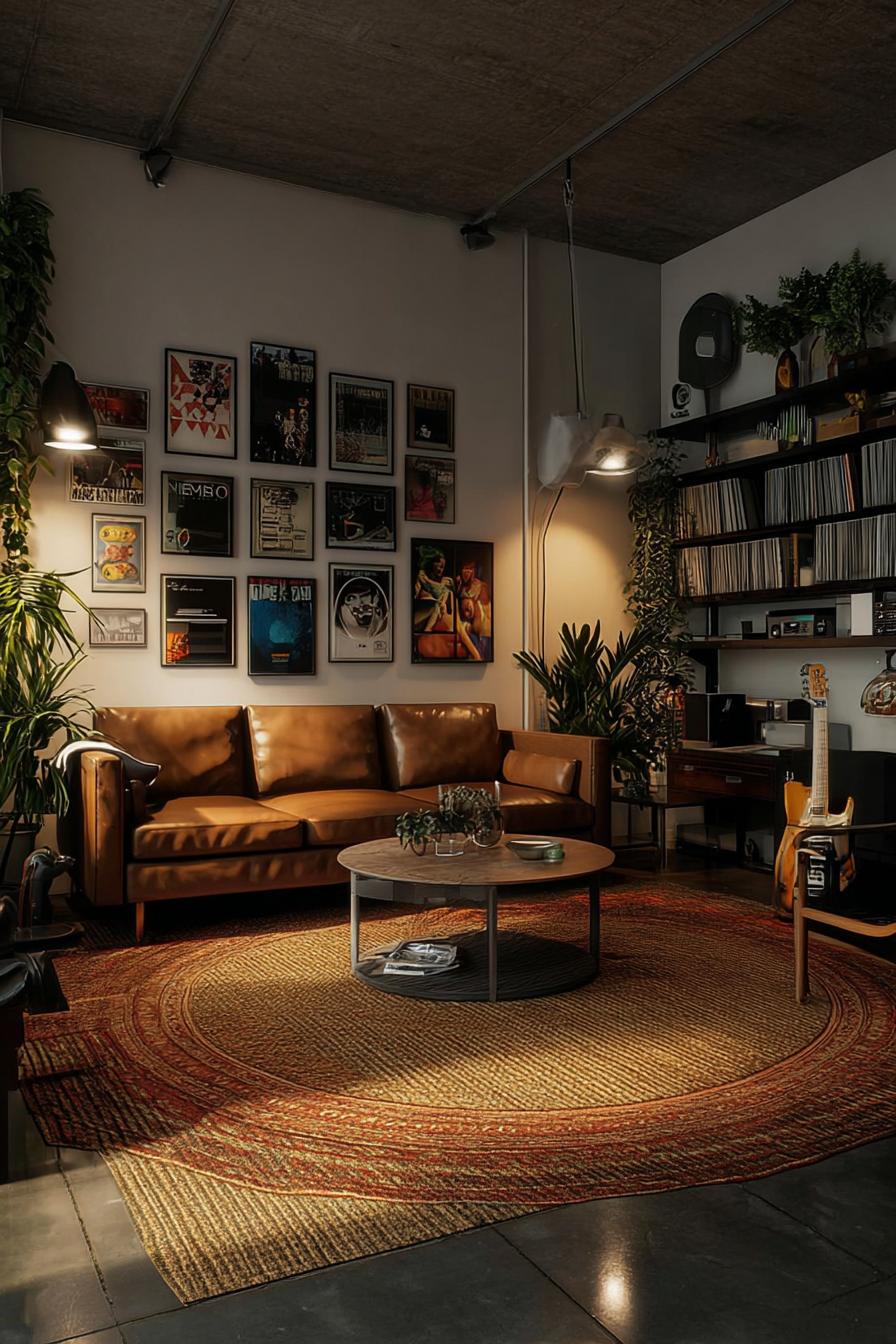
Your record collection is a library of memories and aesthetics, waiting to become interior architecture. Floor-to-ceiling shelving lined with album spines creates a gallery wall that’s simultaneously functional and visually arresting – like walls lined with book leather in a prestigious study, except your collection tells your story.
Display records vertically so their covers face outward, clustering them by color families: burnt oranges beside deep reds, forest greens meeting navy blues. This creates rhythm without chaos. Add track lighting above the shelves to highlight the artwork.
You’re essentially hanging a personalized exhibition that educates visitors about your taste while adding depth and texture to dark walls.
The academia aesthetic thrives on this kind of curation. Pair your vinyl display with a low-slung reading chair and a side table stacked with art books – you’ve built an environment that feels lived-in and intellectually generous. Music lovers and design enthusiasts increasingly see record collections as investment pieces, not just media storage.
3. Balance Textured Accessories For a Cohesive Cozy Look
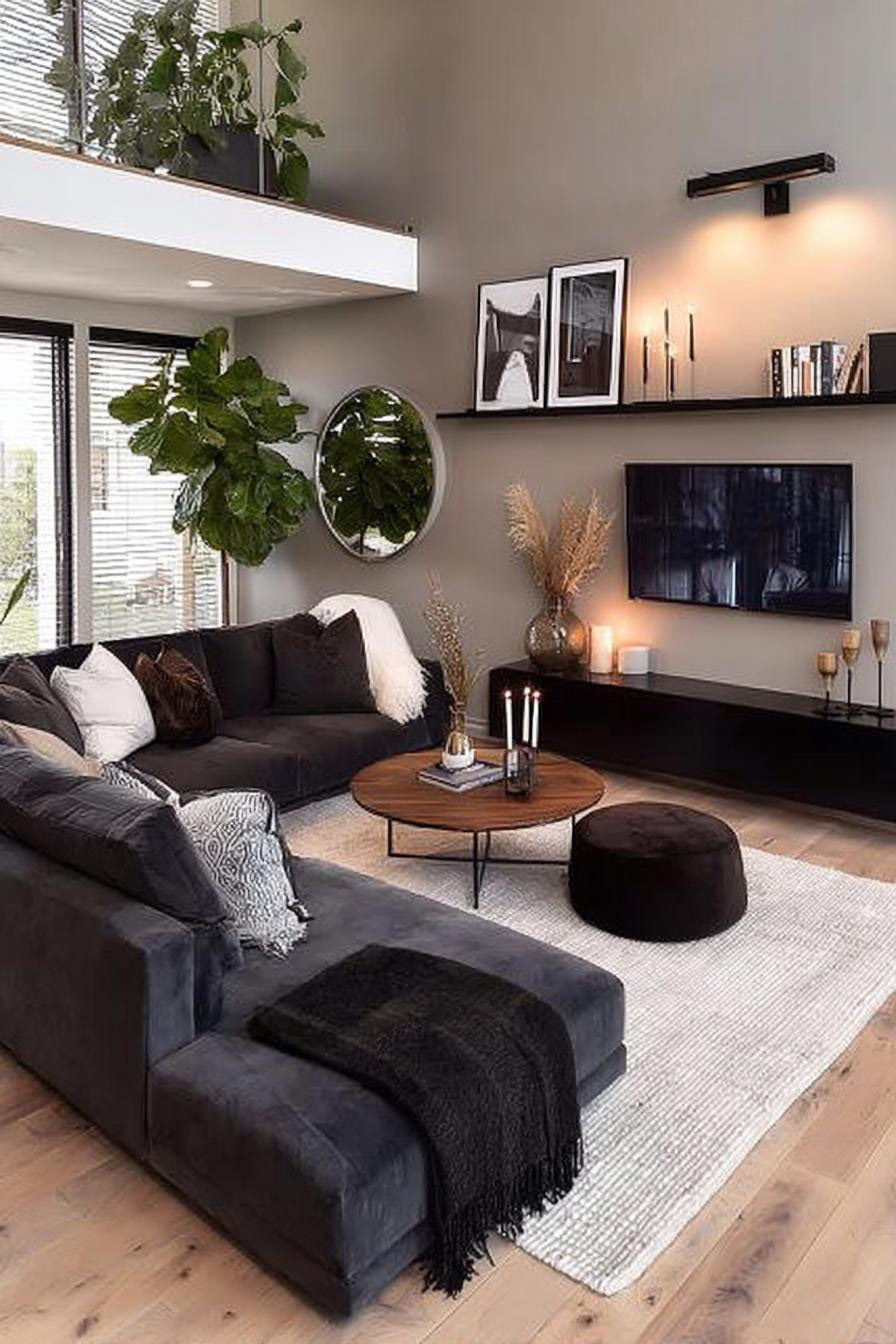
Dark rooms risk feeling flat and airless if everything’s smooth and uniform. The solution: layer tactile materials that catch light differently and invite touch.
A dark living room craves contrast in surface quality. Introduce a chunky knit throw draped across your sofa, linen curtains with visible weave, a woven jute ottoman, and smooth ceramic vases clustered on shelves. When textures vary, shadows hit differently – rough surfaces grab light, smooth ones reflect it.
This interplay prevents your dark palette from reading as monotonous. Leather chairs, velvet cushions, and woven wall hangings work together to create visual interest without introducing competing colors.
This textural layering transforms your space into somewhere you genuinely want to sink into and stay.
4. Contrast Cool Grey Couch with Warm Earth Toned Throw Pillows
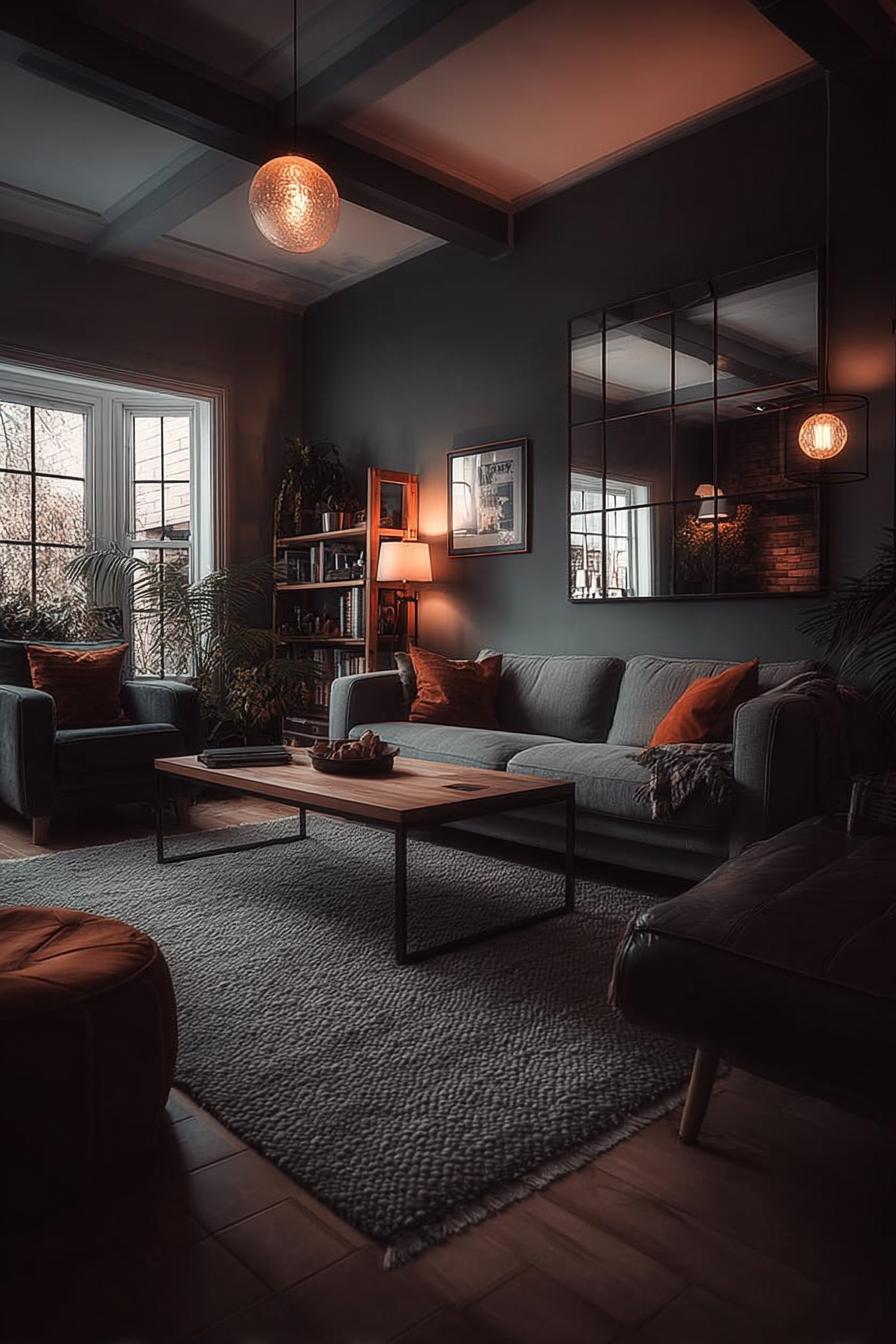
Pairing cool and warm tones mirrors the tension in nature – think slate cliffs beside rust-colored soil. A grey sofa provides a neutral anchor, but warm pillows in terracotta, mustard, and burnt sienna create dynamic conversation.
The grey absorbs your dark walls without disappearing, while warm tones punch through the shadows. This contrast prevents the room from becoming a monochromatic cave. Throw in a few pillows with geometric patterns or texture – macramé, wool, linen – and suddenly your seating area becomes a composition rather than just furniture.
A cool-grey foundation with warm accents creates visual motion without chaos.
5. Display Art Books on the Coffee Table For Effortless Style
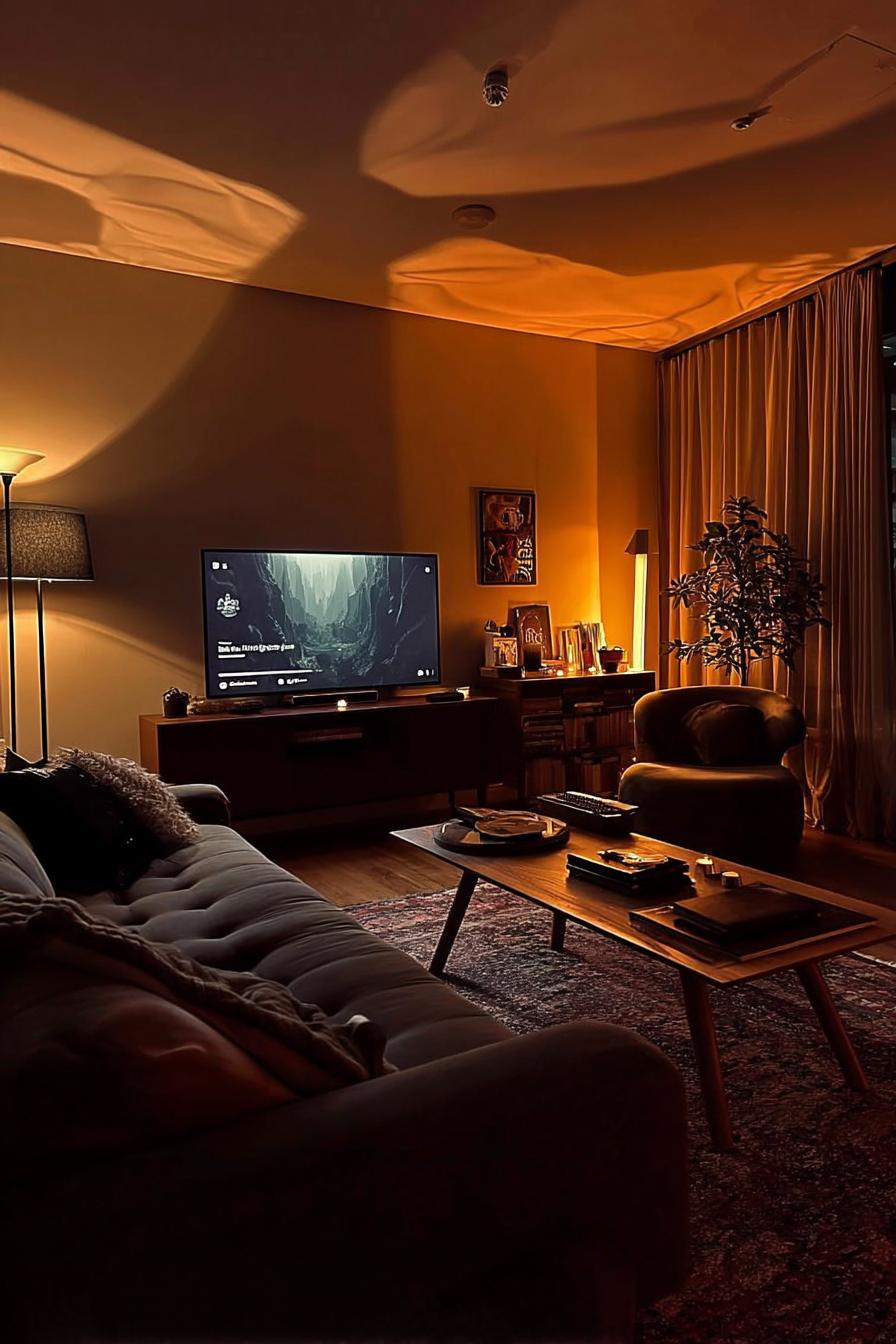
If your coffee table currently holds only remotes and coasters, you’re missing an opportunity to inject personality into your living room’s center point. Art books – thick volumes on photography, design, travel, or architecture – signal that you’re someone with visual curiosity.
Stack three to four oversized books horizontally, placing a ceramic vessel or sculptural object on top as punctuation. This isn’t about showing off; it’s about creating a tactile, visually interesting focal point that invites browsing.
Guests naturally gravitate toward coffee tables with substance – they’re conversation starters and windows into how you think. Books about photography or design particularly shine in dark rooms because their images often feature rich colors and dramatic contrast that complements moody palettes.
The trend toward “slow living” means people increasingly view coffee tables as meditative spaces, not just functional surfaces.
Your table becomes a mini-gallery that reflects your aesthetic vision.
6. Highlight Light Wood Floor to Brighten the Dark Living Room
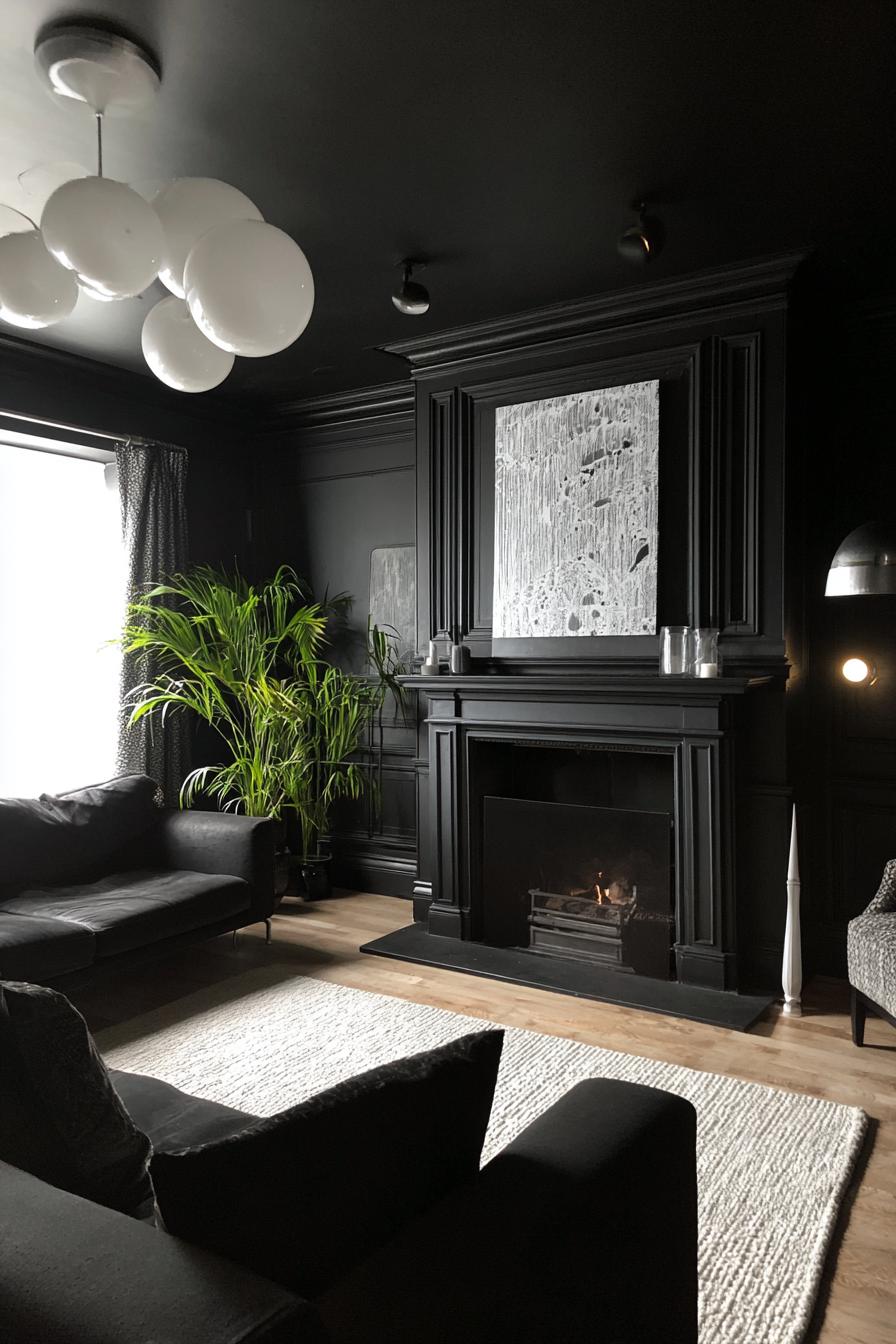
What if the solution to your dark room is already beneath your feet? Light wood flooring seems counterintuitive in a moody space – yet it’s exactly what prevents dark from collapsing into dreary.
The floor reflects ambient light and creates a visual break between walls and furniture. This contrast actually makes the dark walls feel intentional and dramatic rather than cave-like. Think honey-toned oak or whitewashed pine against charcoal walls – the luminous floor grounds the room and prevents it from feeling top-heavy.
During daytime, natural light bounces off light wood and fills the room. At night, strategically placed lamps do the same.
The consequence: your dark aesthetic gains sophistication and airiness simultaneously.
7. Layer a Large Area Rug For Extra Softness Underfoot
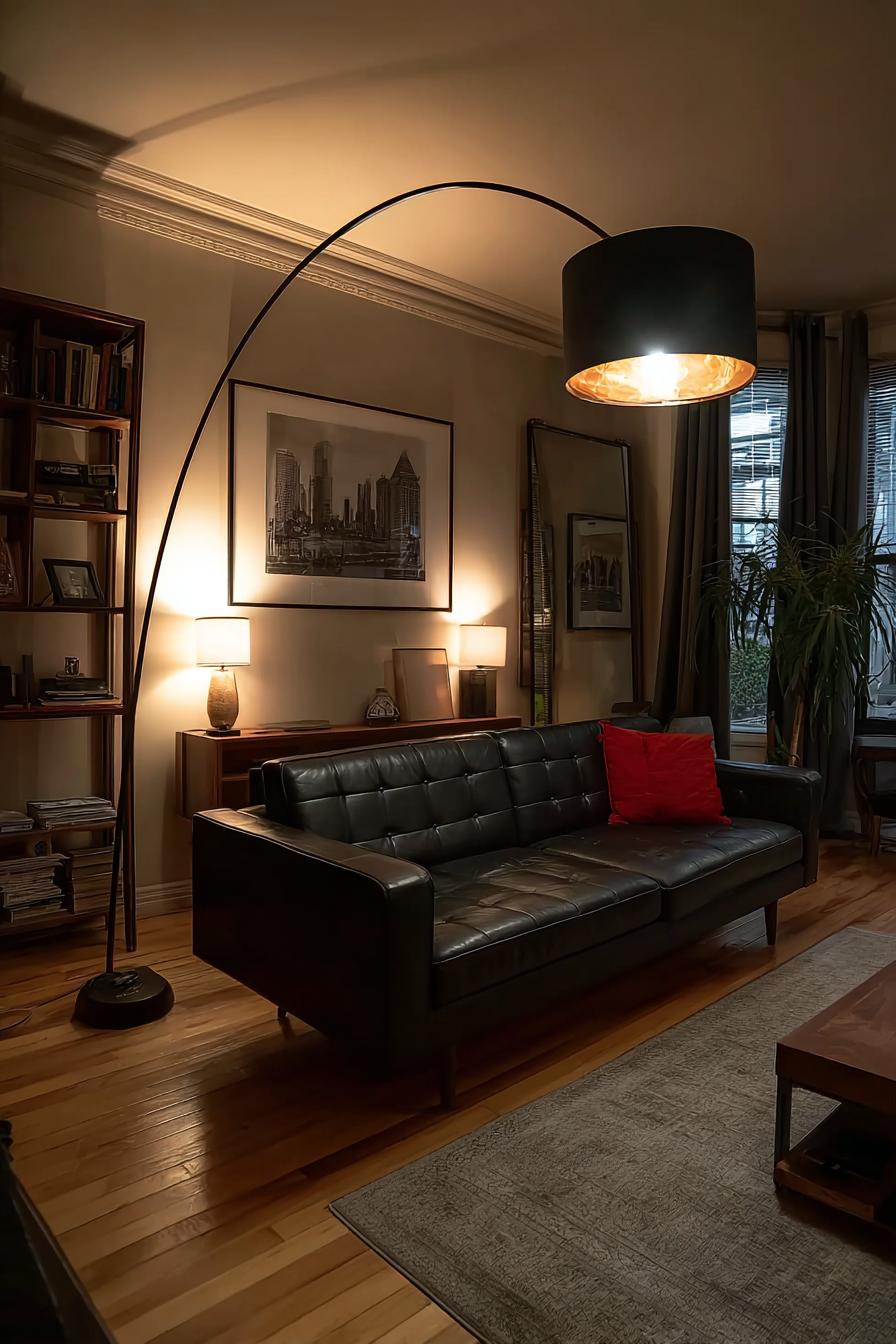
Here’s a silly truth: we make interior design decisions partially because of how things feel on bare feet. You’re already committing to dark aesthetics, so commit fully to the tactile experience too.
A large area rug – think deep charcoal, forest green, or midnight blue – anchors your seating arrangement and softens the room’s edges. It grounds furniture, defines the living room’s distinct territory within an open floor plan, and adds insulation (both physical and acoustic). Layer a smaller patterned rug on top for visual interest.
The combination creates depth and signals that you’ve thought carefully about every layer.
Transform your living room into a sanctuary by prioritizing how your space feels, not just how it looks.
8. Install a Vintage Inspired Mirror to Accentuate the Fireplace Mantel
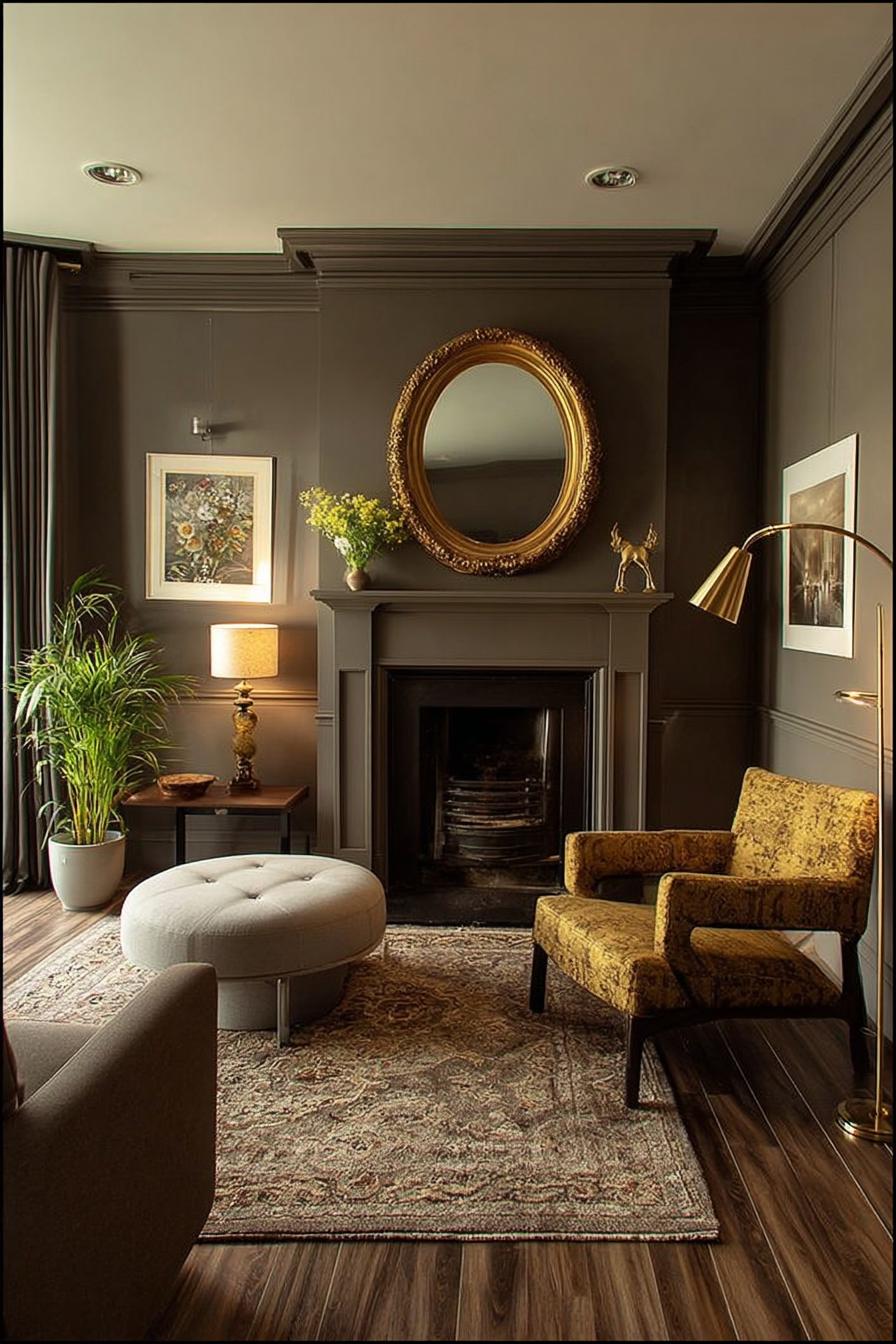
Ever notice how a well-placed mirror can make a room feel instantly larger and lighter? Position a vintage-framed mirror above your fireplace mantel – ornate gold leaf, brushed brass, or distressed wood all work beautifully – and it becomes architectural.
The mirror reflects firelight and ambient room lighting, essentially multiplying your light sources without adding electrical fixtures. An ornate vintage frame adds texture and visual weight without requiring wall space. Dark walls surrounding the mirror make the reflection appear deeper and more luminous.
The mirror becomes a design anchor rather than purely functional glass.
Just ensure it’s properly secured – vintage mirrors are statement pieces that demand respect.
9. Arrange a Sleek Black Coffee Table As a Modern Sofa Anchor
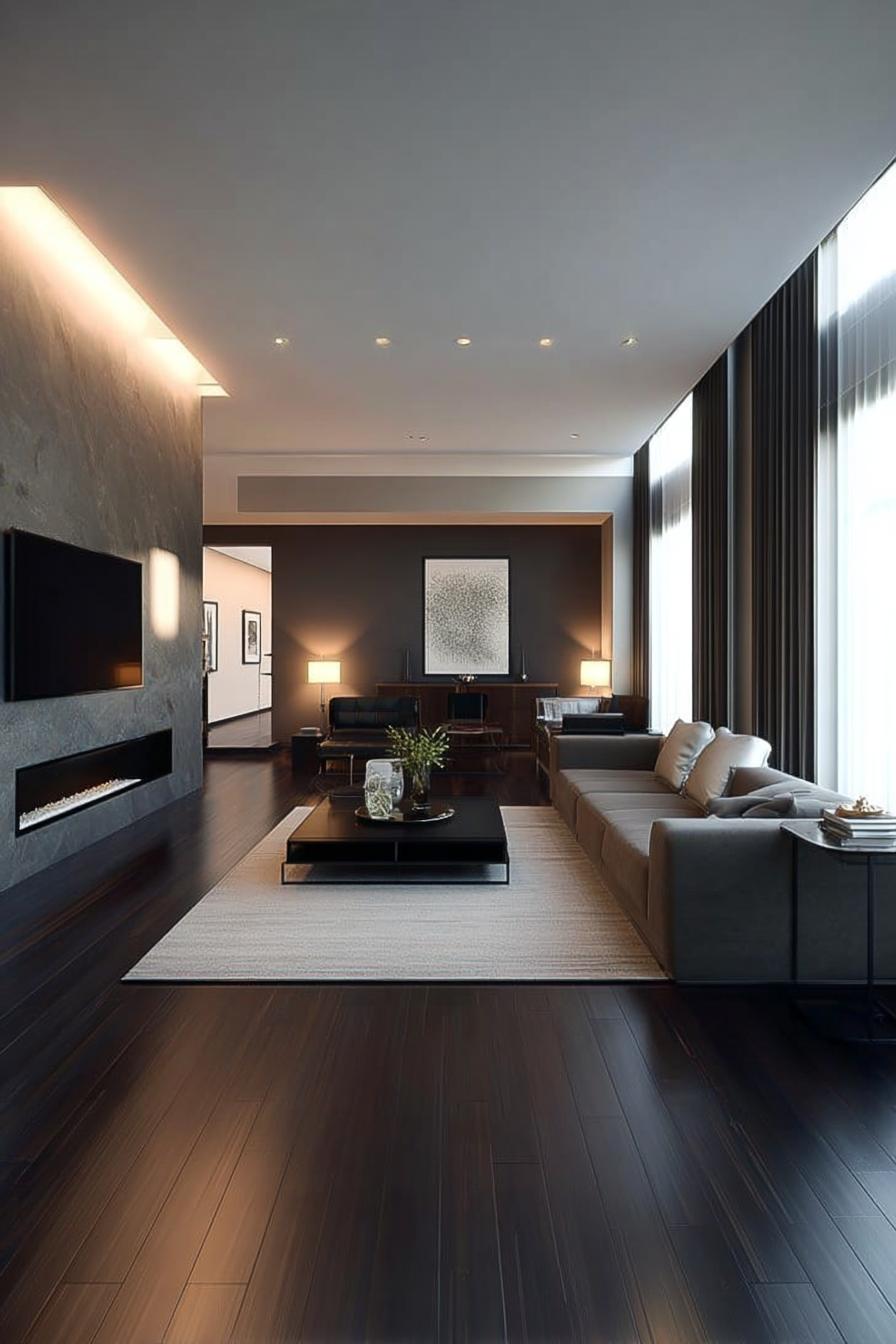
You’re sitting on your grey sofa, feet propped forward – where does your eye naturally land? Your coffee table should command attention without competing with your dark walls.
A glossy black table with clean lines or a sculptural wooden base in dark stain provides grounding weight beneath your seating area. It echoes your dark palette but through a different material, preventing monotony. The table’s surface can be styled minimally: a single art book, a sculptural candle, perhaps a small plant.
This restraint works because the dark table itself is visually substantial. Its clean geometry contrasts beautifully with organic shapes elsewhere in your room.
Pro tip: choose a table with interesting proportions or materials – concrete, metal legs, or live-edge wood – so it becomes functional sculpture rather than forgotten furniture.
10. Frame Tall Windows with Floor to Ceiling Drapes For Visual Drama
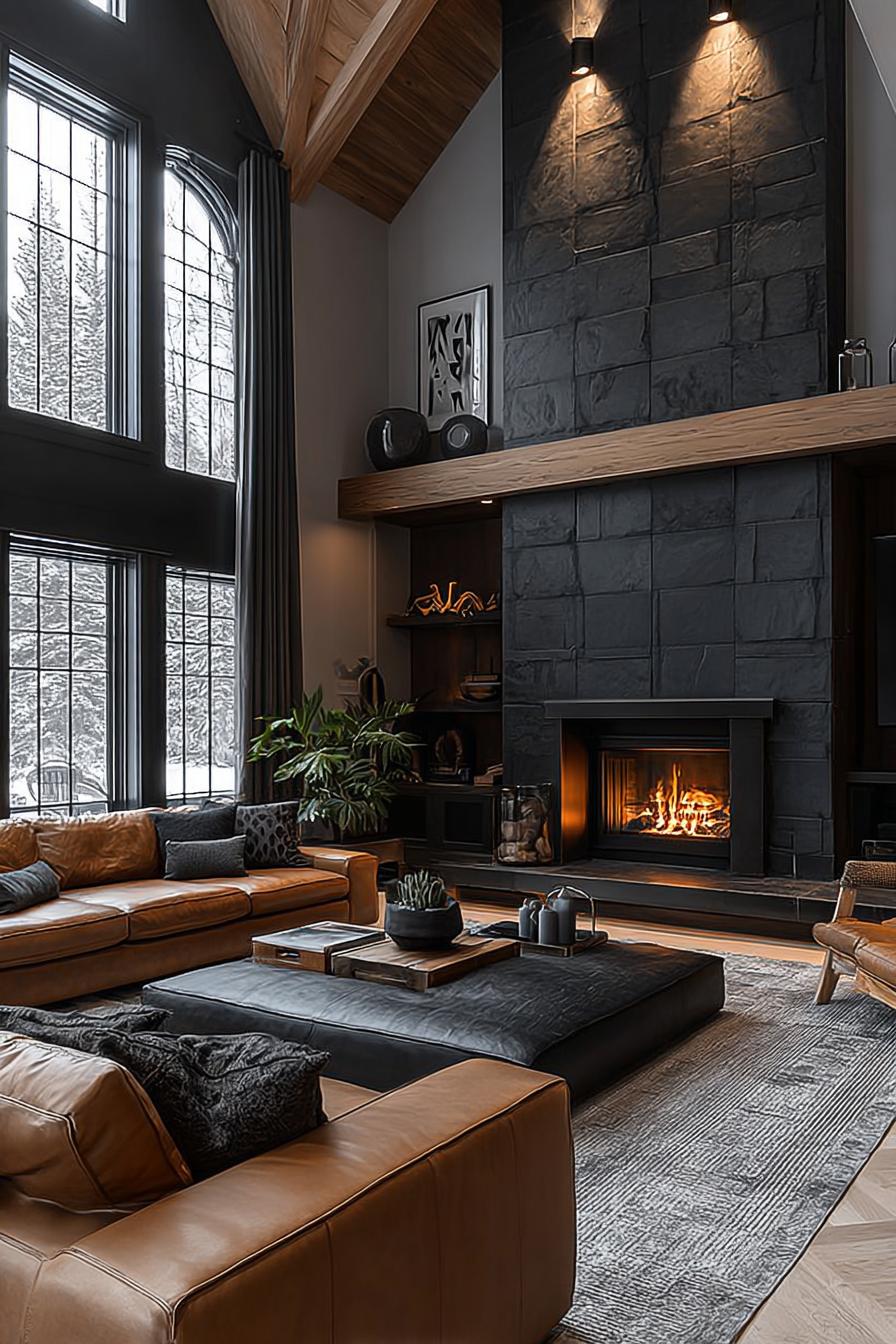
Building on earlier lighting ideas, your windows deserve equally theatrical treatment. Floor-to-ceiling drapes in rich fabric – velvet, linen, heavyweight cotton – frame windows and control how light enters your dark room.
Consider deep charcoal, forest green, or even black drapes that puddle slightly on the floor. They create vertical lines that draw the eye upward, making ceilings feel higher. During daytime, drapes filter sunlight into soft diffusion rather than harsh glare. At night, they become a textured backdrop that depth-charges your walls.
Pair dramatic drapes with a simple rod in matte black or brushed brass. The combination signals intentional design – this isn’t accidental; it’s orchestrated.
Ensure your drapes hang from ceiling to floor (not window-frame to sill) – the visual drama depends on that unbroken line.
11. Mix a Velvet Sofa with Blue Ottoman For Luxe Contrast
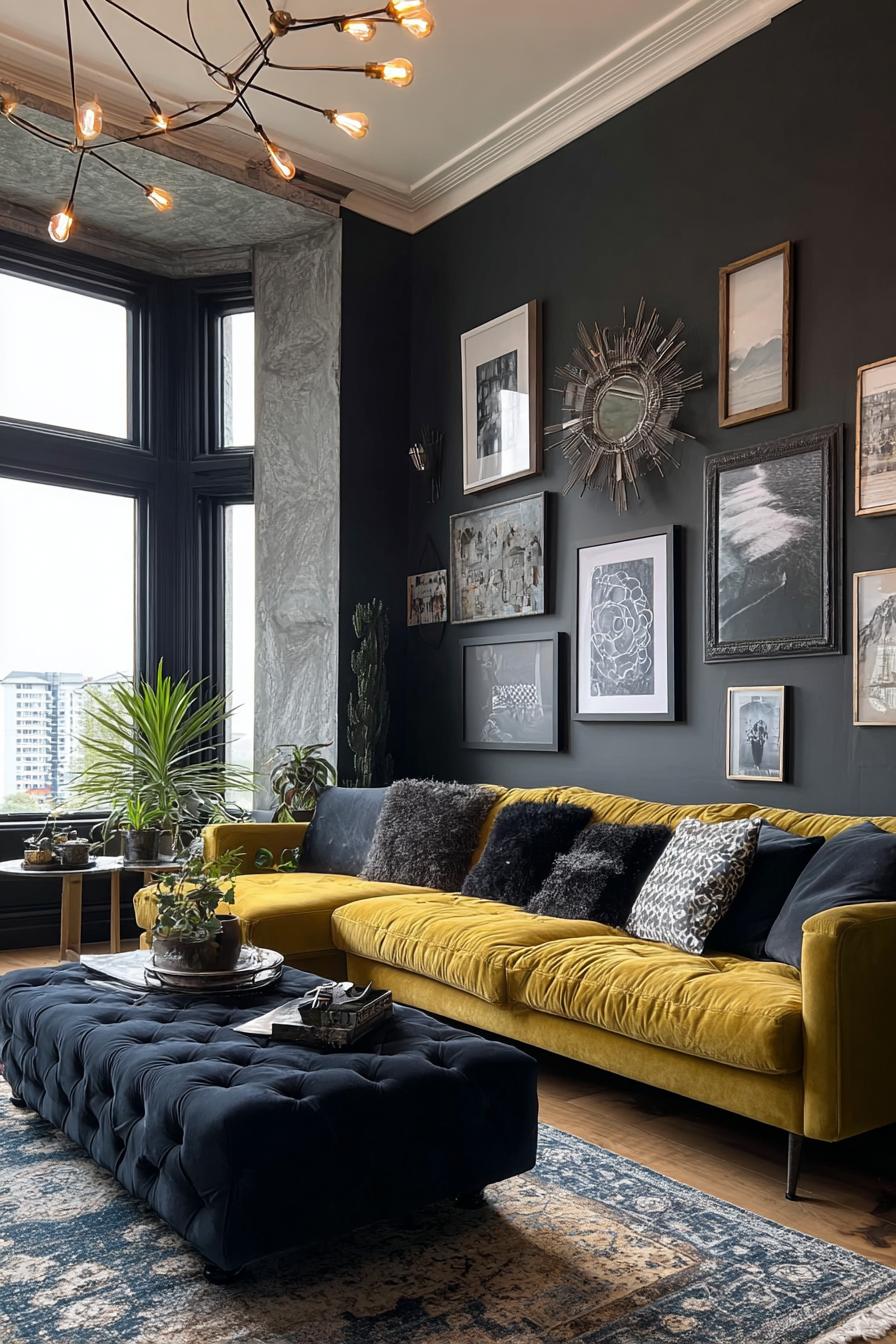
Dark rooms naturally gravitate toward jewel tones, so lean into that instinct. A midnight-blue velvet sofa absorbs light while catching it, creating visual depth that flat upholstery simply cannot.
Pair it with a contrasting ottoman – perhaps warm caramel leather or sage linen – and you’ve created a conversation zone with tactile richness. Velvet’s napped surface catches light differently depending on the viewing angle, so the sofa seems to shift subtly as you move through the room.
The material feels substantial and luxury-adjacent, elevating the entire space. Accessorize with cushions in complementary tones: navy with brass-toned accents, forest green with cream details. These layered jewel tones create a gallery-like atmosphere where the room itself becomes wearable luxury.
Start collecting velvet pieces – from pillows to chairs to wall panels – to build your living room into a sensory experience.
12. Arrange Sculptural Branches in Tall Vases For Organic Warmth
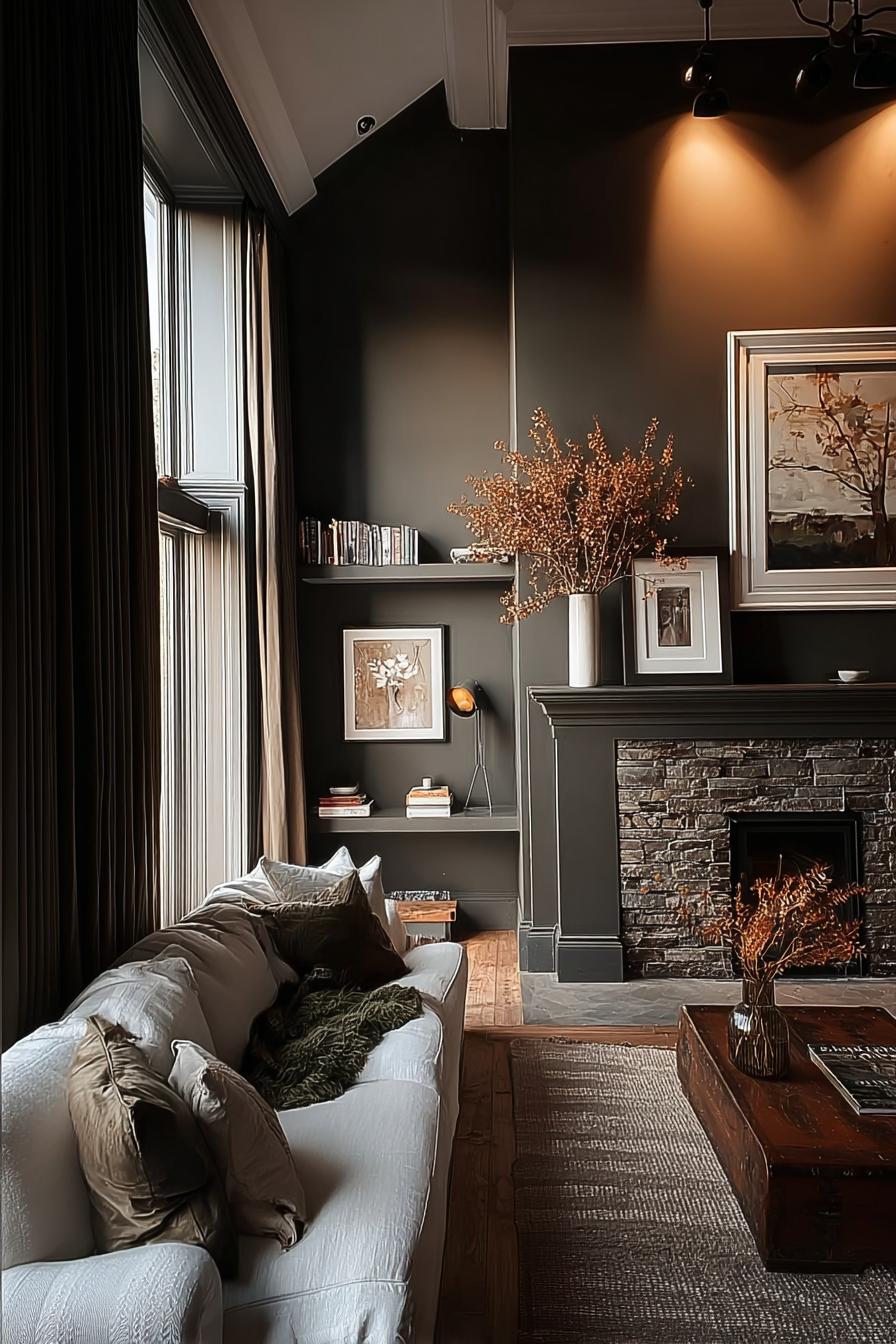
Often overlooked, natural sculptural elements bring breathing room to dark interiors. Tall branches – curly willow, manzanita, or bleached driftwood – in oversized clear or frosted vases create vertical interest without the maintenance of live plants.
The branches create movement and shadow-play, especially when backlit by a window or supplemental light source. Their organic asymmetry contrasts with geometric furniture and straight-edged shelving. Place vases in corners, beside windows, or flanking your fireplace to create vertical accents that prevent the room from feeling heavy.
Branches are essentially sculpture you can acquire affordably from garden centers, craft stores, or even collected during walks.
Styling with natural elements is having a major moment as people seek to ground dark, moody spaces in earthy authenticity.
13. Curate Shelves with Ceramics and Candles For Instant Character
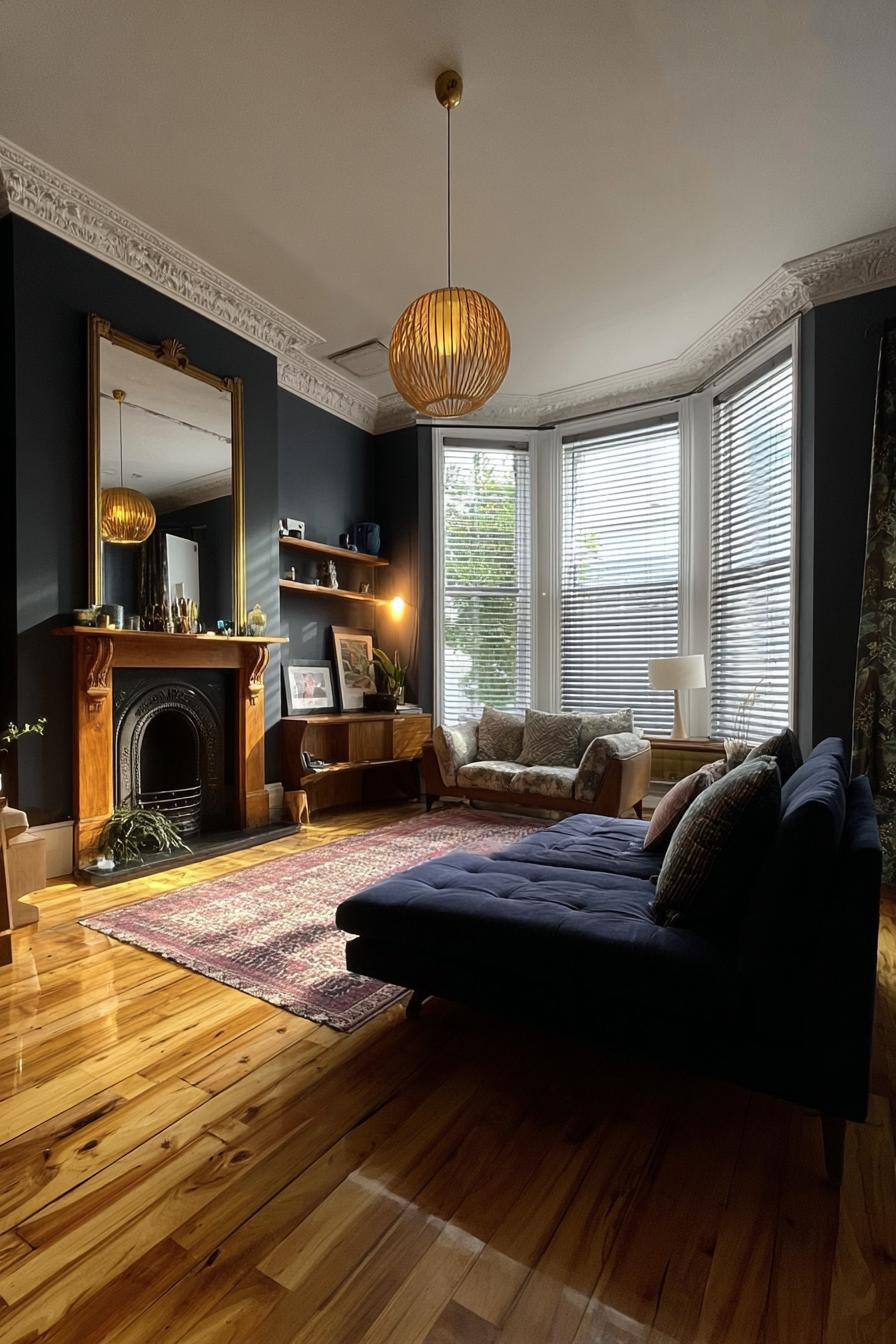
Shelves are your room’s vertical real estate – don’t waste them on clutter. Intentionally group handmade ceramics (in cream, warm grey, and terracotta), glass vessels, and clusters of pillar candles to create moments of visual interest.
Mix heights and materials: a tall ceramic vase beside a low brass candleholder beside stacked art books. Leave breathing room between groupings – negative space matters. Candlelight is non-negotiable in dark rooms; it’s not decoration but essential atmosphere-making.
When you light those candles, your shelves become glowing points of warmth that draw the eye and invite touch.
Are your shelves currently telling your story, or are they just holding things?
14. Incorporate Lush Greenery to Energize Moody Living Room Corners
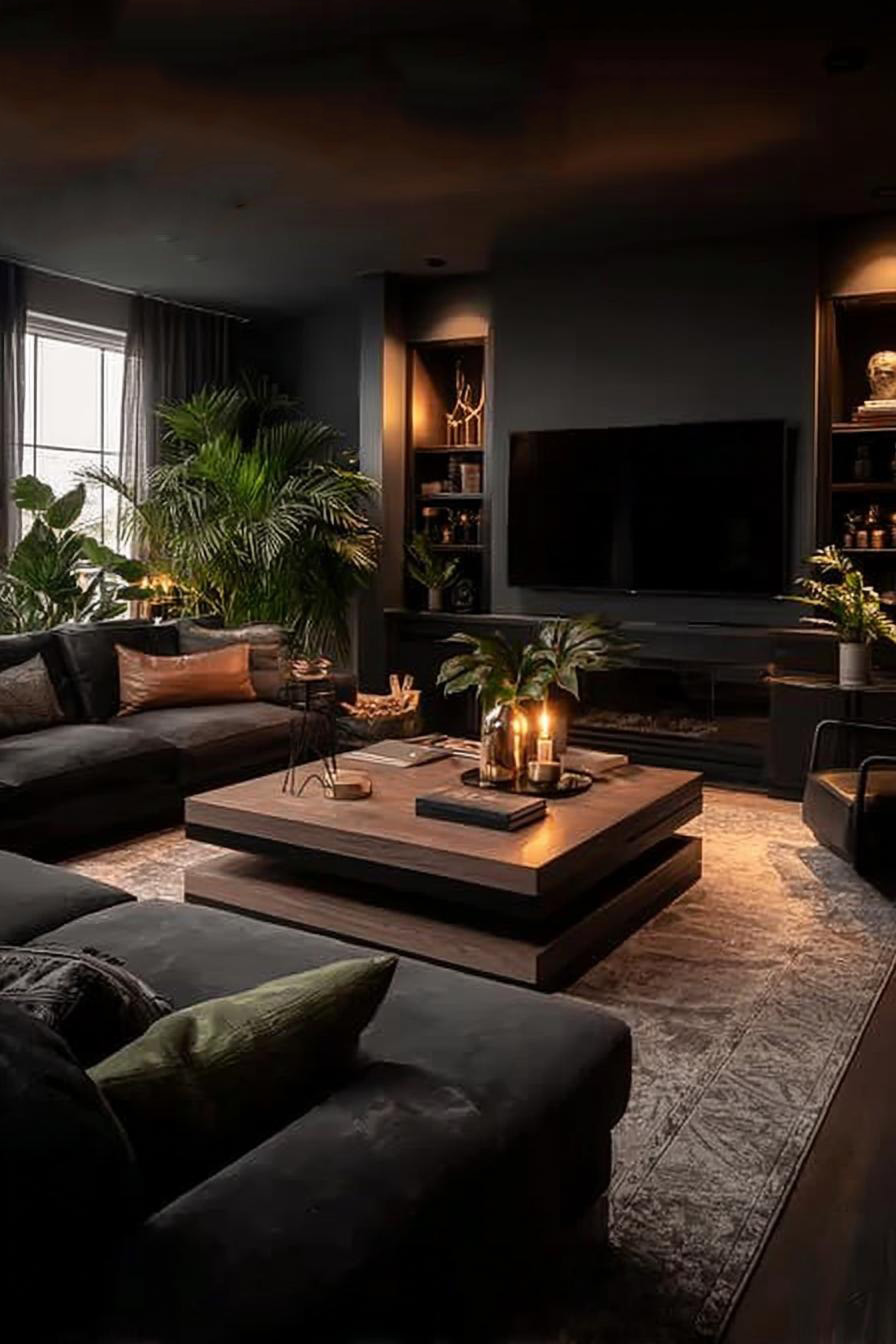
Enliven your dark sanctuary with green. Tall ferns in shadowy corners, pothos vining along shelves, fiddle leaf figs creating vertical drama – living plants breathe oxygen into moody palettes.
Plants add color without competing with your dark aesthetic; they complement it. Greens read differently against dark walls – more vibrant, more alive. Corner plants also define room boundaries and soften hard edges.
The act of tending plants (watering, rotating toward light, pinching back growth) introduces rhythm and mindfulness into your daily routine. Even low-maintenance varieties like snake plants or ZZ plants add silhouettes and texture.
The bonus: plants genuinely improve air quality and psychologically ground us in nature, which dark rooms sometimes lack.
Living greenery transforms your dark living room from a moody retreat into a thriving ecosystem that nourishes you visually and emotionally.
Conclusion
Your dark living room isn’t a limitation – it’s a canvas for intentional, sophisticated design. Start with one idea that resonates: perhaps statement lighting, then move toward layering texture, introducing warmth through pillows and plants. Don’t rush the process.
Each thoughtful addition builds on the last, creating a cohesive sanctuary that reflects your aesthetic and comforts your senses. Begin today.