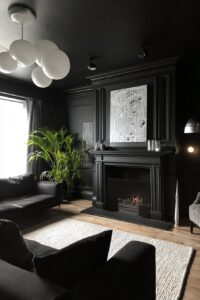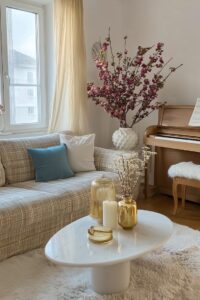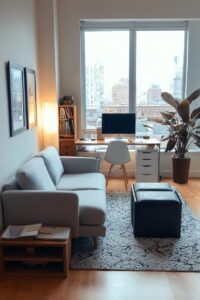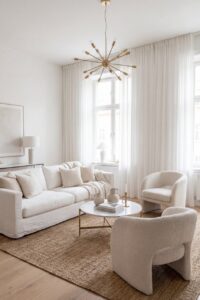

Merging your sleeping quarters with your living space might sound like a puzzle at first, but it opens up surprising possibilities. When you blend these two essential areas, you create a fluid environment that adapts to your daily rhythms – morning coffee transforms into evening wind-down without changing rooms.
Whether you’re working with a studio apartment or simply want to maximize every square foot, these combo ideas will help you craft a space that feels both expansive and intimate.
1. Create Cozy Nooks with Warm Pendant Lighting in Small Spaces
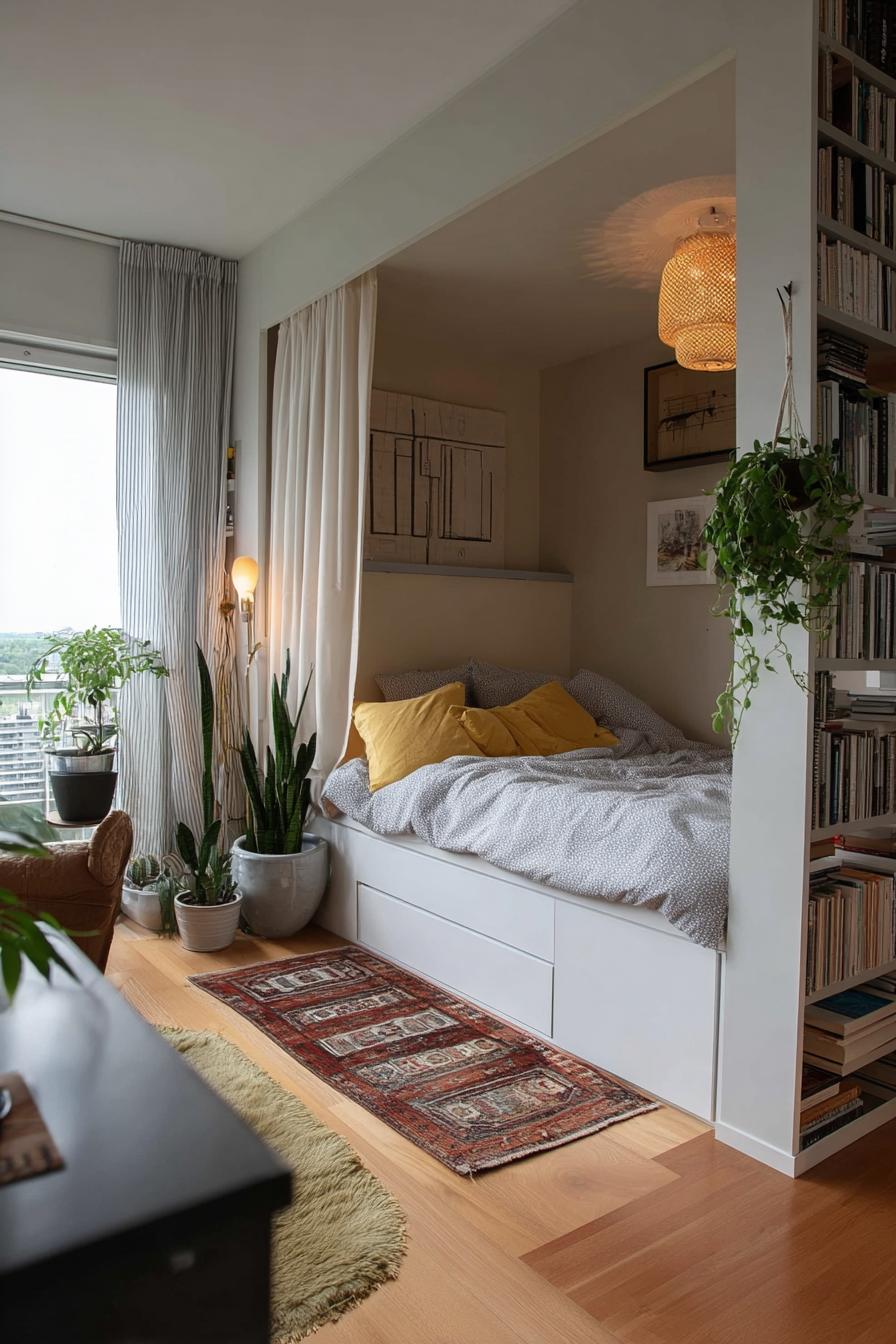
The hygge movement has taught us that strategic lighting transforms cramped quarters into inviting retreats. Pendant lights, especially those with warm-toned bulbs or woven shades, create distinct zones without eating up precious floor space.
When you suspend a cluster of pendants at varying heights above your bed area, you establish an invisible boundary that whispers “sleep here” while maintaining visual flow. The soft pools of light naturally guide the eye, making your 300-square-foot studio feel like it has actual rooms – even though, well, it doesn’t.
Consider installing dimmers to shift from bright task lighting to ambient evening glow with just a twist of your wrist.
2. Use Open Shelving As Functional Divider in Small Spaces
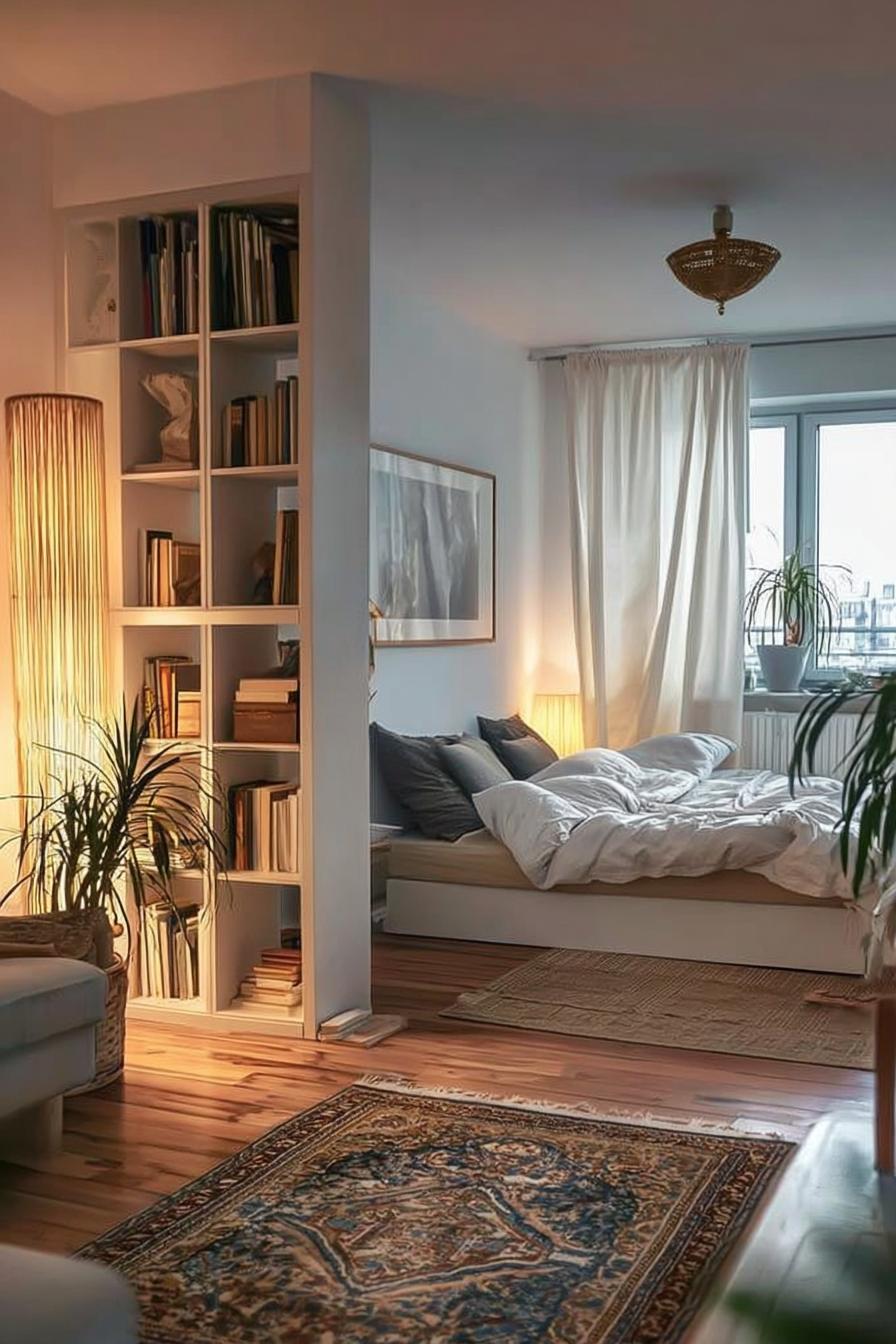
If you could separate your spaces without blocking light or making the room feel boxed in, wouldn’t that solve half your layout challenges?
Open shelving units work like architectural magic tricks – they carve out distinct areas while maintaining that airy, see-through quality. Stack your books spine-out on some shelves, display ceramics on others, and leave a few gaps empty for breathing room. The negative space matters as much as what you fill.
How will you style your shelves to reflect both your public living area and private sleeping sanctuary?
3. Utilize Loft Bed Structure to Maximize Floor Space in Small Spaces

While traditional layouts spread everything horizontally, loft beds flip the script by stacking your life vertically.
By elevating your mattress six feet off the ground, you suddenly gain an entire room’s worth of space underneath – perfect for a desk setup, reading corner, or even a compact sofa arrangement. Modern loft structures come with built-in stairs that double as storage drawers (genius, really), and some designs incorporate shelving into the frame itself.
Going vertical transforms your limited square footage into a multi-level living experience.
4. Create Visual Interest with Gallery Wall Art in Small Spaces

Who says you need separate walls to showcase your personality? A curated gallery wall does double duty – it’s art and architecture rolled into one.
Mix vintage frames with modern prints, layer different sizes, and don’t be afraid to extend your collection from floor to ceiling. This visual feast draws attention upward, making your ceilings seem higher while subtly marking the transition between sleep and social zones.
5. Elevate Bedroom Area to Define Zones in Small Spaces
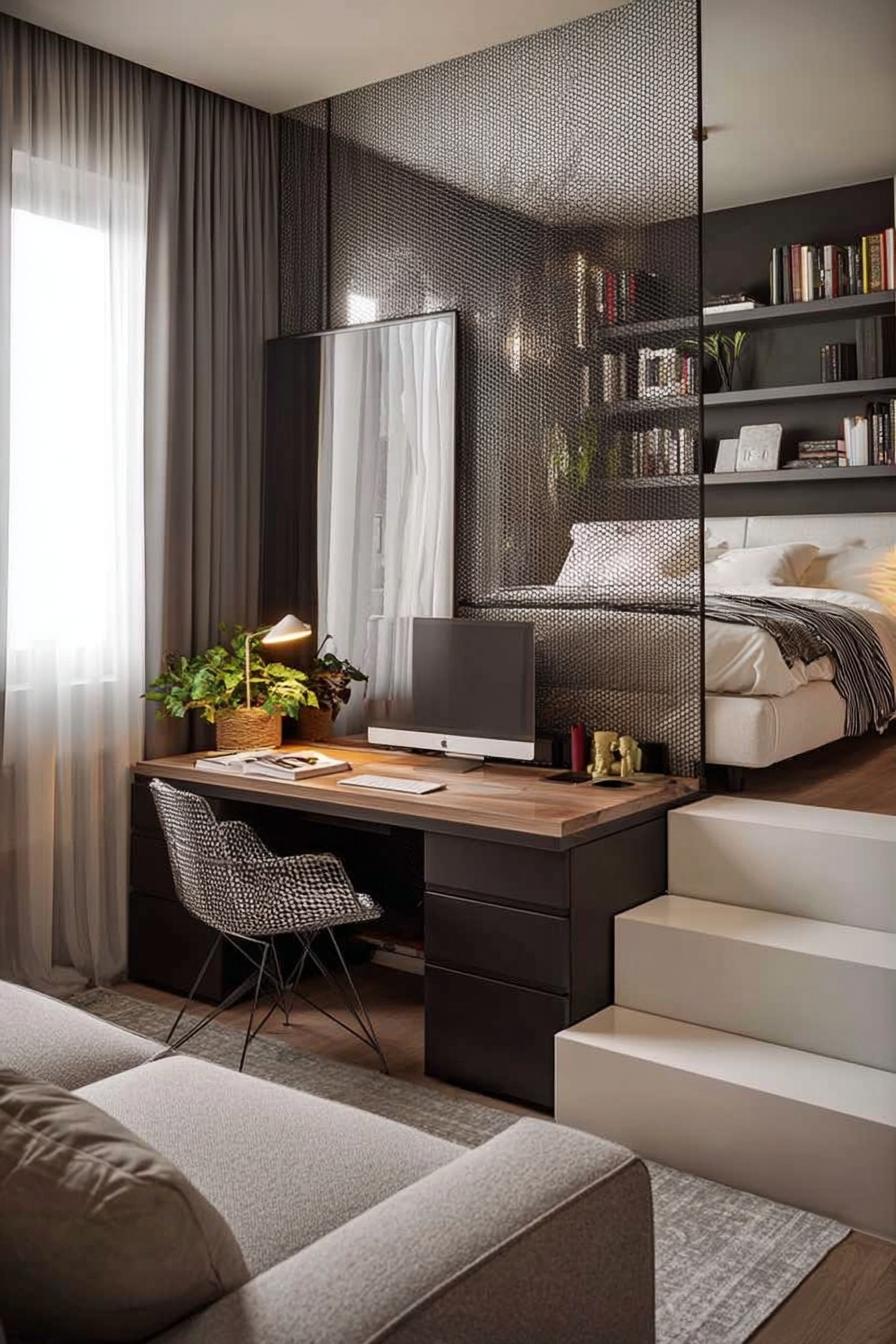
Raising your bed on a platform might seem like something only tall people would enjoy – until you discover those extra eight inches of height psychologically separate your spaces better than any partition.
The elevation shift creates a subtle but powerful distinction: step up to rest, step down to live. Plus, that platform base? It’s secretly storage heaven. Tuck away seasonal clothes, extra bedding, or those impulse purchases you’re not quite ready to admit to.
Build your platform deep enough to include pull-out drawers – future you will thank present you.
6. Hang a Floor to Ceiling Curtain For Instant Privacy in Tiny Spaces
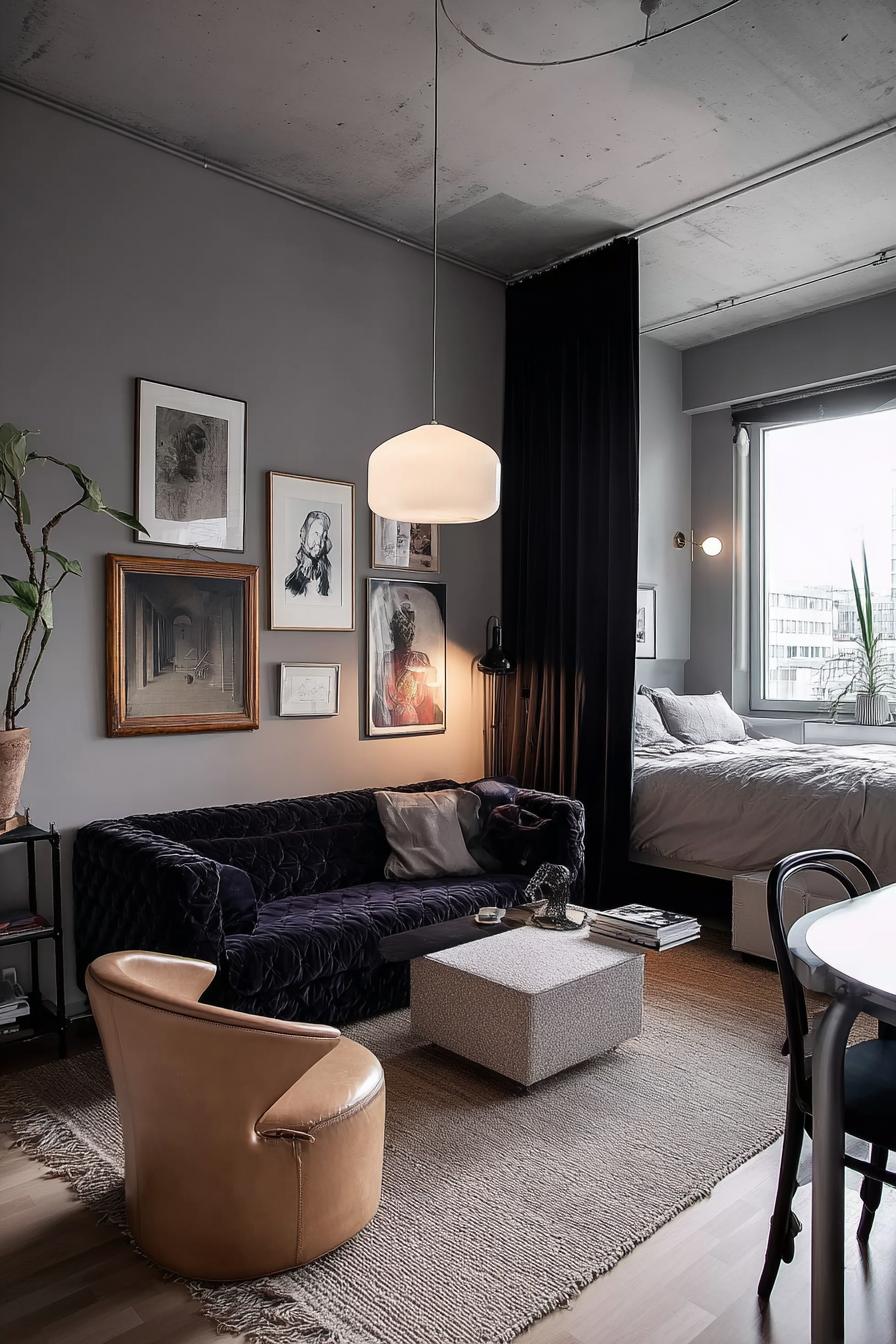
Building on the elevated bed concept, a ceiling-mounted curtain track lets you transform open space into private sanctuary in seconds.
Choose heavyweight linen for complete privacy or gauzy sheers that filter light while maintaining connection to your living area. When pulled back during the day, the fabric pools dramatically like a piece of soft sculpture.
7. Style Multiple Green Plants on Bookshelf For Boho Charm
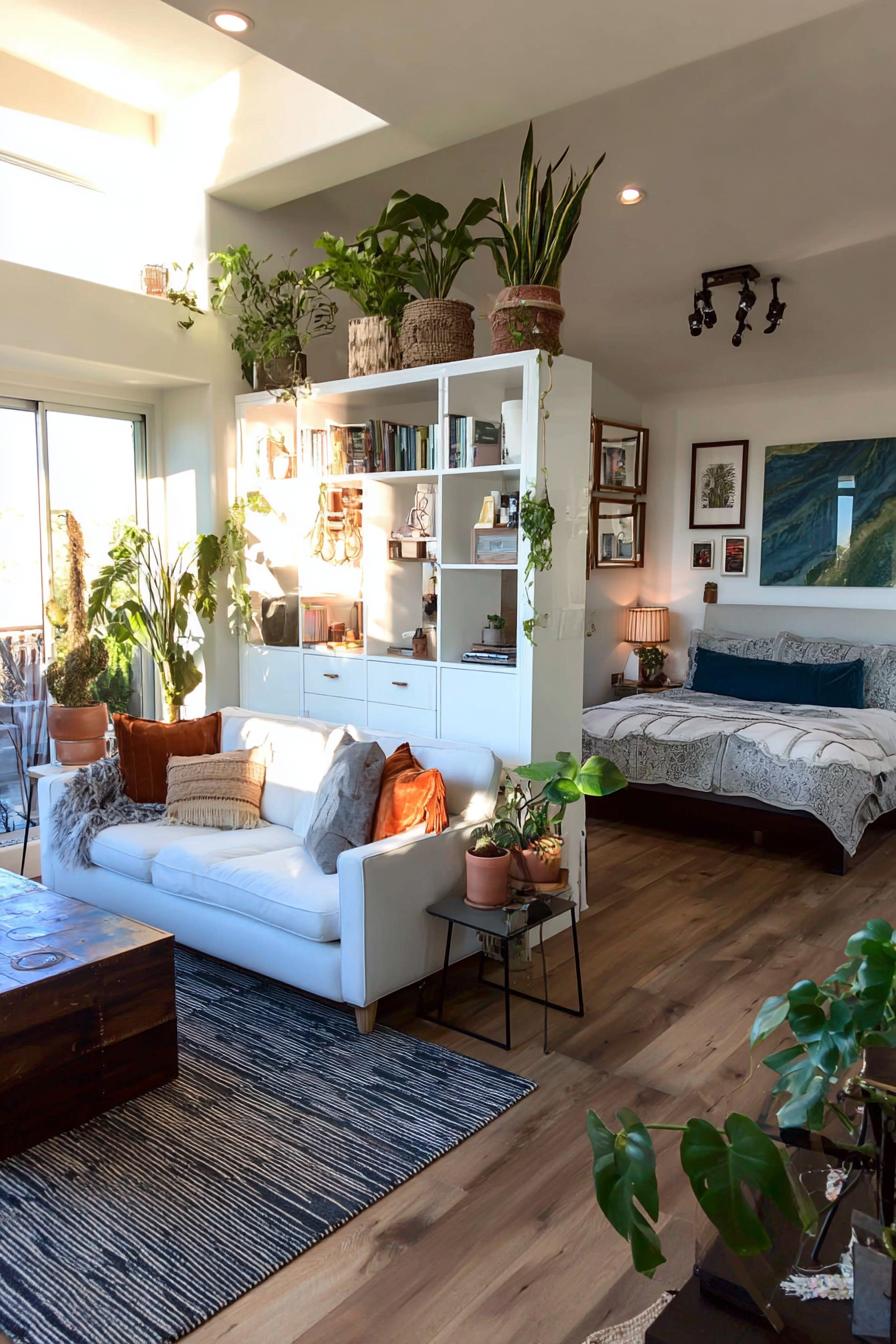
Here’s something quirky: NASA researchers found that certain houseplants can filter up to 87% of air toxins in 24 hours – so your aesthetic choice doubles as an air purification system.
Cascade pothos from high shelves, cluster succulents at eye level, and let a fiddle leaf fig anchor the floor space. The varying heights and textures create layers that blur the line between indoors and out, making your combo space feel like an urban jungle retreat.
8. Highlight Exposed Brick Wall For Warm Industrial Vibe in Small Spaces
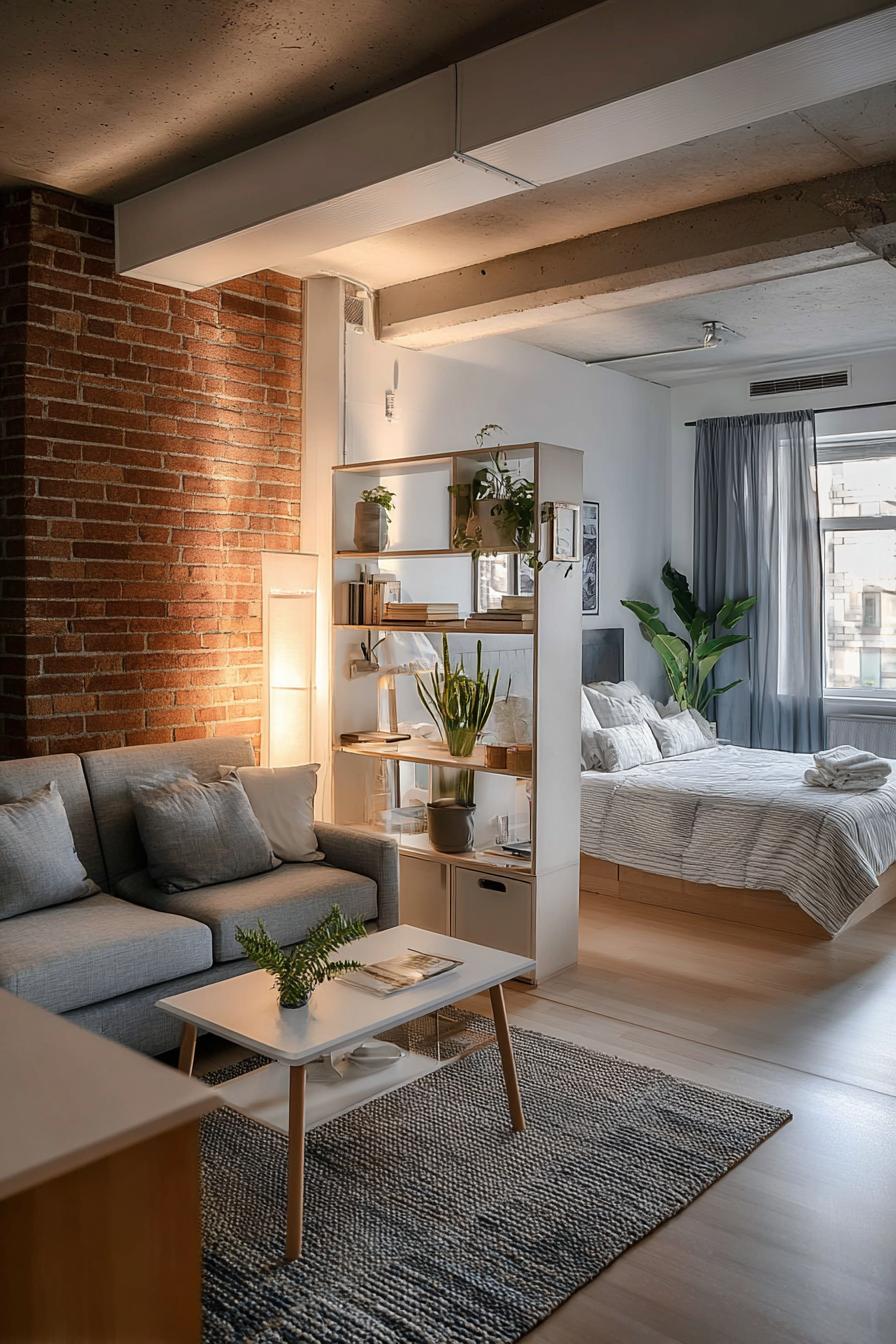
Sometimes the best design move is doing absolutely nothing – exposed brick walls bring instant character without spending a dime on decoration.
The raw texture naturally zones your space: perhaps the brick section becomes your sleeping area, its warmth and roughness creating a cocoon effect. Paint the remaining walls white to amplify the contrast, and suddenly that old building feature becomes your room’s star player.
As more people embrace authentic materials over manufactured perfection, exposed brick continues to gain value in the design world.
9. Anchor the Room with Cozy Layered Rugs in Small Spaces
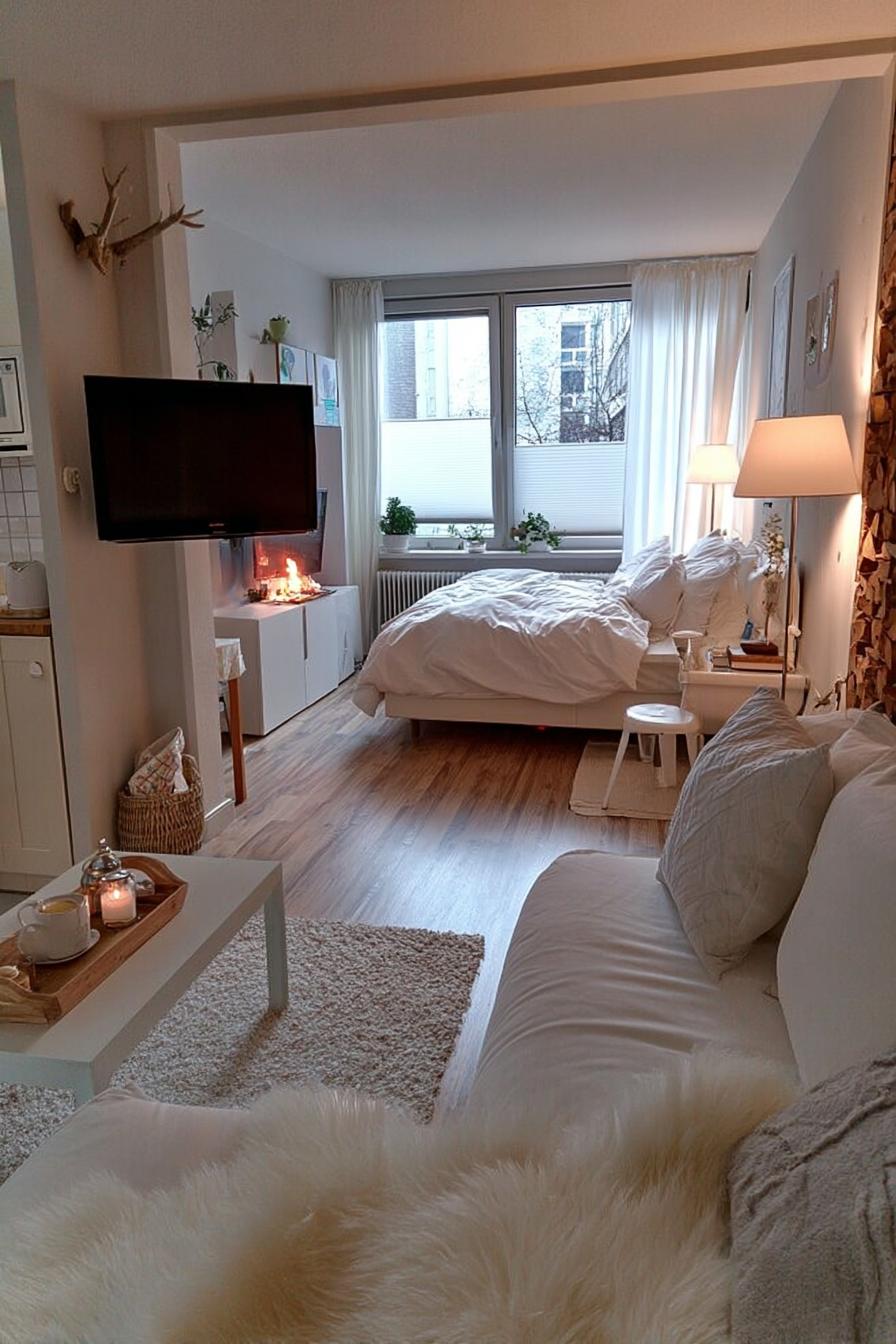
First, forget everything you know about one-rug-per-room rules. Second, embrace the overlap.
When you’re dealing with a dual-purpose space, rugs become your floor’s way of telling stories. A large neutral base rug unifies the entire area, while a smaller, patterned piece defines your seating arrangement or bed zone.
The textile layers add warmth underfoot – crucial when you’re padding from bed to coffee maker on chilly mornings – while the overlapping edges create visual boundaries that feel organic rather than forced. Choose varying pile heights for textural interest that your bare feet will appreciate.
10. Maximize Natural Light with Large Windows in Small Spaces
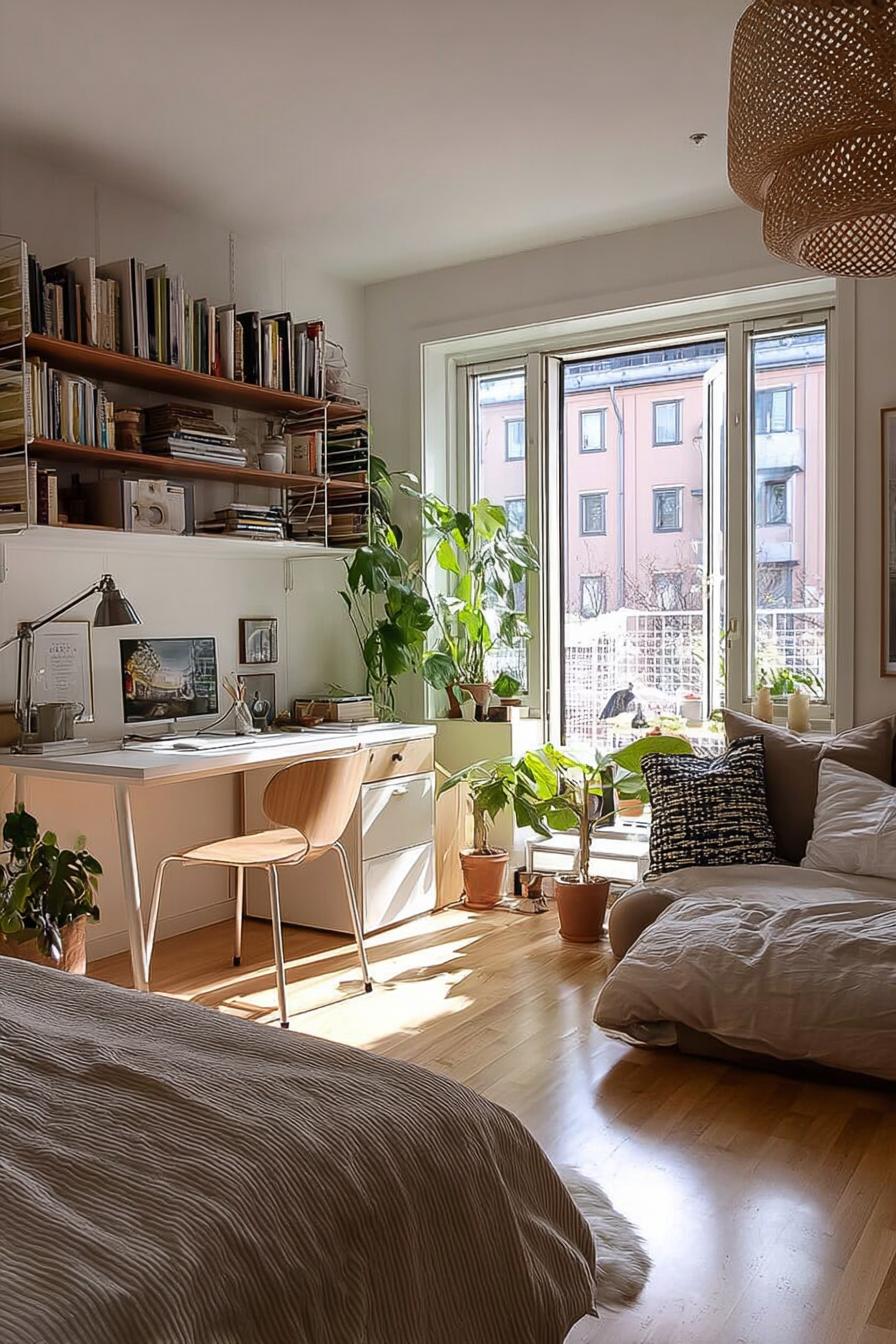
You know that magical hour when afternoon sun streams through your windows, making even dust particles look enchanting? That’s the power you want to harness all day long.
If you’re blessed with large windows, resist the urge to cover them with heavy treatments. Instead, mount your curtain rods close to the ceiling and extend them beyond the window frame – this trick makes windows appear larger while allowing maximum light penetration.
During darker months, this natural illumination becomes even more precious, potentially affecting your mood and energy levels.
Could strategic mirror placement opposite your windows double that gorgeous natural light throughout your space?
11. Incorporate Natural Wood Accents For Warmth in Small Spaces
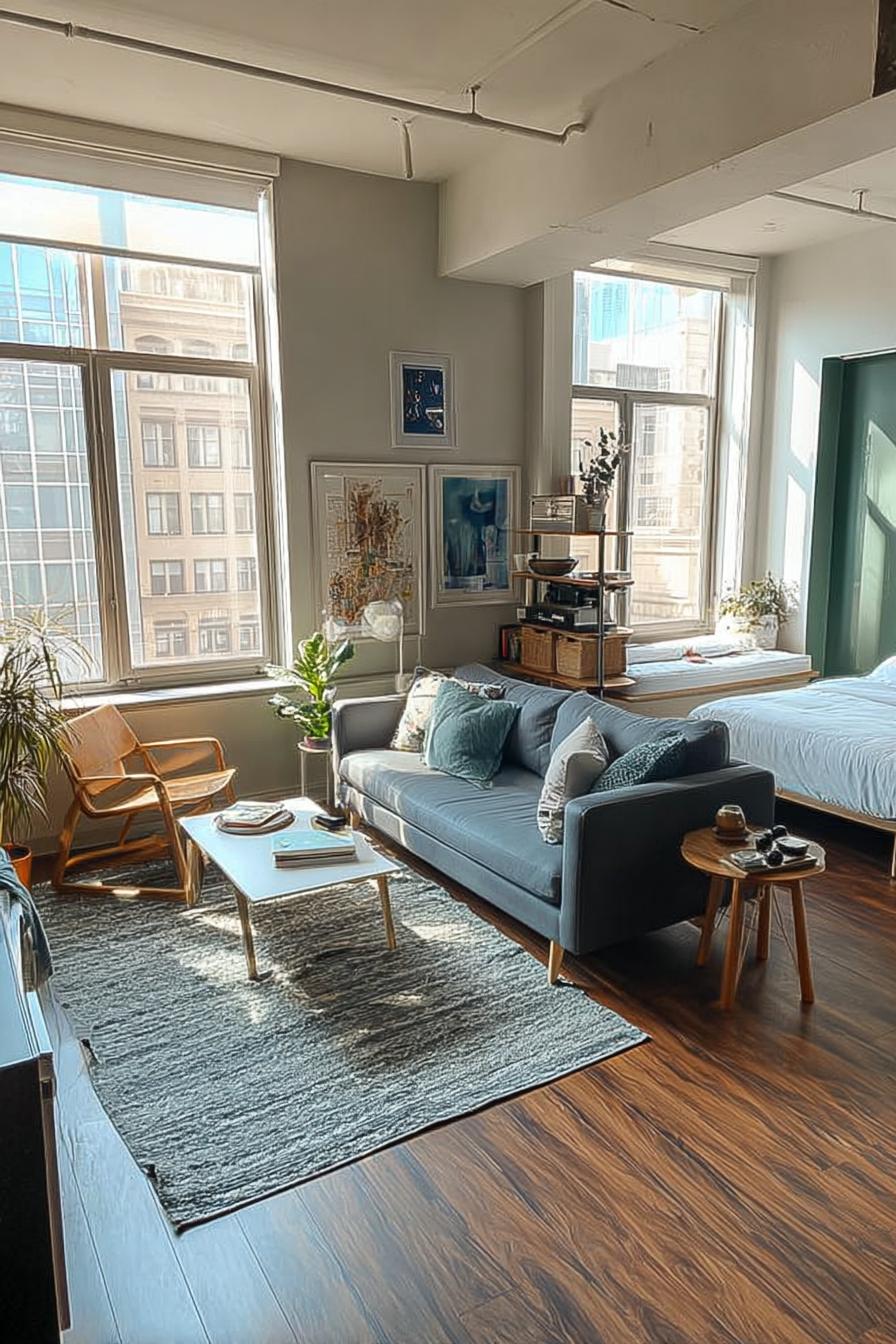
Why does wood make us feel so instantly at home, even in the most urban settings?
Natural wood elements – whether it’s a live-edge coffee table, floating oak shelves, or bamboo room dividers – bring organic warmth that softens the boundaries between living and sleeping areas. The grain patterns add visual texture without overwhelming small spaces, it seems, while different wood tones can subtly mark transitions between zones.
Mix lighter woods like pine or birch near your windows to amplify brightness, then anchor sleeping areas with deeper walnut or cherry tones that promote rest. The variation creates rhythm across your space while maintaining that cohesive, nature-inspired foundation.
12. Install Soft White Curtains For Flexible Privacy in Living Bedroom Combo
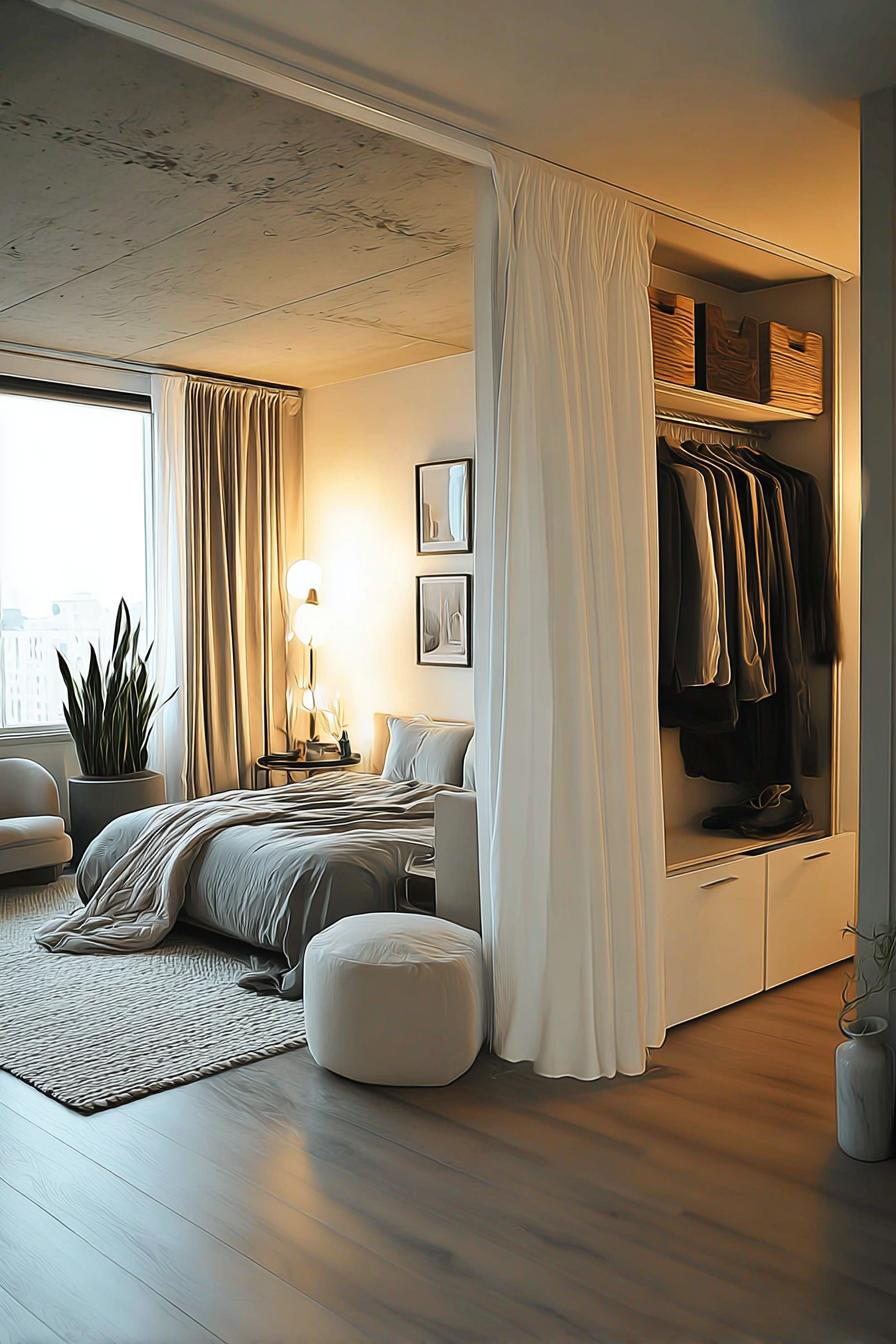
Often overlooked in favor of solid dividers, ceiling-mounted curtains offer something permanent solutions can’t: complete flexibility.
White or cream curtains work particularly well because they maintain brightness even when closed, preventing that cave-like feeling that darker dividers create. During the day, sweep them to one side and secure with a decorative tie-back – instant architectural interest.
At night, draw them closed to cocoon your sleeping area while muffling sound from the living space.
Furthermore, the soft fabric movement adds a dynamic element that rigid partitions simply can’t match.
13. Opt For Sliding Glass Doors to Enhance Privacy in Small Spaces
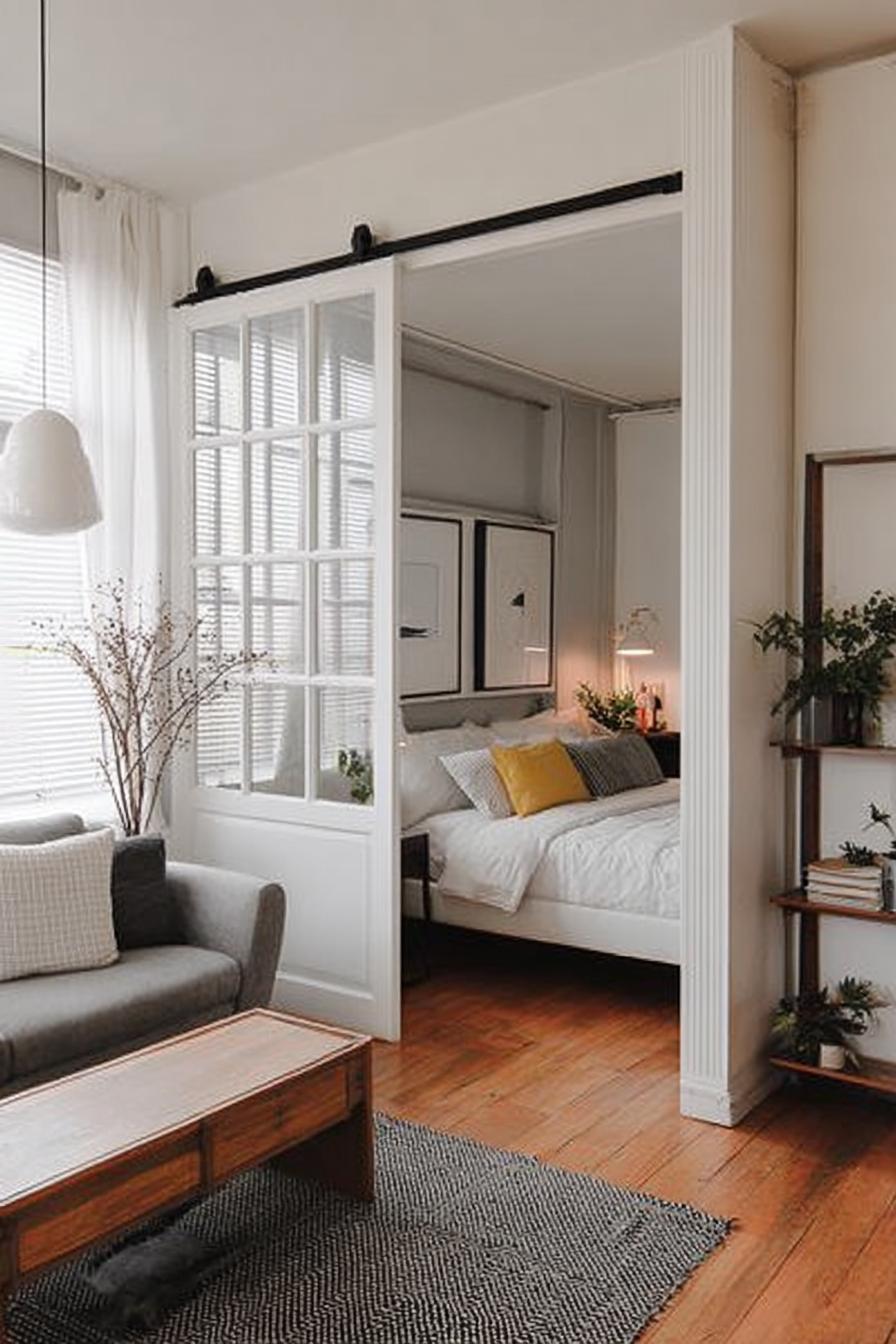
Install sliding glass panels on ceiling tracks for a solution that feels both modern and timeless.
The transparent barriers maintain visual continuity while providing sound insulation – perfect when one person wants to sleep while another watches late-night TV. Frosted or textured glass options offer additional privacy without sacrificing light transmission.
Some designs even incorporate internal blinds between glass panes for ultimate flexibility.
This investment in quality separation could become the defining feature as combo living spaces evolve from necessity to lifestyle choice.
14. Add Greenery on Open Shelves to Define Zones in Small Spaces
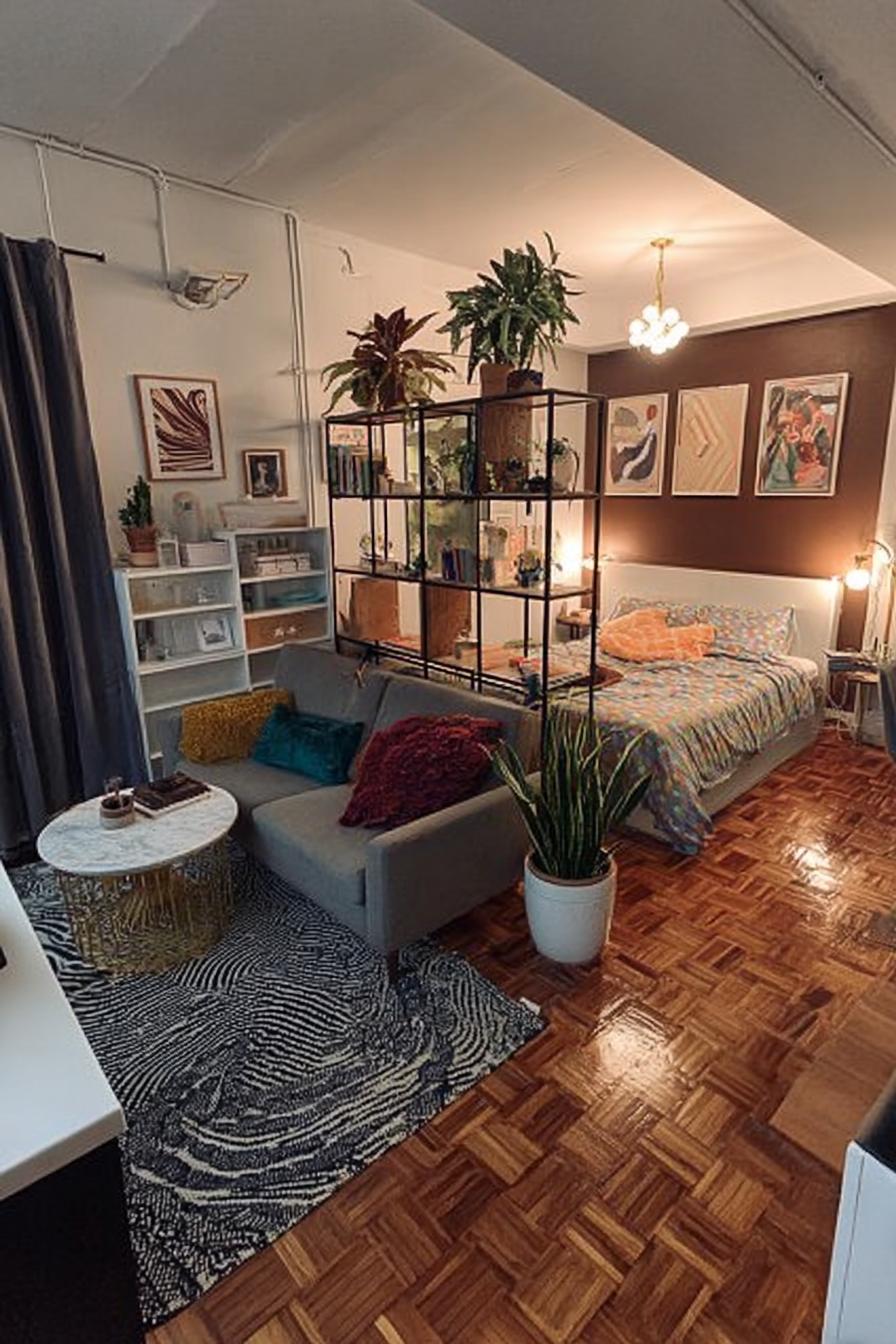
Plants naturally create boundaries – they’re living, breathing space dividers that happen to clean your air.
Position trailing plants like philodendrons on higher shelves between your bed and living areas, letting their vines create a soft curtain effect. Mix in upright plants like snake plants or ZZ plants at varying heights to build a green gradient.
The organic shapes break up the rigid lines of furniture while adding life to what might otherwise feel like a cramped box.
Water them on Sundays while your coffee brews – it becomes a ritual that connects you to your space.
15. Enhance Privacy with Open Bookshelf Divider in Living Bedroom Combo
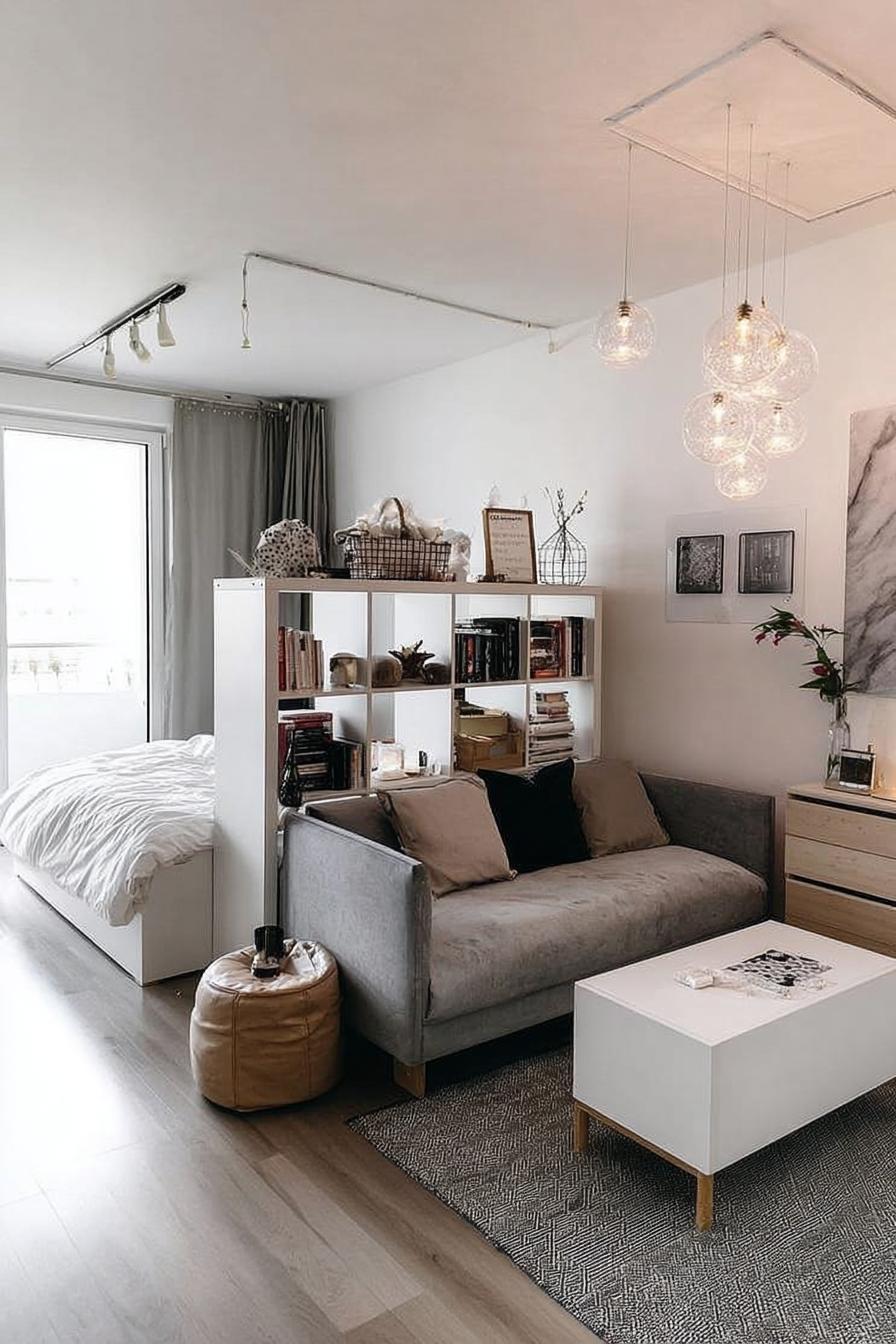
Think of a bookshelf divider as a permeable membrane between your public and private worlds – it filters rather than blocks.
Beyond the obvious book storage, these units become display galleries for your life: vintage cameras on one shelf, ceramic bowls on another, perhaps a trailing plant spilling over the edge. The key lies in leaving some compartments empty, creating windows that maintain visual connection while establishing clear boundaries.
Style the living room side with colorful spines and decorative objects, while the bedroom side might hold softer items – folded throws, candles, or a small reading lamp. This dual personality lets one piece of furniture speak two different languages.
Transform your bookshelf into a living memoir by rotating displays seasonally – your space stays fresh without buying new furniture.
16. Arrange Sofa Facing Bed For Cozy Layout in Small Spaces
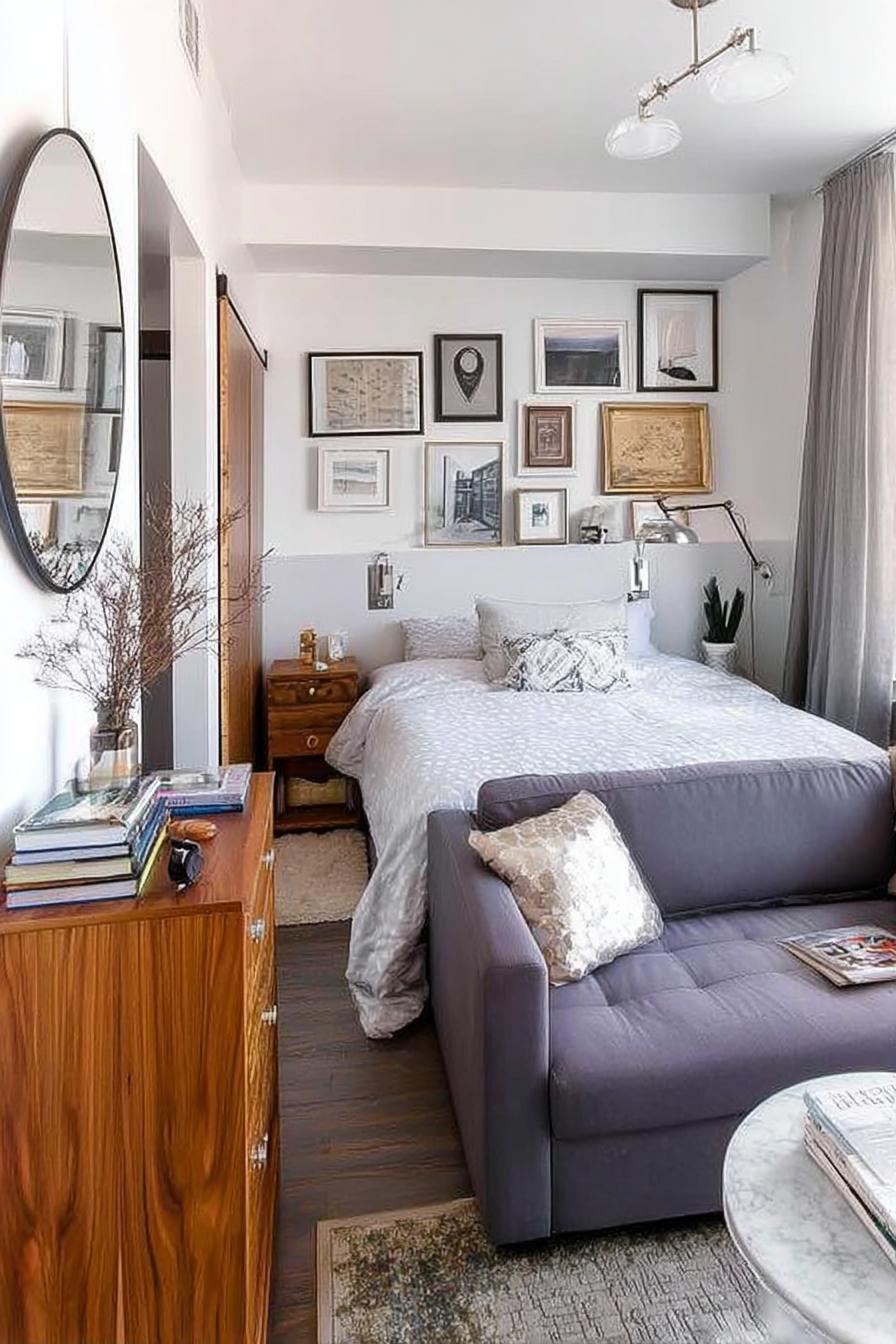
Observation tells us that most people instinctively position their sofa against a wall, but facing it toward the bed creates unexpected intimacy.
This arrangement forms a natural conversation pit in your living area while using the sofa back as a soft barrier to your sleeping space. The setup works particularly well with low-profile furniture that doesn’t obstruct sightlines – think mid-century modern pieces or Japanese-inspired designs that hover just above the floor.
Consequently, your small space gains clear zones without any actual walls, and the central pathway between sofa and bed becomes a natural traffic flow that prevents that trapped-in-a-maze feeling.
17. Pair Deep Blue Sofa with Crisp White Coffee Table in Small Spaces
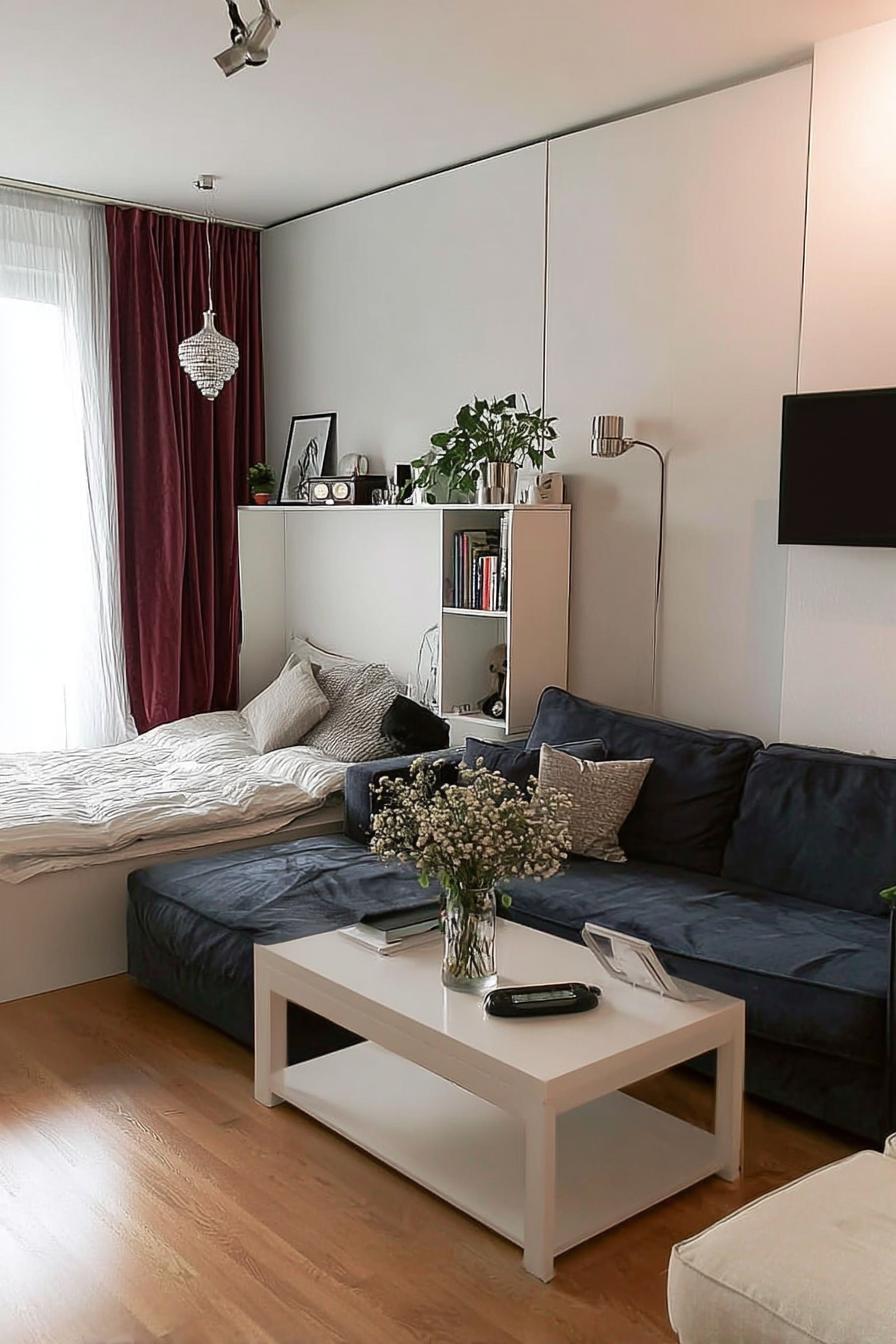
Like the ocean meeting sandy shores, a navy sofa anchored by a white coffee table creates instant sophistication in tight quarters.
The deep blue grounds your living area with gravitas – it’s a color that hides everyday wear while adding depth – while the white table reflects light upward, preventing the space from feeling heavy. Add brass accents through picture frames or lamp bases, and suddenly you’ve created a nautical theme without a single sailboat in sight.
Just avoid matching everything too perfectly – your space could end up looking like a furniture showroom rather than a home.
18. Use Half Wall Divider to Separate Bedroom and Living Room
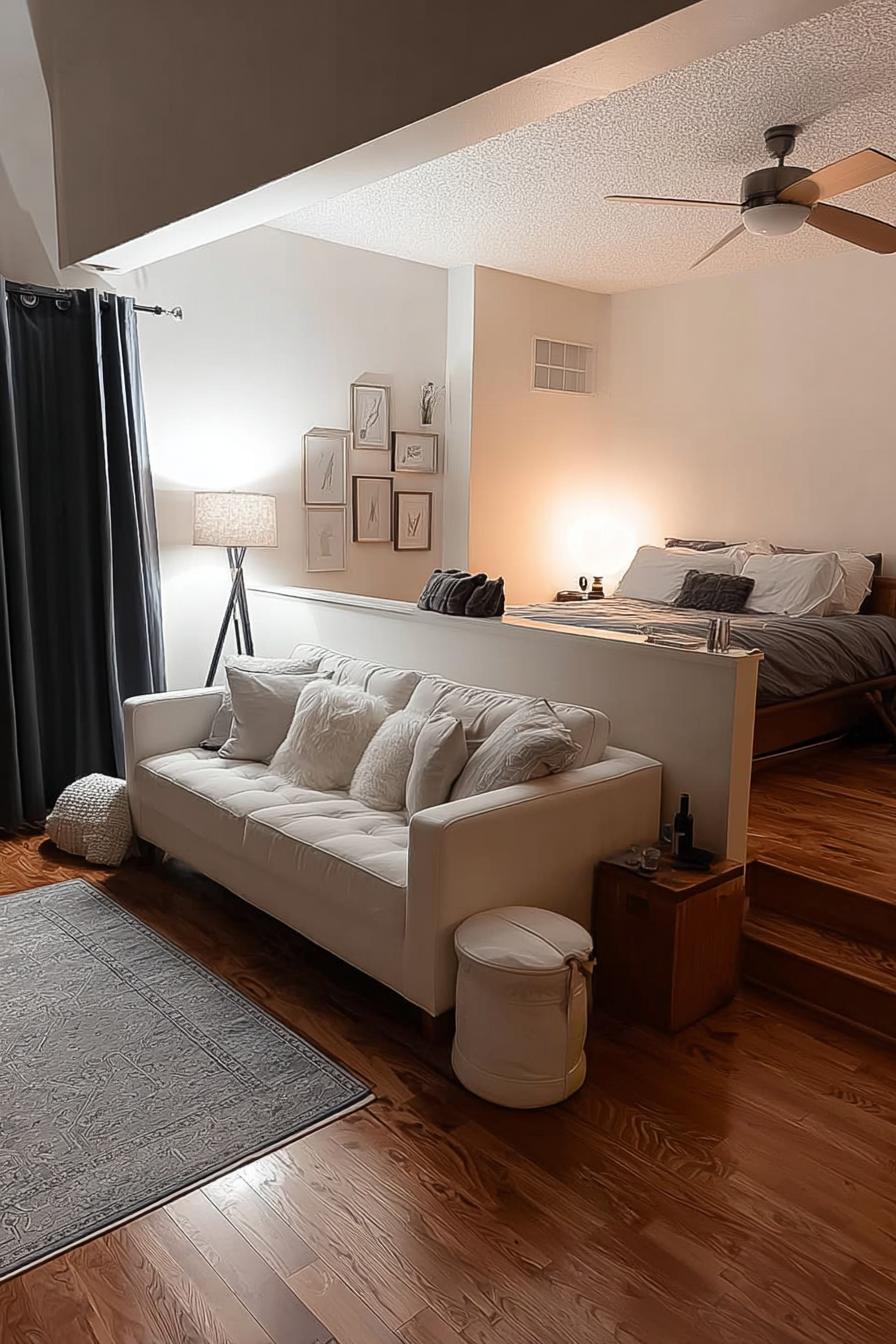
The challenge of total separation versus complete openness finds its sweet spot in the half wall – a solution that offers privacy without claustrophobia.
Build your divider at seated eye height (roughly 42 inches), which blocks views when you’re lounging on the sofa but maintains airflow and light circulation above. The top becomes an impromptu shelf for plants, books, or that collection of vintage bottles you’ve been accumulating.
Some clever builders incorporate electrical outlets on both sides, turning the barrier into a charging station.
A half wall gives you boundaries without commitment – architectural definition that still lets your space breathe.
19. Anchor the Space with a Large Plush Area Rug For Comfort in Small Spaces
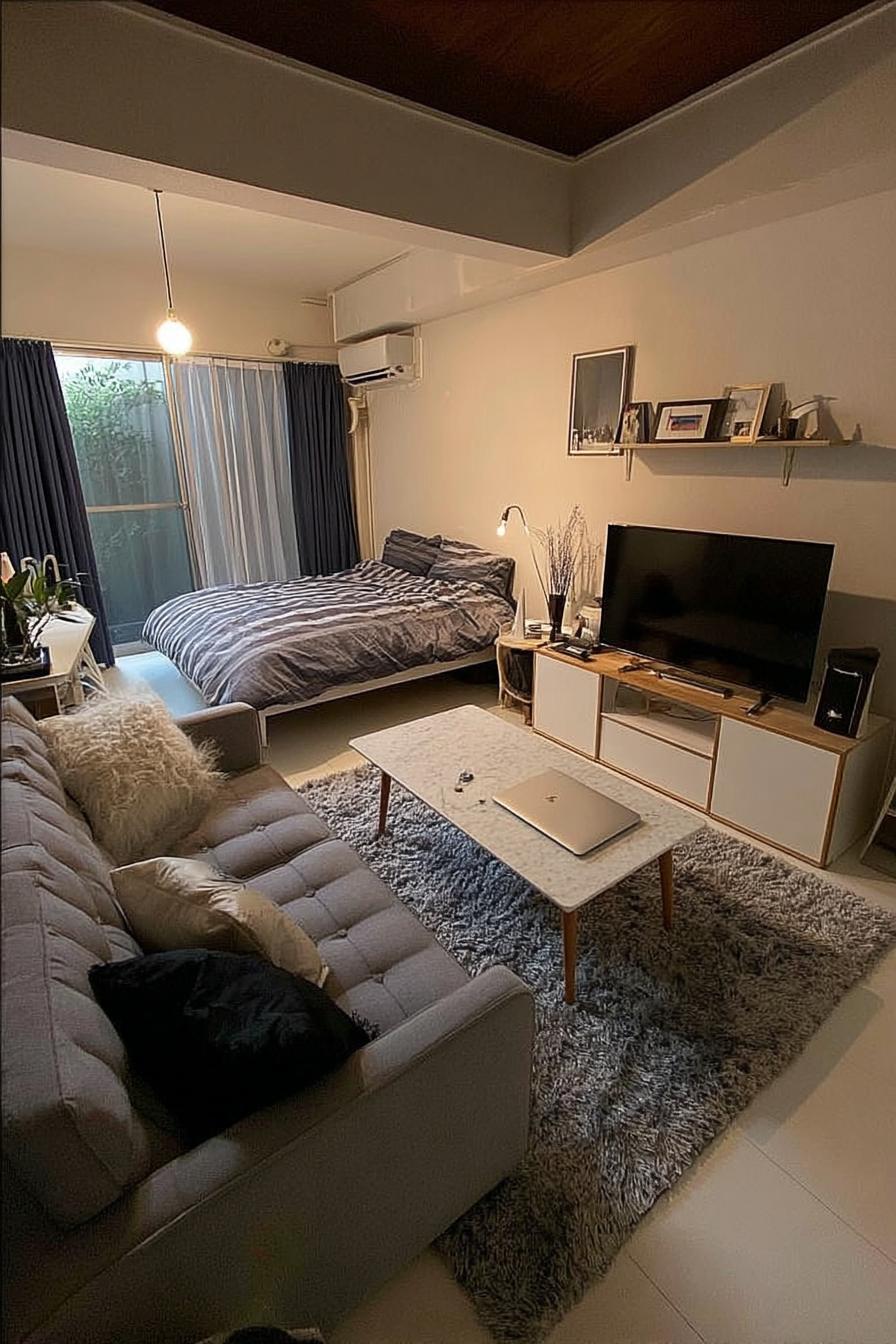
Choose a rug large enough that both your bed legs and sofa legs rest on it – this unifying move makes everything feel intentional rather than scattered.
The plush texture invites barefoot wandering, essential when your bedroom and living room share the same air. Moreover, the rug’s substantial presence grounds floating furniture arrangements, creating an island of comfort in what might otherwise feel like an undefined space.
Deeper pile heights add acoustic benefits too, absorbing sound that would otherwise bounce off hard floors.
When selecting your rug, go at least one size larger than you think you need. The extra coverage makes your room feel more expansive, while the soft boundaries it creates feel less rigid than physical dividers. Styling a bedroom living room office combo uses many of these same principles for functional beauty. Your living room dining room combo can use similar division techniques. Meanwhile, dorm room design and bedroom small room planning share these creative spatial solutions.
Conclusion
Your living room and bedroom combo doesn’t have to feel like a compromise – it could become your favorite design challenge yet. Start with one idea that resonates with your lifestyle, perhaps those floating shelves or that platform bed you’ve been considering.
Once you see how one change transforms your space, you’ll gain confidence to layer in more elements. Remember, the most successful combo rooms tell a cohesive story while honoring both rest and activity – your story, written in furniture, light, and the careful art of division.