
The heart of modern living beats strongest where cooking aromas mingle with conversation, where morning coffee transitions seamlessly into evening entertainment. Today’s open-plan spaces demand more than just knocking down walls – they require a delicate choreography between function and flow.
Whether you’re wrestling with a compact studio or blessed with sprawling square footage, combining your kitchen and living room opens up possibilities you might not have imagined. The trick lies in creating distinct zones while maintaining that coveted sense of spaciousness.
1. Balance Neutral Shades with Natural Wood Elements For Open Concept
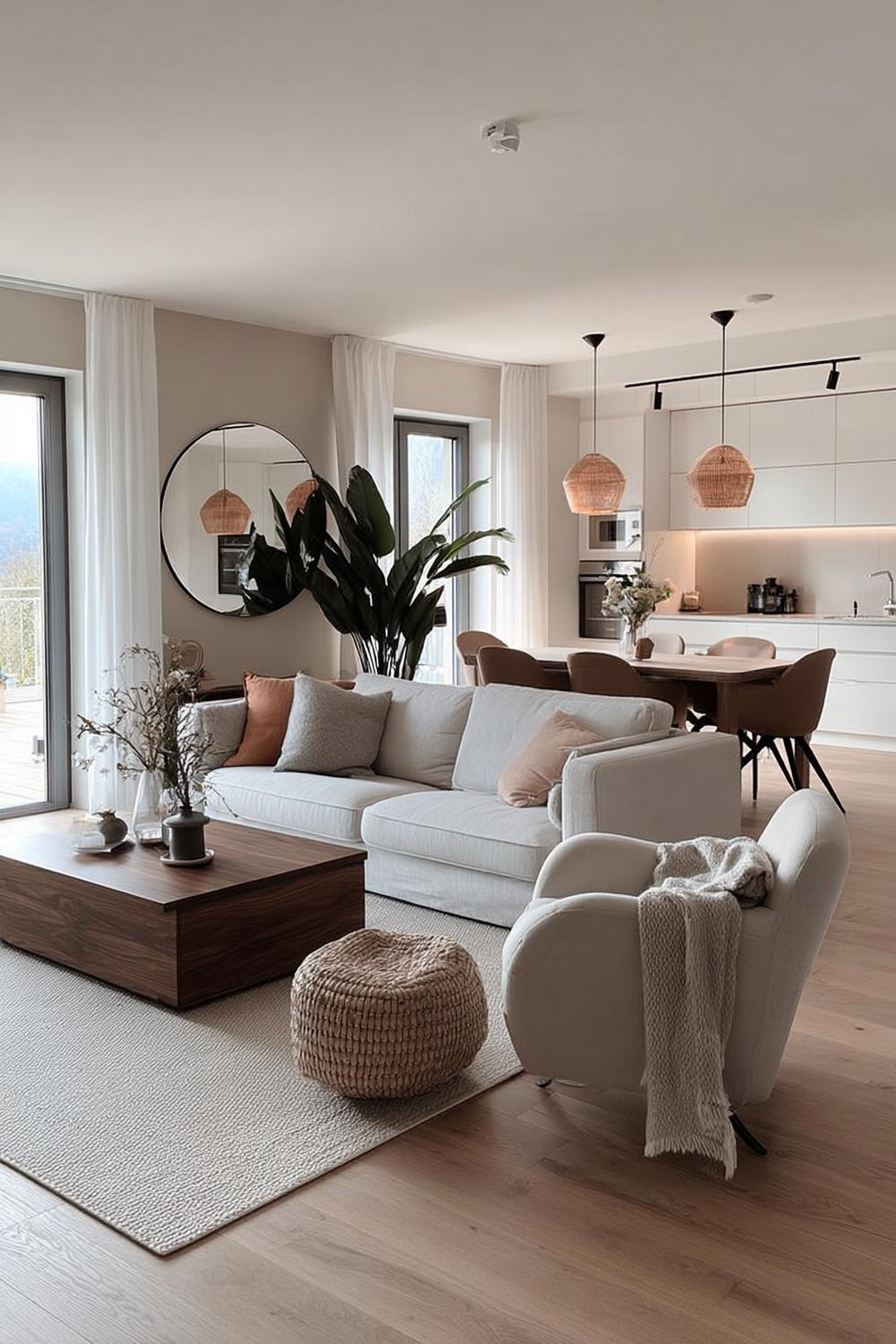
The eternal struggle: you want warmth without clutter, sophistication without sterility. Pairing soft grays and creamy whites with honey-toned oak or walnut accents solves this beautifully – the neutrals keep things airy while wood elements ground the space with organic texture.
Picture this: white shiplap walls meeting a reclaimed wood kitchen island, dove-gray sofas facing butcher block countertops. The wood acts as a visual bridge, pulling both spaces together without forcing them to match perfectly.
This balanced approach lets you change accent colors seasonally without repainting everything.
2. Incorporate Large Windows to Maximize Natural Light in Open Concept
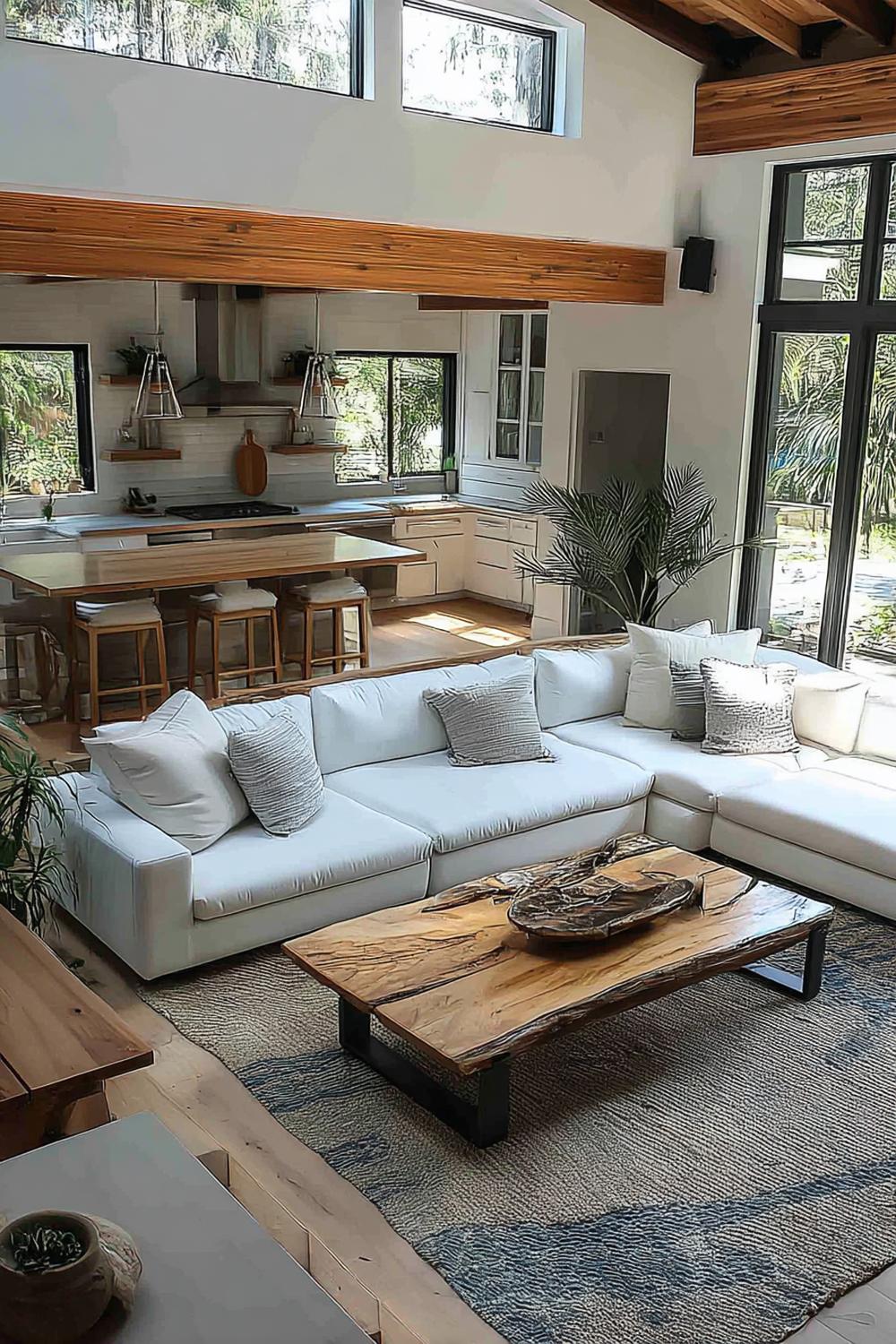
Natural light acts like nature’s own interior designer, sculpting shadows and highlights that shift throughout the day. Floor-to-ceiling windows or even strategically placed skylights transform your combo space into something that breathes with the outdoors.
The effect goes beyond mere brightness – sunlight bouncing off kitchen surfaces creates subtle reflections that animate your living area, while soft morning light makes breakfast prep feel almost meditative. You’ll notice how different textures reveal themselves as the sun moves.
Expect to see more homes embracing window walls and glass corners as energy-efficient glazing becomes more affordable.
3. Highlight Pendant Lighting to Define Kitchen Zones in Open Concept
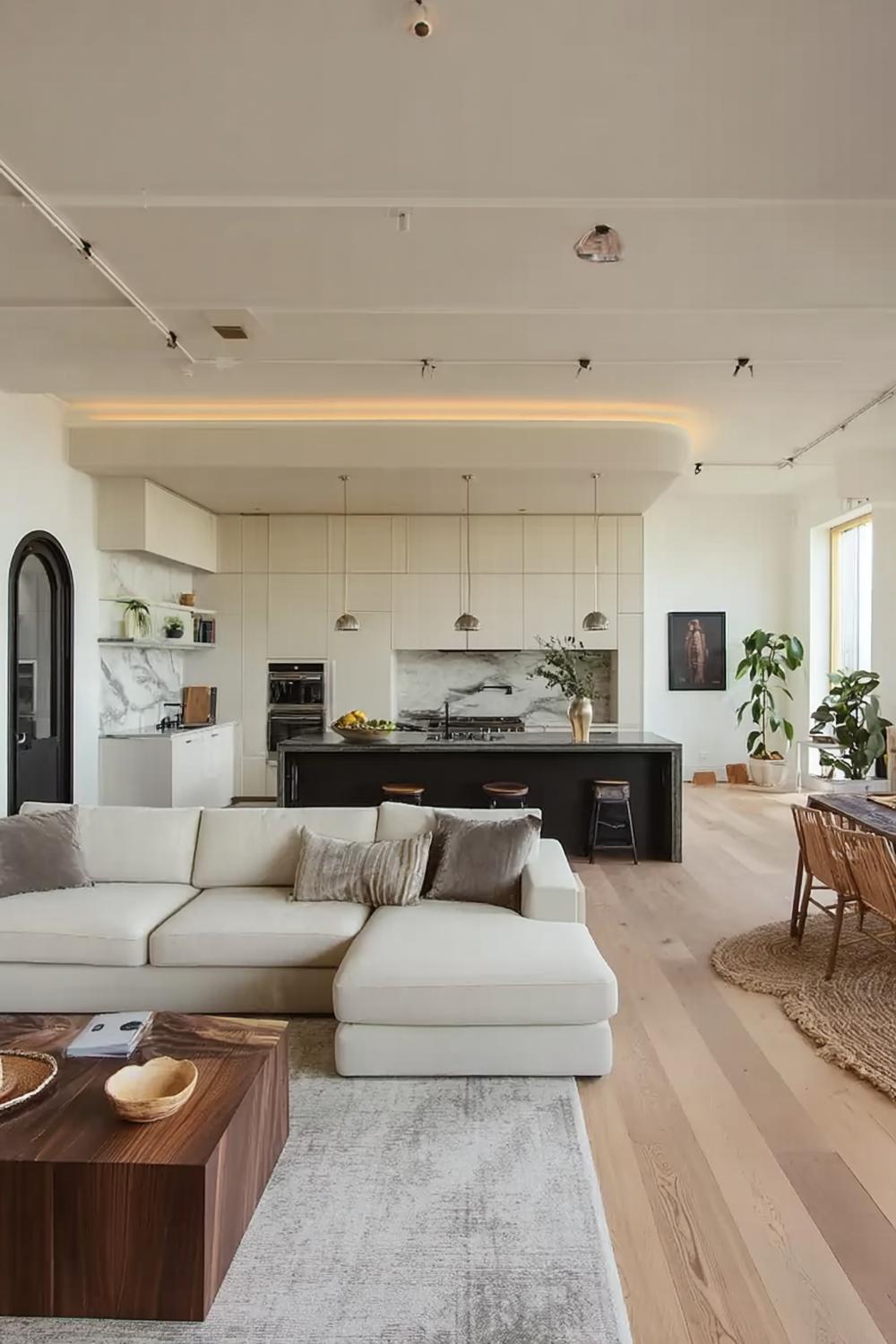
Pendant lights do double duty – they’re both jewelry for your ceiling and invisible walls that separate spaces without blocking sightlines. Three copper pendants over your island immediately signal “kitchen territory” while maintaining visual flow.
Consider how restaurants use lighting to create intimacy in large spaces – you can borrow this trick. The key lies in choosing fixtures that complement rather than compete with your living room lighting.
Think of it as creating layers: pendants for task lighting, perhaps track lighting for art, and a statement chandelier or flush mount for the living area. Different heights and intensities help your eye understand where one zone ends and another begins.
Pro tip: Install dimmers on everything – you’ll thank yourself when transitioning from bright meal prep to moody movie nights.
4. Use Natural Wood Flooring to Unify Living and Kitchen Spaces For Divider
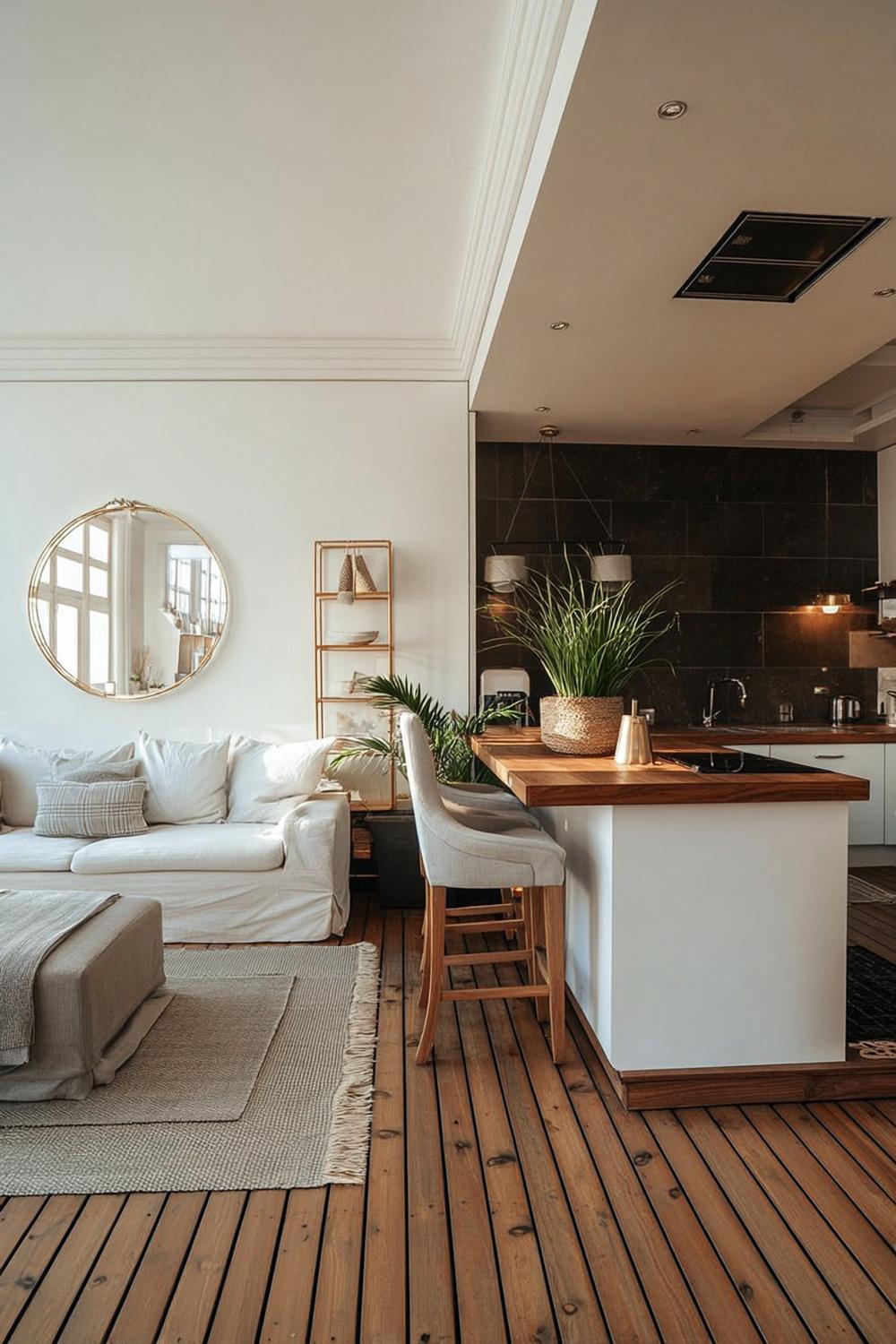
While some designers suggest changing flooring materials to separate zones, continuous hardwood actually makes small spaces feel larger and more cohesive. The unbroken sight lines trick your brain into perceiving more square footage than exists.
Take a loft apartment where oak planks run from the front door through the kitchen and into the living area – suddenly, what could feel choppy becomes one flowing space. Add a large area rug under your living room furniture to define that zone without interrupting the floor’s visual journey.
(Yes, this means slightly more maintenance around the kitchen, but the payoff in spaciousness is worth it.)
Avoid mixing too many flooring types – it fragments the space and makes cleaning transitions a nightmare.
5. Enhance Cozy Comfort with Plush Pillows and Soft Upholstery For Small Apartment
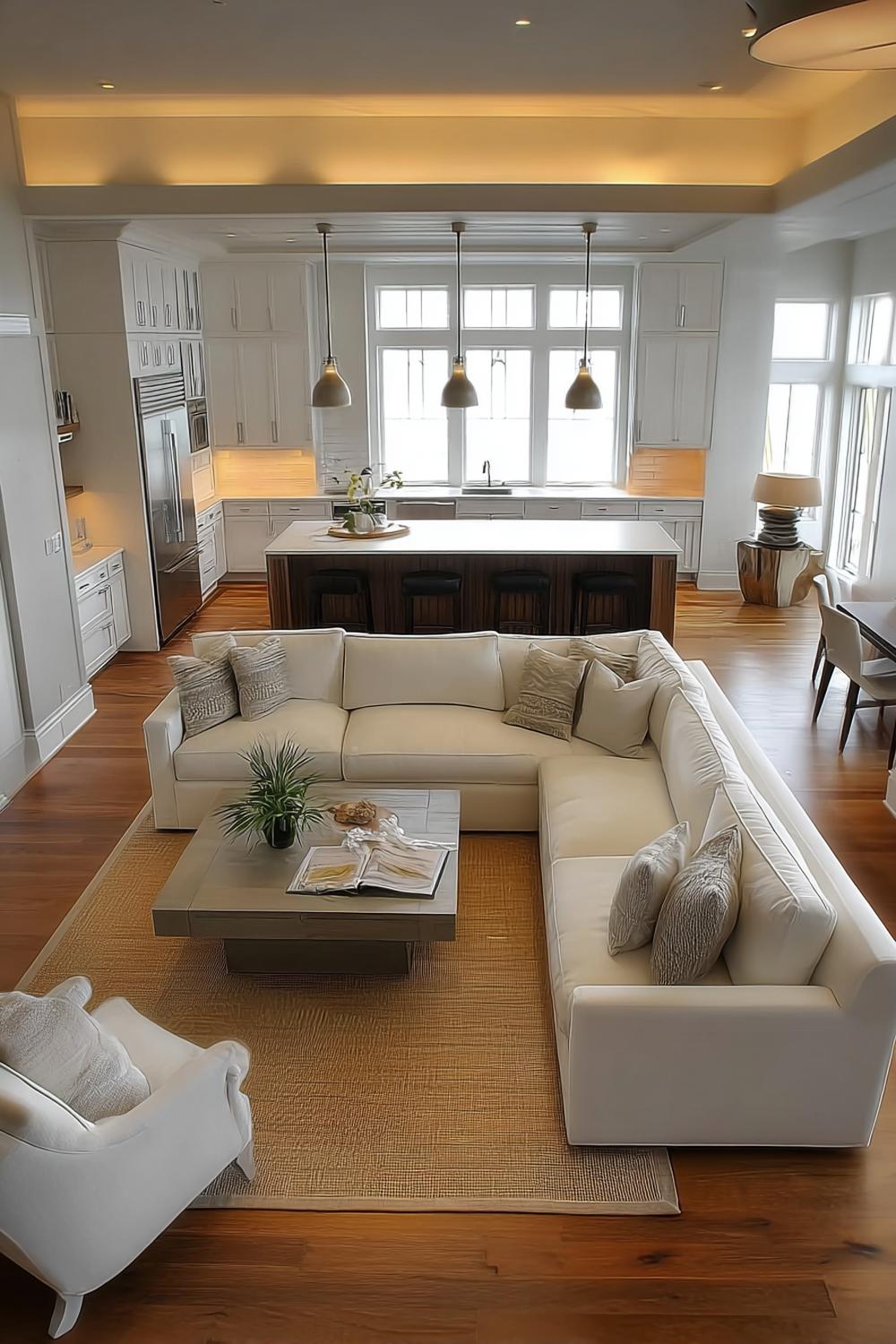
Building on the hard surfaces we’ve discussed, soft furnishings become even more crucial in combo spaces where kitchen sounds need absorbing. Layer different textures – velvet cushions, chunky knit throws, maybe a leather pouf – to create visual depth while dampening noise.
These textile elements also let you inject personality without permanent changes, perfect for renters who can’t paint or renovate.
6. Emphasize Minimalist White Cabinets to Maximize Small Apartment Space
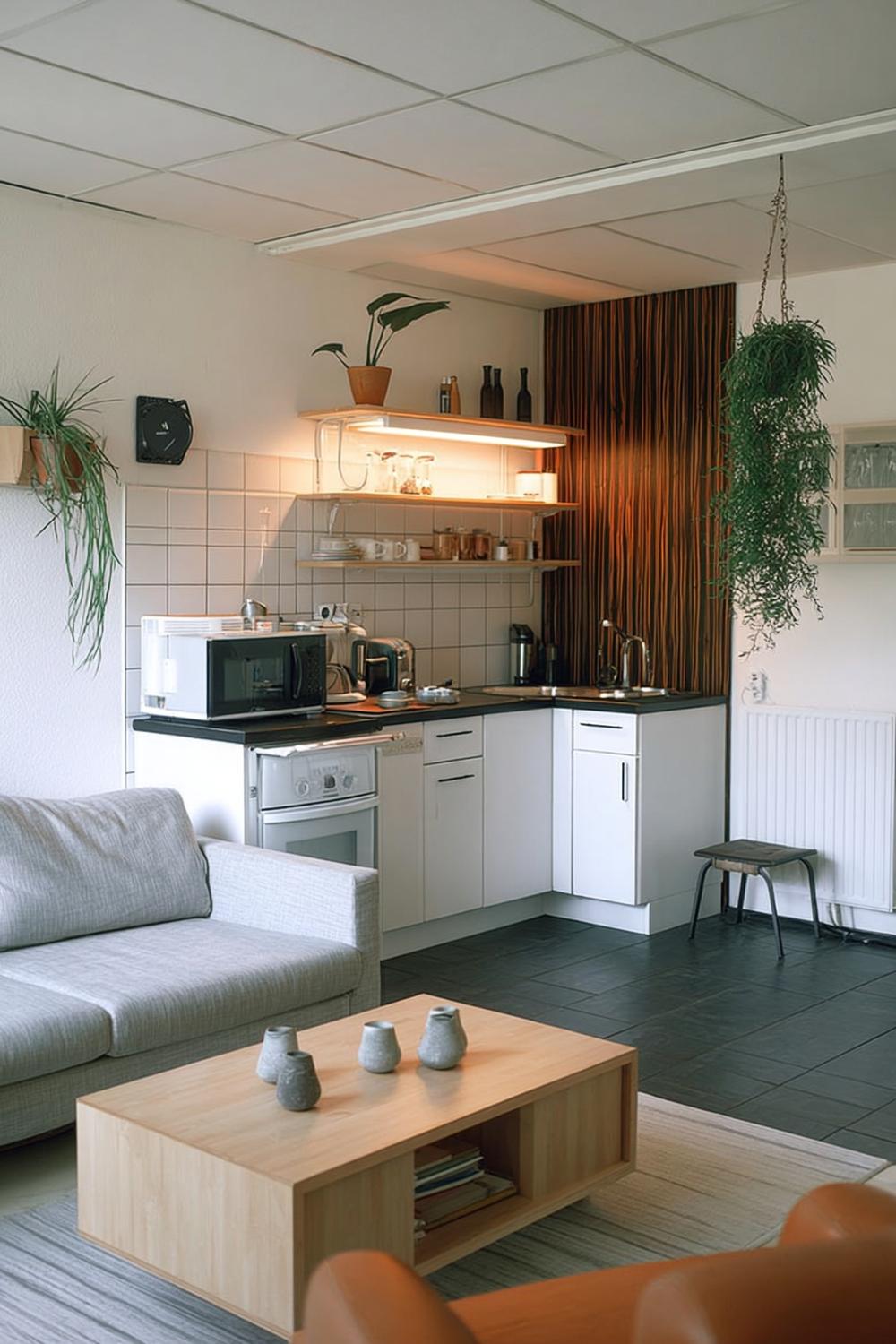
Here’s what most people miss: white cabinets aren’t just about looking clean – they’re about visual recession. White surfaces seem to push back, creating precious inches of perceived space that darker cabinets would swallow.
Flat-panel doors without elaborate molding take this further, acting almost like white walls that happen to hide your dishes. The lack of visual noise means your eye travels smoothly from kitchen to living room without getting snagged on busy details. Combine this with integrated handles or touch-latch mechanisms, and the cabinets nearly disappear.
This sets the stage perfectly for our next consideration about surface finishes.
7. Incorporate Glossy Cabinetry to Elevate Open Concept Kitchens
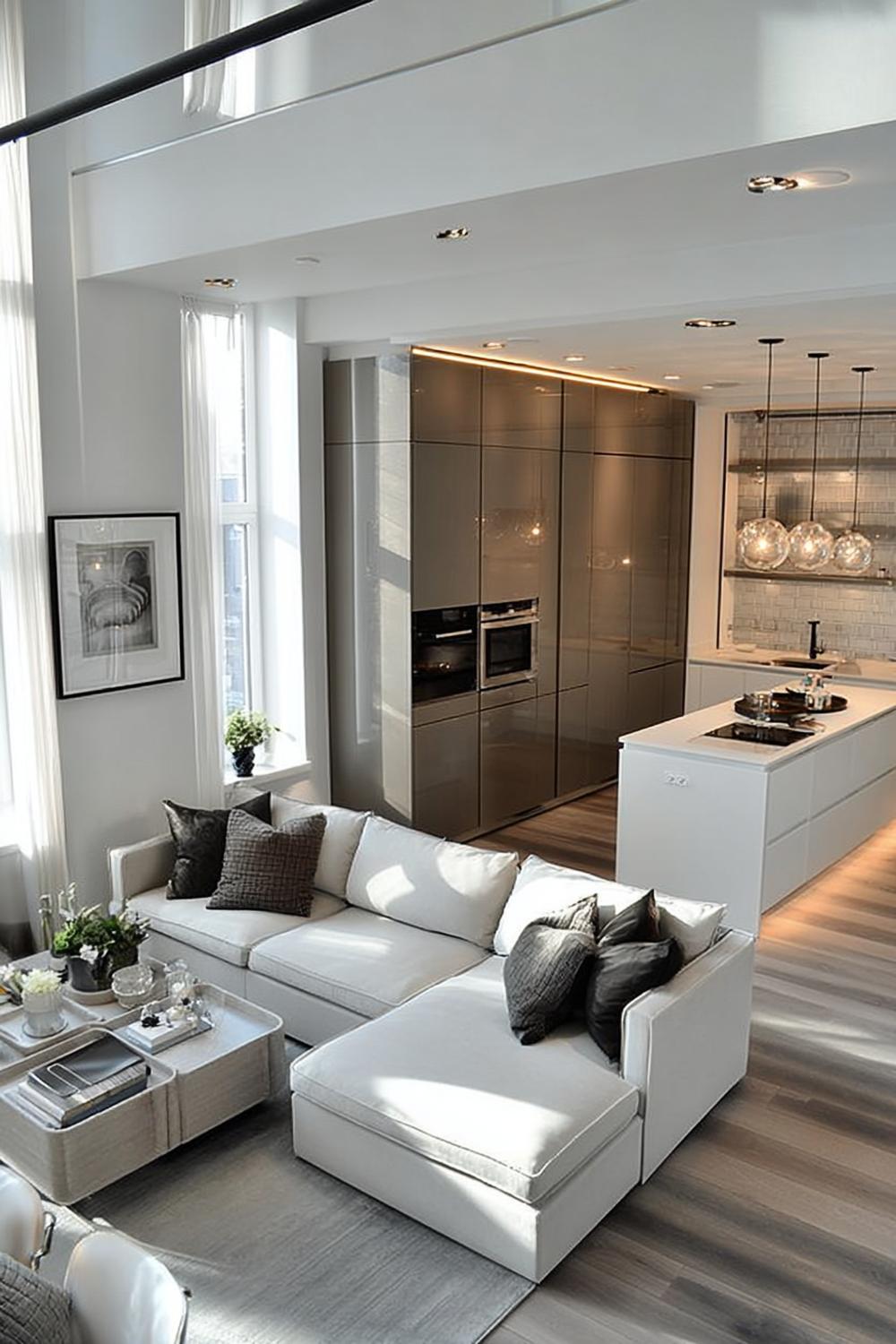
First, let’s address the elephant: yes, glossy surfaces show fingerprints, but they also reflect light like nothing else, doubling the impact of whatever natural or artificial lighting you have.
The mirror-like finish creates depth and movement, preventing your kitchen from feeling static or heavy – particularly valuable when it’s constantly in view from your sofa.
8. Incorporate Exposed Brick Walls to Add Warmth and Texture For Ideas
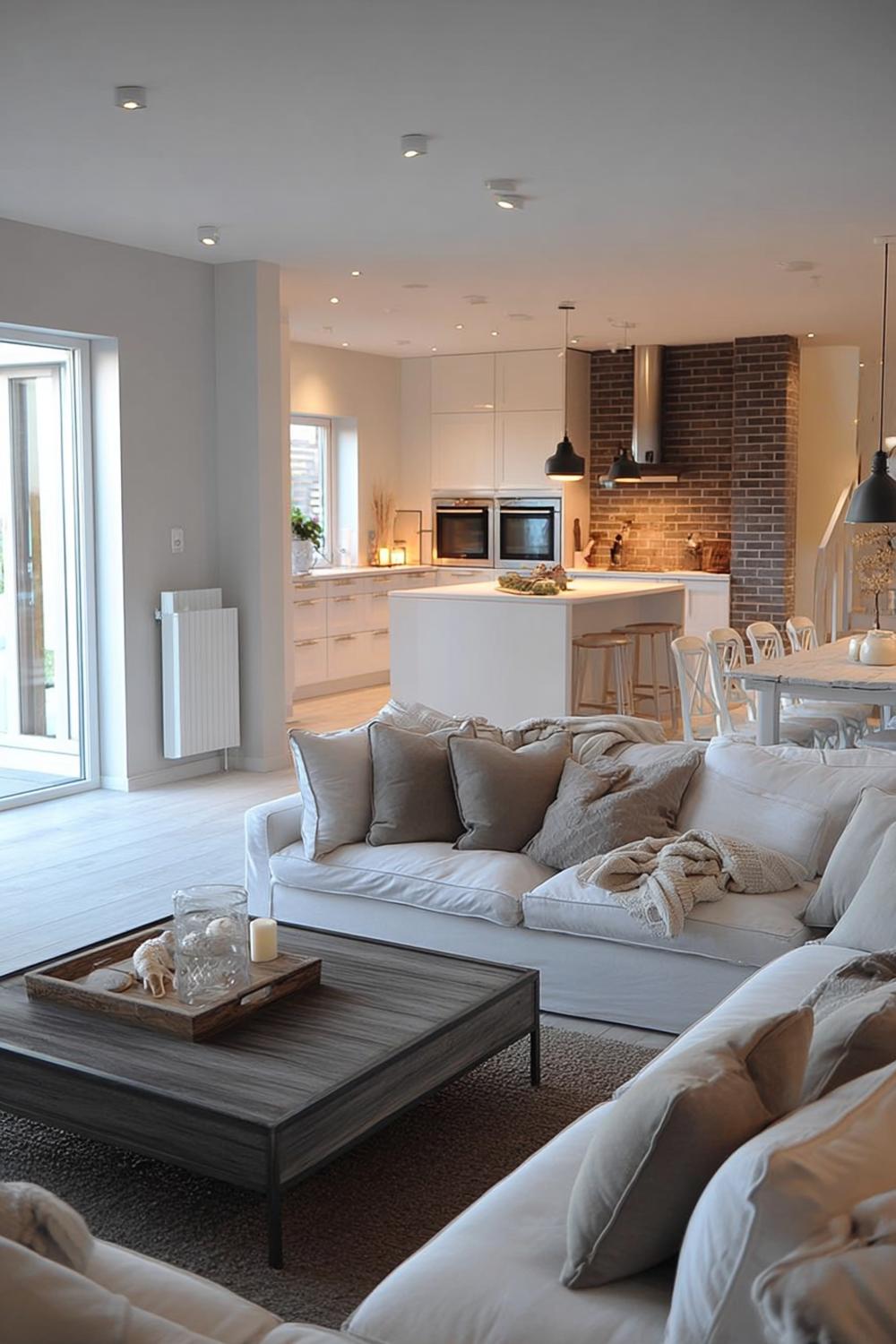
Who says you need actual vintage brick when modern veneers look virtually identical at a fraction of the cost? This textural element bridges the gap between industrial edge and homey comfort.
The rough surface creates acoustic interest too – sound bounces differently off brick than drywall, adding subtle dimension to your space’s ambiance. In the kitchen zone, brick provides a bulletproof backsplash that only gets better with age and cooking splatters (seriously, the patina adds character).
Meanwhile, the same brick wall in your living area becomes an ever-changing canvas as light plays across its uneven surface throughout the day.
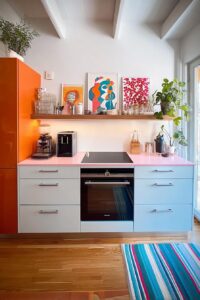
9. Integrate Open Shelving to Showcase Stylish Kitchenware For Decor
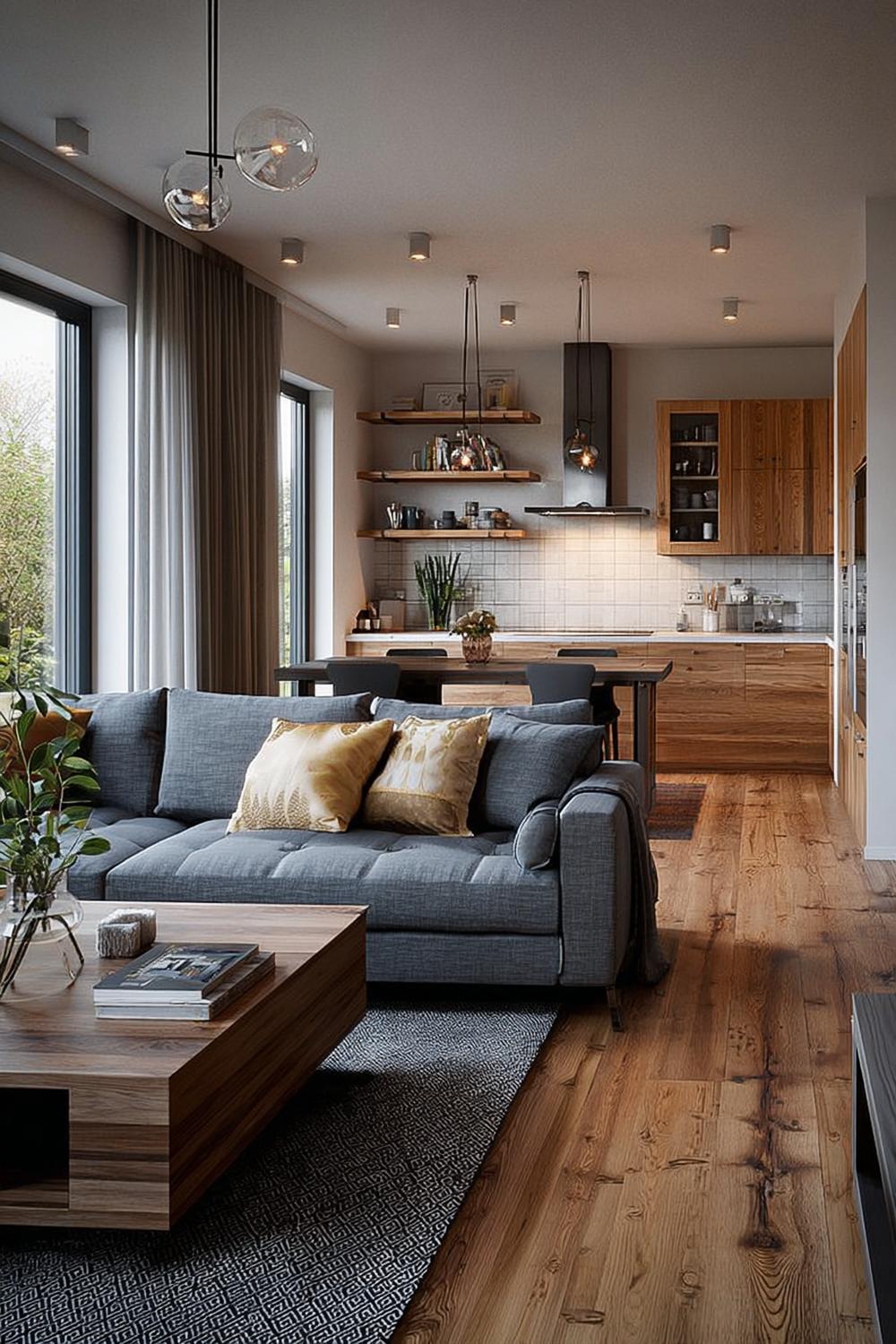
Why hide beautiful ceramics behind cabinet doors when they could double as decor? Open shelving forces you to curate your kitchenware, keeping only pieces that earn their visible real estate.
The transparency keeps sight lines open – crucial in combo spaces – while floating shelves seem to hover rather than imposing bulk. Display your collection of vintage teacups, stack those handmade bowls you bought on vacation, or line up spice jars like a rainbow.
Just remember: this storage style demands discipline since every misplaced mug becomes part of your living room view.
Ready to embrace the beauty of everyday objects, or does the thought of constant tidying make you nervous?
10. Blend Soft Textures with Sleek Surfaces For Cozy Open Concept

Like a cashmere sweater paired with leather boots, mixing plush and polished creates sophisticated tension. Your marble countertops and stainless steel appliances need the counterpoint of a tufted ottoman or bouclé accent chair.
Imagine running your hand from a cool quartz surface to a nubby linen cushion – that tactile journey adds richness no single texture could achieve. The interplay prevents your space from feeling too cold (all hard surfaces) or too cluttered (all soft furnishings).
Don’t go overboard though – too many competing textures create visual chaos that’s exhausting to live with.
11. Position a Sectional Sofa to Define Living Area in Open Concept
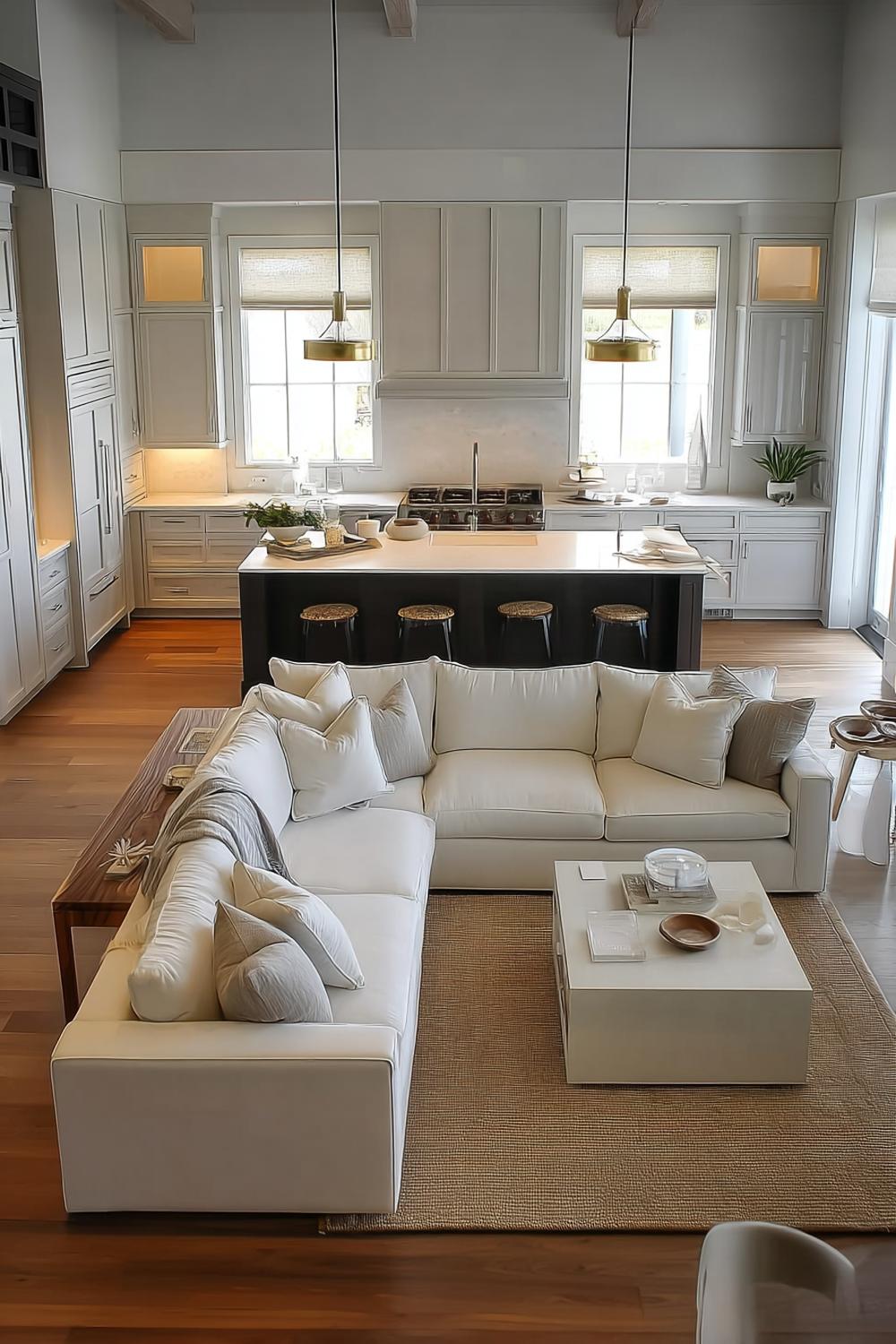
Forget walls – sometimes all you need is a well-placed L-shaped sofa to say “the kitchen ends here, folks.” The beauty lies in how a sectional creates boundaries while keeping conversations flowing between cook and guests.
Historically, furniture placement followed walls religiously, but floating your sectional creates a room within a room. The back of the sofa becomes an implied wall, perhaps topped with a narrow console table for extra functionality.
This arrangement works particularly well when you angle the sectional slightly, softening the division between spaces.
Time to liberate your furniture from wall-hugging habits and let it define your space instead.
12. Highlight Mixed Wood Tones to Add Warmth and Texture For Small Apartment
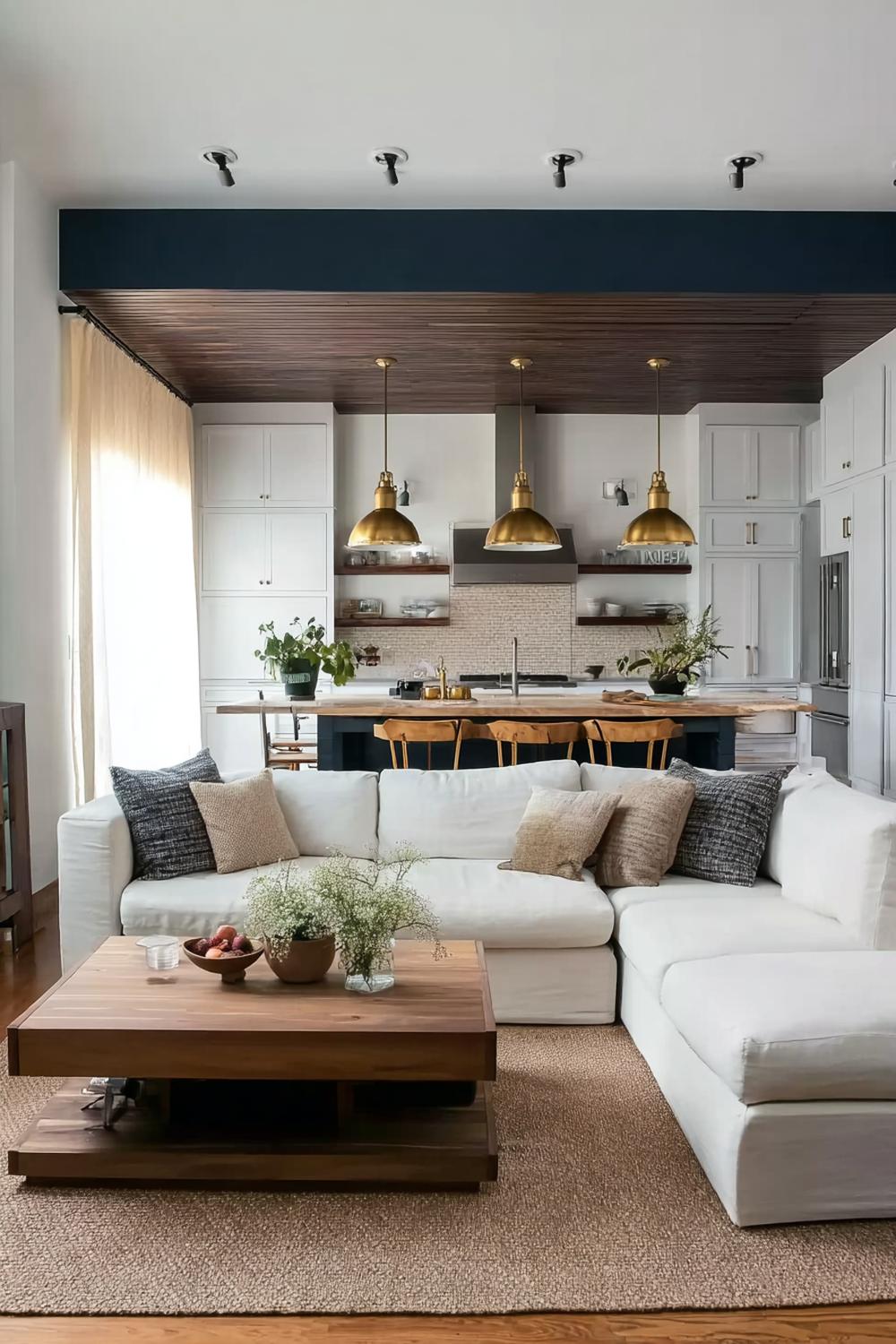
You’ve probably heard the old rule about never mixing wood tones – forget it. Combining light oak floors with walnut furniture and perhaps a pine accent piece creates layers of warmth.
The variety prevents that matchy-matchy catalog look while giving your eye interesting places to rest as it travels through the space.
13. Introduce Geometric Ceiling Design to Enhance Open Concept

Most people forget to look up, which seems odd given how much ceiling space influences a room’s feel. Coffered sections, painted geometric patterns, or even just strategic beam placement can subtly zone your combo space.
The ceiling becomes a map of sorts – perhaps wood beams over the living area while the kitchen stays smooth and white. This overhead architecture creates invisible boundaries that your brain registers without conscious thought. The shadows cast by these elements shift throughout the day, adding movement to what could otherwise feel static.
Consider how white kitchen designs emphasize airy, functional spaces with seamless ceiling transitions that echo across open concept layouts.
Combining these design strategies naturally leads many homeowners to invest in a home coffee bar setup to elevate their morning routine within these beautifully integrated spaces. Whether you’re designing a living room and bedroom combo or refining your kitchen layout, thoughtful zone definition remains essential.
14. Create Visual Interest with Art Gallery Wall For Open Concept
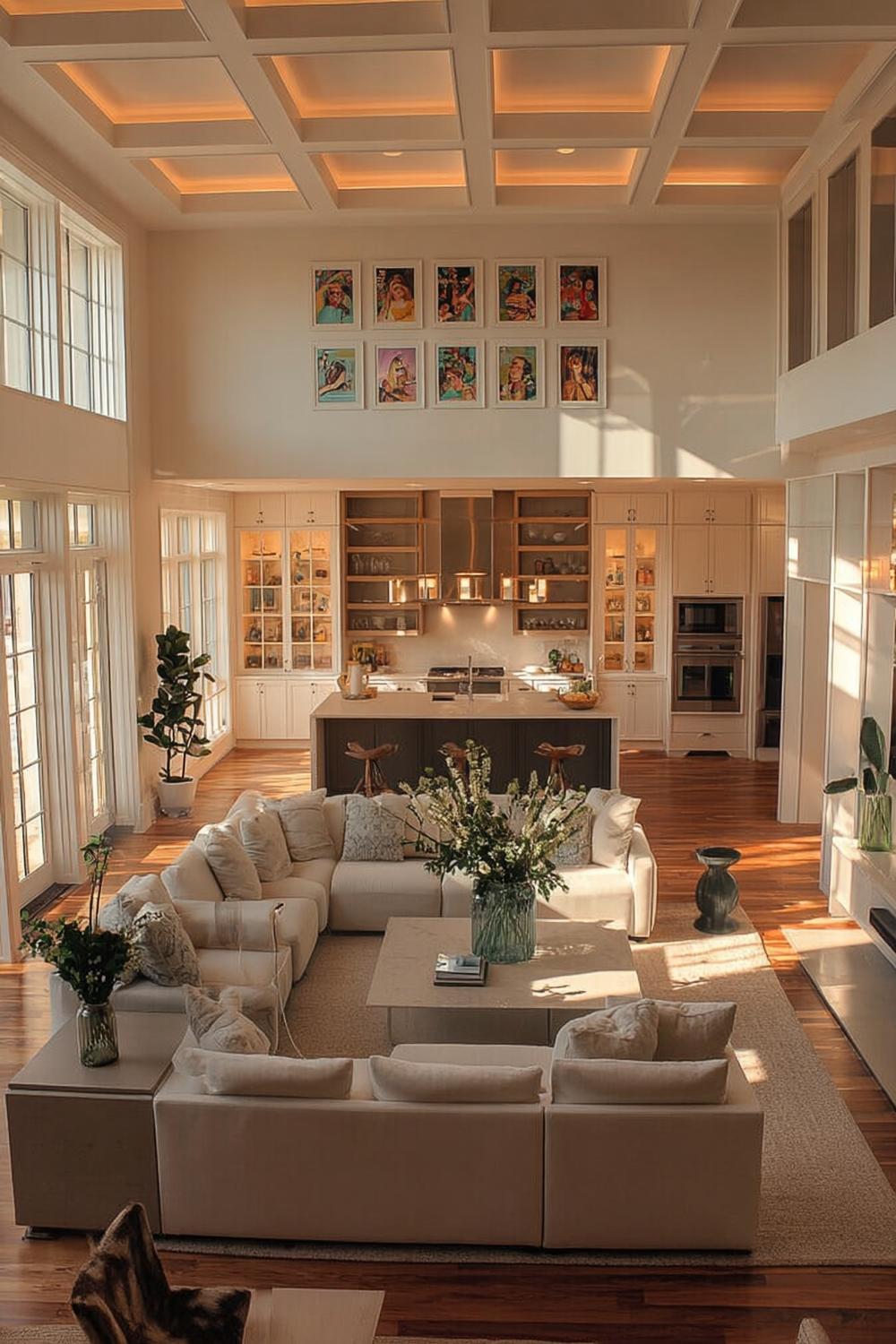
If you’re going to stare at the same wall from both your couch and your cutting board, it better be worth looking at. A thoughtfully curated gallery wall serves as a focal point that belongs to neither kitchen nor living room exclusively.
Mix family photos with abstract prints, maybe throw in a vintage mirror or sculptural piece – the variety keeps your eye moving while you chop vegetables or channel surf. The gallery wall in my friend’s apartment includes everything from her grandmother’s cross-stitch to concert posters, creating conversation pieces visible from everywhere.
One well-composed gallery wall beats scattered art that never quite comes together.
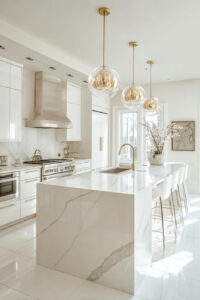
15. Highlight Sleek Gold Pendant Lights to Define Kitchen Island For Divider
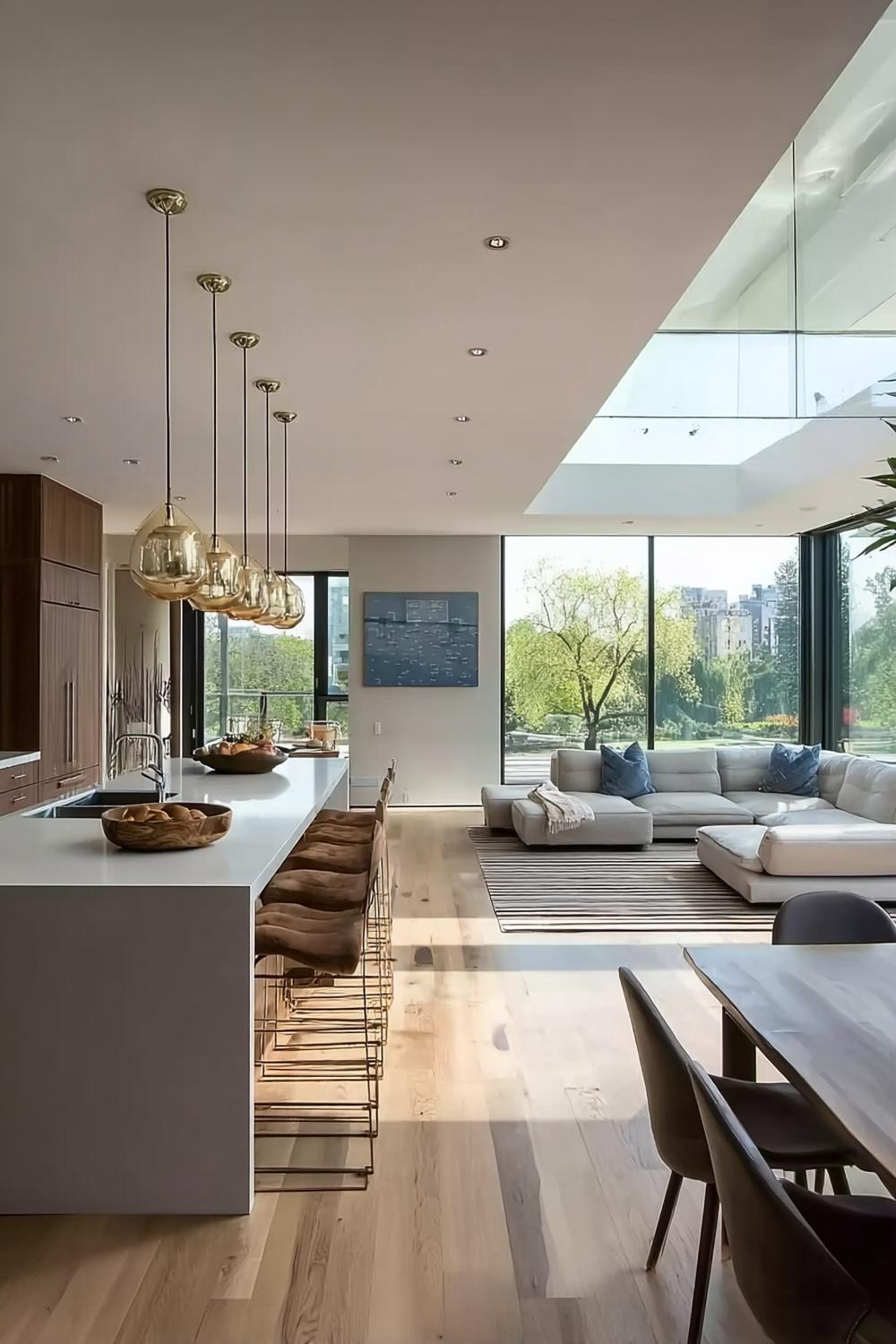
Here’s something interior designers rarely mention: brass and gold fixtures age beautifully, developing character that chrome never achieves. Those sleek gold pendants you hang today will patina subtly over time, growing richer rather than just older.
The warm metallic glow softens the sometimes harsh transition between task-focused kitchen lighting and ambient living room illumination. Watch how gold fixtures catch and reflect both natural and artificial light differently throughout the day – morning sun makes them gleam while evening lighting turns them molten.
With this final layer of metallic warmth, your combo space transforms from mere open plan to thoughtfully integrated living.
Conclusion
Your living room and kitchen combo holds more potential than you might realize – it’s not about working around limitations but embracing the possibilities of connected living. Whether you start with a black kitchen aesthetic or simply swap out those builder-grade pendants for something with personality, each change ripples through both spaces.
The beauty of combo living lies in its flexibility; tomorrow’s dinner party flows as naturally as this morning’s quiet coffee. So pick one idea that resonates, implement it this weekend, and watch how it transforms not just your space, but how you live in it.