
Transforming your backyard into a cooking and entertaining hub changes how you live during warmer months. An outdoor kitchen extends your home’s footprint while creating a dedicated zone for grilling, dining, and gathering with family and friends.
These spaces blend functionality with style, turning ordinary patios into culinary retreats. The right design choices can make your outdoor kitchen feel like a natural extension of your indoor living areas.
1. Install a Sleek Stainless Steel Grill for Modern Outdoor Cooking
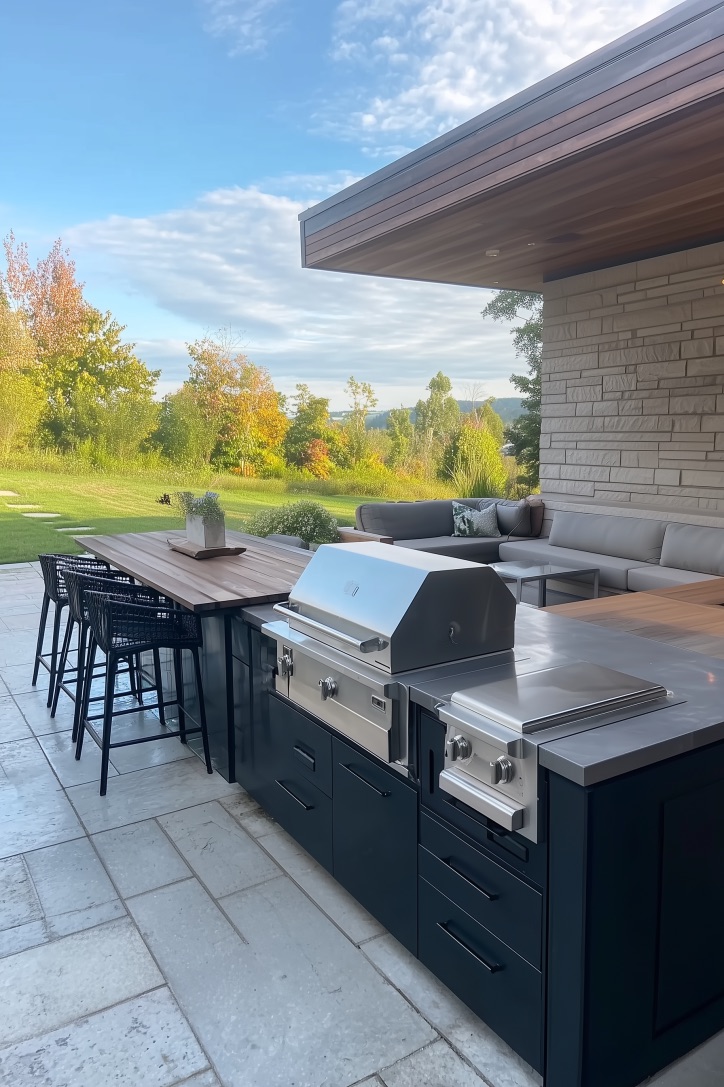
What defines a truly contemporary outdoor kitchen more than gleaming stainless steel catching the afternoon sun? A professional-grade stainless steel grill anchors your cooking space with clean lines and unmistakable presence.
The reflective surface bounces light around your patio while the material itself resists rust and weather damage season after season. You’ll find yourself spending more time outside, flipping burgers or searing steaks, simply because the equipment makes cooking feel effortless and professional.
2. Opt for Stone Walls to Create a Rustic Ambience
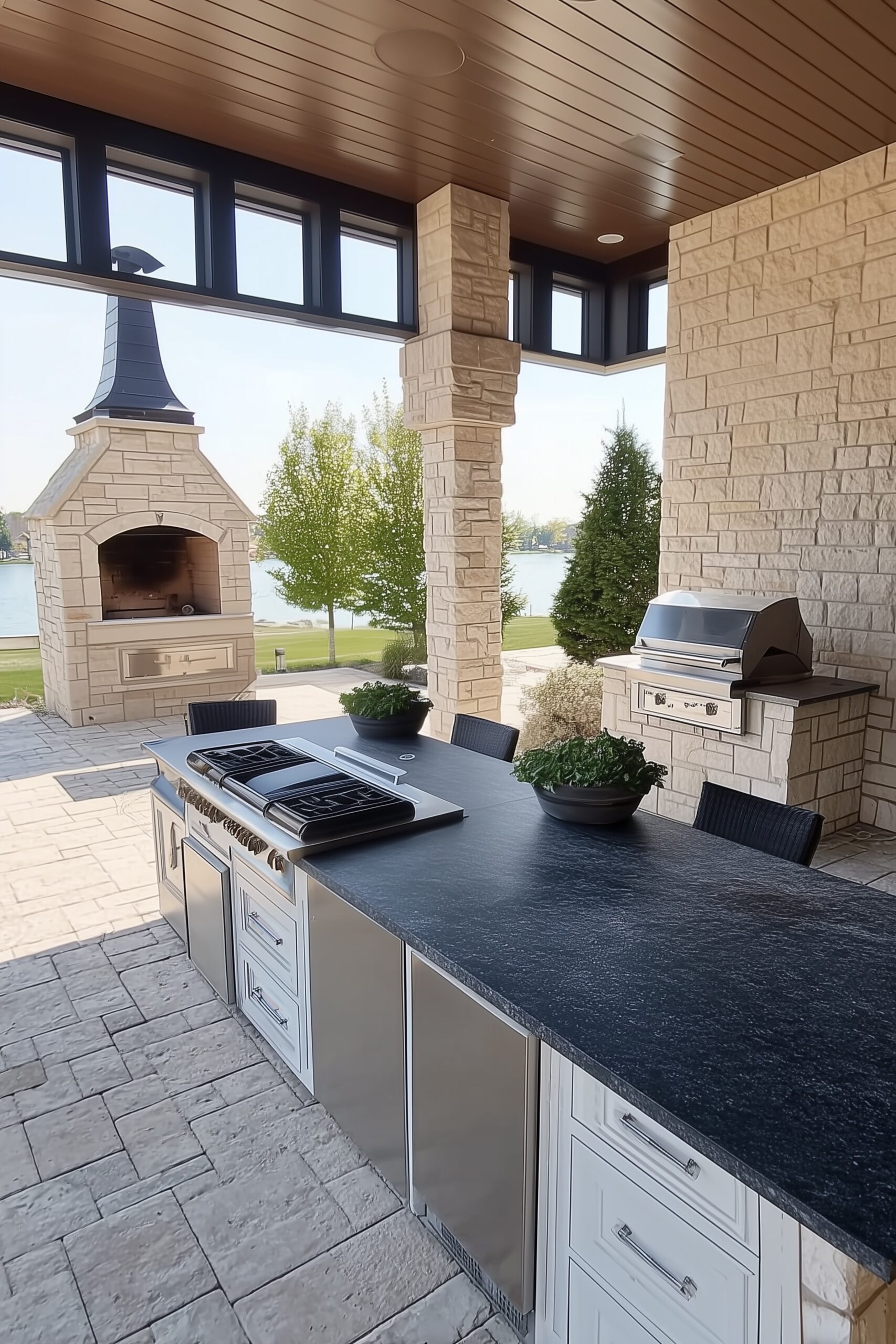
Stone walls might seem like relics from another era, yet they’re experiencing a remarkable comeback in outdoor kitchen design. The texture and weight of natural stone instantly grounds your space, creating boundaries that feel permanent rather than temporary.
Beyond aesthetics, stone walls offer genuine thermal benefits – they absorb heat during the day and radiate warmth as evenings cool. This natural climate control extends your comfortable outdoor hours without any electrical input.
Be cautious about mixing too many stone types in one space, though. A jumble of granite, limestone, and slate can look more like a geology exhibit than a cohesive design.
3. Incorporate Wicker Dining Chairs for Cozy Patio Gatherings
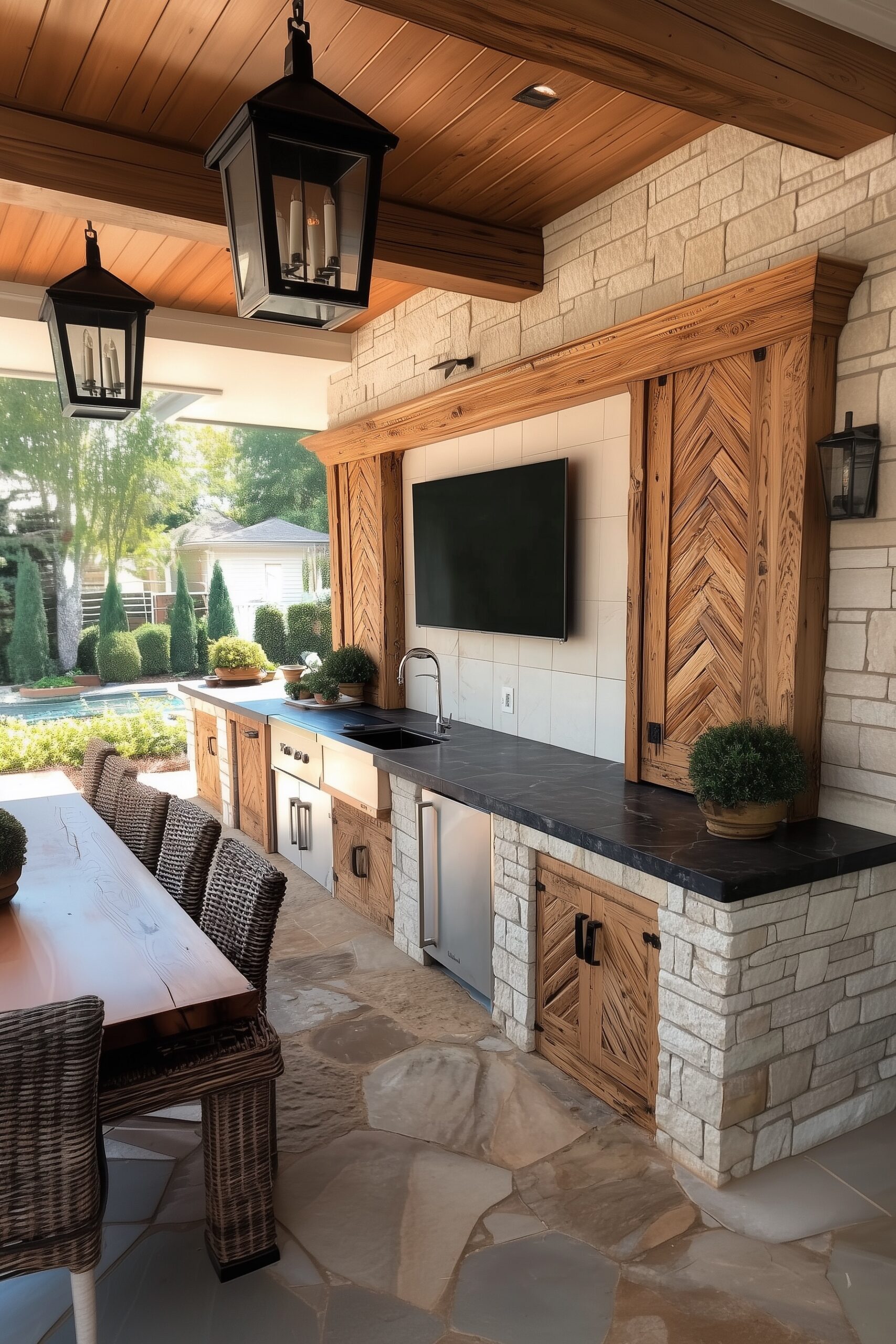
Building on that stone foundation we just discussed, you’ll need seating that balances durability with comfort. Wicker dining chairs bring a relaxed, almost vacation-like atmosphere to your outdoor meals.
Modern wicker resists fading and moisture far better than the brittle versions from decades past. The woven texture adds visual interest without overwhelming other design elements, and these chairs typically weigh less than metal alternatives, making rearrangement simple when you’re hosting different sized groups.
Some manufacturers now offer wicker with UV-resistant coatings that maintain color for years.
This flexibility flows naturally into the next consideration: how much workspace you actually need for meal preparation.
4. Maximize Counter Space for Effortless Food Prep in Backyard Kitchens
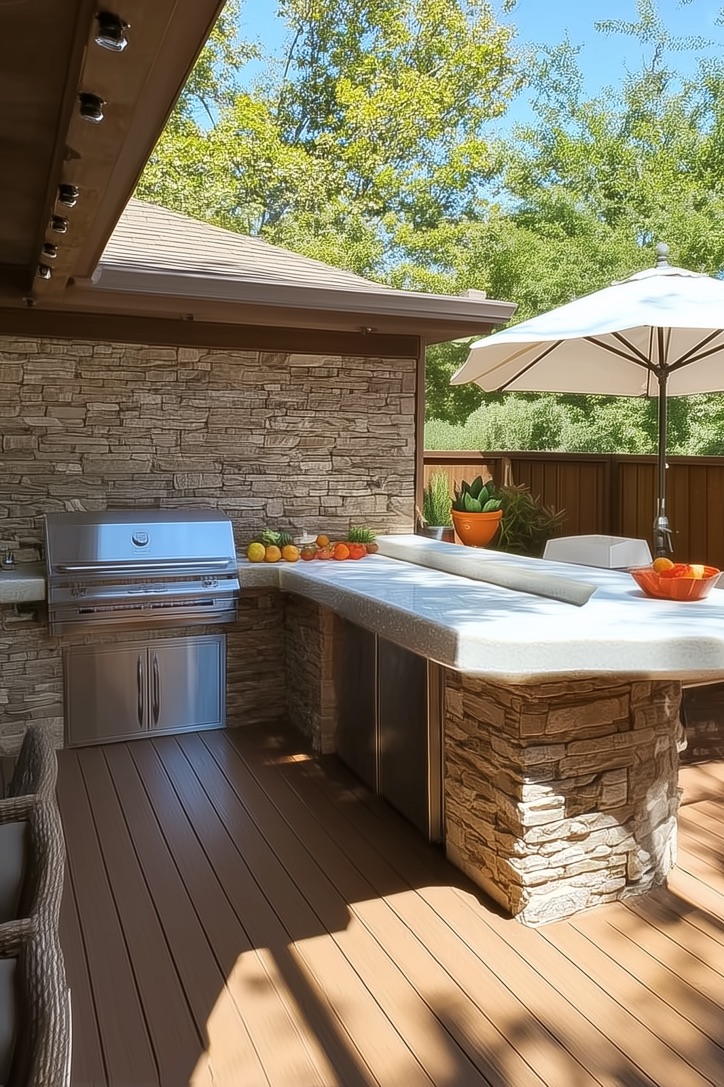
Indoor kitchens overflow with counter space, while outdoor setups often leave you juggling plates on the grill lid. This disparity creates unnecessary frustration when you’re trying to prep vegetables, arrange serving platters, or simply set down a drink.
Picture yourself hosting a weekend barbecue with burgers sizzling, corn ready to shuck, and salad ingredients waiting for assembly. Ample counter space transforms this scenario from chaotic to choreographed – you move smoothly between tasks without searching for an empty spot to work.
L-shaped or U-shaped configurations often provide the most usable surface area.
Consider materials like granite or concrete that handle heat, moisture, and food prep without constant worry. Some designers even incorporate different counter heights – standard height for food prep, bar height for casual dining – within the same outdoor kitchen footprint.
5. Highlight Rattan Pendant Lighting for Natural Outdoor Charm
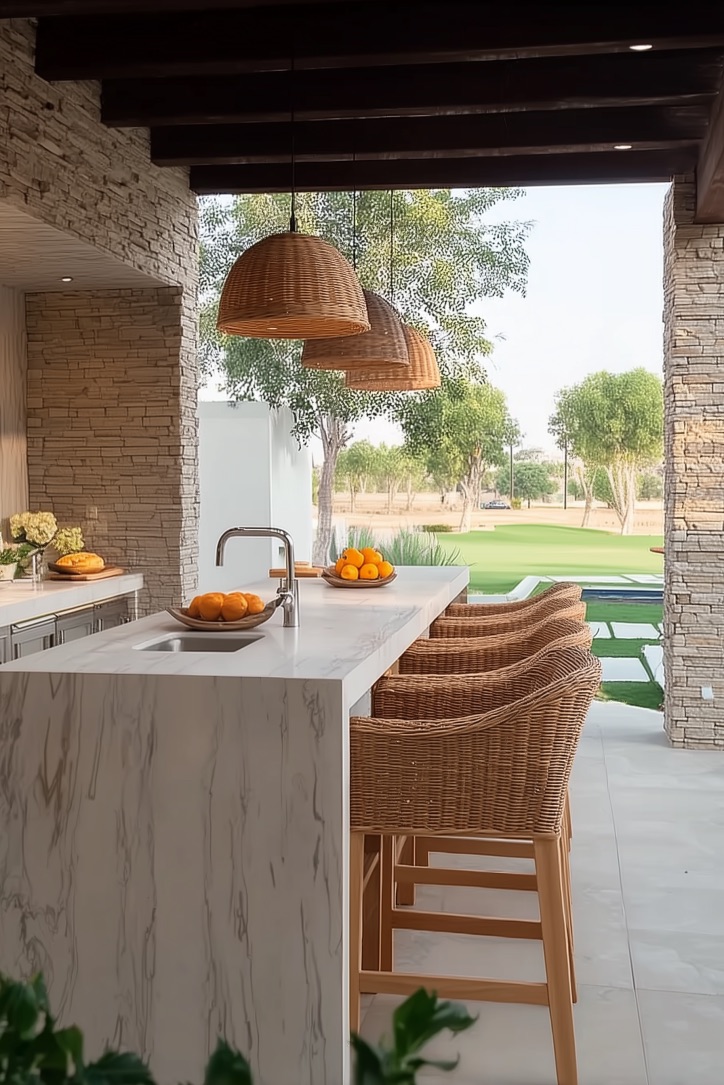
Forget the harsh floodlights that make your patio feel like a parking lot. Rattan pendant lights cast a warm, dappled glow that makes evening gatherings feel intimate rather than exposed.
The woven natural fiber complements nearly any outdoor style, from coastal to bohemian to modern farmhouse. These fixtures have evolved beyond simple shades – you’ll now find geometric designs, oversized globes, and layered configurations that serve as sculptural elements during daylight hours before illuminating your space after sunset.
6. Showcase Potted Greenery for a Simple Nature Inspired Touch
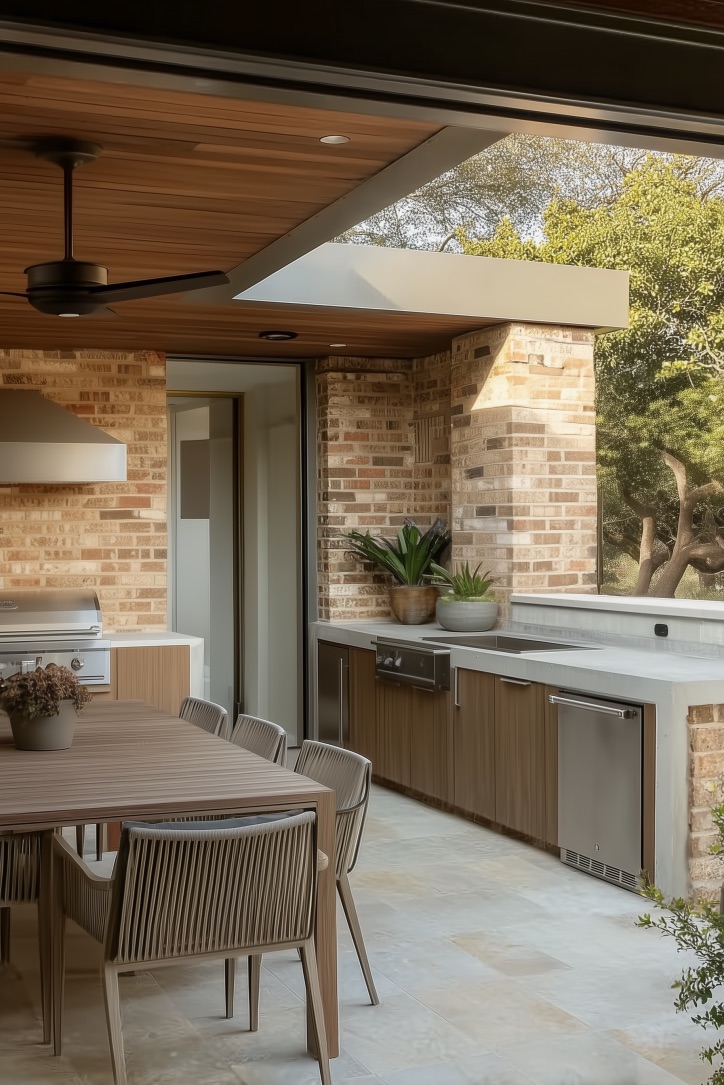
Plants don’t just fill empty corners – they soften hard surfaces and blur the line between built environment and garden. Potted greenery lets you control exactly where you want that softening effect without committing to permanent landscaping.
Consider how a restaurant in Santa Fe uses large terra cotta pots filled with ornamental grasses to define the edges of their outdoor dining area. The plants sway in the breeze, creating movement and privacy simultaneously.
You might cluster several smaller pots with herbs like rosemary and thyme near your prep area, giving you fresh ingredients within arm’s reach while releasing fragrance when brushed.
Does your outdoor kitchen feel more like an extension of your living space or a utilitarian cooking zone? The answer often lies in how you’ve incorporated living elements.
7. Design with a Covered Roof for Year Round Outdoor Enjoyment
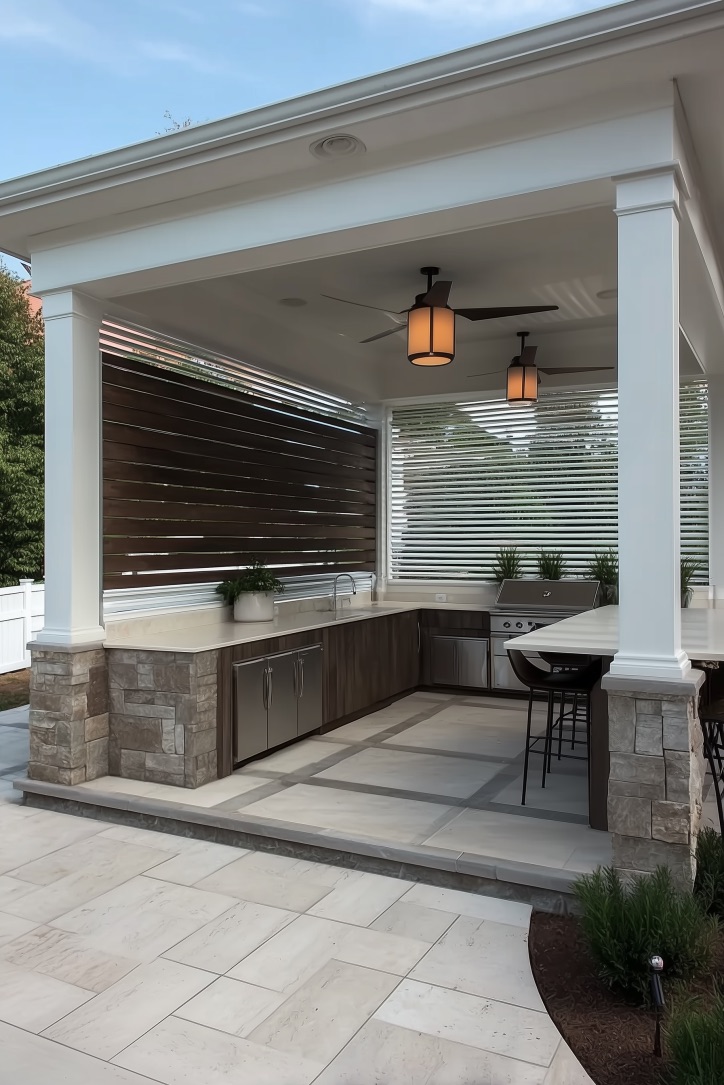
A covered roof acts as an umbrella that never needs folding – a permanent shelter that transforms your outdoor kitchen from seasonal amenity to year-round destination. Rain or intense sun no longer dictate when you can use the space.
The structure itself creates a room-like feeling without walls, defining your kitchen zone while maintaining open-air benefits. Materials range from traditional shingled roofs that match your home to modern pergolas with retractable canopies.
Some homeowners install ceiling fans beneath the cover, circulating air on humid days and extending comfortable cooking hours well into summer afternoons.
Here’s a useful tip: slope your roof slightly and include gutters to direct water away from cooking and dining areas. Standing water or drips onto hot grills create both safety hazards and annoyances.
8. Arrange an L Shaped Layout for a Functional Patio Kitchen
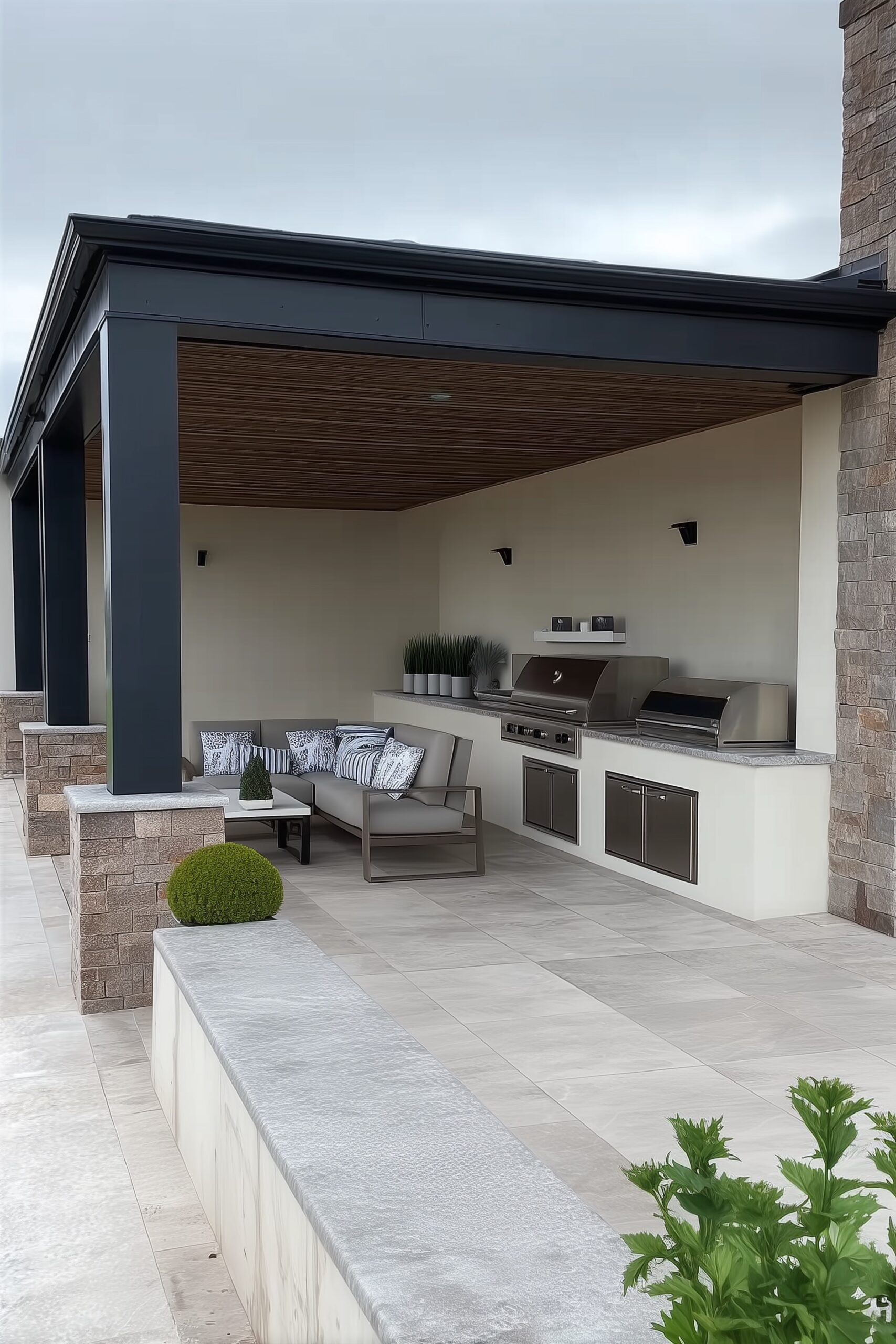
If you’re working with a corner location or want to maximize workflow efficiency, an L-shaped configuration organizes your outdoor kitchen into distinct zones. The layout naturally separates cooking from prep work while keeping everything within a few steps.
One leg of the L typically houses the grill and other heat-producing appliances, while the perpendicular section accommodates refrigeration, sinks, and prep surfaces. This arrangement also creates a partial barrier that shields your cooking area from wind – helpful when you’re trying to maintain consistent grill temperatures.
Expect this layout to gain even more traction as homeowners realize outdoor kitchens function best when they mirror indoor kitchen work triangles. The L-shape may well become the default configuration for serious outdoor cooks.
9. Select Warm Gray Decking Boards for Subtle Outdoor Sophistication
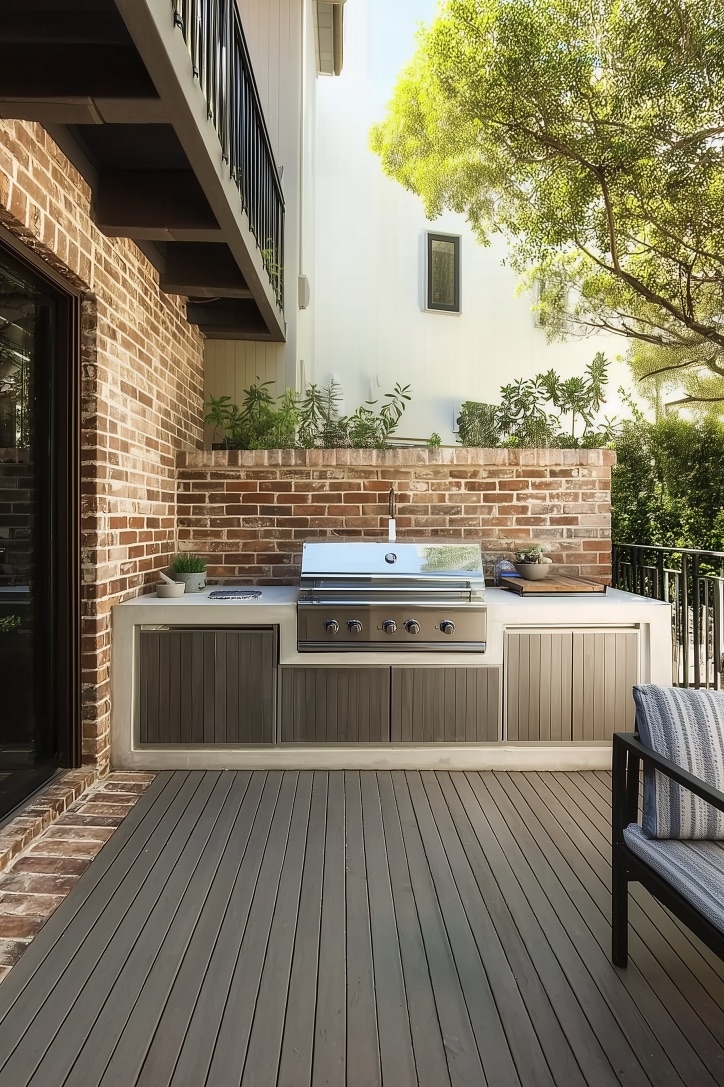
Think beyond weathered wood tones when choosing your decking surface. Warm gray boards create a neutral foundation that makes colorful furnishings and greenery pop without competing for attention.
These muted tones hide dirt and pollen better than stark white or very dark surfaces, reducing your maintenance burden throughout the season. The color works equally well with contemporary stainless steel appliances and rustic stone elements – a versatility that proves valuable if you change your decor over time.
Modern composite decking in warm gray shades resists splintering, fading, and moisture damage while maintaining that sophisticated appearance year after year.
Start comparing samples in your actual outdoor space rather than under store lighting. Natural daylight reveals undertones that artificial lighting masks.
10. Feature Textured Metal Backsplashes for a Modern Kitchen Statement
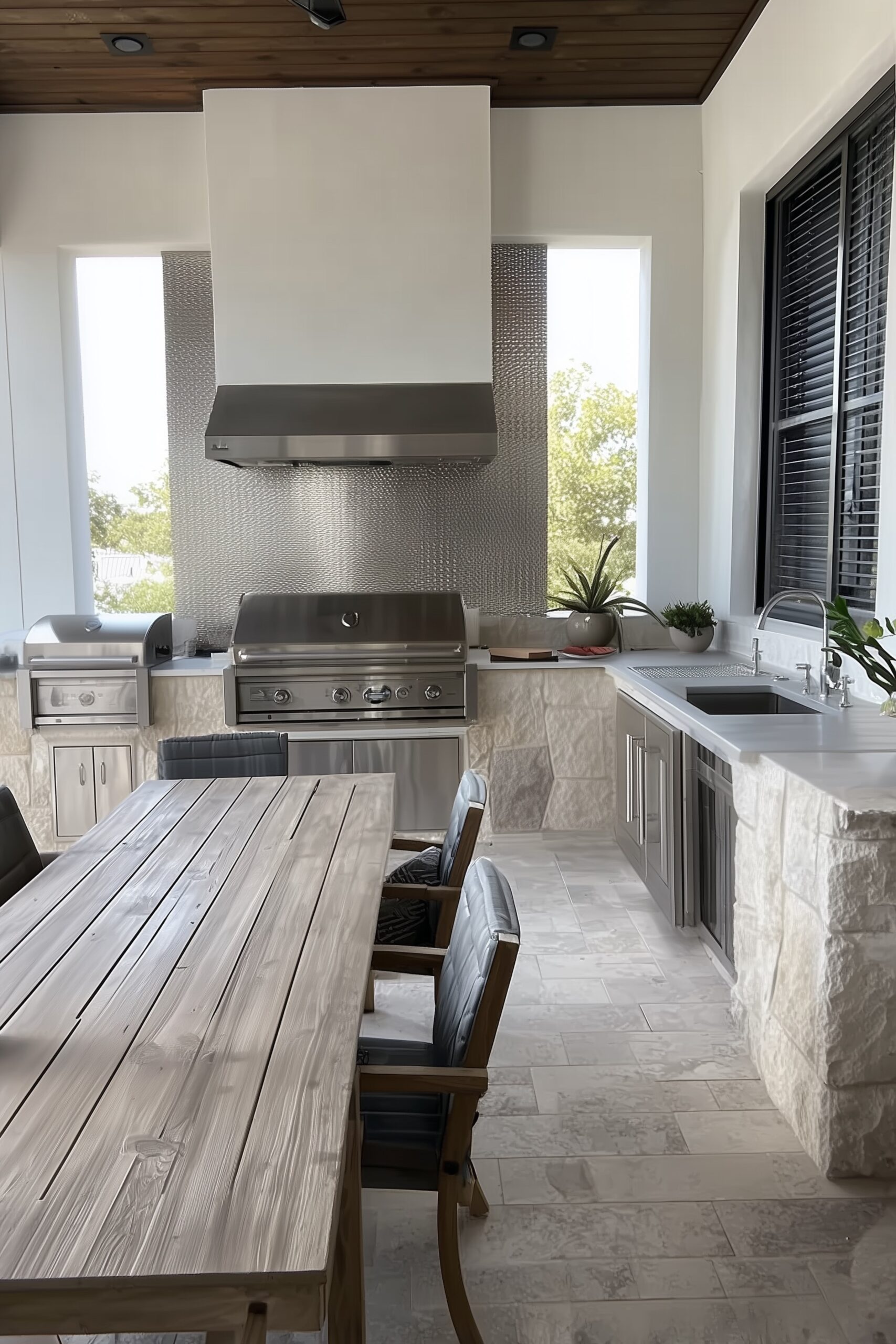
Most people focus on countertops and appliances, but the vertical surfaces behind your cooking area deserve equal consideration. Textured metal backsplashes – think hammered copper, brushed steel, or corrugated aluminum – add dimension that flat tile simply can’t match.
These materials emerged from industrial and commercial kitchens where durability outweighed aesthetics. Now they’ve crossed into residential design, bringing that professional-grade toughness with unexpected visual appeal.
Metal backsplashes clean easily with a simple wipe-down, resist heat from nearby grills, and won’t crack like tile during freeze-thaw cycles.
Don’t underestimate maintenance requirements, though. Copper develops patina over time – beautiful if you want that aged look, problematic if you prefer consistent shine. Stainless steel shows fingerprints and water spots that require regular attention.
11. Display Ceramic Tile Flooring for a Stylish Patio Kitchen
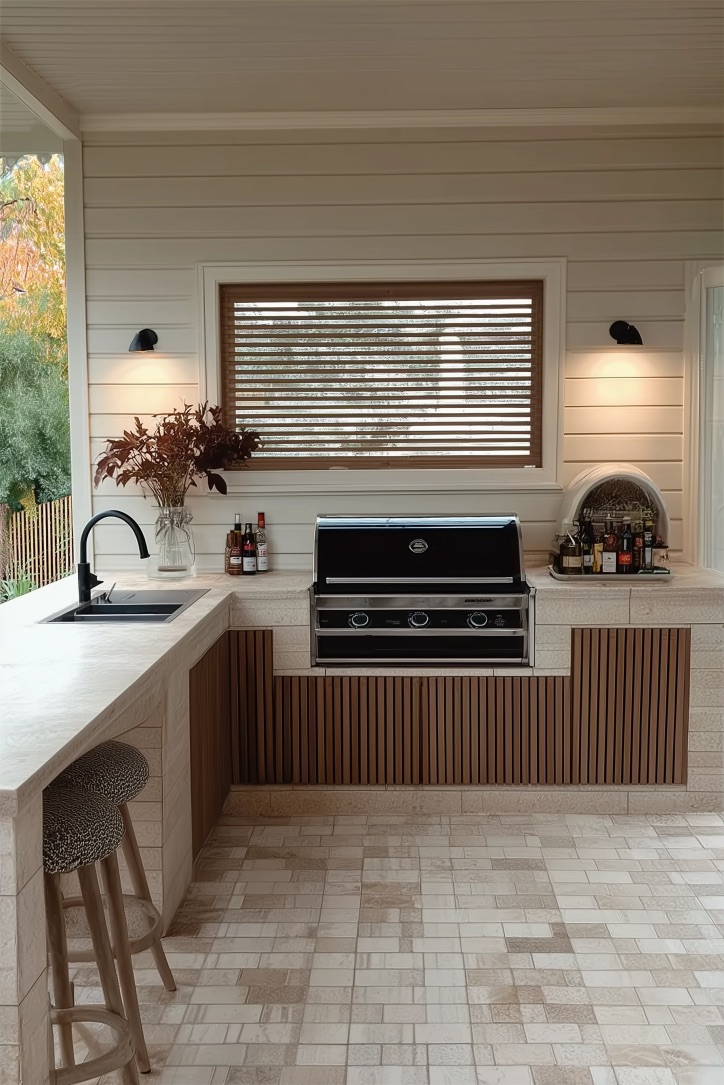
Worn pavers and cracked concrete undermine even the most beautiful outdoor kitchen setup. Ceramic tile flooring solves multiple problems simultaneously – it provides a level surface, cleans easily, and introduces pattern or color into your design.
Large-format tiles minimize grout lines where dirt accumulates, while textured surfaces prevent slipping when wet. You might choose cool blues and whites for a Mediterranean vibe, or earth tones that echo the natural landscape around your property.
The permanence of tile signals that your outdoor kitchen is a serious investment rather than a temporary setup.
12. Choose Upholstered Bar Stools for Comfort in Outdoor Kitchens
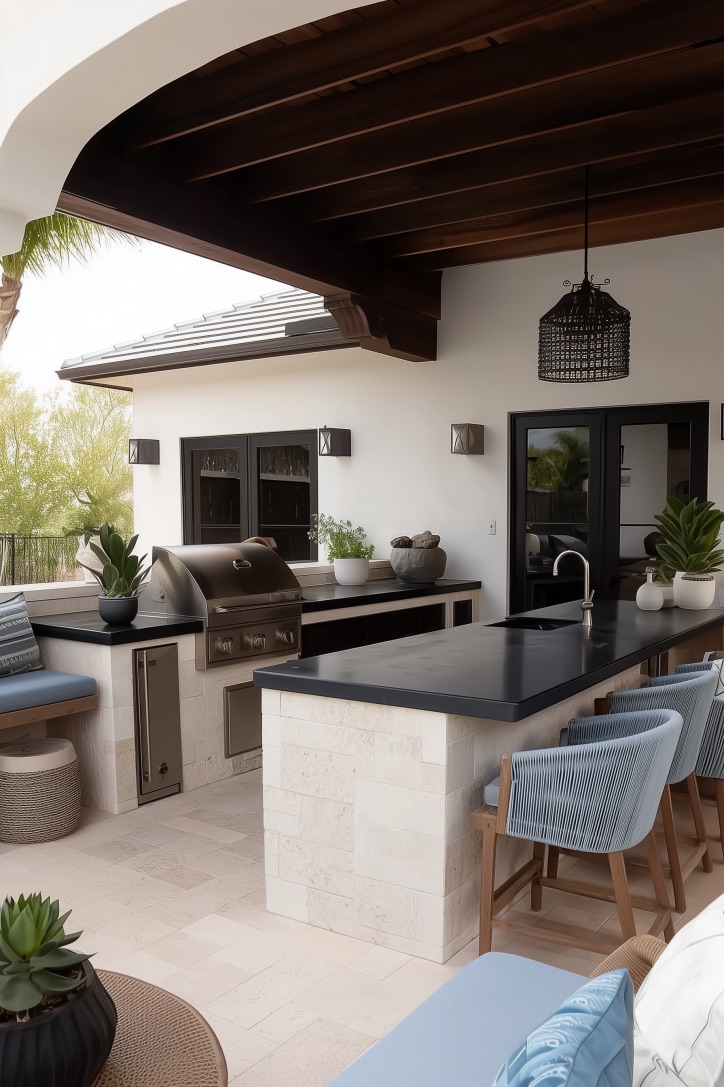
Outdoor seating has evolved dramatically beyond basic plastic chairs. Upholstered bar stools represent the latest shift toward treating outdoor spaces with the same comfort standards you’d apply indoors.
Weather-resistant fabrics now rival indoor textiles in softness and appearance while shedding water and resisting mildew. These bar stools transform your outdoor counter into a genuine gathering spot where guests linger over drinks and conversation rather than perching briefly before retreating inside.
The added cushioning matters especially during longer meals – comfort encourages people to stay, relax, and enjoy the space you’ve created.
Make this investment in comfort now, and you’ll notice how much more frequently your outdoor kitchen becomes the evening’s preferred gathering spot. Your guests will thank you with their presence.
Conclusion
Your outdoor kitchen awaits transformation from concept to reality. Start with one element that excites you most – perhaps that stainless steel grill or those inviting upholstered stools – and build outward from there.
Each addition brings you closer to a space that rivals your indoor kitchen in both function and appeal, creating memories that last long after the cooking is done.