
Many homeowners assume farmhouse kitchens require a complete renovation with shiplap walls and antique furniture. The truth is simpler: a few thoughtful touches can transform any kitchen into a warm, rustic retreat.
Modern farmhouse style blends the best of old and new. You don’t need a century-old cottage to capture that inviting, lived-in atmosphere everyone craves.
1. Emphasize Wooden Ceiling Beams for Rustic Warmth
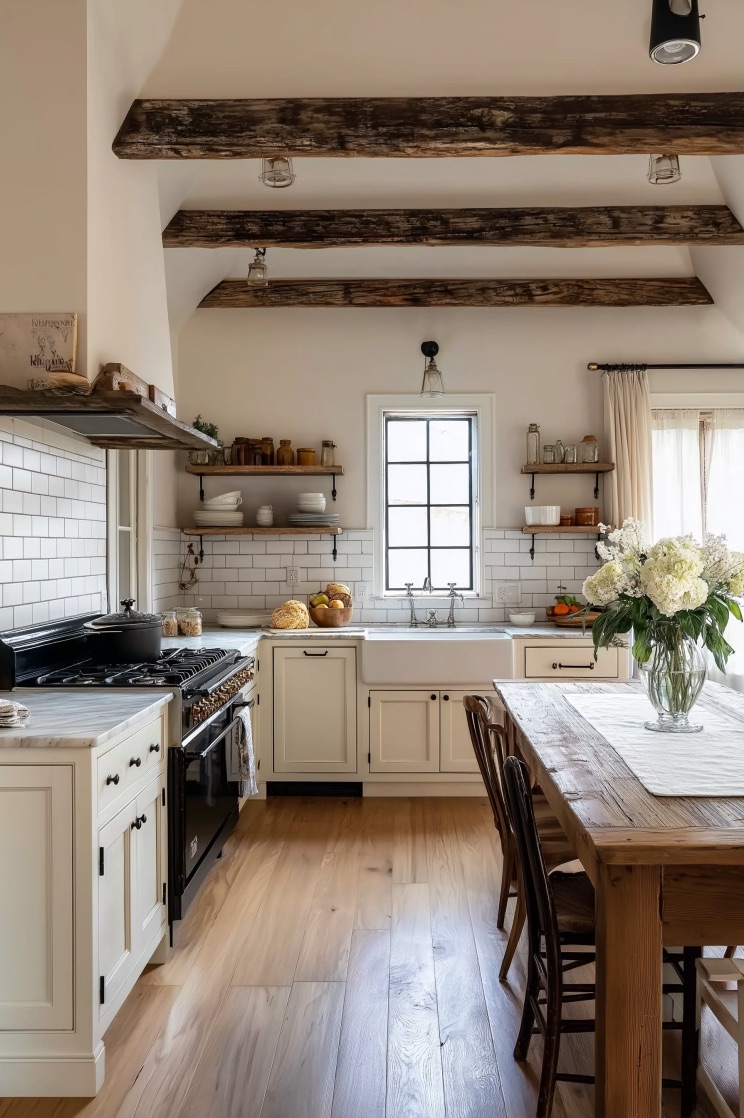
What draws your eye upward in a truly memorable farmhouse kitchen? More often than not, it’s the exposed wooden beams stretching across the ceiling, their weathered grain telling stories of craftsmanship and age.
Picture yourself standing in your kitchen on a Sunday morning, coffee in hand, sunlight filtering through the windows and catching the rich texture of reclaimed wood overhead. These beams anchor the entire space, creating a sense of shelter and history that painted drywall simply can’t match. They ground you.
The beauty lies in their versatility – dark walnut beams add drama against white ceilings, while lighter pine creates an airy, Scandinavian-farmhouse fusion. You might even leave the original hardware visible: iron brackets, wooden pegs, or metal straps that hint at the structural purpose beams once served.
Each knot and crack becomes a design feature rather than a flaw.
2. Showcase Open Shelving for Effortless Country Charm

Open shelving often gets dismissed as impractical, collecting dust and requiring constant organization. Yet this overlooked approach brings an authenticity to farmhouse kitchens that closed cabinets never quite achieve.
The effect is immediate and welcoming. Your everyday dishes, vintage crockery, and glass jars filled with pasta or dried beans become part of the decor rather than hidden away. There’s an honesty to this display – you’re showing what you actually use, creating a kitchen that feels lived-in rather than staged for a magazine shoot.
Consider floating shelves made from thick butcher block or reclaimed barn wood. As you transition from upper cabinets to open storage, you’ll notice how the space feels larger, less cluttered paradoxically, even with items on display. The key is editing: keep what you love, what you use daily, and what tells your kitchen’s story.
3. Highlight Natural Wood Floors for Inviting Vintage Appeal
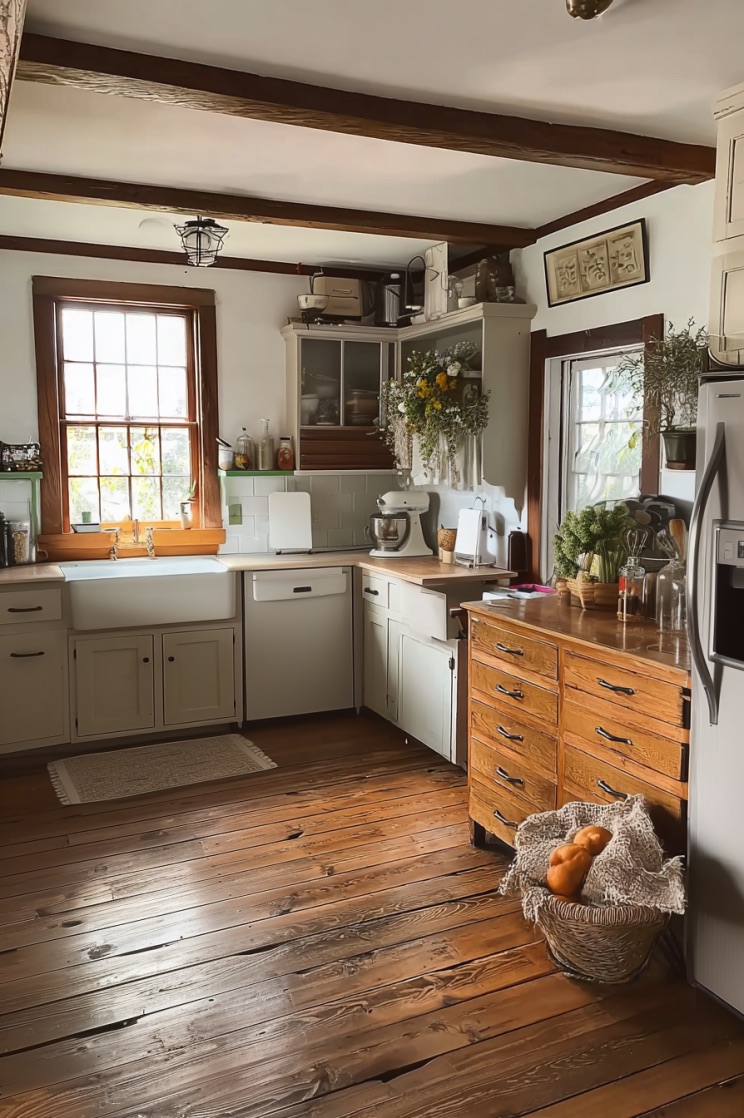
While trendy tile patterns come and go, natural wood flooring remains the foundation – literally – of timeless farmhouse design. The contrast between cold, modern materials and warm wooden planks couldn’t be starker.
Wood floors age gracefully, developing character with every scratch and scuff. That dent from a dropped cast-iron skillet? It becomes part of your home’s narrative.
Wide-plank oak or reclaimed pine boards bring an instant sense of history, their natural variations in color and grain creating visual interest that manufactured materials strain to replicate.
The patina develops over years, darkening slightly in high-traffic areas, staying lighter where your kitchen table shields it from sunlight. Each board breathes differently, expanding and contracting with the seasons in a way that makes your kitchen feel alive.
Isn’t that the essence of farmhouse living – embracing imperfection and the passage of time?
4. Incorporate Potted Herbs on Windowsills for Fresh Inspiration
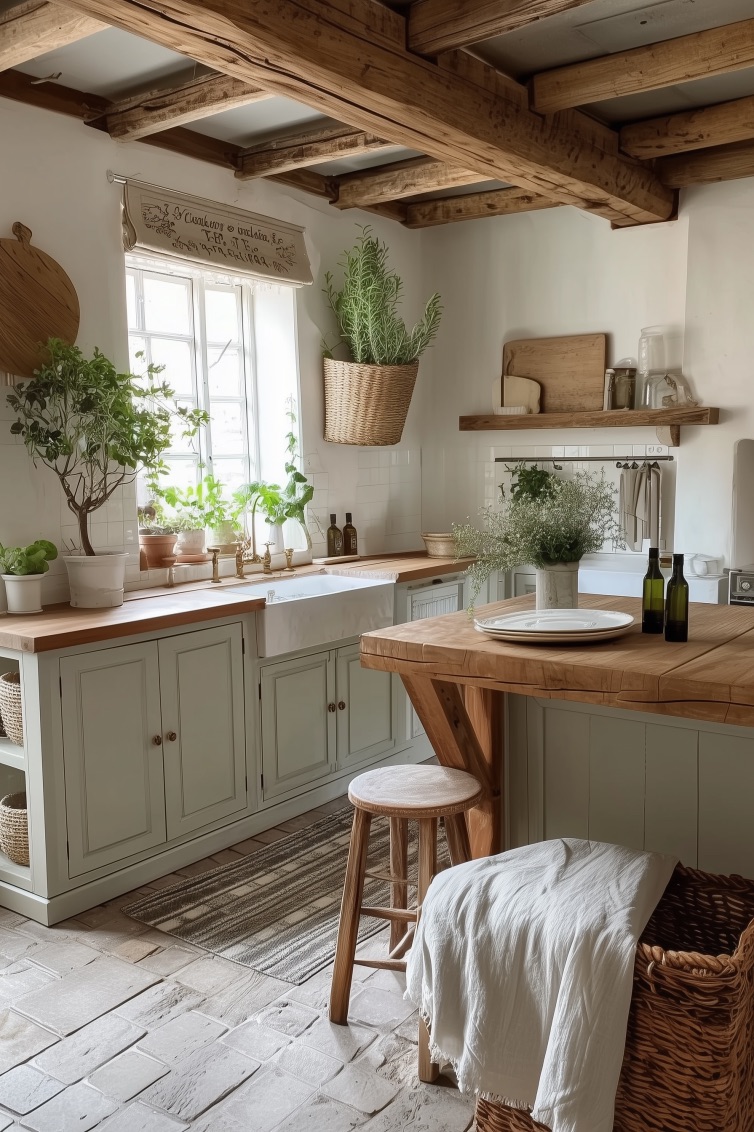
There’s a growing movement toward edible landscapes and bringing the garden indoors, and your kitchen windowsill offers the perfect microclimate for this shift. Fresh herbs aren’t just trendy – they’re a return to how kitchens functioned for centuries.
Before supermarkets sold year-round basil in plastic clamshells, cooks reached for pots of rosemary, thyme, and parsley growing right beside the sink. This practice connects you to that tradition while solving the modern problem of wilted herb bunches languishing in your crisper drawer.
Terra-cotta pots lined up along a sunny window add living texture and that earthy, rustic quality that farmhouse kitchens crave.
Here’s a practical tip: group herbs by water needs. Rosemary and thyme prefer drier soil, while basil and cilantro want more moisture. This prevents the all-too-common scenario of overwatering some while others wither from neglect.
5. Feature a Glass Paneled Pantry Door for Unique Modern Flair
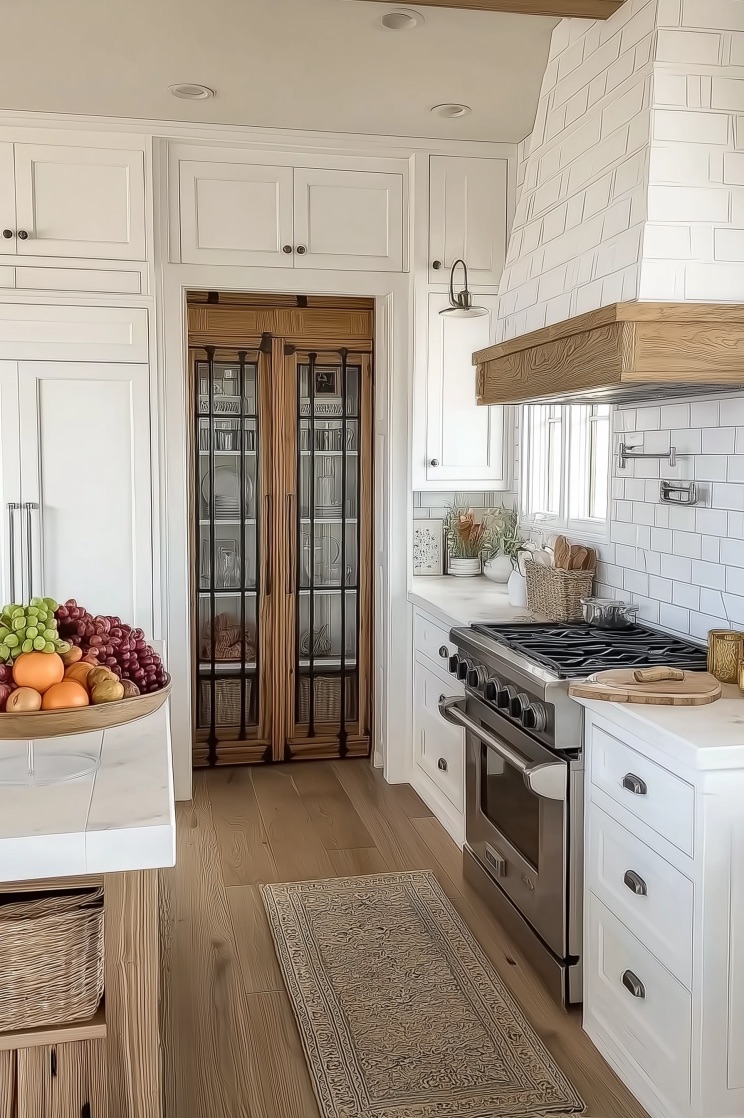
You’ve probably walked past your solid pantry door a thousand times without considering its potential. Replacing it with a glass-paneled version – perhaps with mullions creating a grid pattern – opens up exciting design possibilities.
The benefit goes beyond aesthetics. Glass panels force you to keep your pantry organized (in the best way), turning everyday staples into a curated display. Mason jars filled with flour, sugar, and grains become part of your kitchen’s visual story.
The light that filters through creates depth, making your kitchen feel more expansive while maintaining that cozy farmhouse sensibility.
As a consequence, you’ll find yourself more mindful about what you store and how you arrange it. That awareness often leads to less food waste and a more intentional approach to stocking your kitchen. The door becomes a window into your culinary life.
6. Display Black Hardware on White Cabinets for Striking Contrast

Think of farmhouse design as similar to a carefully composed photograph – it needs both highlights and shadows to create depth. White cabinets alone can feel flat, almost sterile, but add black hardware and suddenly the space gains definition.
Take a farmhouse kitchen in upstate New York, for instance, where the designer installed matte black cup pulls and hinges against crisp white shaker cabinets. The hardware draws your eye along the cabinet lines, creating visual rhythm.
Each knob becomes a small punctuation mark, breaking up the expanse of white in a way that feels both traditional and surprisingly contemporary.
This contrast continues to gain momentum in interior design circles, and it seems likely to remain relevant precisely because it’s rooted in historical precedent – old farmhouses often featured dark iron hardware against painted wood. You’re not following a fleeting trend so much as reviving a classic pairing that never really went out of style.
7. Style an Oversized Island with Cozy Stools
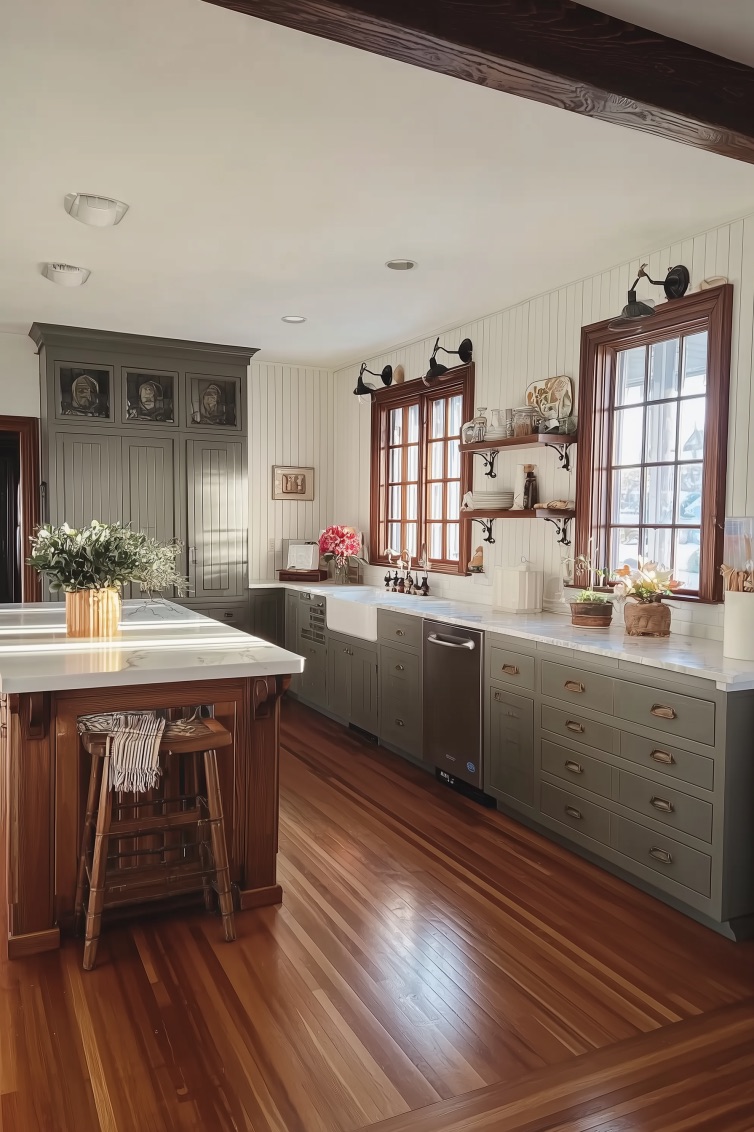
Building on the ideas we’ve explored – the wood, the openness, the welcoming imperfection – an oversized island serves as the heart where these elements converge. It’s more than a work surface; it’s where life happens.
Imagine a substantial island crafted from reclaimed wood or topped with butcher block, large enough to prep dinner on one end while kids do homework on the other. The scale matters here. A generous island (at least four feet long, though six or eight feet works even better) transforms your kitchen into a gathering space.
Pair it with three or four stools – perhaps Windsor-style wooden ones or upholstered seats in a durable linen – and you’ve created an informal dining spot that encourages lingering over morning coffee or evening wine.
Don’t settle for an island that barely fits two people. Go bigger than feels sensible, add those inviting stools, and watch how your kitchen becomes the room where everyone naturally congregates. Make this your priority if you’re renovating.
8. Arrange Fresh Florals in a Pitcher for Effortless Boho Decor
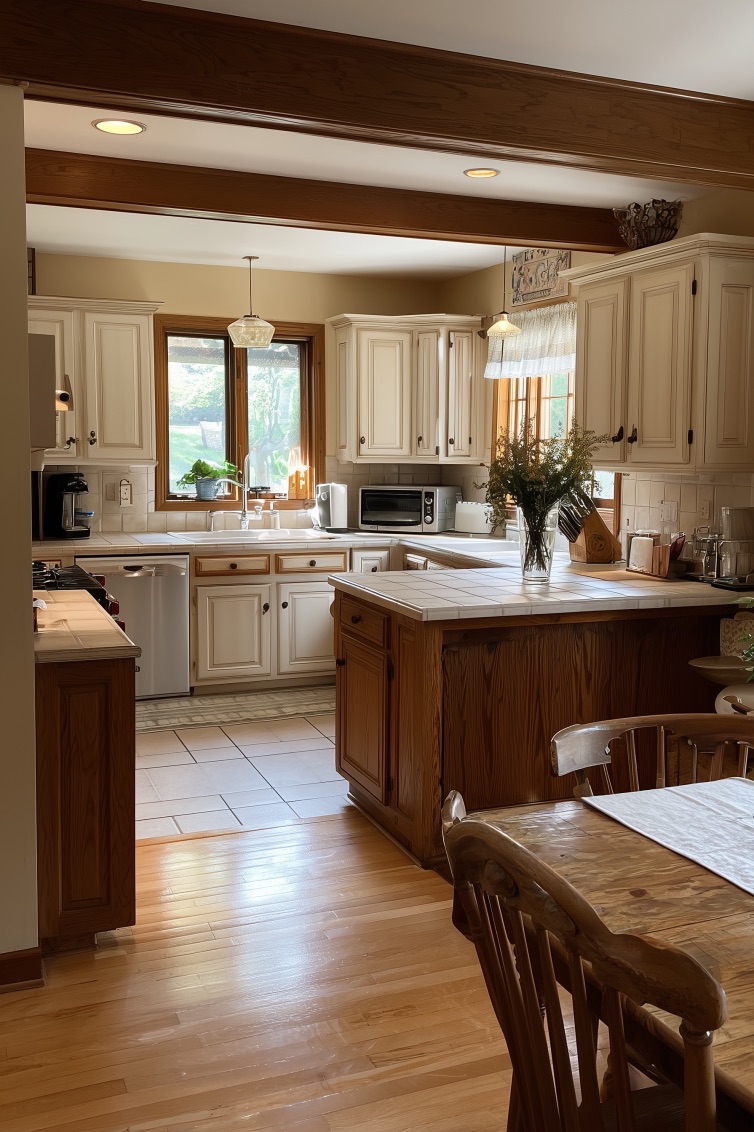
First, the good news: you don’t need expensive vases or a florist’s skill. Second, even better news: an enamelware pitcher or ceramic jug works beautifully for this purpose.
A simple arrangement of grocery-store blooms – sunflowers, daisies, or even wildflowers from your yard – instantly softens the hard surfaces of a kitchen. The pitcher itself, perhaps vintage or reproduction enamelware with a worn patina, contributes as much to the farmhouse aesthetic as the flowers.
This approach feels unpretentious, as if you simply grabbed what was blooming and stuck it in whatever container was handy.
9. Install a Statement Range for Functional Industrial Character

If you’re willing to invest in one showpiece appliance, a professional-style range could anchor your entire farmhouse design. The stainless steel and heavy grates introduce an industrial edge that balances the softer, more romantic elements.
A six-burner range with a griddle, standing 36 or even 48 inches wide, commands attention the moment you enter the kitchen. It suggests serious cooking happens here – not just reheating takeout.
The combination of modern performance and vintage-inspired design (many ranges feature retro details like brass knobs or colored enamel finishes) bridges old and new in a way that feels intentional rather than confused.
One warning, though: these ranges require proper ventilation. You’ll need a substantial hood, preferably one that makes its own design statement. Skimping on the ventilation system means dealing with cooking odors and grease buildup that undermines your carefully crafted farmhouse atmosphere.
10. Dress Windows with Striped Roman Shades for Subtle Country Texture
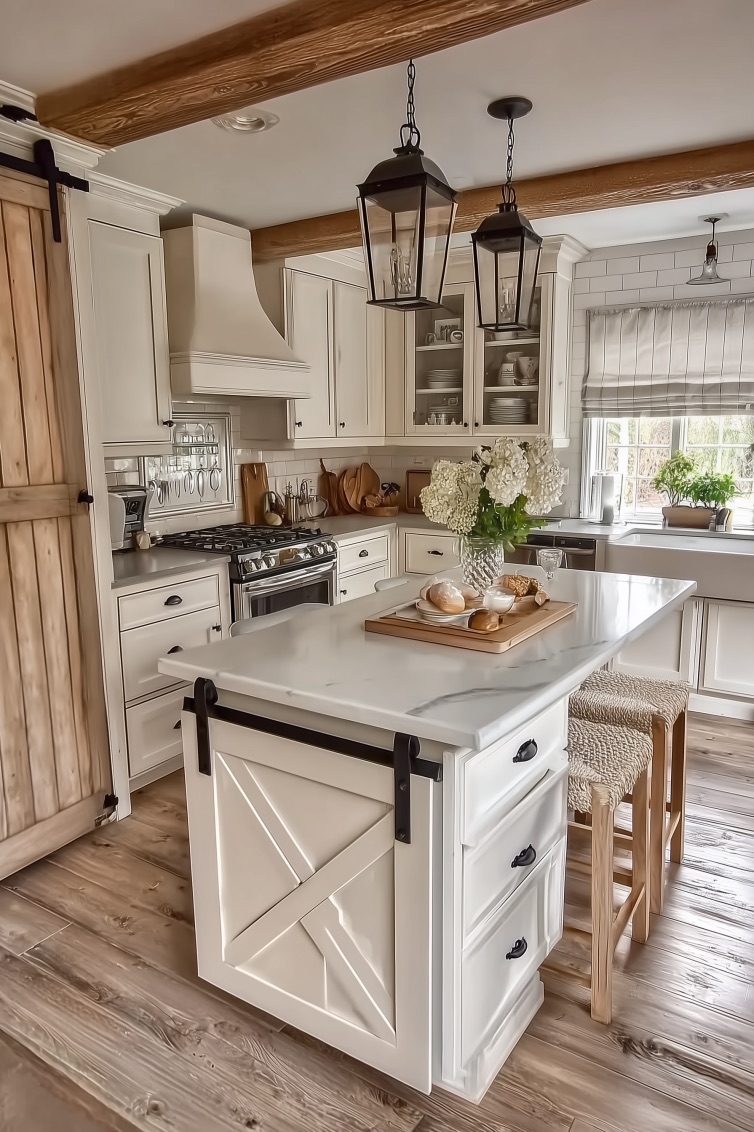
Don’t overlook your windows when considering farmhouse touches. Roman shades in a classic stripe – navy and cream, or perhaps a muted ticking stripe – add softness without fussiness.
Consider a kitchen in Connecticut where simple Roman shades in blue-and-white ticking stripe filter afternoon light. The fabric’s weight provides privacy when lowered but stacks neatly when raised, keeping the focus on the window’s architectural details.
The stripes introduce pattern in a restrained way that doesn’t compete with other design elements. This approach works especially well if you’ve chosen solid-colored cabinets and countertops.
11. Opt for Apron Front Sinks to Enhance Farmhouse Cabinets
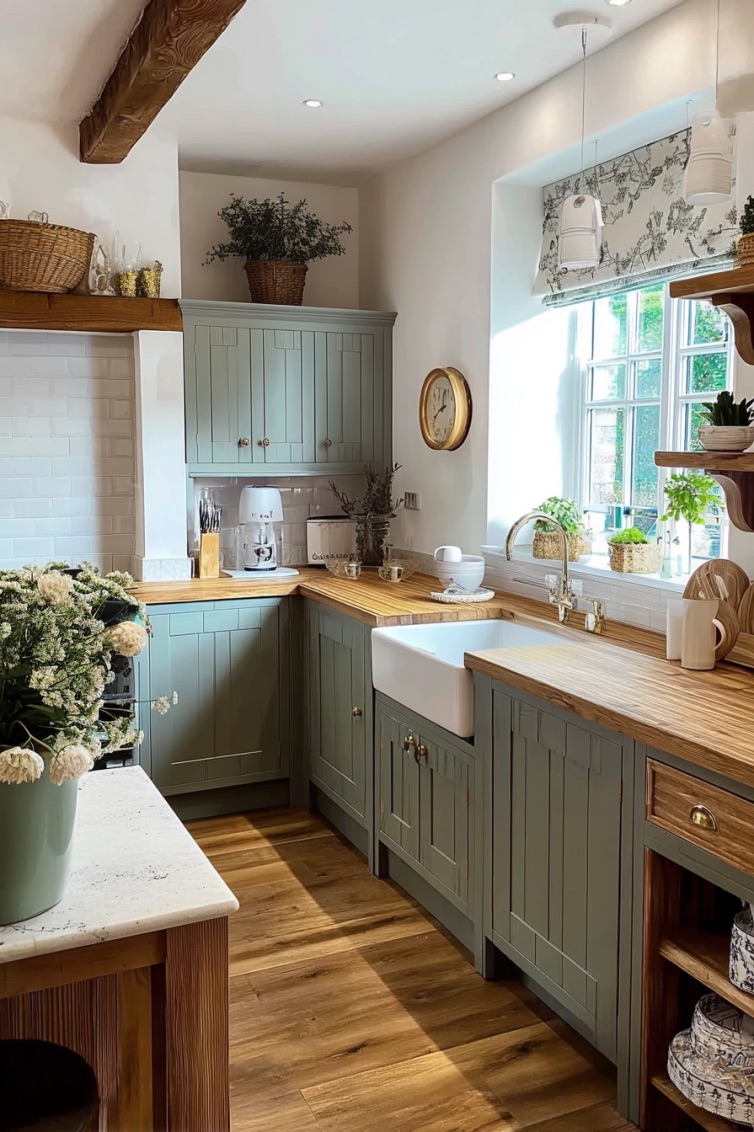
Here’s something unexpected: the sink you choose shapes your kitchen’s character more than you might imagine. An apron-front (or farmhouse) sink isn’t just nostalgic – it’s a functional workhorse with serious visual presence.
These deep, front-facing sinks originated in an era before dishwashers, when every pot, pan, and dish required hand-washing. The exposed front eliminated the cabinet face that would otherwise get soaked during dish duty.
Today, that same design serves as an unmistakable farmhouse marker, available in materials ranging from traditional porcelain to modern fireclay or even copper for a warmer aesthetic.
The effect ripples through your entire kitchen design. Your cabinets must be modified to accommodate the sink’s unique dimensions, and that customization – the way the sink becomes integrated into the cabinetry – creates a built-in, crafted appearance that elevates the whole space.
You’ll find yourself appreciating this detail every time you wash vegetables or fill a stockpot.
12. Layer Woven Baskets Above Cabinets for Extra Cozy Storage

Think of that awkward space above your cabinets as a gallery shelf waiting for the right collection. Woven baskets of varying sizes – perhaps vintage wire, natural wicker, or even galvanized metal – turn dead space into a textural display.
The effect softens the hard lines of cabinetry while adding warmth through natural materials. These baskets can remain purely decorative, or you might tuck away items you rarely need (holiday platters, extra vases, seasonal items) in a way that looks intentional rather than cluttered.
The slight irregularity of handwoven baskets introduces an artisanal quality that factory-made items can’t replicate.
A quick tip: vary the heights and shapes rather than buying matching sets. The asymmetry feels more collected-over-time, more authentic to how actual farmhouses evolved. Mix round with rectangular, tall with shallow, and leave some breathing room between pieces.
13. Mix Metal Accents for Sleek Modern Interest
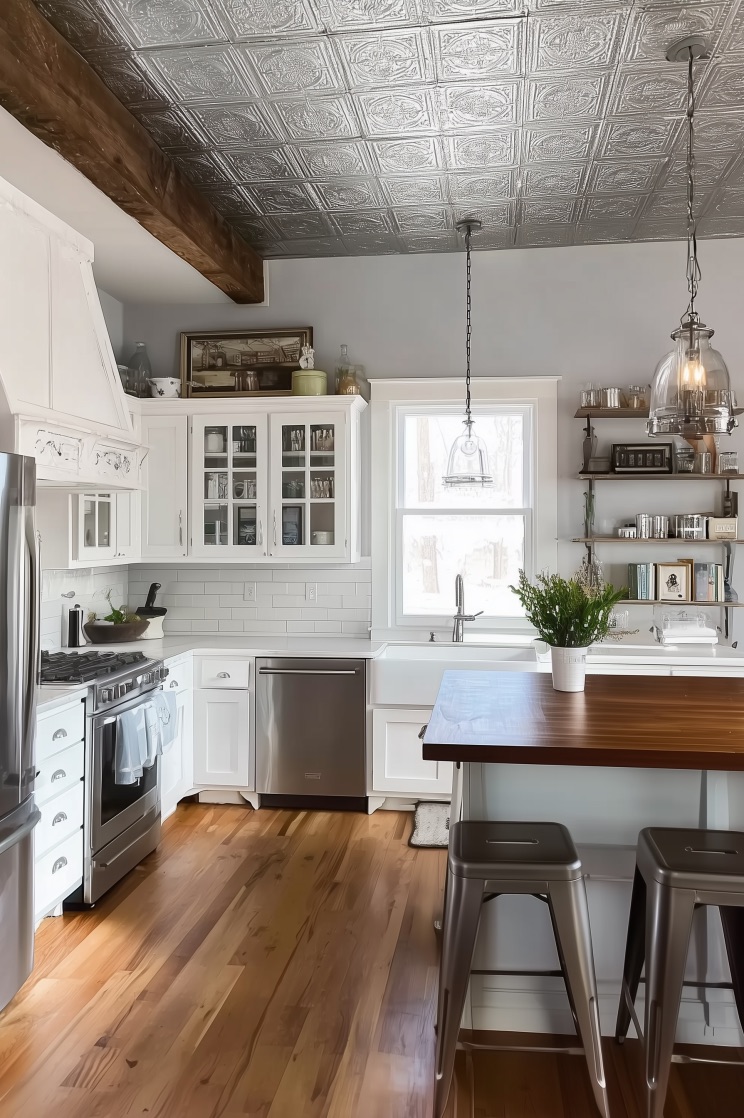
Observe any truly successful farmhouse kitchen and you’ll notice it’s rarely monotone – there’s a deliberate mixing of metal finishes that creates visual richness. Copper, brass, stainless steel, and matte black might all appear in a single space.
This layering prevents the kitchen from feeling too themed or one-note. Your stainless appliances don’t need to match the copper pendant lights, which don’t need to match the brass cabinet hardware.
The benefit of this approach is freedom: you’re not locked into finding every element in the same finish, which is both expensive and, frankly, a bit boring.
As you build out your kitchen, consider how different metals catch light differently throughout the day. This variety creates subtle shifts in ambiance that make the space feel dynamic. From here, you can start thinking about how other materials – wood, stone, fabric – play with these metallic elements.
14. Illuminate Workspaces with Industrial Style Black Sconces
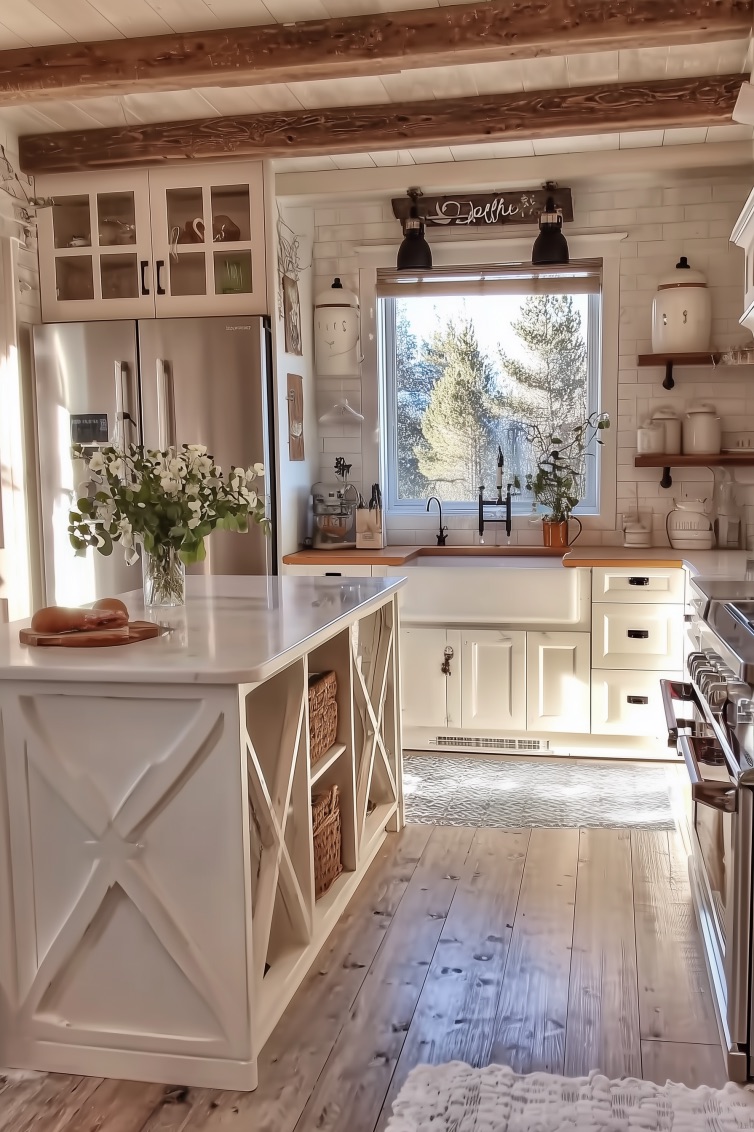
Task lighting matters, full stop. But industrial-style black sconces serve double duty, providing focused light where you need it while reinforcing that farmhouse-meets-modern aesthetic.
Mount sconces flanking your range hood, above a coffee station, or along open shelving to create pools of light that define different work zones. The black metal – especially in a matte or oil-rubbed bronze finish – grounds these functional pieces, preventing them from feeling too utilitarian.
You might choose articulating arm sconces that adjust to direct light exactly where you’re chopping or reading recipes, adding an interactive element to your lighting scheme.
This trend toward statement task lighting shows no signs of fading. It seems designers and homeowners alike have realized that lighting shapes mood as much as any other design decision, and black industrial fixtures deliver personality alongside lumens.
15. Show Off Antique Rugs for a Touch of Vintage Warmth
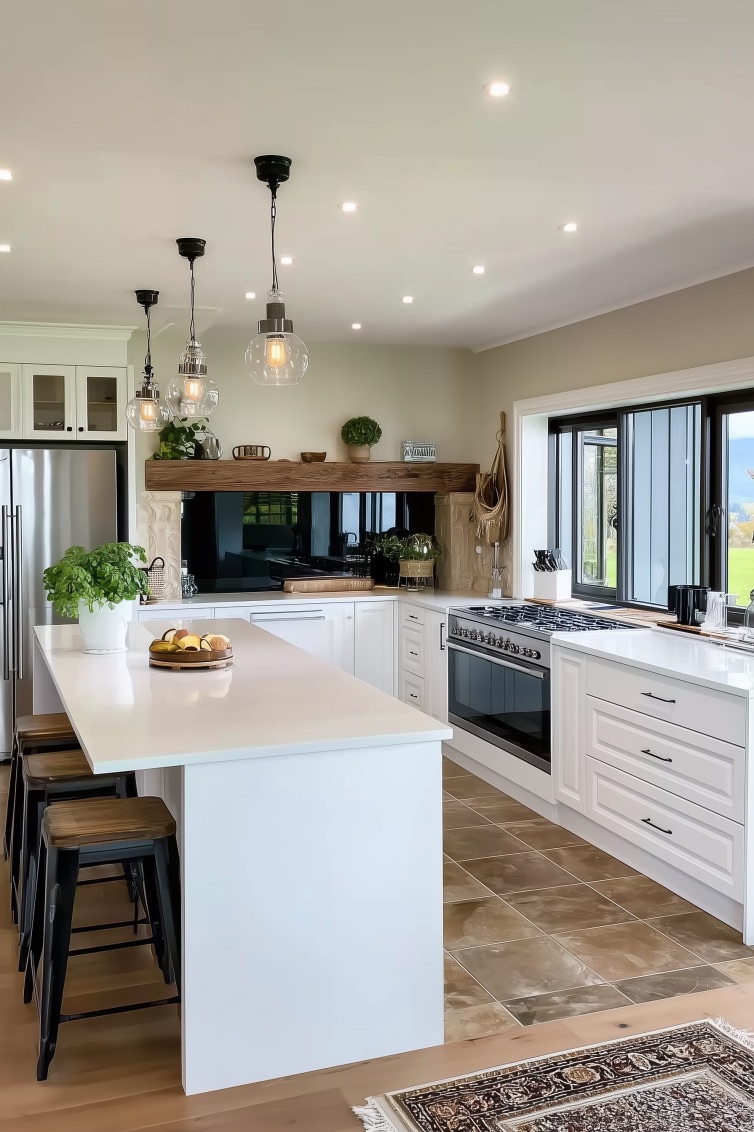
Can a floor ever feel too hard, too cold, too unforgiving? The right antique rug answers this question by introducing softness underfoot and visual warmth overhead (as you look down while working).
Picture a faded Persian runner stretching along your island, its reds and blues muted by decades of use, or a Turkish kilim positioned in front of the sink where you stand for countless hours. These rugs bring pattern, history, and comfort into a space dominated by hard surfaces.
They mark the kitchen as a room for living, not just cooking – a space worthy of your grandmother’s hand-knotted textiles rather than disposable mats.
The beauty of antique rugs lies partly in their imperfections: the worn spots, the slightly irregular weaving, the colors that have softened over time. These characteristics align perfectly with farmhouse sensibilities. Hunt for them at estate sales, online auctions, or antique shops, and don’t shy away from pieces that show their age.
Place them strategically, embrace their story, and let them anchor your farmhouse kitchen in a tradition that spans centuries.
Take Action and Create Your Farmhouse Kitchen
You’ve seen how individual elements – from ceiling beams to vintage rugs – layer together to create the farmhouse kitchen you’re craving. Start with one or two ideas that resonate most strongly, perhaps those wooden beams or that apron-front sink, and build from there. Your kitchen is waiting to tell its story.